Seasonal calendar
? Lurkaia Blog ?
About this section
- • Key moments:Solstices, carnival, harvests and saints days
- • Examples:San Juan, Olentzero, carnival and the days of the dead
- • Main focus:Links between natural cycle and cultural tradition
- • Usefulness:Planning visits when traditions are most alive
The circular year of myth
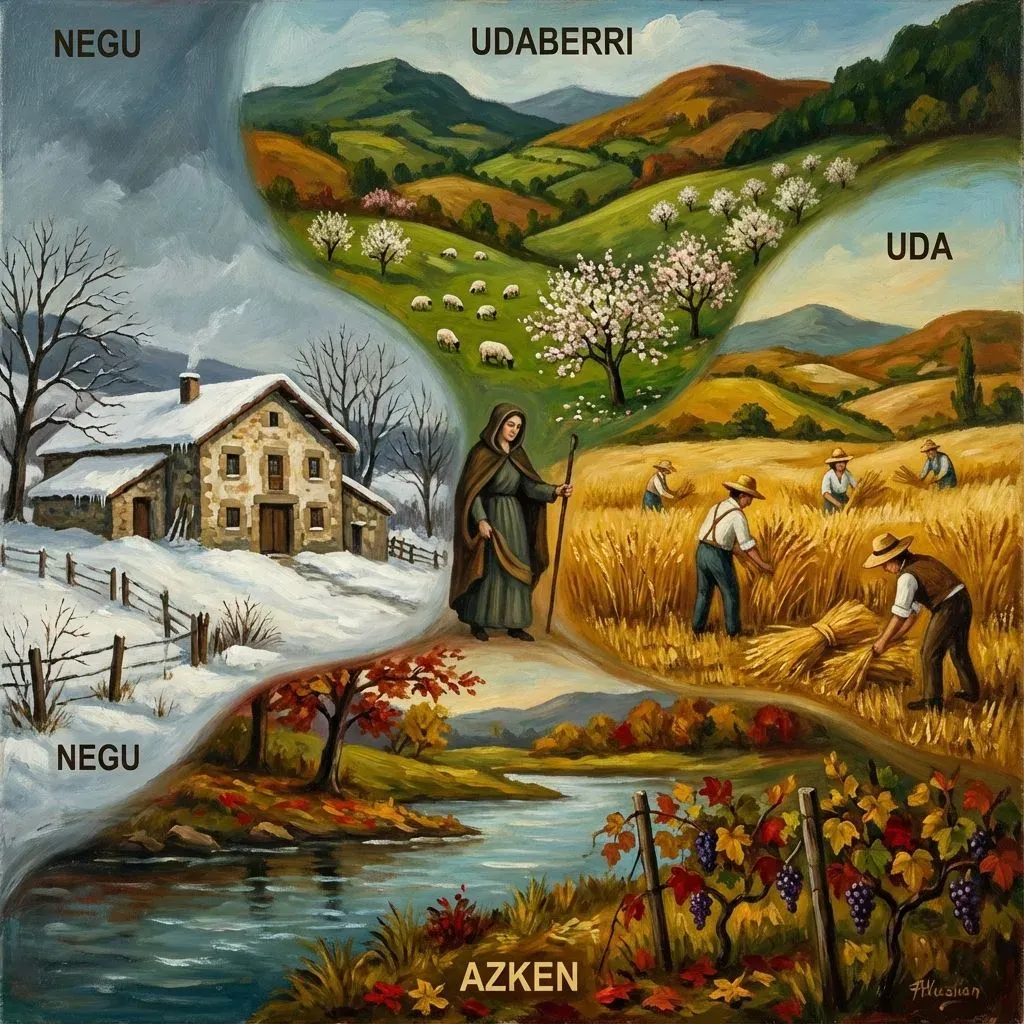
Basque traditions do not happen in abstract time. They are tied to seasons, solstices, agricultural rhythms and the recurring movement of the year. This section links myths and celebrations to their moment in the calendar, showing how ritual life gives shape to the passage of time in Euskal Herria.
The winter solstice, around 21 December, marks the deepest darkness but also the rebirth of light. It is the season of Olentzero, sacred logs in the home and rituals of renewal later absorbed into Christmas. We explore how these practices speak of fire, hope and communal continuity.
Carnival unleashes a controlled chaos before Lent. The joaldunak of Ituren, the momotxorroak of Altsasu and the zaldiko of Lantz are not just colourful figures but participants in a symbolic struggle between winter disorder and the return of spring. Their masks and movements still carry ancient meanings.
The night of San Juan, on 23 and 24 June, remains the great festival of fire. Bonfires burn across Euskal Herria, herbs are gathered, purification rites are performed and old burdens are cast away. Legends often insist that the boundary between worlds grows thinner on that night.
All Saints and the days of the dead mark another important threshold, when the living turn towards their ancestors through candles, food, cemeteries and memory. Argizaiolas, prayers and family rituals remind us that the household extends beyond death into continuity and remembrance.
The calendar also includes smaller but significant celebrations: Santa Agueda songs, San Blas blessings, spring pilgrimages to mountain sanctuaries, summer feasts and August festivals tied to harvest. Each date offers another way to read the persistence of older ritual structures.
This section also serves as a practical guide for readers who want to encounter Basque traditions at the right moment: which celebrations are especially visible, which are more intimate, and when certain places are best understood through their festive context. Myth is often best read in season.