Regional variants
? Lurkaia Blog ?
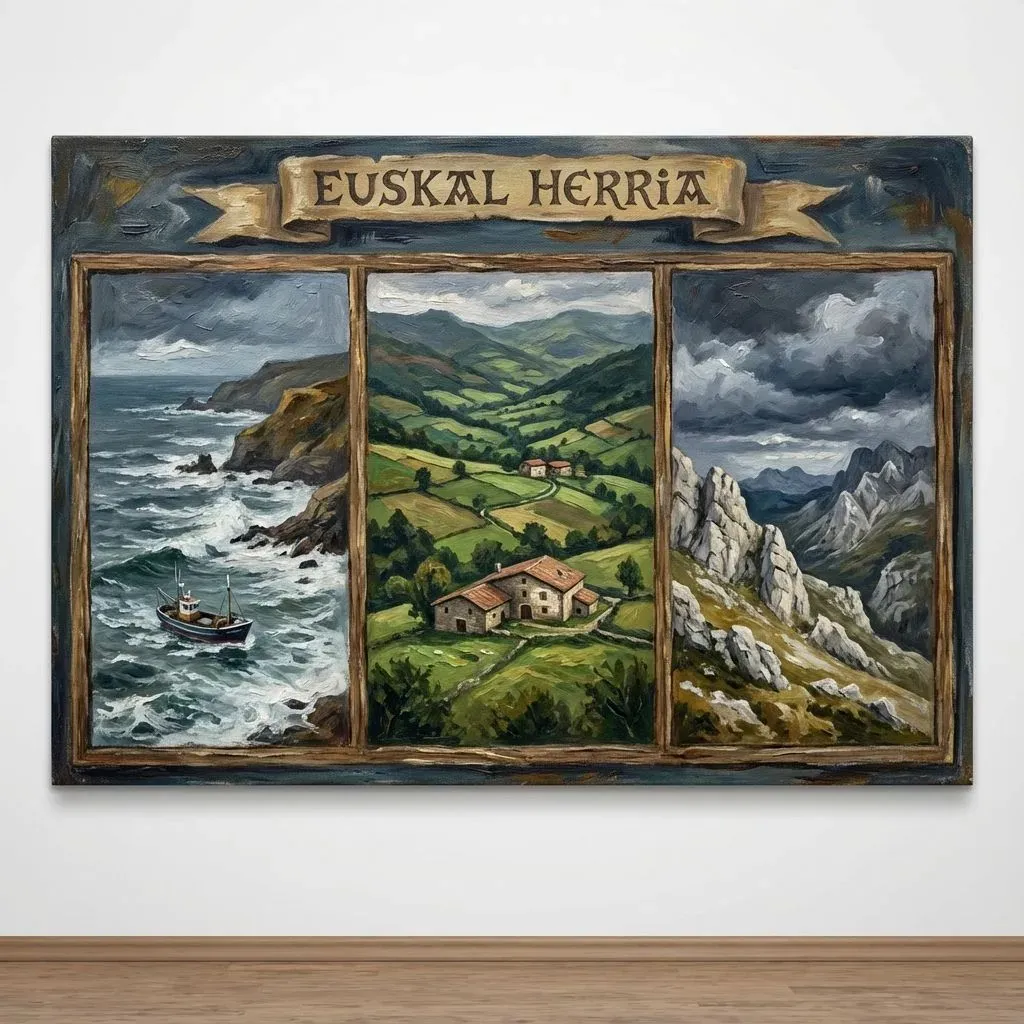
About this section
- • Territories:Bizkaia, Gipuzkoa, Araba, Navarre and Iparralde
- • Main focus:Comparing local versions of shared myths
- • Examples:Mari, lamias, jentilak and regional names
- • Value:Understanding the richness of Basque mythological diversity
One myth, many versions
Euskal Herria is not a homogeneous territory. Its valleys, provinces and historical regions have produced local versions of shared legends, giving the same being different names, appearances and stories depending on where the tale is told. This section explores that diversity as one of the great strengths of Basque mythology.
Mari is perhaps the clearest example. In Anboto she appears as an absolute mistress of storms and fertility, while in Aizkorri she is more strongly tied to justice and punishment. In some places she is remembered as a radiant woman in red, in others as a severe old figure. Each cave associated with her generates its own local mythology.
The lamias also change from place to place. On the Biscayan coast they may resemble fish-tailed sirens; in Gipuzkoan valleys they are remembered with bird feet or webbed limbs; in parts of Navarre they even take on stranger bodily traits. Their relationships with humans also shift between helpful presence and dangerous seduction.
The jentilak, the giant builders of megaliths, vary too. In some valleys they are powerful but clumsy beings; in others they are wise giants who taught humans how to work iron. Even the stories of their disappearance differ, revealing how each community reworked the same mythical memory in its own way.
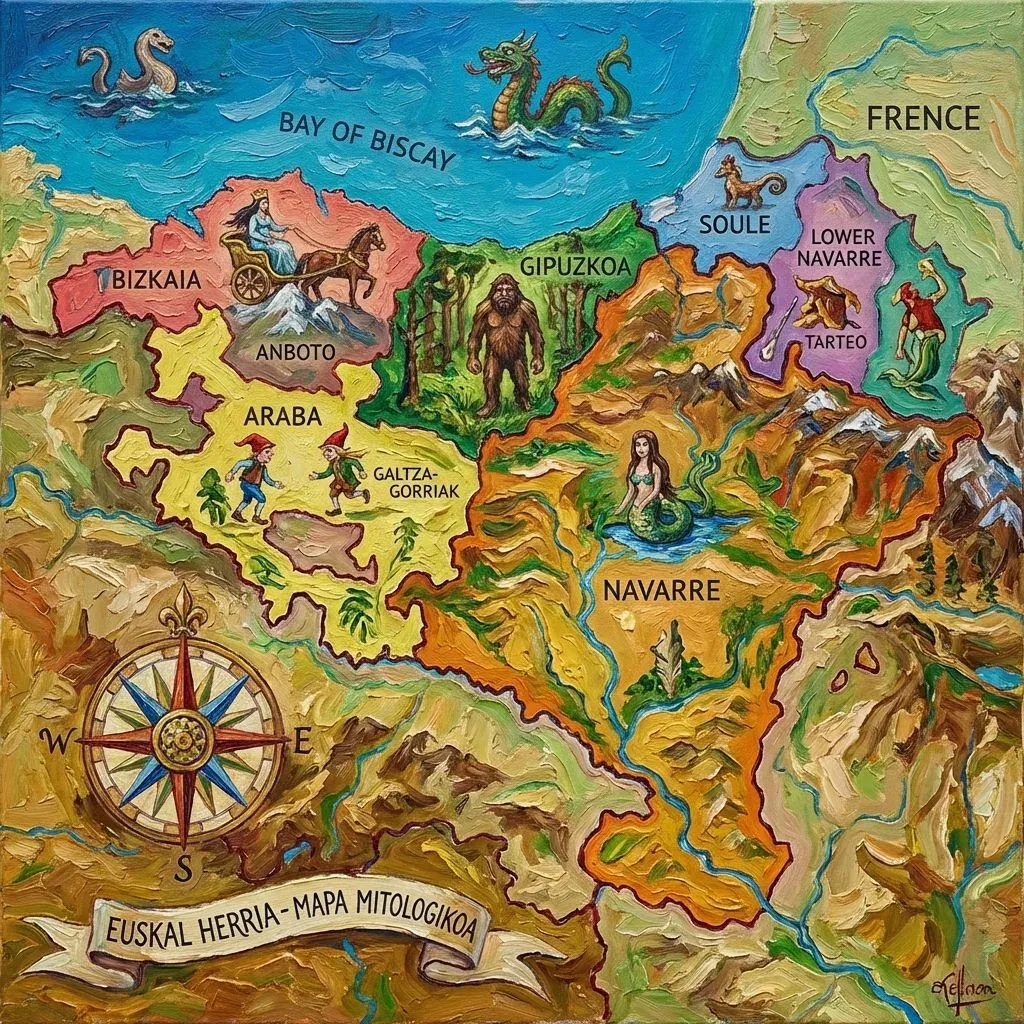
In Iparralde, Basque mythology also takes on specific nuances shaped by contact with Gascon and Pyrenean traditions. Figures such as the basa-andere or local lamiak gain distinctive features, while dragons, buried treasures and airborne witches appear with a flavour less common south of the mountains.
Each article in this section starts from a central legend or creature and then follows its regional variants through maps, comparisons and local references. We are interested not only in the differences themselves, but also in what they reveal about neighbouring cultures, landscapes and historical change.
Knowing these regional variants reminds us that Basque mythology is a living fabric woven by many communities. There is no single correct version and no secondary deviations: each local telling is a legitimate expression of collective imagination shaped by centuries of oral transmission.