Myths vs history
? Lurkaia blog ?
About this section
- • Goal:Critically examine legends, separating myth from history
- • Methodology:Archaeological evidence, historical documents and scientific analysis
- • Themes:Witches of Zugarramurdi, gentiles, orígenes del euskera
- • Focus:Academic rigour with respect for mythical heritage
Between truth and imagination
Did the witches of Zugarramurdi really exist Who built the dolmens that tradition attributes to the jentilak Was there ever a dragon on Mount Gorbea The Myths vs History section tackles these questions by crossing legend, documentary evidence and historical context.
The case of the witches of Zugarramurdi is paradigmatic. In 1610, the Inquisition tribunal of Logroño tried a group of neighbours from this Navarrese village for witchcraft and sentenced several of them to the stake. Were they really witches in the mythical sense History says no, but the social trauma and symbolic power of the episode turned it into one of the strongest stories in Basque memory.
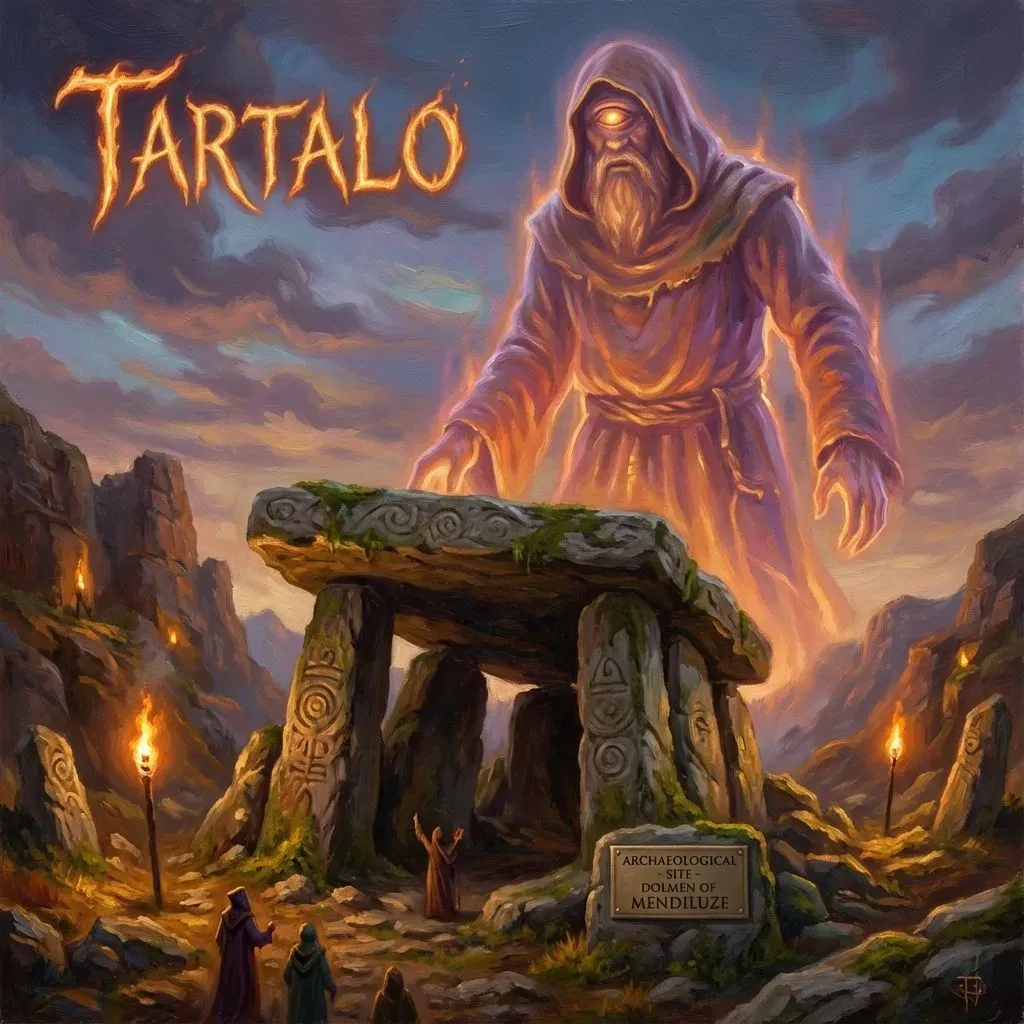
The jentilak who, according to tradition, built dolmens and cromlechs were not mythological giants, but those monuments were indeed raised by prehistoric communities that populated Euskal Herria thousands of years ago. Myth preserves the memory of ancient builders, even if it transforms them into colossal beings.
The origin of the Basque language has generated persistent myths: from theories linking it to biblical Hebrew to fantasies about Atlantis. Historical linguistics instead places Basque as an isolate, without proven direct relatives, which only increases its singularity.
Some myths preserve identifiable historical cores. Legends about battles against Muslim invaders may echo Carolingian expeditions; stories about the Christianisation of sanctuaries often reveal the reuse of older sacred sites.
We also examine modern myths about the Basque past: the idea of a primitive matriarchy, the notion of a fully egalitarian pre-Christian society, or the supposed survival of Paleolithic religions. Some of these ideas have a suggestive symbolic value, but they need to be separated from what sources actually allow us to affirm.
Our approach is never to dismiss myth because it is not ?historical truth?. Myth has its own truth: psychological, social and poetic. What we try to do is help the reader distinguish between symbolic meaning and documented fact, so that both dimensions can be appreciated more clearly.