Symbols and objects
? Lurkaia Blog ?
About this section
- • Main symbols:Protective, ritual and identity objects
- • What it studies:Material culture and symbolic meanings
- • Examples:Eguzkilore, lauburu, combs, makila and argizaiolas
- • Why it matters:Understanding how myth inhabits everyday objects
Objects that tell stories
Beyond the beings and narrative legends, Basque tradition also preserves a rich world of objects and symbols that condense its worldview. The eguzkilore on the door, the golden comb of the lamias or the lauburu carved into stone are not decorative details alone: they are knots of meaning linking daily life to myth.
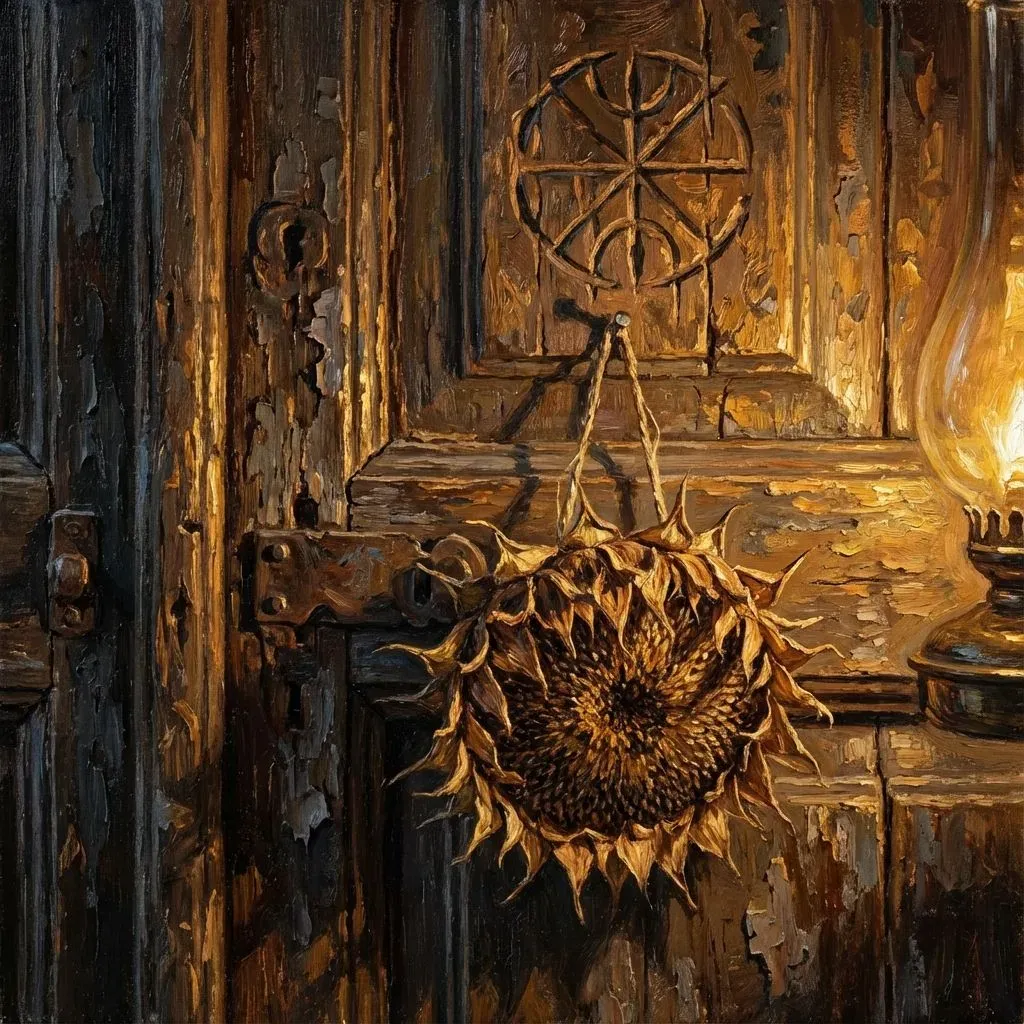
The eguzkilore, often translated as the flower of the sun, is perhaps the best known of these signs. Dried and placed at the entrance to homes, it works as a symbol of protection against hostile nocturnal forces. The legend surrounding it opens onto wider questions of light, domestic shelter and the role of Mari in guarding the household.
The combs of the lamias appear in many stories. Left by rivers, returned in exchange for favour or stolen at the cost of misfortune, they gather meanings of femininity, seduction, liminality and solar brilliance. This section looks at how such objects become moral and symbolic devices inside the tales.
The lauburu, with its four curved arms, has a disputed origin but an unquestionable contemporary power as a Basque sign of identity. We explore the theories surrounding it, its documented uses and the meanings readers continue to attach to it today.
We also include less famous but equally meaningful objects: the carved chest, the makila as a sign of authority, discoidal stelae, argizaiolas used in funerary contexts and horns or ritual instruments associated with collective ceremony.
Each article combines physical description, associated legends, symbolic reading and notes on present-day use. The aim is to build a visual and narrative catalogue of Basque mythical material culture rather than simply listing folkloric curiosities.
This section also pays attention to symbolic spaces: thresholds, hearths, crossroads and other places where objects acquire force through placement. Understanding these spaces helps explain why certain items had to stand in very precise locations in order to protect, warn or connect worlds.