Crafts and traditional trades
? Traditions of Euskal Herria ?
Key facts
- • Traditional trades:Blacksmithing, basketry, pottery, stonemasonry, boatbuilding
- • Emblematic objects:Makila (staff), kaiku, kutxa, argizaiola
- • Craft centres:Legazpi (iron), Bermeo (sea), Soraluze (arms)
- • Transmission:Guilds, family workshops, trade schools
The hands that shape culture
Basque crafts and traditional trades form the material foundation of a culture that learned to turn local resources into objects of beauty and use. From the iron forges of Bizkaia to the workshops where baskets were woven for farming and fishing, artisans preserved skills passed down over generations and helped define the visible texture of Euskal Herria.
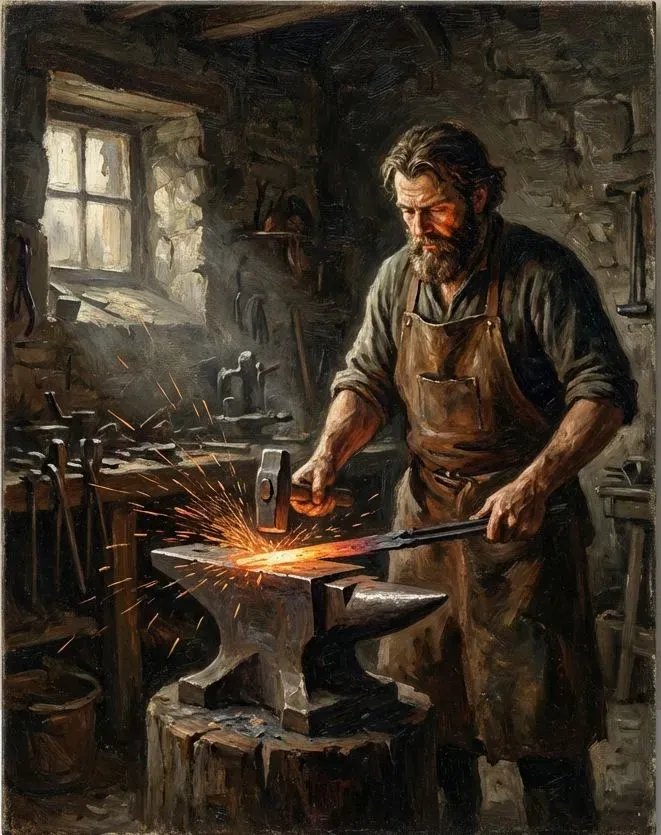
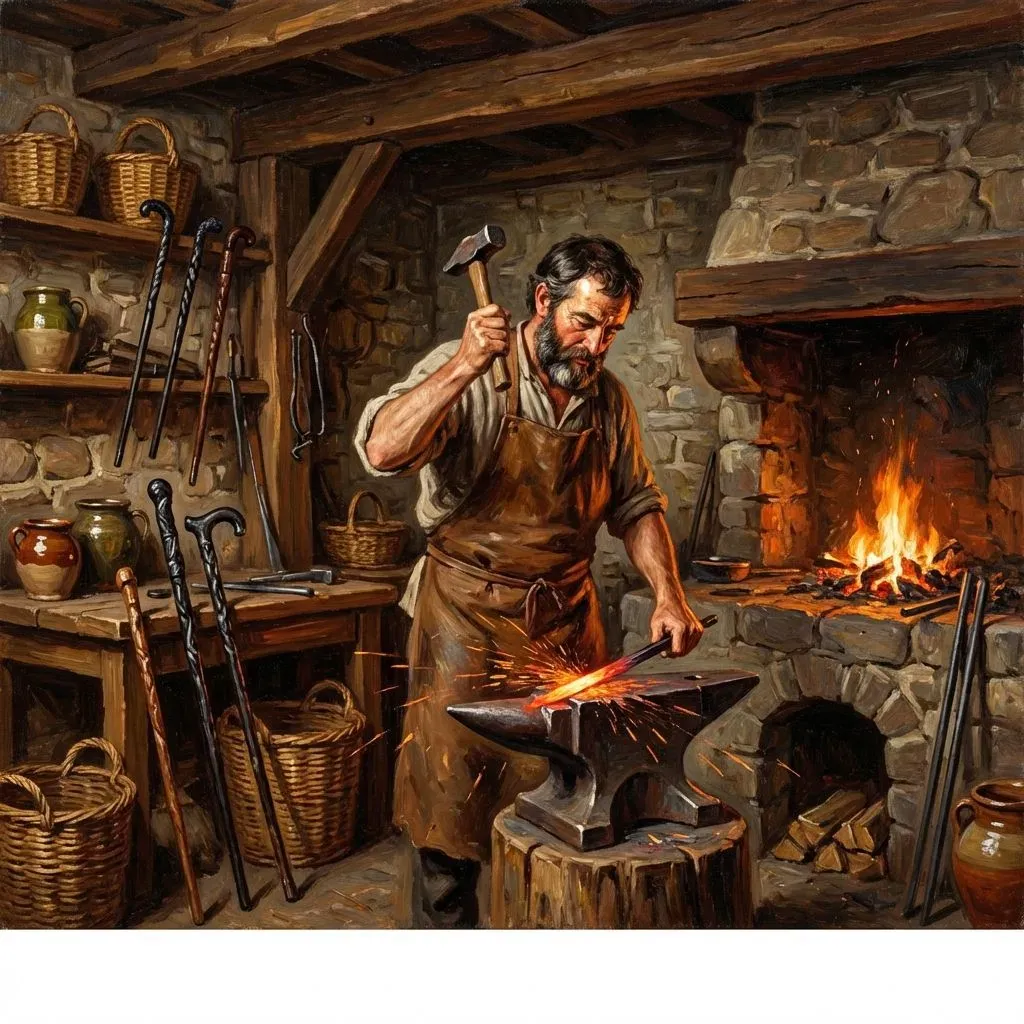
Ironworking holds a central place in this tradition. Basque smiths gained European fame for the quality of their blades, tools and weapons, exported widely from the Middle Ages onward. The later industrial traditions of places such as Eibar, Soraluze or Tolosa grew out of this older world of highly skilled metalwork.
The makila is perhaps the most emblematic crafted object in Euskal Herria. Made from medlar wood marked while the tree is still standing, it combines ceremonial value, walking support and at times even defensive use. Workshops in Larressore still keep this tradition alive with extraordinary care.
Basketry, pottery, stone carving and naval carpentry completed the craft landscape of a society in which each trade had a recognised social role. Together they formed a dense web of practical knowledge closely tied to agriculture, seafaring, ritual and domestic life.
The kaiku, a wooden vessel traditionally used for milking and carrying milk, shows how Basque artisans transformed necessity into elegance. Carved from a single block of alder or birch, it had to be watertight and durable, and it remains today one of the clearest symbols of pastoral craftsmanship.
Argizaiolas represent another unique craft tradition, linked to funerary ritual. These carved wooden tablets wrapped with wax were lit in churches for the family grave, creating a material connection between the living and their dead. In some places, the emotional and symbolic force of these objects still remains palpable.
Industrialisation threatened many of these trades but did not erase them. A new generation of artisans now combines inherited techniques with contemporary sensibilities, ensuring that Basque craft knowledge continues to evolve rather than surviving only as museum memory.