Carnivals and masks
? Traditions of Euskal Herria ?
Key facts
- • Main figures:Joaldunak, Momotxorroak, Zampantzar, Miel Otxin, Txatxoak
- • Time of celebration:January–February, before Christian Lent
- • Notable locations:Ituren, Zubieta, Lantz, Altsasu, Mundaka, Tolosa
- • Ritual meaning:Awakening the earth, driving out spirits, renewal
The ancestral awakening
Rural Basque carnivals form one of the most striking ethnographic traditions in Europe. Rooted in pre-Christian ritual cycles tied to agriculture and the awakening of nature after winter, they preserve characters, gestures and symbols that connect directly with an older Basque worldview.
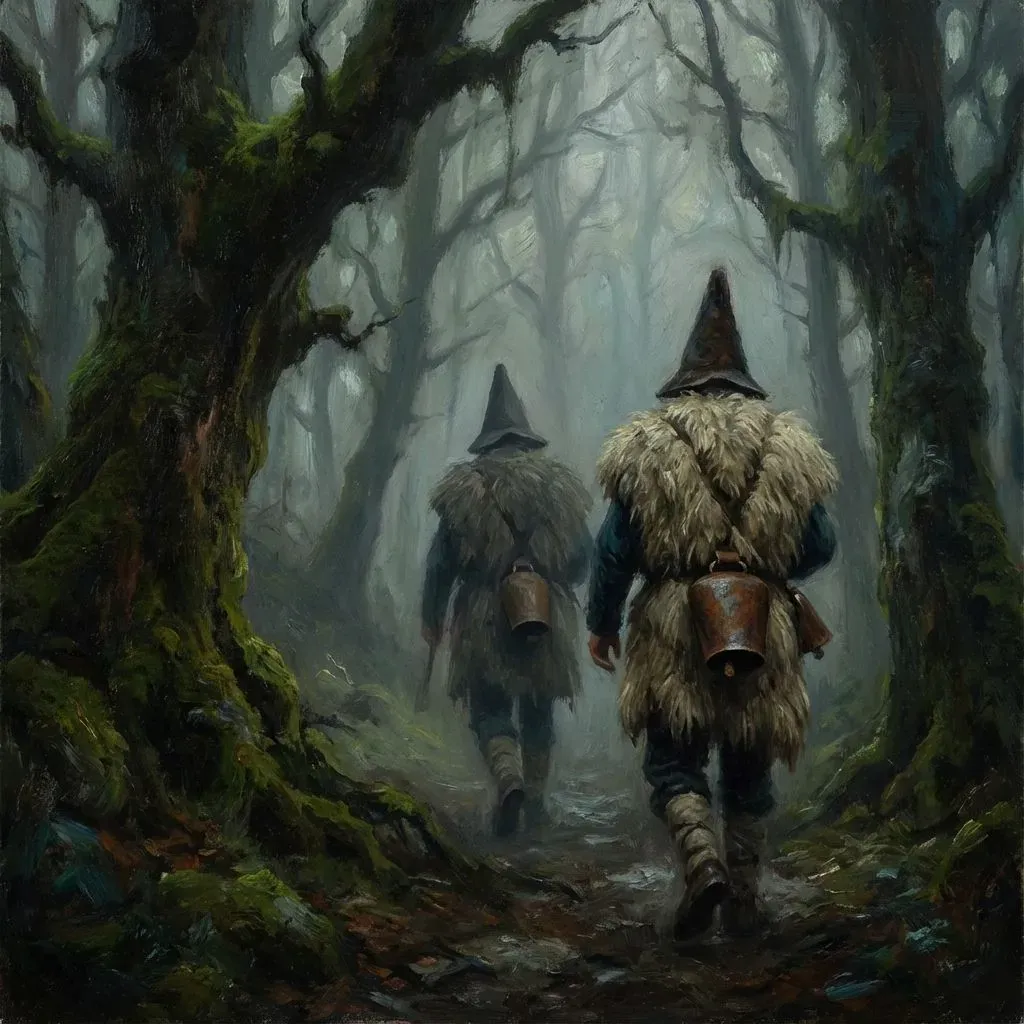
The joaldunak of Ituren and Zubieta are perhaps the best-known example. Dressed in sheepskins and carrying heavy bells on their backs, they move through the villages in a hypnotic rhythm said to drive away evil spirits and wake the sleeping earth. Their passage marks the opening of the agricultural cycle and the approach of spring.
In Lantz, the carnival centres on Miel Otxin, a giant straw figure who is judged, condemned and burned, symbolising the defeat of evil and the renewal of life. The momotxorroak of Altsasu, hidden under sacks and skins and armed with forks and brooms, add a more ferocious energy to the same ritual landscape.
Other figures such as the zampantzar, the txatxoak of Mundaka or the carnivals of Tolosa and Donostia complete a festive mosaic that has resisted homogenisation and retained strong local identity. These celebrations are now recognised as important forms of intangible cultural heritage.
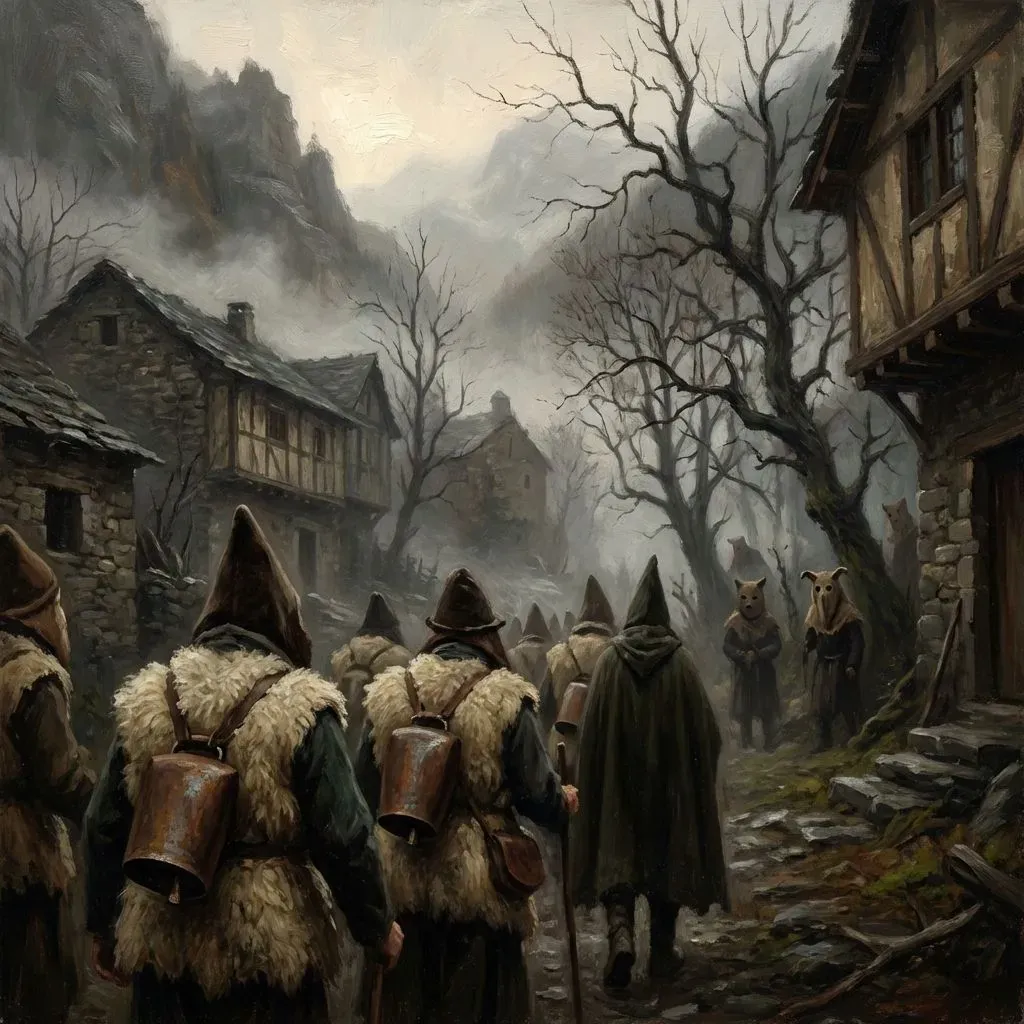
The calendar of Basque inauteriak follows a precise order, beginning with the joaldunak at the end of January and stretching through Carnival Tuesday. Each locality maintains its own date, figures and ritual sequence while sharing a common celebration of the transition from winter to spring.
Animal skins, bells, masks, noise and burning effigies all carry layers of meaning. They link fertility, purification, social inversion and cosmic renewal, and they appear in different combinations from village to village while preserving a recognisable ritual logic.
The survival of these carnivals into the present is also a story of cultural resistance. Despite prohibitions and pressures, rural communities transmitted them across generations. Today they attract large audiences while still functioning as powerful expressions of local identity and collective memory.