Popular beliefs and taboos
? Traditions of Euskal Herria ?
Key facts
- • Protections (amulets):Eguzkilore, blessed laurel, salt, iron, holy water
- • Bad omens:Owl, raven at night, howling dog, broken mirrors
- • Main taboos:Whistling at night, naming the dead, desecrating places
- • Protection against:Evil eye (begizkoa), witches, storms, illnesses
The invisible world
Basque popular beliefs formed a coherent system of unwritten rules governing relations between people and the invisible powers of the cosmos. In a world understood as alive with spirits, influences and unseen dangers, omens, taboos and protective customs offered guidance for preserving the household, health and prosperity.
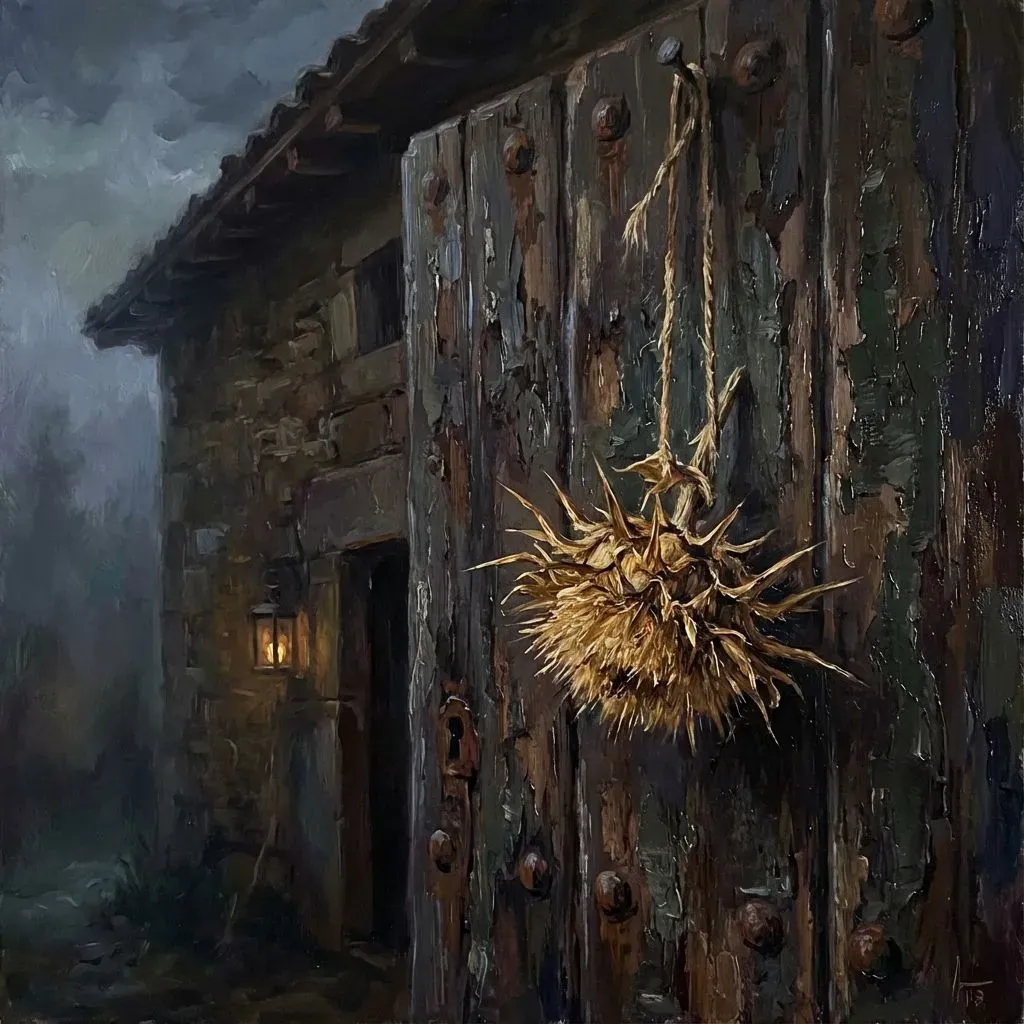
The eguzkilore, the dried wild thistle still hung on many farmhouse doors, is the most famous protective sign of Euskal Herria. According to legend, Mari created it to defend humans from nocturnal beings: witches, lamiak and other hostile forces became trapped counting its petals until dawn drove them away. Together with blessed laurel and salt, it formed the basic protective armoury of the home.
Omens were read in animals, weather and chance encounters. The cry of an owl near the house, dogs howling at odd hours or crossing paths with certain figures could all be taken as signs of misfortune. Such warnings often triggered protective gestures, altered routes or ritualised precautions.
The evil eye, begizkoa, was one of the strongest fears in traditional society. Envy could be transmitted through the gaze and bring illness or bad fortune, especially to children, livestock and harvests. Red ribbons, amulets and healing rituals performed by specialists formed part of the defensive repertoire against that threat.
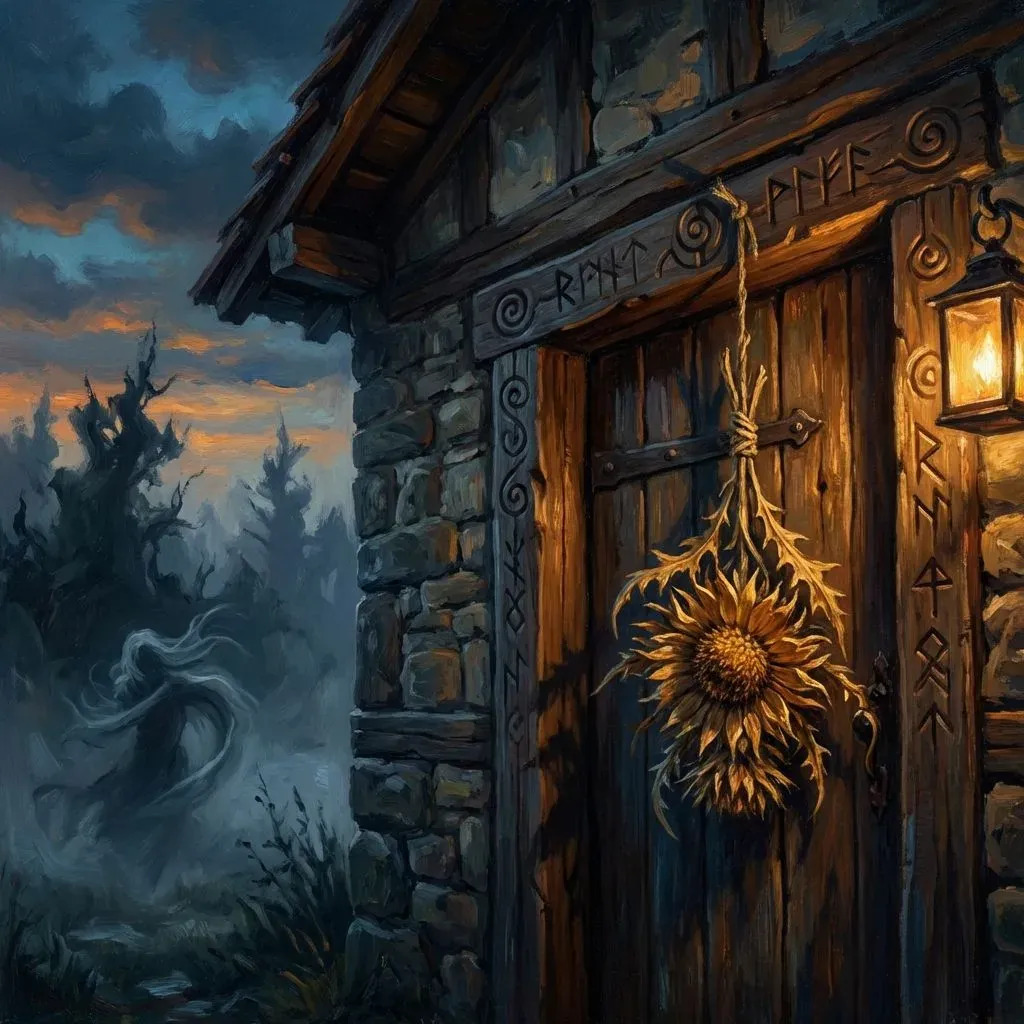
Taboos marked lines that should not be crossed: whistling at night, naming the dead after sunset, cutting sacred trees or violating powerful places such as caves and springs. These taboos regulated social behaviour while also protecting fragile natural and symbolic spaces.
Storms were especially feared and heavily ritualised. Blessed candles were lit, prayers were spoken and laurel branches were placed at windows to ward off lightning. Some believed witches rode within storm clouds, which is why church bells were rung and protective gestures repeated at doors and thresholds.
Although many of these beliefs have faded from everyday life, traces survive in habits that people may still practise without knowing their origin: hanging an eguzkilore, touching wood or avoiding certain unlucky gestures. They remain a discreet link between the present and an older Basque worldview.