Euskera and orality
? Traditions of Euskal Herria ?
Key facts
- • Main art form:Bertsolaritza, improvised poetry in Basque
- • Oral genres:Ipuinak (stories), kondairak (legends), errefrauak (proverbs)
- • Featured event:Euskal Herria Bertsolari Championship (every four years)
- • Heritage:Candidate for UNESCO Intangible Cultural Heritage
The voice of the Basque people
Euskera is far more than a language: it is the sounding soul of Euskal Herria, a pre-Indo-European tongue whose origins disappear into deep time and whose survival owes much to oral transmission. Before widespread literacy, knowledge, beliefs, history and practical wisdom were carried from mouth to mouth and generation to generation.
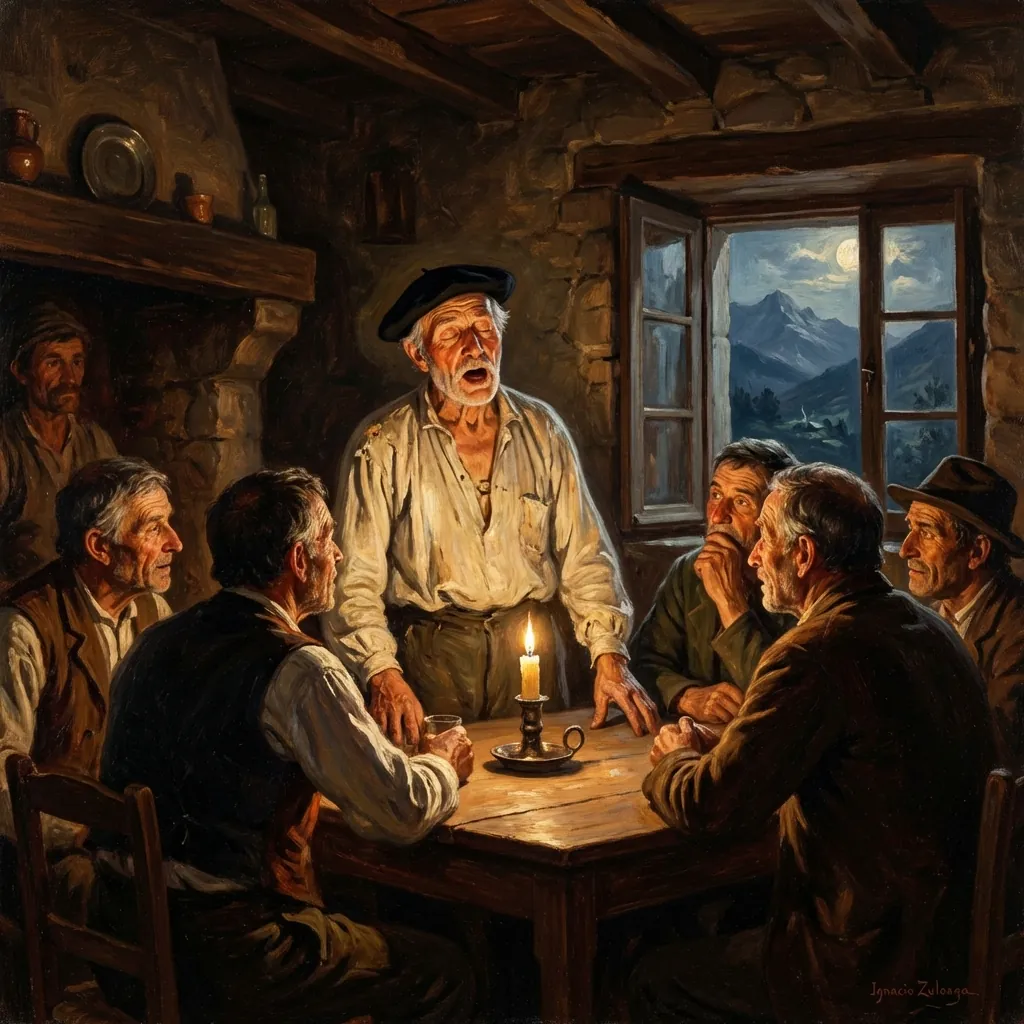
Bertsolaritza stands at the summit of that oral tradition. Bertsolaris improvise verses instantly on any proposed subject while respecting strict metres and melodies. Documented since at least the fifteenth century, this art combines wit, speed, verbal mastery and artistic sensitivity in a public performance that still gathers large audiences today.
Bertsolaris perform in squares, taverns, frontons and auditoriums, often in verbal duels where quick response and sharp expression matter as much as poetic craft. The national Bertsolari Championship remains one of the most important cultural events in the Basque Country.
But Basque orality extends well beyond bertsolaritza. Ipuinak and kondairak preserved the mythical imagination of Mari, the lamiak, Basajaun, the jentilak and many other beings. Winter evenings around the fire were long one of the main settings for passing on that narrative heritage.
Proverbs and old sayings condense popular wisdom into memorable formulas. They carried practical advice, social norms and observations on human behaviour, and helped give oral culture a dense ethical and linguistic texture.
Traditional songs form another essential pillar of Basque orality. Lullabies, work songs, epic ballads and tavern songs all transmitted emotions, stories and shared values. Many of them are inseparable from traditional dance, creating a deep bond between music and movement.
The recovery and strengthening of Euskera in recent decades has given this oral world fresh energy. Euskara schools, bilingual education and cultural production in Basque have created new generations of speakers, while bertsolaritza in particular is living through a striking period of renewal without losing its roots.
The proposal to recognise bertsolaritza as UNESCO Intangible Cultural Heritage acknowledges this unique practice’s universal value. As oral cultures disappear rapidly, Basque and its oral tradition offer an exceptional example of cultural resilience, adaptation and innovation within continuity. Every improvised bertso, narrated story and repeated proverb adds a link between Euskal Herria’s distant past and its future.