Fairs and the agrarian cycle
? Traditions of Euskal Herria ?
Key facts
- • Historic markets:Ordizia, Gernika, Tolosa, Azpeitia, Durango
- • Emblematic fair:Saint Thomas’s fair (21 December), traditional market
- • Traditional products:Cheese, txakoli, cider, livestock, garden produce
- • Agricultural calendar:Sowing, transhumance, grape harvest, slaughter, harvest
The pulse of the land
Basque fairs and markets were far more than simple commercial exchanges. They were the economic and social heartbeat of a culture rooted in the land, shaping the rhythm of the agrarian year and creating places where goods, news and traditions circulated together.
The market of Ordizia, held every Wednesday since the sixteenth century, remains one of the most emblematic in Gipuzkoa, especially for dairy and produce from the Goierri farmhouses. Gernika, on Mondays, long functioned as one of Bizkaia's great commercial centres, while Tolosa, Azpeitia and Durango keep alive their own historic market traditions.
The Santo Tomas fair, celebrated on 21 December, marks the beginning of the Christmas season and remains one of the biggest traditional commercial events of the year. Farmhouses descend to the cities with cheese, txistorra, txakoli, honey and crafts, while urban residents dress as baserritarrak and eat talo with txistorra in a ritual reunion between countryside and city.
The traditional agrarian cycle ordered the work of the Basque farmhouse: sowing in spring, mountain grazing in summer, harvest and vintage in autumn, pig slaughter in winter. Each task had its own rhythm, gestures and associated celebrations, while the Catholic liturgical calendar gradually overlaid older seasonal structures.
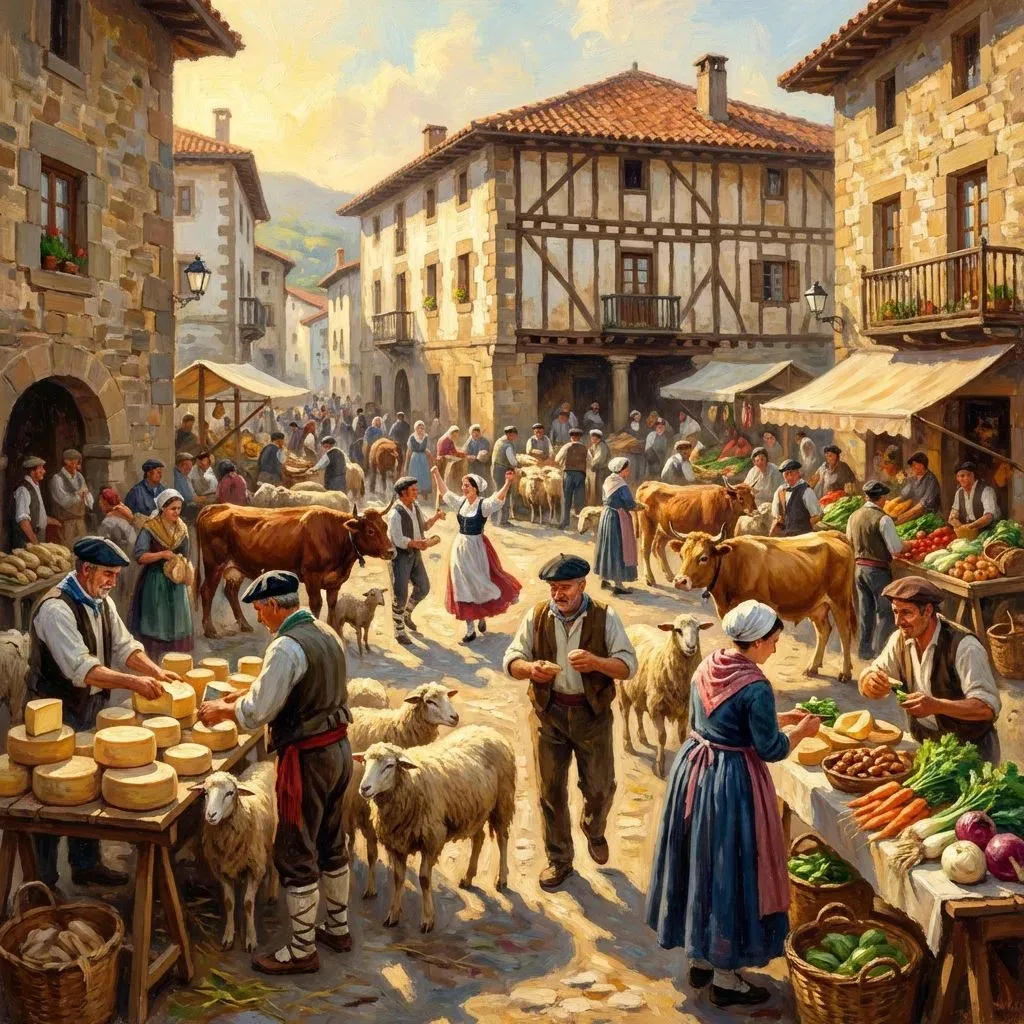
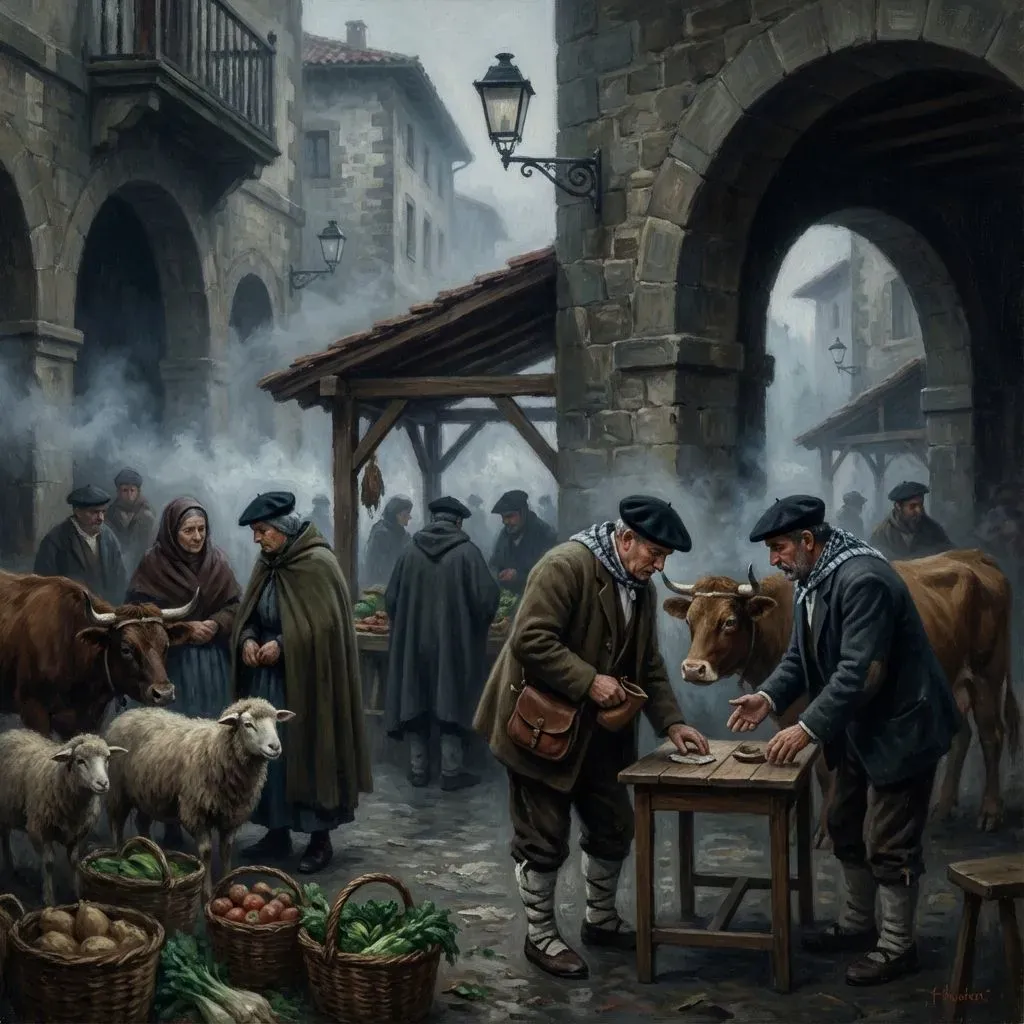
Livestock fairs were among the major events of the rural year. Cattle, sheep, horses and pigs changed hands there; deals were sealed with a handshake; seeds and tools were exchanged; and agricultural knowledge passed from one generation to the next. The dates of these fairs punctuated the collective calendar of the countryside.
Communal labour, or auzolan, was essential in tasks too large for a single household: maize harvests, hay collection or the building of a new farmhouse all relied on reciprocal help between neighbours. That system created strong social bonds and helped ensure the survival of rural communities.
Mechanisation and depopulation transformed the Basque countryside, but traditional fairs have experienced a notable revival as symbols of local identity and support for nearby produce. The rise of zero-kilometre food culture and renewed interest in artisan products has returned these spaces to the centre of public life.