Festivals
? Traditions of Euskal Herria ?
Key facts
- • Major festivals:San Fermín, Aste Nagusia (Bilbao/Donostia), Tamborrada
- • Calendar:January (Tamborrada), July–August (patron saint festivals)
- • Festive elements:Opening rocket, bull runs, giants, carnival groups, open-air dances
- • Recognition:Festivals of International Tourist Interest
The festive explosion
Basque festivals are among the most exuberant expressions of collective life in Euskal Herria. They bring people into the streets to celebrate community, shared identity and the suspension of ordinary time, combining religious tradition, civic ritual and popular festivity in highly distinctive ways.
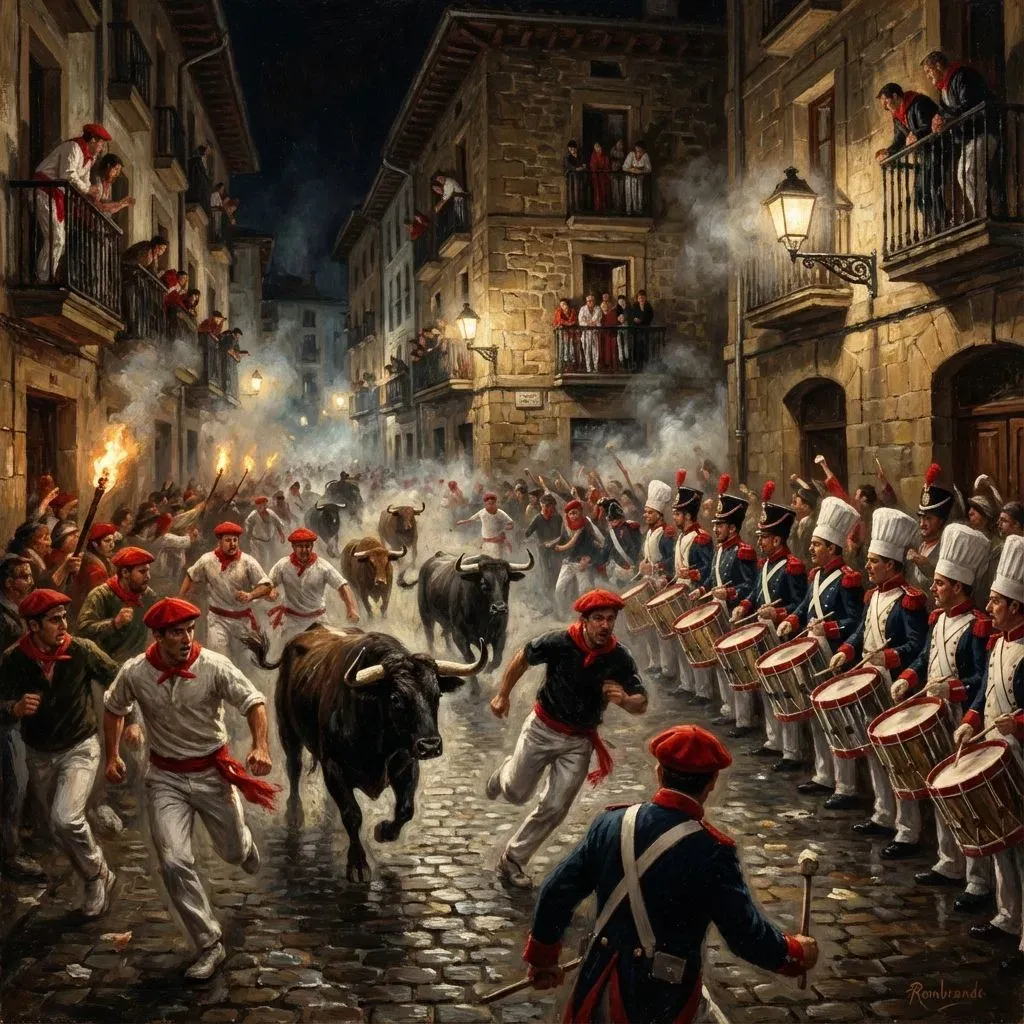
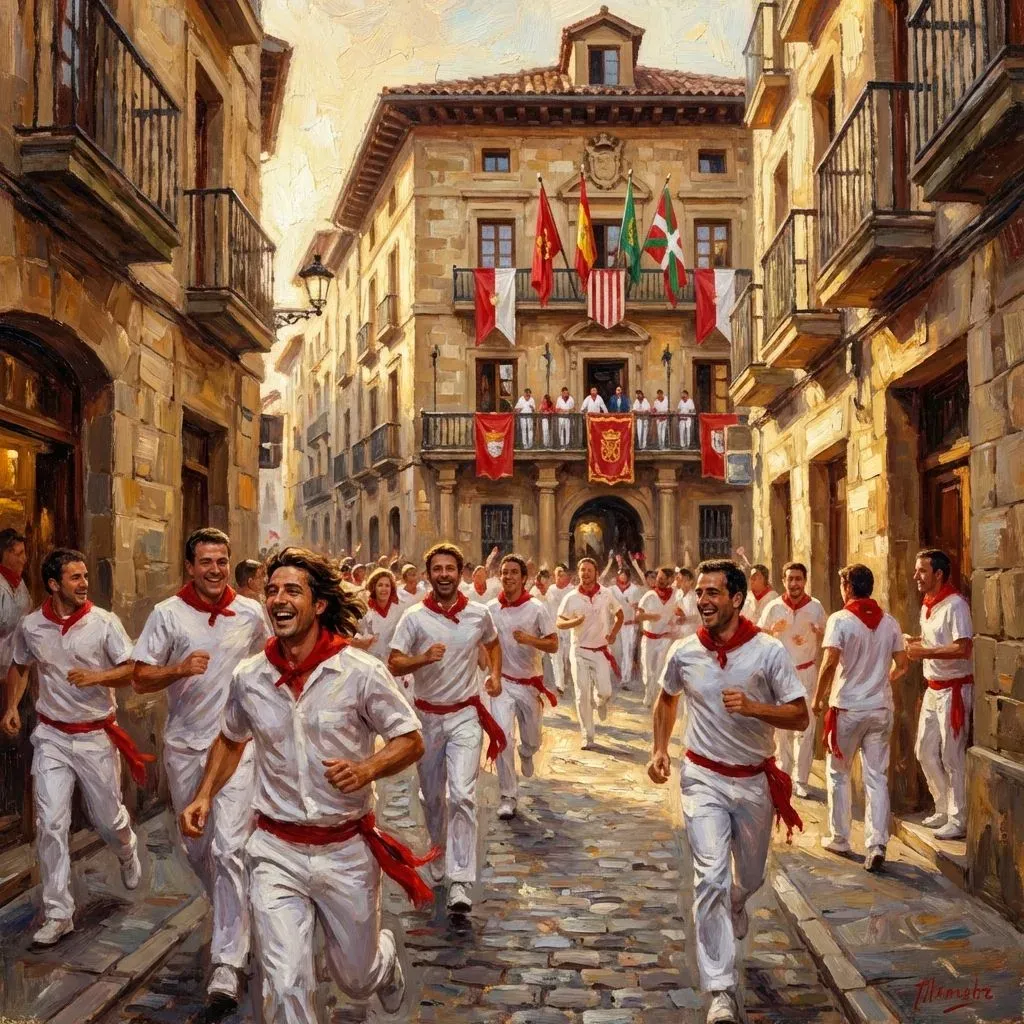
San Fermin, beginning each 6 July with the txupinazo in Pamplona, has become one of the world's most famous festivals. The running of the bulls, devotion to the saint, the peñas, the songs and the collective energy attract international attention, yet beneath the global image the celebration remains deeply rooted in Navarrese ritual life.
Bilbao's Aste Nagusia transforms the city each August through concerts, fireworks, giants, masked parades and constant celebration by the river. Donostia answers with the Tamborrada of San Sebastian, while the Alardes of Irun and Hondarribia commemorate historical victories through volunteer military parades. Each major city reshapes festive identity in its own way.
Every town also keeps its own patron saint festival, complete with zezensuzko fire bulls, bertsolaris, traditional dances, dawn music and the intense neighbourly coexistence that defines Basque communal spirit. These celebrations continue to pass from generation to generation as living rhythms of local identity.
The Tamborrada of Donostia is one of the clearest examples of mass civic participation. Drummers, cooks, soldiers and civilians fill the city for twenty four hours, turning rhythm itself into a symbol of unity. It shows how a festival can function as both spectacle and community ritual at once.
The communal element is central to all Basque festivals. Quadrillas, peñas and the culture of moving together from bar to bar express a festive model based on collectivity rather than individual display. The square and the street become shared living space where differences are temporarily suspended.
The Basque festive calendar follows seasons and saints days, but its spirit goes beyond liturgy. Festivals are moments of permitted transgression, joy, memory and belonging, reinforcing local bonds while reminding participants that celebration is itself part of cultural continuity.