Fire and solstices
? Traditions of Euskal Herria ?
Key facts
- • Main celebration:Saint John’s Eve (23–24 June), summer solstice
- • Basque names:San Juan sua, Sanjuanak, San Juan gaua
- • Associated rituals:Bonfires, purifying leaps, gathering magical herbs
- • Ancestral meaning:Purification, protection, renewal of the sacred fire
The purifying power of fire
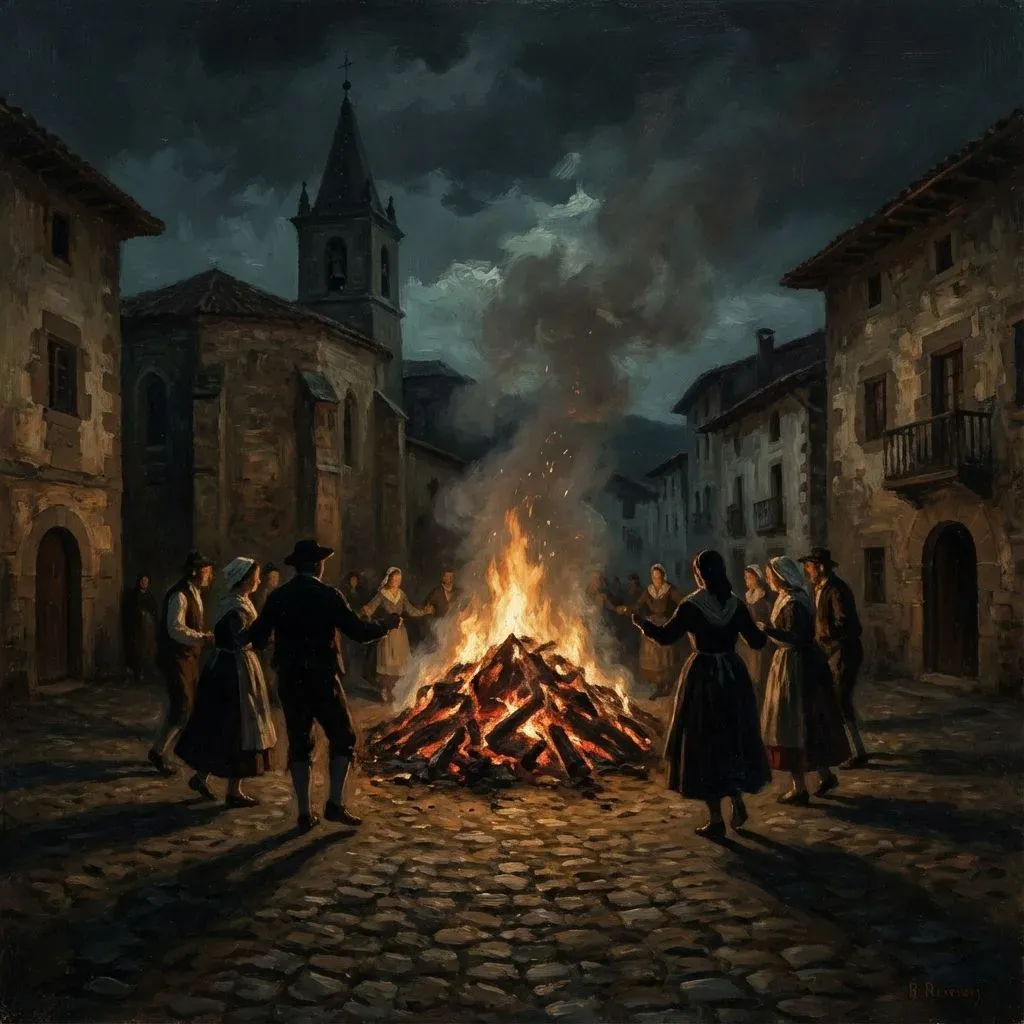
Fire occupies a central place in the ancestral Basque worldview as a purifying and regenerative force linking the world of the living to cosmic powers. The night of San Juan, coinciding with the summer solstice, is the most important fire celebration in the Basque calendar and one of the clearest examples of this symbolic energy.
San Juan bonfires illuminate the shortest night of the year across nearly every corner of Euskal Herria. Built collectively over several days, they become the centre of rituals in which people jump over flames while speaking protective formulas meant to ward off illness and malevolent forces. According to tradition, three jumps can secure protection for the year to come.
That same night is also considered ideal for gathering medicinal and magical herbs, which are believed to reach their fullest potency at the solstice. In some places herds were driven between two fires for protection, and ashes from the sacred blaze were scattered in fields to ensure fertile harvests.
Beyond San Juan, fire appears in many Basque rituals: the zezensuzko in village festivals, the burning of Miel Otxin in Lantz carnival, and winter solstice fires once lit on mountain summits. The domestic hearth, sutondoa, was itself sacred, a spiritual centre of the farmhouse where ancestral presence was felt.
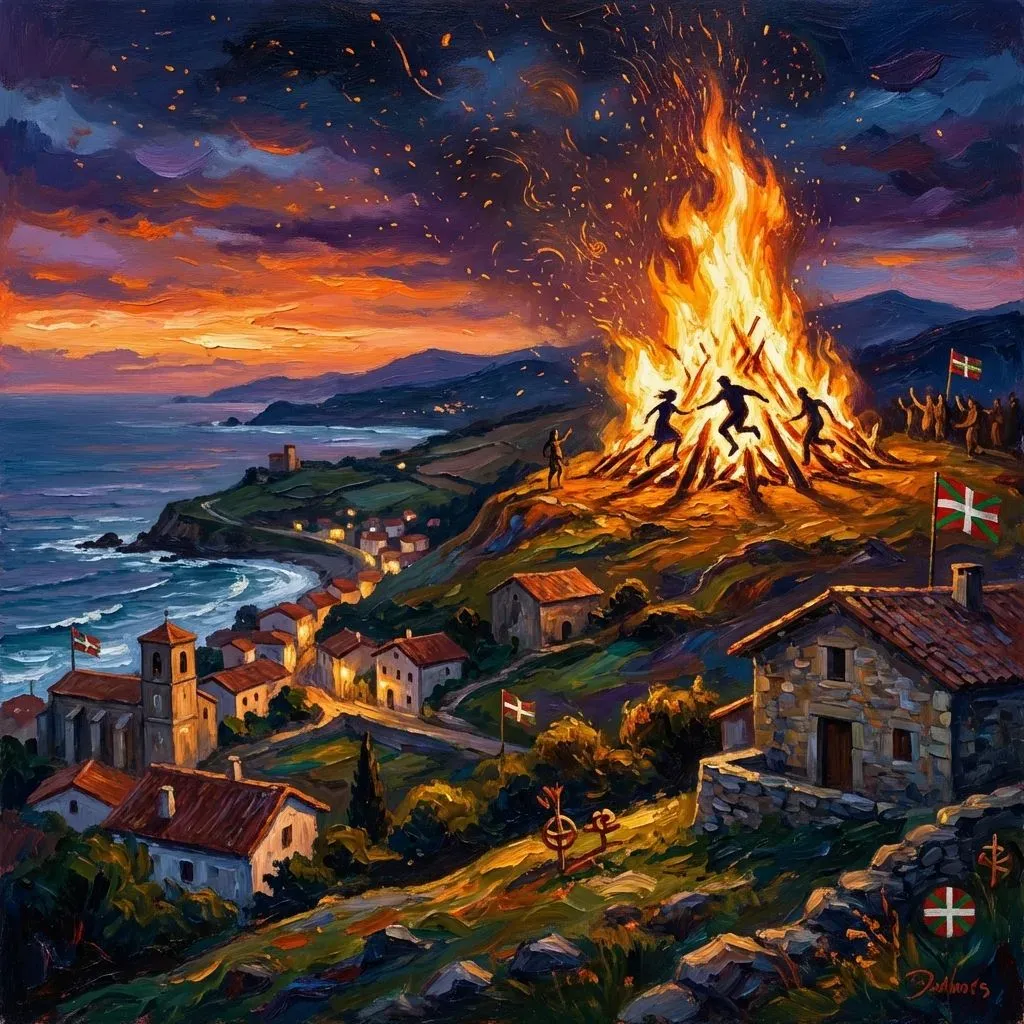
The house fire, etxeko sua, was understood as the soul of the farmhouse. Letting it die out could be read as a dark sign, while in funeral settings it was briefly extinguished and then rekindled as part of the symbolic passage between death and renewed life. The Christmas log, or gabonzuzi, connected the household to the wider cosmos during the longest night of the year.
Bonfires on mountain tops also once formed a visual network between valleys and regions. On the night of San Juan, chains of flame could unite distant communities symbolically beyond geographical divisions. In some areas this practice has been revived as a powerful gesture of shared belonging.
In Basque mythology, fire is linked to Eguzki, the sun, and to the struggle against the powers of darkness. Witches, lamiak and other nocturnal beings flee from light and flame, which explains the lasting protective role of fire and solar symbols such as the eguzkilore on farmhouse doors.