Winter rites
? Traditions of Euskal Herria ?
Key facts
- • Central figure:Olentzero, the mythical Christmas charcoal burner
- • Companion:Mari Domingi, the spinner who completes the pair
- • Key dates:Christmas Eve (24 December), Gabon (winter solstice)
- • Symbolism:Rebirth of light, hope, community generosity
The rebirth of light
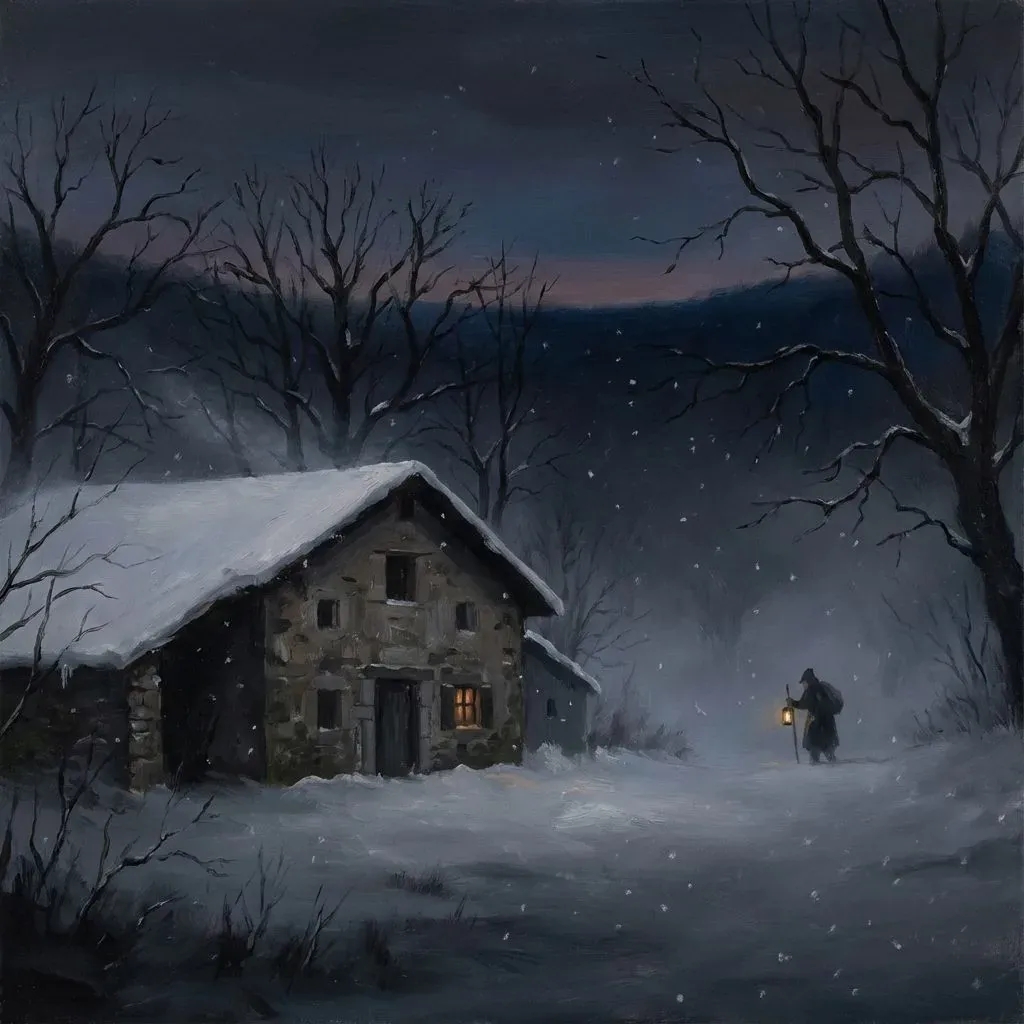
Basque winter rites celebrate the darkest moment of the year as a prelude to the return of light, blending ancient solstice traditions with Christmas observance. At the centre stands Olentzero, the legendary figure who descends from the mountains on Christmas Eve and has become one of the most powerful symbols of Basque festive culture.
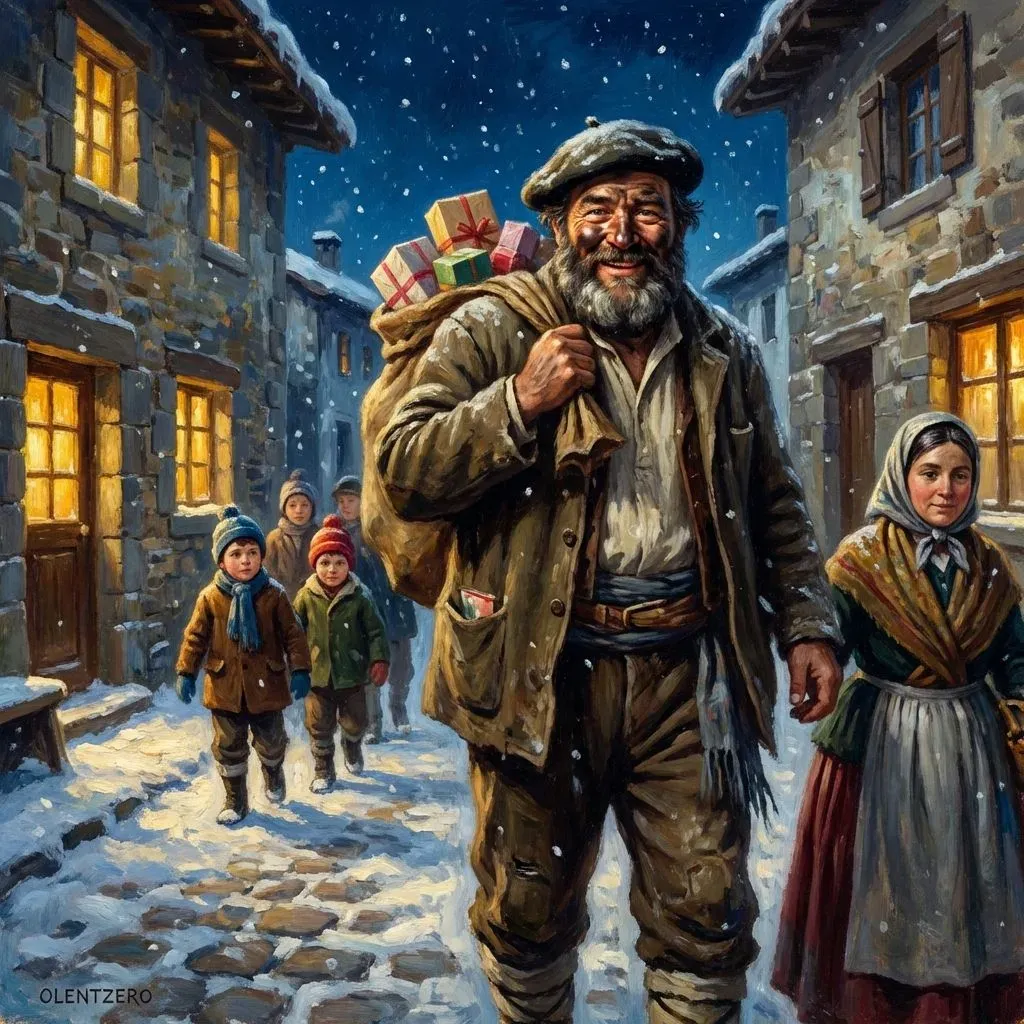
Olentzero is usually imagined as a charcoal burner from the mountains, wearing peasant clothes, a beret and a face darkened by soot. Good natured yet rough, he brings together older fire renewal imagery with the Christian story of Christmas. In recent decades Mari Domingi has joined him in many places, adding a complementary female presence to the winter narrative.
On the night of 24 December, towns and villages across Euskal Herria organise processions in which Olentzero is carried through the streets while choirs sing traditional songs. Children and young people go from house to house in groups, gathering gifts or donations and turning the evening into a shared ritual of voice, movement and expectation.
Alongside Olentzero survive other winter elements: the Christmas log burning in the home, visits to cemeteries, Christmas Eve suppers and household rituals linking the present to older solstice structures. These customs preserve the idea that the longest night is also the beginning of renewal.
The gabon subil or Christmas log once held a central place in the celebration. Carefully chosen, it was lit on the evening of 24 December and allowed to burn through the night, while its ashes could later be kept for protection against storms. In some versions the log itself was struck so that it might symbolically give birth to gifts.
Children's rounds for offerings and songs are another fundamental part of the season. Traditional verses in Euskera combine wishes for prosperity with references to Olentzero, Mari Domingi and the mystery of the solstice, preserving oral continuity inside festive practice.
The recovery of Olentzero in the twentieth century as a distinctly Basque alternative to other Christmas gift bringers has been one of the most successful examples of cultural revitalisation in Euskal Herria. From a nearly forgotten rural figure, he has become a central emblem of Basque winter identity, both at home and in the diaspora.