Rites of passage
? Traditions of Euskal Herria ?
Key facts
- • Life transitions:Birth, first communion, marriage, death
- • Wedding rituals:Wedding aurresku, spur, cutting the log, candles
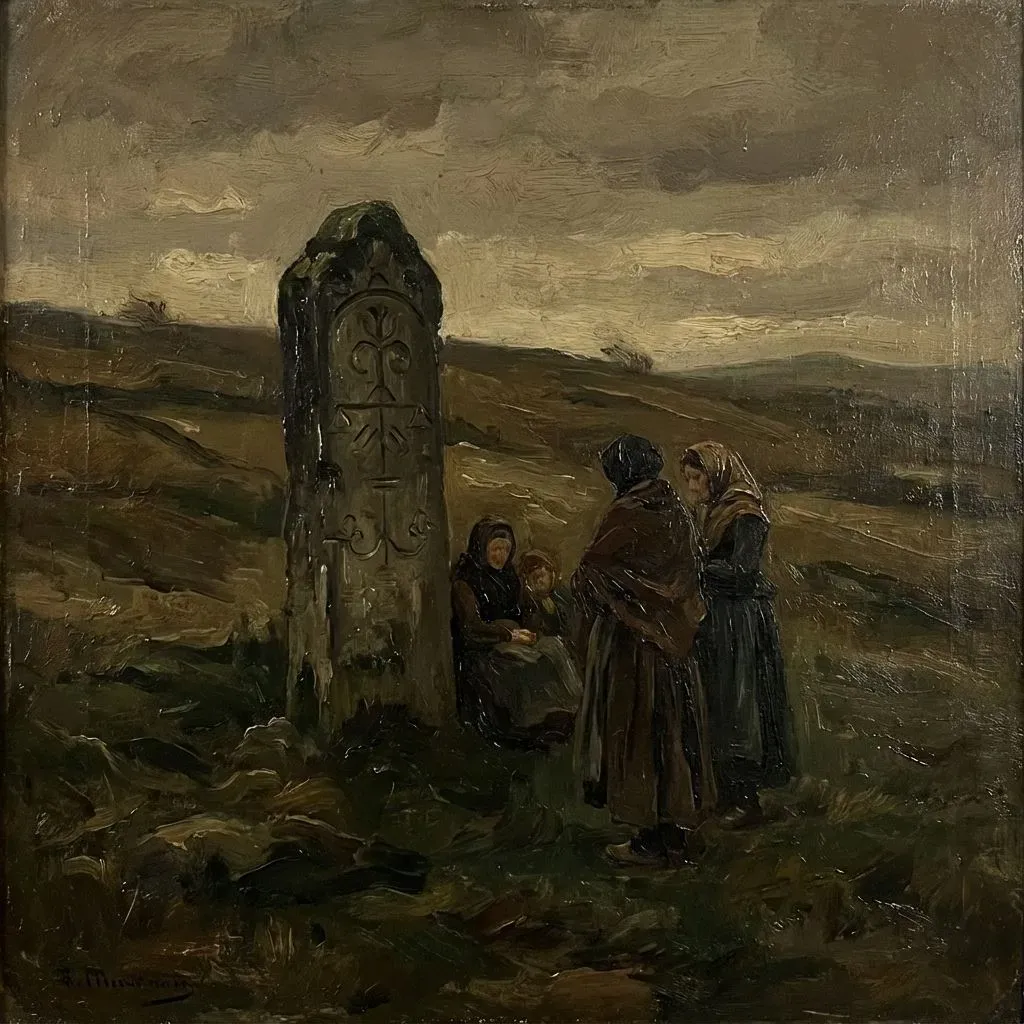
- • Funerary rituals:Steles, argizaiolak, offerings, family burial place
- • Community role:Required community participation, solidarity (auzolan)
The thresholds of life
Basque rites of passage mark the great transitions of human existence ? birth, marriage and death ? with rituals that reflect a worldview in which the individual only fully makes sense within the community. These ceremonies, inherited and adapted over time, connect domestic life, religion and collective memory.
Birth in traditional Basque society was surrounded by protective rituals for mother and child. Baptism, celebrated as soon as possible to protect the newborn from limbo, became a family celebration in which godparents assumed both spiritual and social responsibilities.
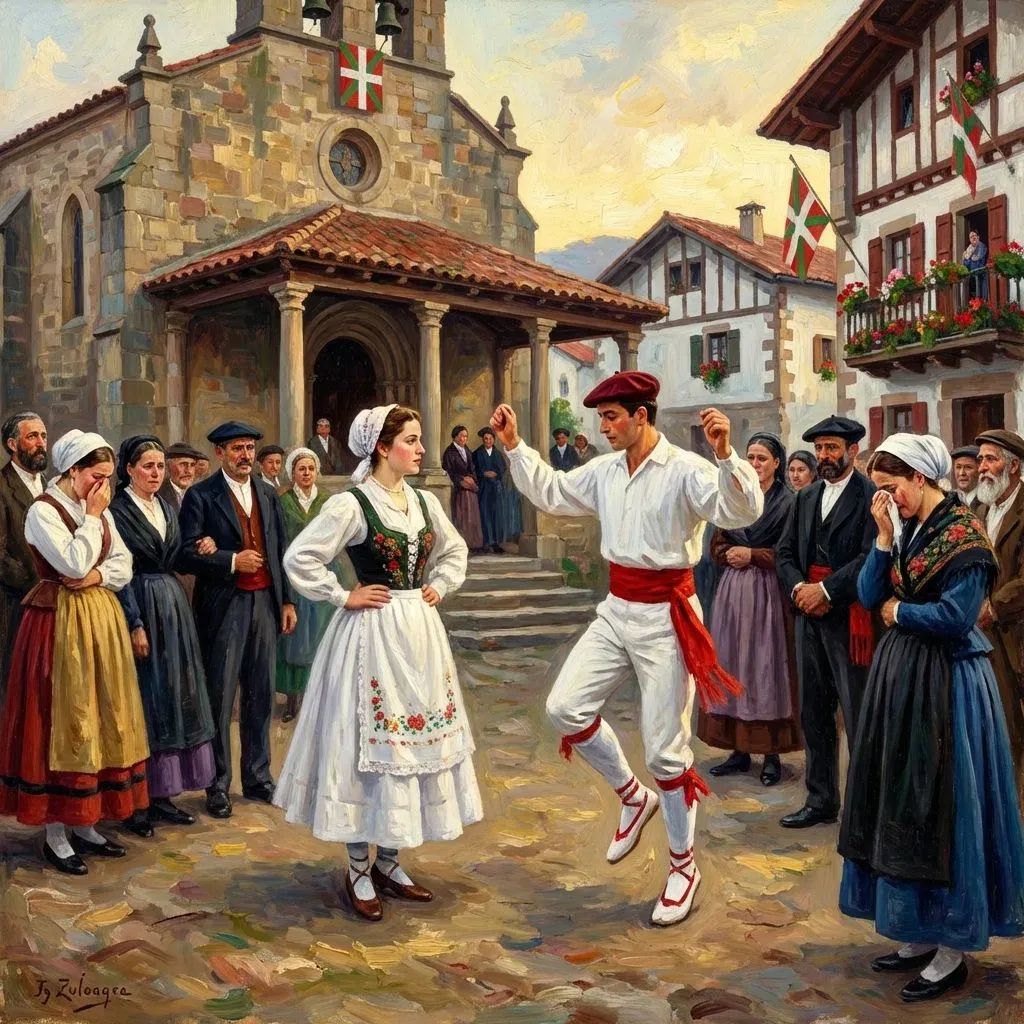
The traditional Basque wedding unfolded through a complex ceremonial beginning with the courtship, or eskea, and negotiations between families. On the wedding day, the aurresku dance performed before the bride became the central moment of public honour and community recognition.
Basque funerary rituals are perhaps the most singular and best documented aspect of these rites of passage. The wake in the farmhouse, the argizaiola, the funeral stelae and the ongoing relationship with the dead reveal a strong bond between house, lineage and sacred memory.
The family burial place, the yarleku, in the parish church was the sacred space where the bones of the ancestors rested and where present members of the family would eventually be laid. Marked on the church floor, it symbolised the continuity of the household through generations.
Auzolan, or communal work, was present in all rites of passage. Neighbours from the district or immediate vicinity were expected to assist at weddings and funerals, contribute labour to the celebrations and support affected families, reinforcing community bonds.
Although many of these rituals disappeared or were simplified with modernisation, some survive in adapted form: the aurresku remains common at Basque weddings, funerary stelae continue to mark collective memory and many gestures of mutual help still endure in local life.