Pilgrimages and sanctuaries
? Traditions of Euskal Herria ?
Key facts
- • Main sanctuaries:Arantzazu, Urkiola, San Miguel de Aralar, Loyola, Begoña
- • Pilgrimage season:Spring and summer, Marian feasts
- • Ritual elements:Processions, offerings, dances, communal meals
- • Syncretism:Christianised pre-Christian sacred places
Paths of faith and tradition
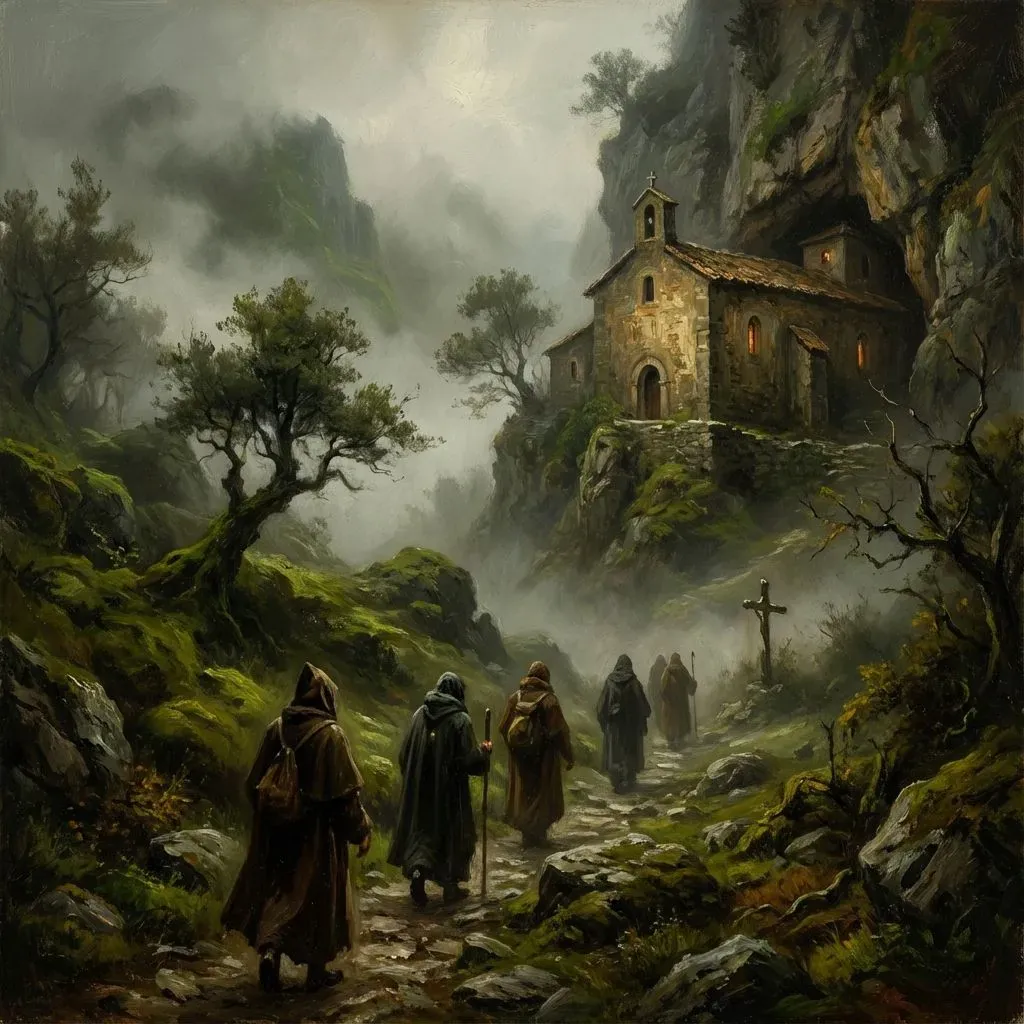
Basque pilgrimages are among the deepest expressions of popular spirituality in Euskal Herria. These journeys to sanctuaries and hermitages weave Christian devotion together with traces of older forms of sacred attachment to mountains, caves, springs and powerful landscapes.
Arantzazu, on the slopes of Aizkorri, is one of the most important Marian sanctuaries in the Basque Country. According to tradition, a shepherd found the image of the Virgin on a thornbush in 1469, giving rise to a cult that turned the place into a spiritual heart of Gipuzkoa. The modern sanctuary still draws pilgrims who walk ancient paths to honour Amatxu.
Urkiola, at the foot of Anboto, combines devotion to Saint Anthony with rituals that seem to preserve older sacred meanings. The stone of love, circles walked in search of a partner and gestures of bodily contact with the basilica all suggest continuity between Christian worship and earlier forms of local reverence. San Miguel de Aralar offers another key example of this layered sacred geography.
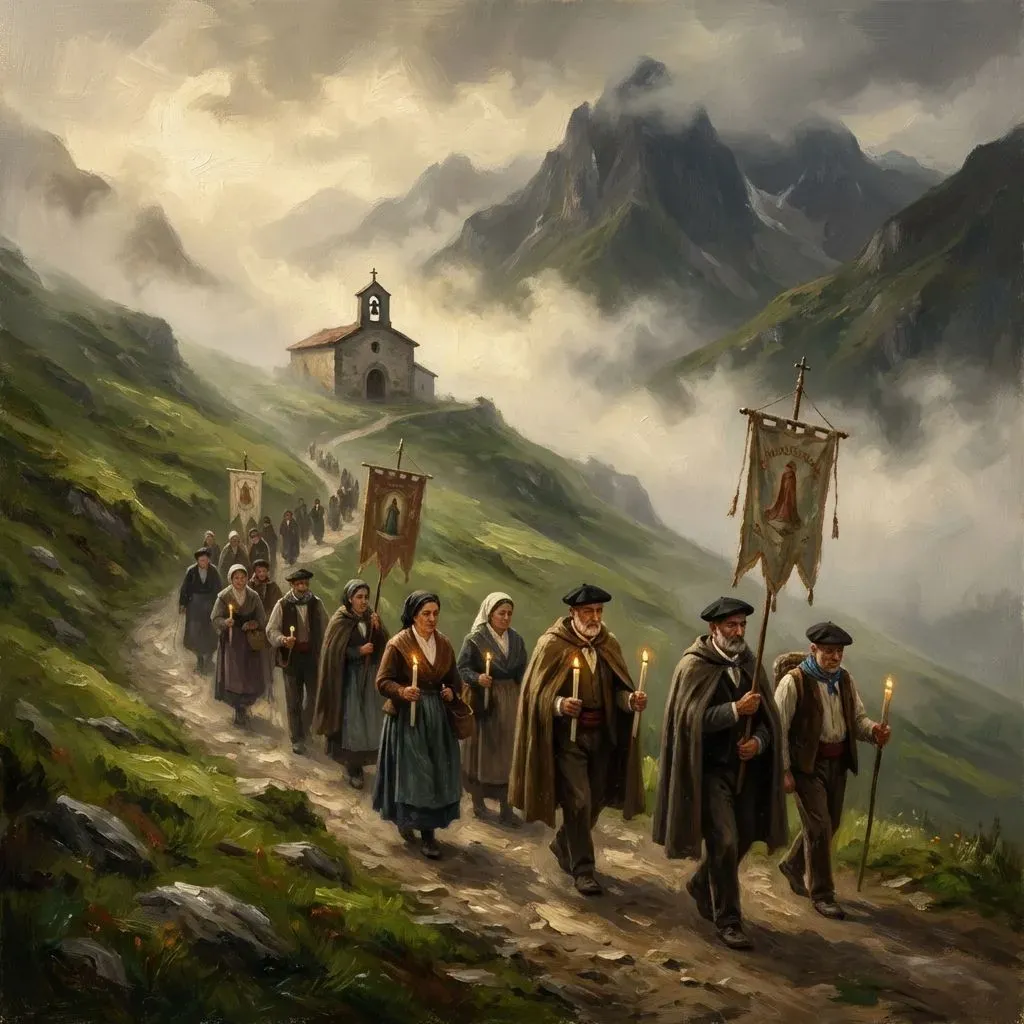
Pilgrimages are also festive social occasions. After masses, processions and offerings come shared meals, dances of honour and encounters between neighbours from different villages united by devotion to the same sanctuary. In this way, the pilgrimage year structures religious and social life at once.
Religious syncretism is especially visible in these sacred places. Many Marian sanctuaries stand over caves or beside springs that were already meaningful before Christianity. The figure of the Virgin in Basque lands sometimes overlaps in popular memory with Mari, both associated with mountain heights, weather and protective presence.
Smaller rural hermitages, less monumental than the major sanctuaries, are no less important. Each neighbourhood or village often maintains its own yearly pilgrimage to a local chapel, preserving intimate traditions rooted in place, landscape and community memory.
The walk itself is a central part of the ritual. Climbing to Arantzazu, reaching Urkiola on foot or processing toward a hillside hermitage turns bodily effort into offering and preparation. This physical dimension helps explain why pilgrimages remain such a valuable part of Basque intangible heritage.