Herri kirolak
? Basque rural sports ?
Key facts
- • Main disciplines:Aizkolaritza, harrijasotzea, sokatira and sega
- • Origins:Rural labour transformed into sport
- • Examples:Wood chopping, stone lifting, animal traction and grass cutting
- • Value:Keeping work, land and identity connected
The strength of the land
Herri kirolak, literally the sports of the people, are the most distinctive sporting expression of Basque culture. These athletic disciplines were born from rural labour and eventually became a unique sporting system with federations, championships and a passionate following of their own.
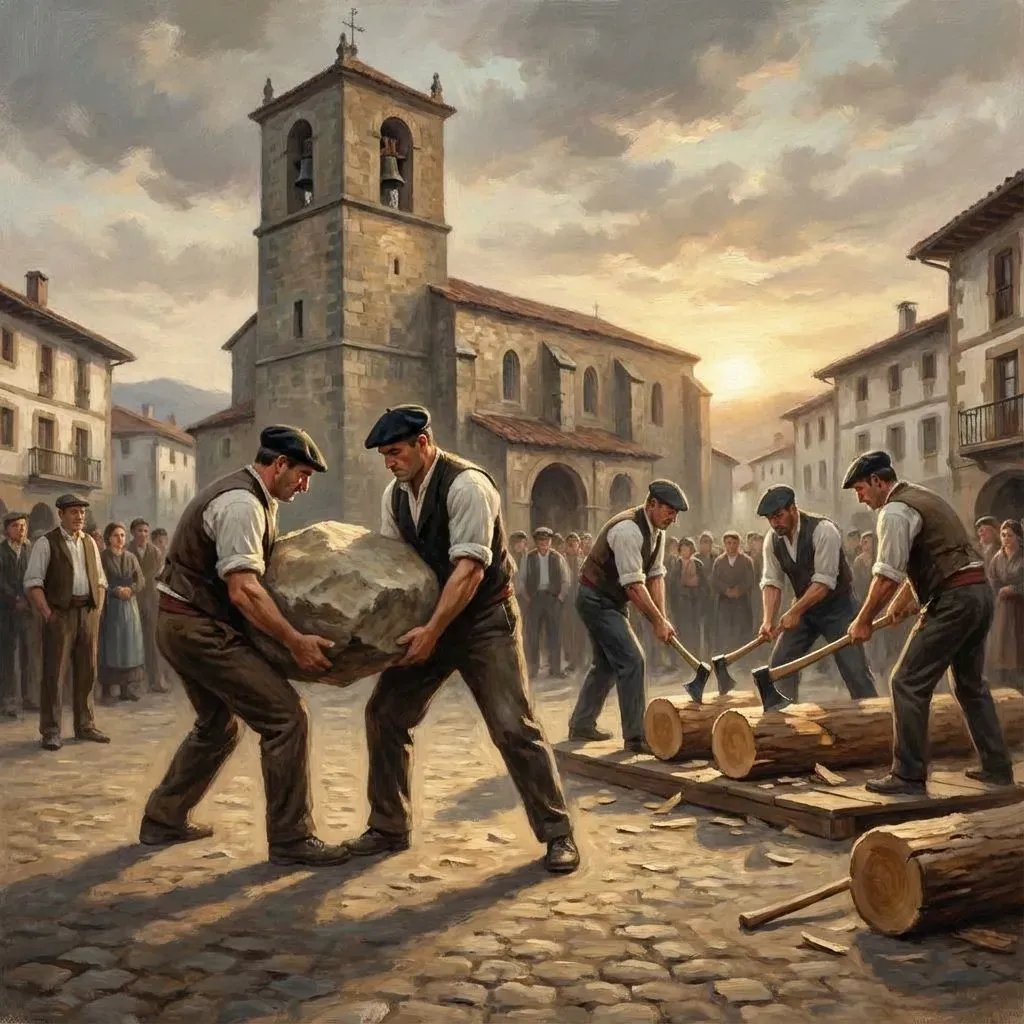
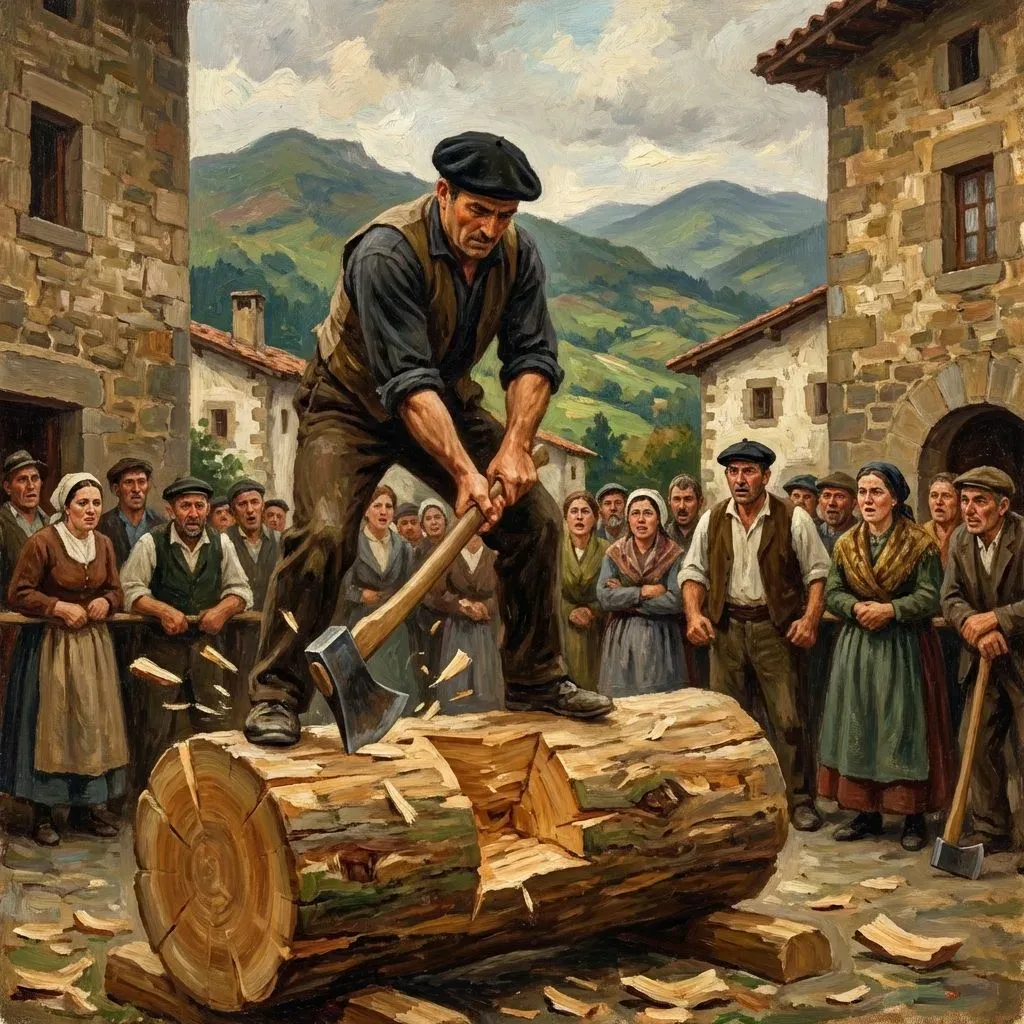
Aizkolaritza, the chopping of logs with an axe, is perhaps the most iconic and spectacular of these disciplines. The aizkolari competes against wood of different sizes using a technique refined over generations, requiring explosive power, stamina and extraordinary precision. Historic bets between wood-choppers have formed part of Basque popular culture for centuries.
Harrijasotzea, or stone lifting, is the purest test of strength. Stone-lifters raise cylindrical, cubic or spherical blocks that can weigh more than three hundred kilos, following a ritualised technique adapted to each form. The names of famous stones and legendary lifters still resonate strongly in Basque collective memory.
Sokatira, hay-bale lifting, weight carrying, sack races and gizon proba all broaden the catalogue of Basque rural sports in which the body is measured against extreme tests of resistance and power. Each discipline has its specialists, technical secrets and major championships.
Ox and horse trials add another dimension to herri kirolak. Huge stones mounted on drags are pulled by animal pairs under the guidance of their owners, preserving the bond between Basque sport and its farming roots. Strength, handling skill and knowledge of the animal all matter at once.
Sega jokoa, the competitive cutting of grass with a scythe, keeps a direct connection with agricultural labour. The rhythmic sound of the blade moving through the field still evokes a seasonal world in which productivity, endurance and technique were inseparable.
Herri kirolak also remain alive because they continue to be staged in festivals, local squares and packed exhibition venues where spectators recognise both the athletic feat and the older world from which it emerged. They are sport, memory and identity at the same time.