Basque pelota
? The fronton sport ?
Key facts
- • Main modalities:Hand-pelota, cesta punta, pala, paleta, remonte and share
- • Core space:The fronton as sporting and social centre
- • Examples:Village courts, jai alai and professional championships
- • What it represents:A Basque sport with strong local and global life
The king of the frontons
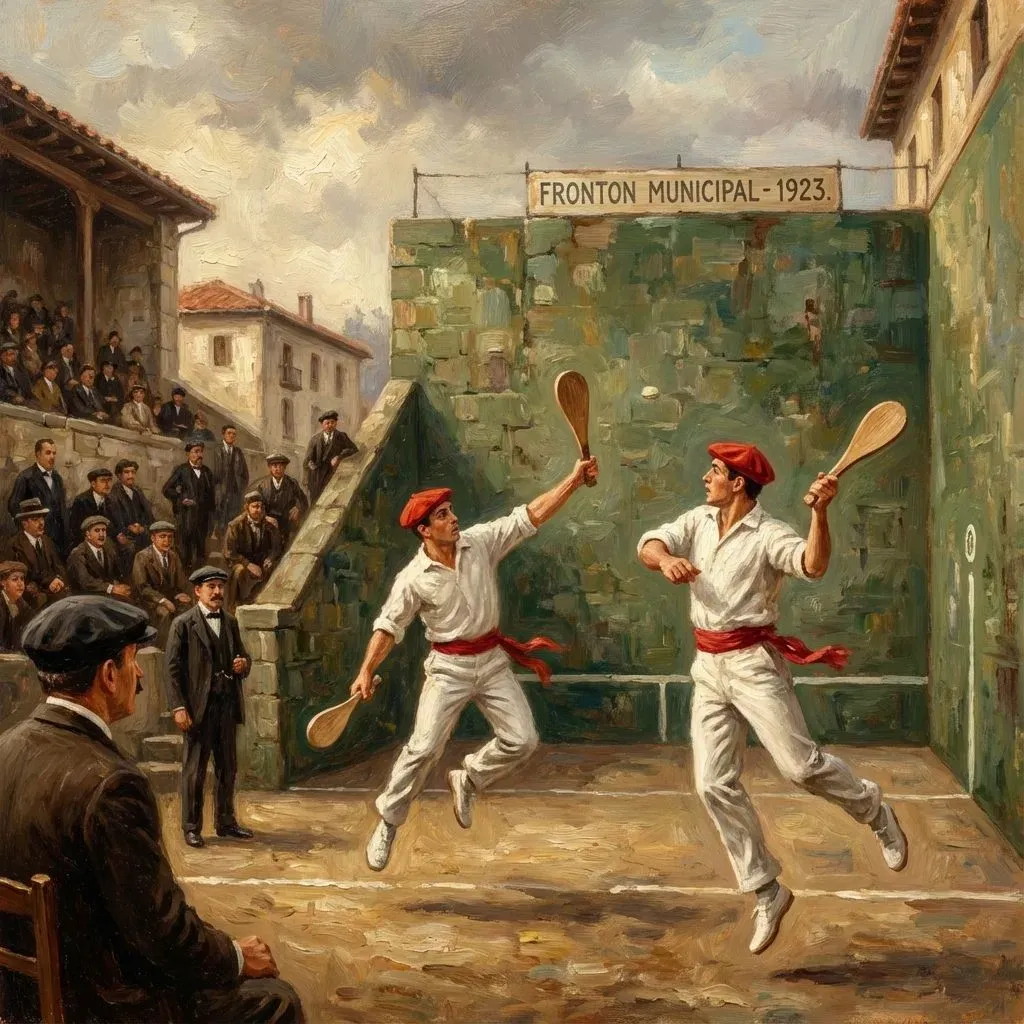
Basque pelota is the Basque sport par excellence, a family of game types built on the shared principle of striking a ball against a fronton using the hand, wooden bats or woven baskets. From humble village courts to the great jai alai venues of the diaspora, pelota has travelled widely without losing its Basque core.
Hand-pelota remains the most ancestral and stripped-back form. Pelotaris strike the ball directly with the hand in contests where technique, placement and endurance determine the result. The hardness of the ball leaves visible marks on the players' hands, signs of a demanding craft passed from generation to generation.
Cesta punta, or jai alai in the Americas, is the most spectacular modality. The long wicker cesta allows the ball to be launched at extraordinary speed, making it one of the fastest ball sports in the world. Carried abroad by Basque migration, it became famous in Cuba, Mexico, Florida and beyond.
Pala and paleta stand somewhere between hand-pelota and cesta punta, allowing a more forceful but more controllable game. Remonte and share add further variation, creating a rich mosaic in which each region and audience may favour a different form.
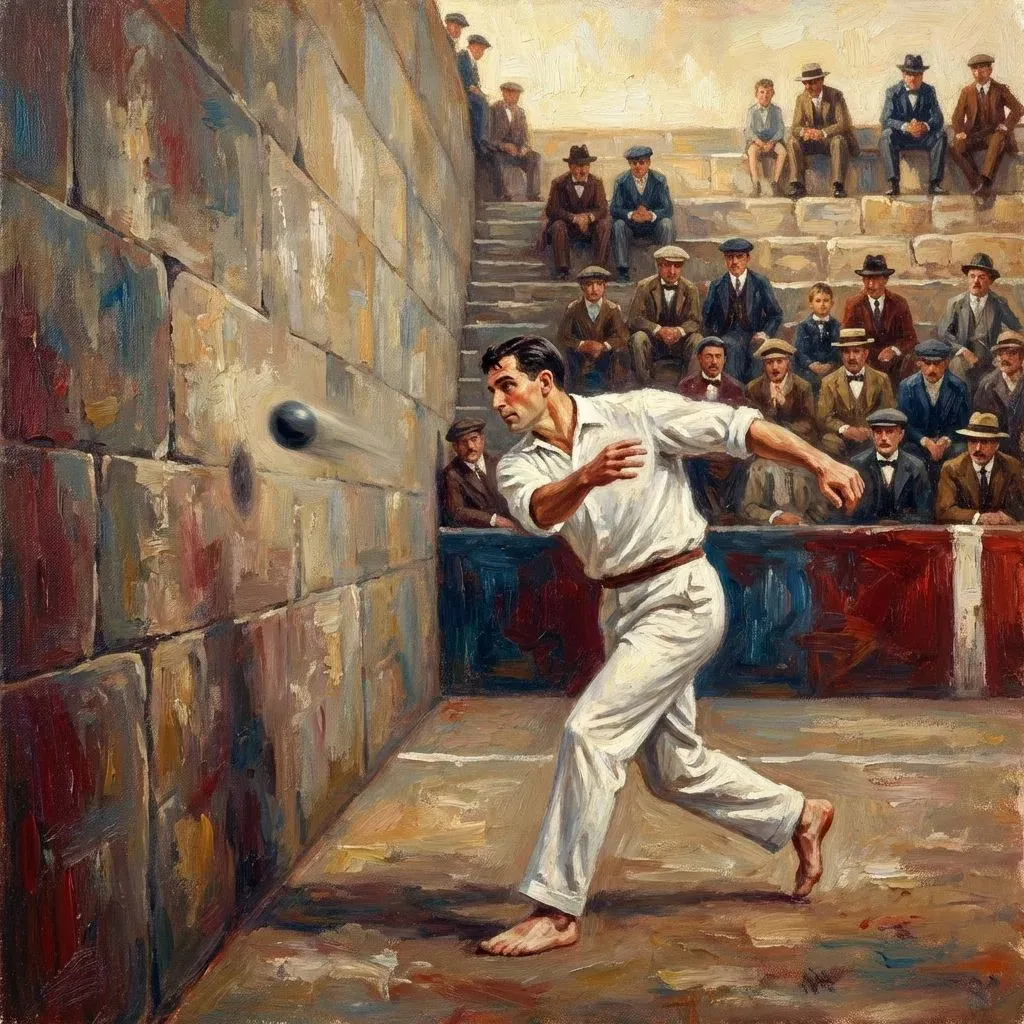
The fronton is far more than a sporting installation: it is a social heart of Basque towns. In many villages the fronton shares space with the church and square, making pelota part of daily public life from childhood onward. Professional venues such as Labrit, Bizkaia or the old jai alai arenas give that local tradition a larger stage.
Great pelotaris occupy a place in Basque collective memory comparable to that of major heroes in other sports. Rivalries generate strong loyalties, and betting has long formed part of the atmosphere, giving the sport a social temperature that goes well beyond the court itself.
Basque pelota remains vital because it is supported by a full system extending from beginner schools to professional competition. Territorial federations organise championships at every level, pelota schools train new generations and the professional circuit allows the best players to devote themselves fully to the game without severing its popular roots.