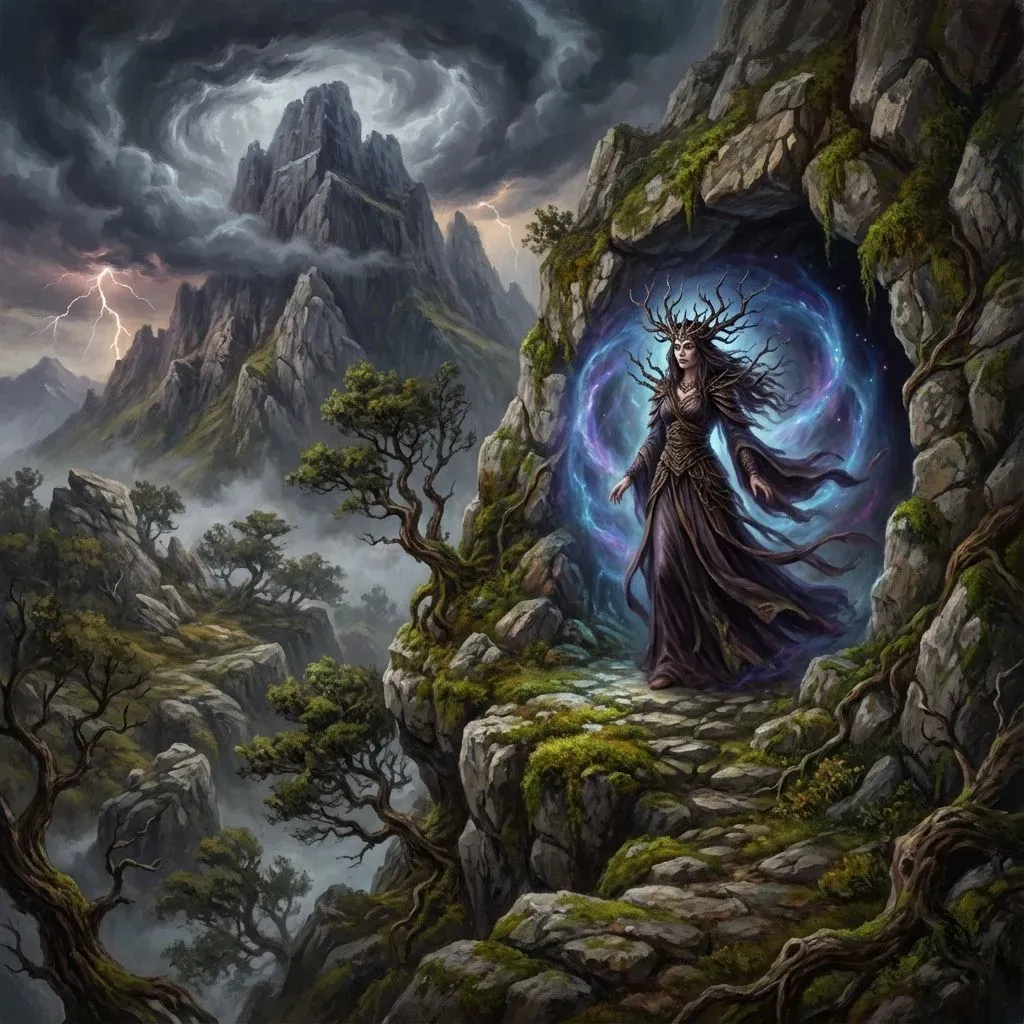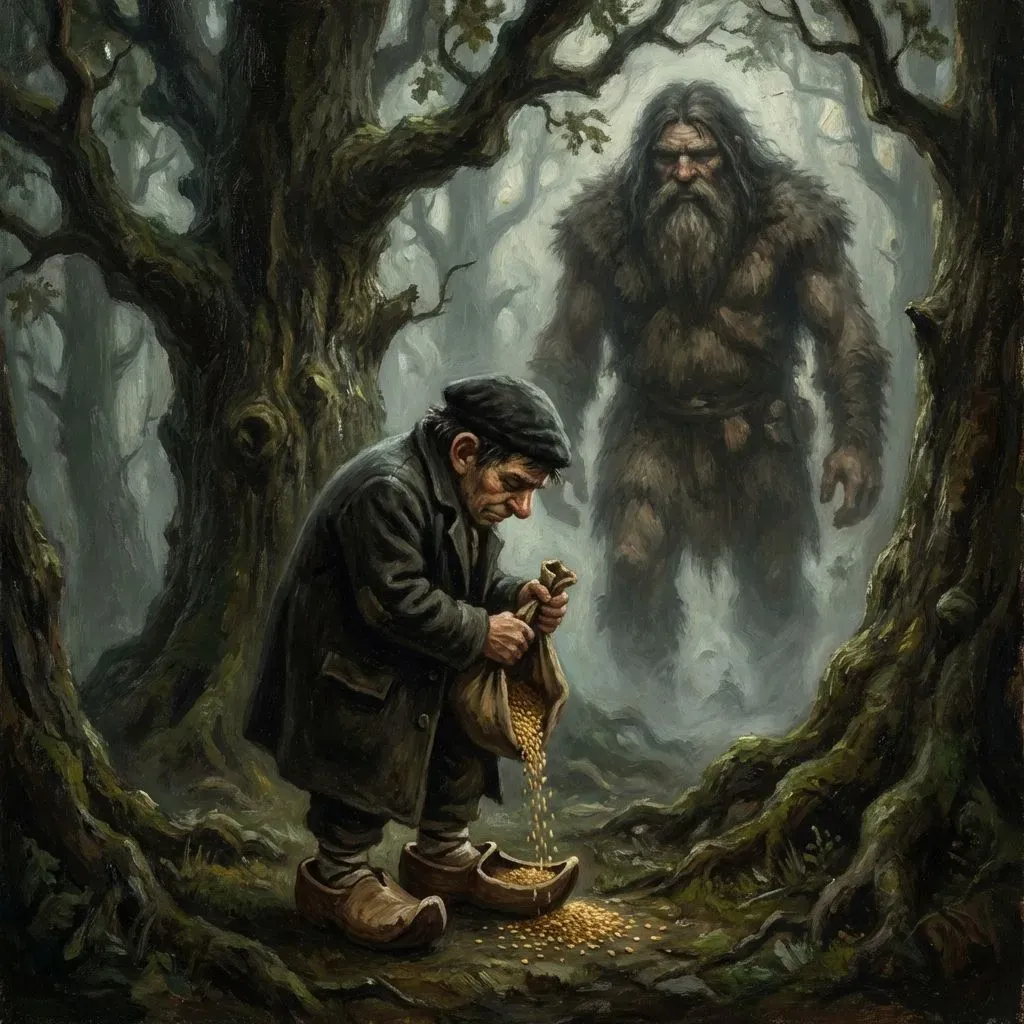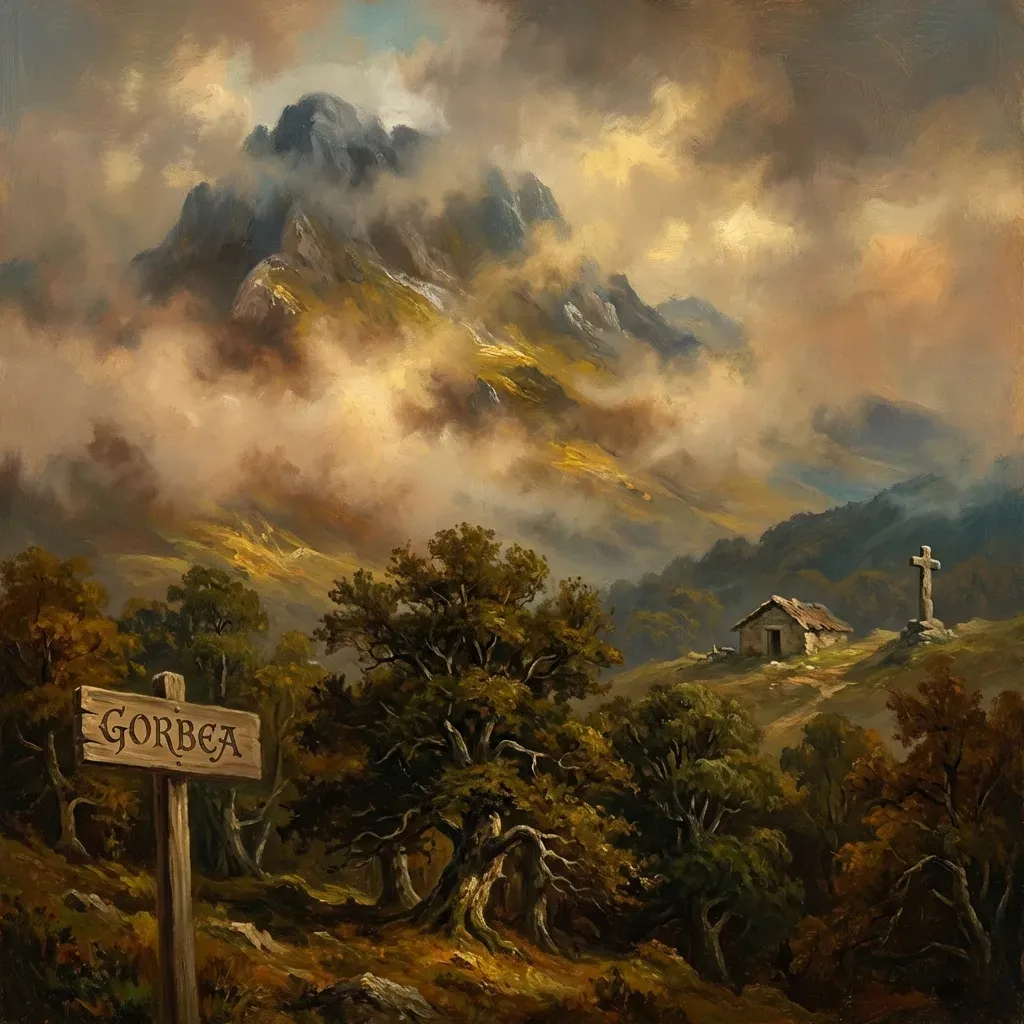
Mari's caves
Mythic spaces where the children of Mari receive secret knowledge.
The twins of cosmic duality
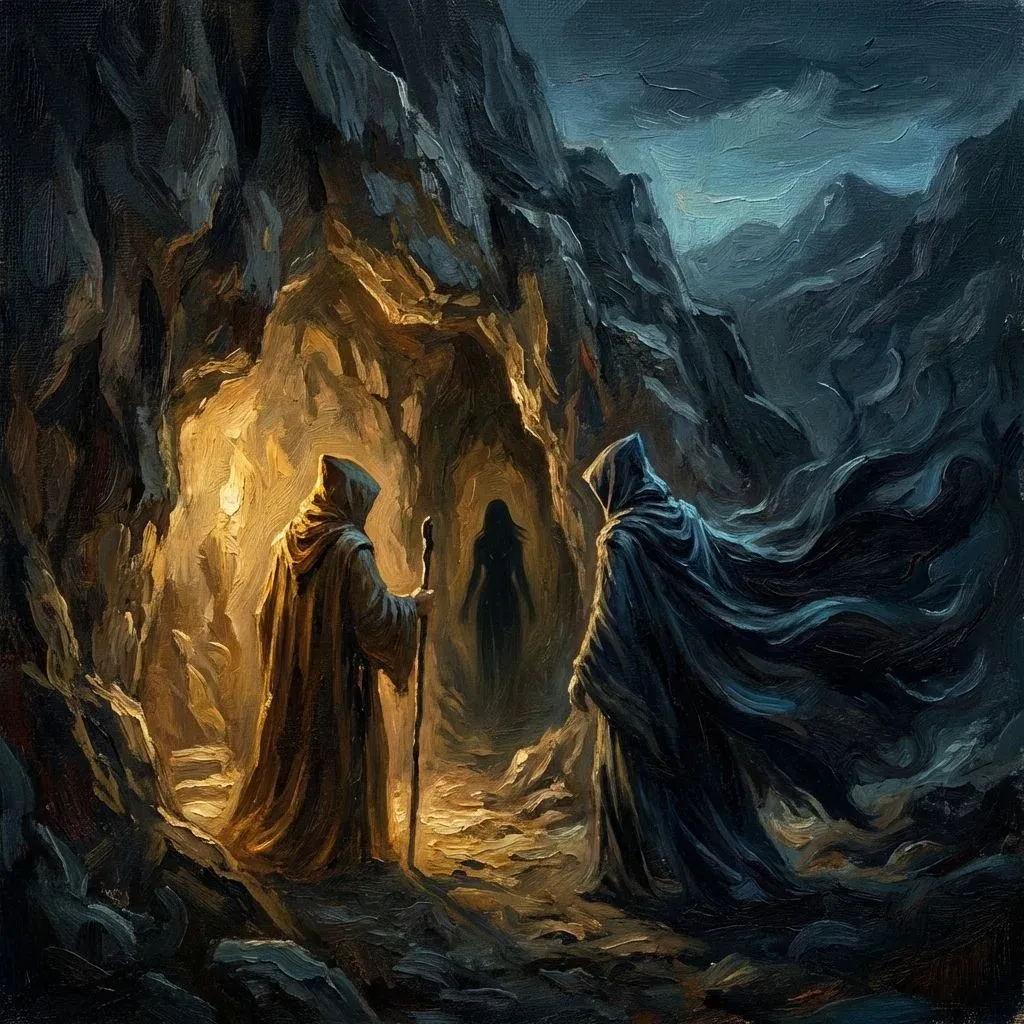
Atarrabi and Mikelats were born from the union of Mari and Sugaar, yet from the first moment they represented opposing paths. One is linked to measured intelligence, protection, and justice; the other to trickery, destruction, and the darker forces of nature.
Many versions of the legend say the twins were handed over to a sinister being or demonic master so that they might learn the hidden arts of the world. That apprenticeship became the testing ground where their true natures emerged.
Mikelats embraced spells that ruined crops, summoned hail, and spread fear among villages. Atarrabi, by contrast, learned how to defend fields and herds, using knowledge as a shield rather than as a weapon.
When the time came to leave the cave, the cruel rule was that the last pupil remaining behind would be trapped forever. Atarrabi escaped through wit and resolve, while Mikelats remained bound to the shadow. Since then, they symbolize the permanent struggle between light and darkness in Basque myth.
The tale of Atarrabi and Mikelats condenses one of the deepest ideas in Basque mythology: reality is sustained by opposing forces that never fully disappear. The sons of Mari are not merely characters but living principles of balance and conflict.
Their upbringing in the cave places knowledge at the heart of the story. Learning is powerful, but it is never neutral. The same hidden arts can protect a community or devastate it, depending on the will of the one who wields them.
Atarrabi is remembered as the figure who tempers power through intelligence and restraint, while Mikelats personifies the temptation to turn gifted power toward harm. That moral contrast gives the legend its lasting force.
For that reason, the myth remains more than a family drama among divine beings. It is a reflection on choice, responsibility, and the fragile line separating sacred wisdom from destructive ambition.
Ordered by Etsai to painstakingly separate fine straw from flour as punishment, the young man enchanted his sieve so that it answered in a shrill voice, repeating “I’m still here!” and “I’m almost finished!” While the cruel creature remained at ease, reassured by the sound of work deep inside the mountain, the bright young genius fled swiftly and fearlessly towards the sunlit valleys.
When the master reacted and lunged to seal the mountain slabs, he could seize only the young man’s trailing darkness, magically tearing off his ethereal shadow at the threshold. Forever unable to cast a shadow beneath the Sun, Eguzki, Atarrabi settled freely in the mountains. There he became humanity’s selfless guardian, countering the spiteful tricks of the jealous Mikelats until the stars themselves should end.