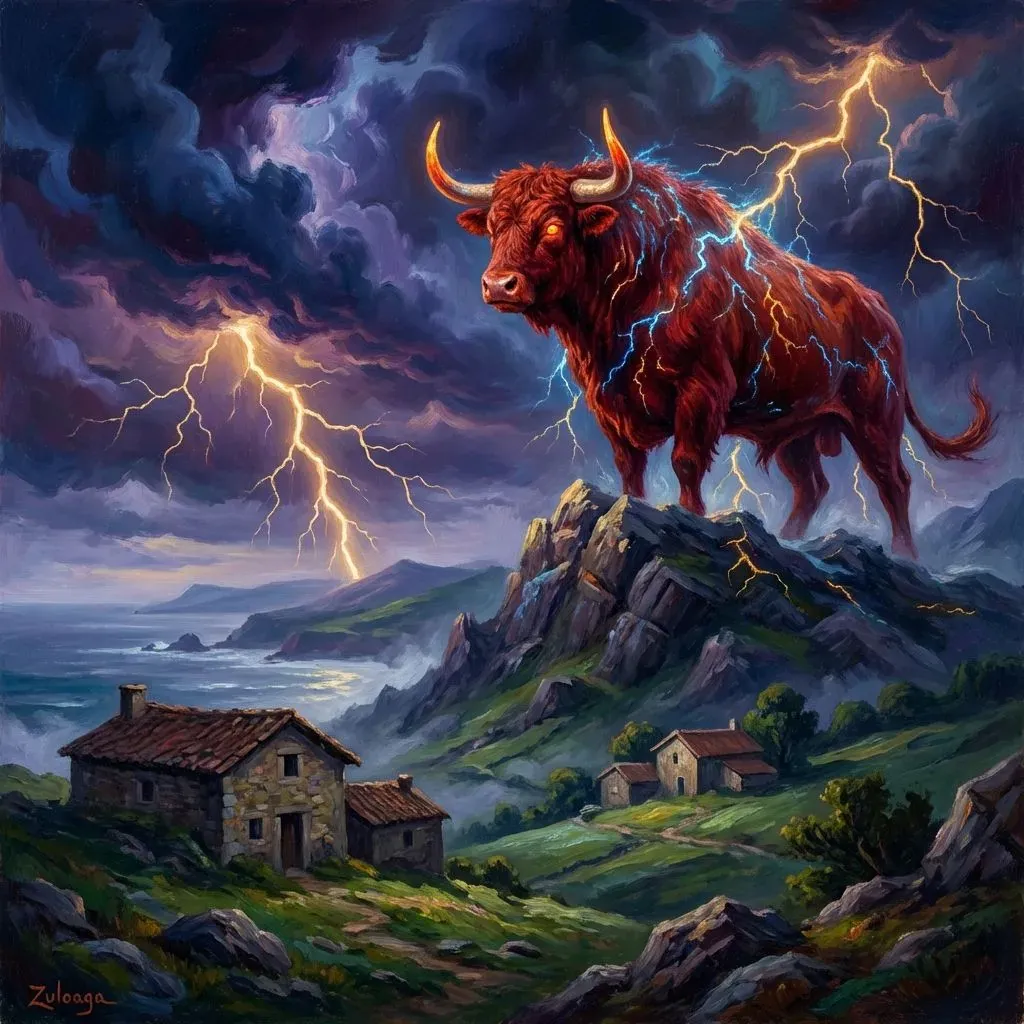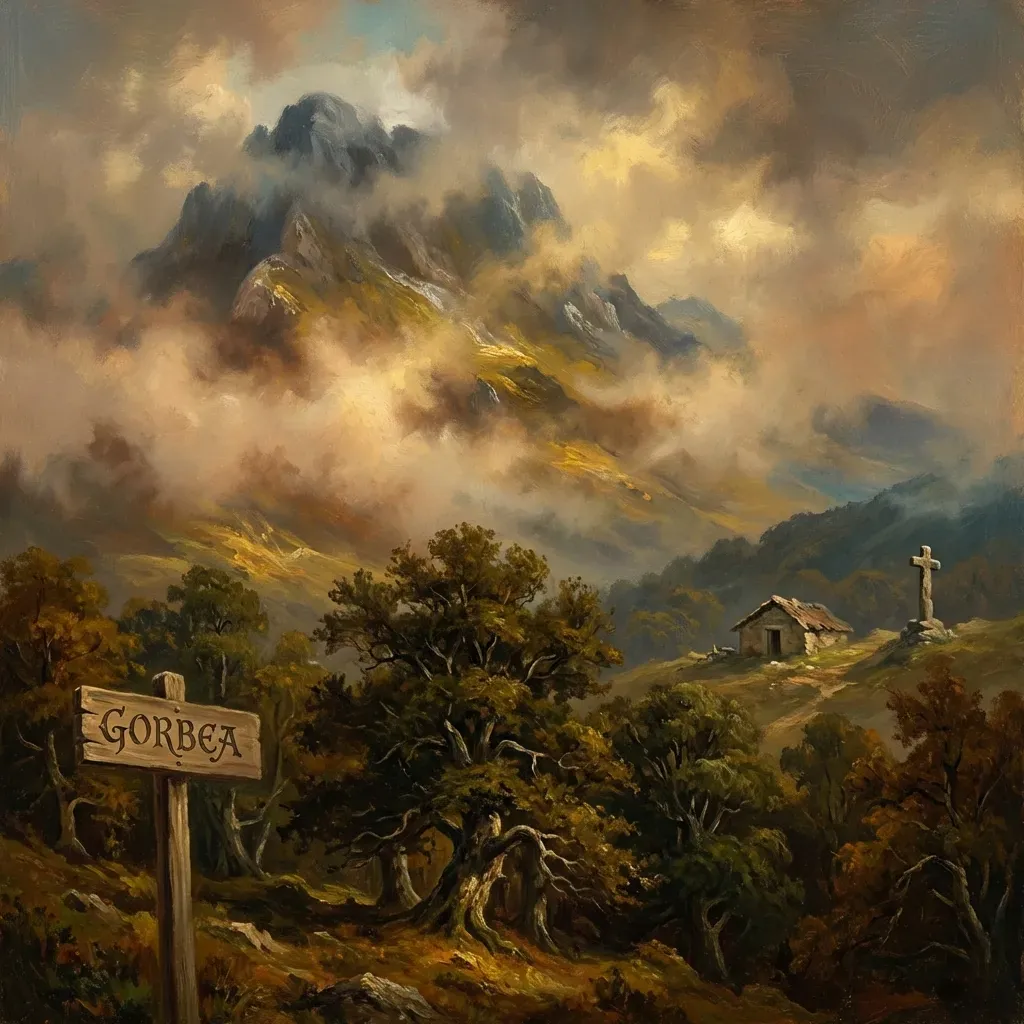
Peaks of Anboto
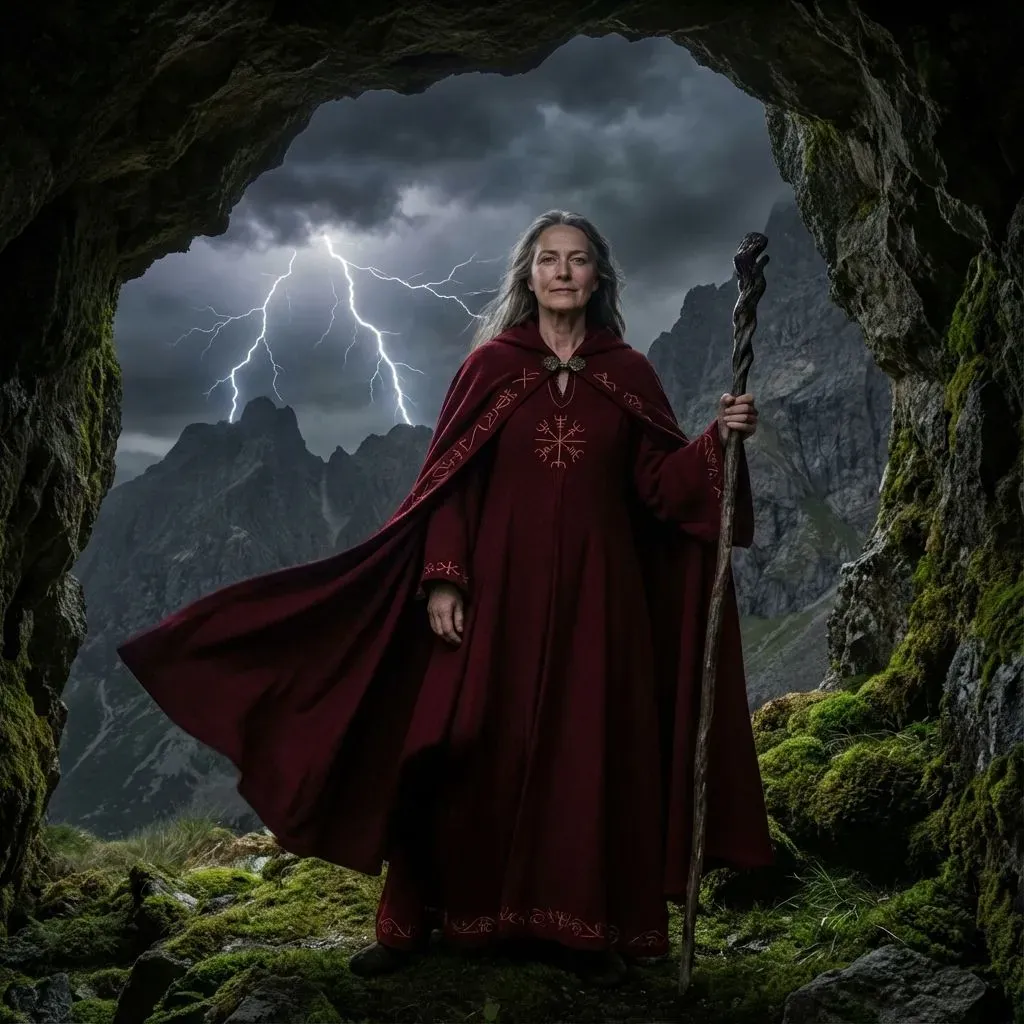
Where Mari awaits the arrival of Sugaar.
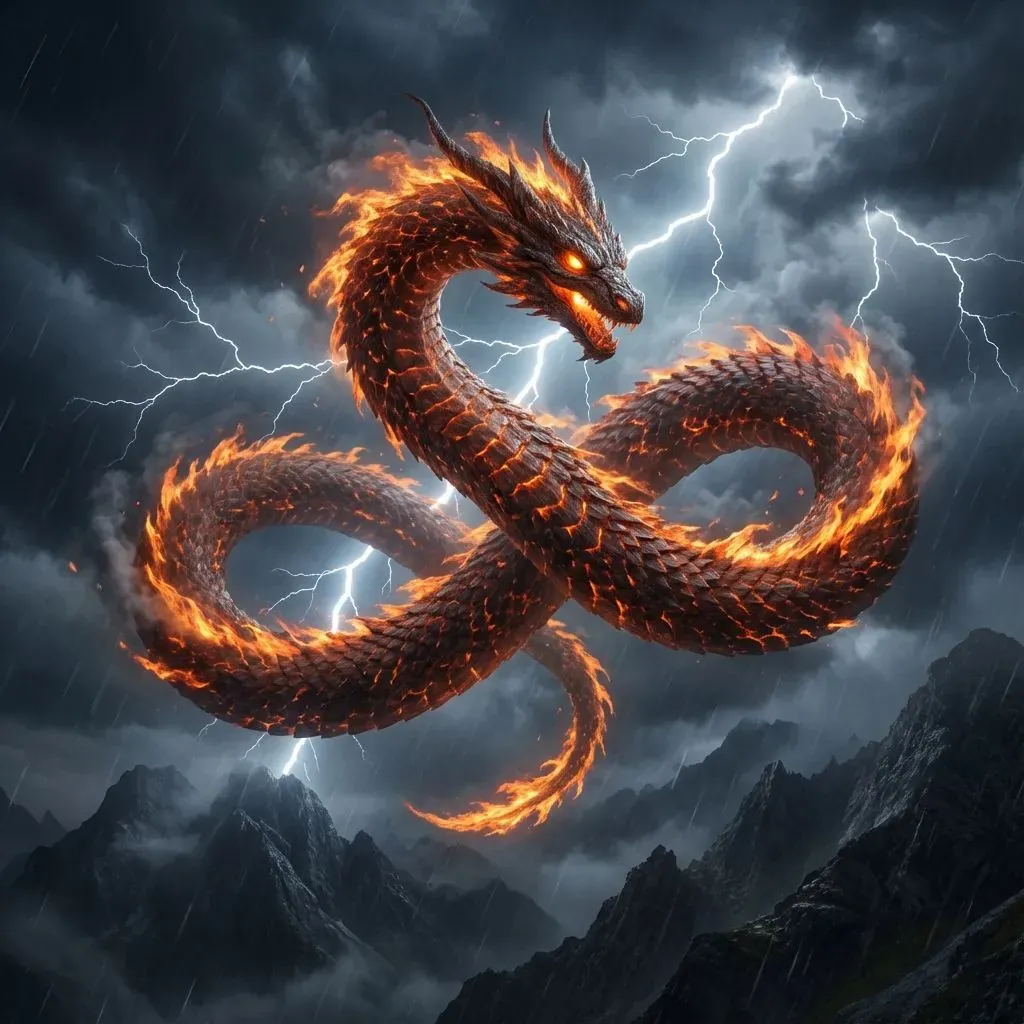
— The serpent of fire crossing the night sky —
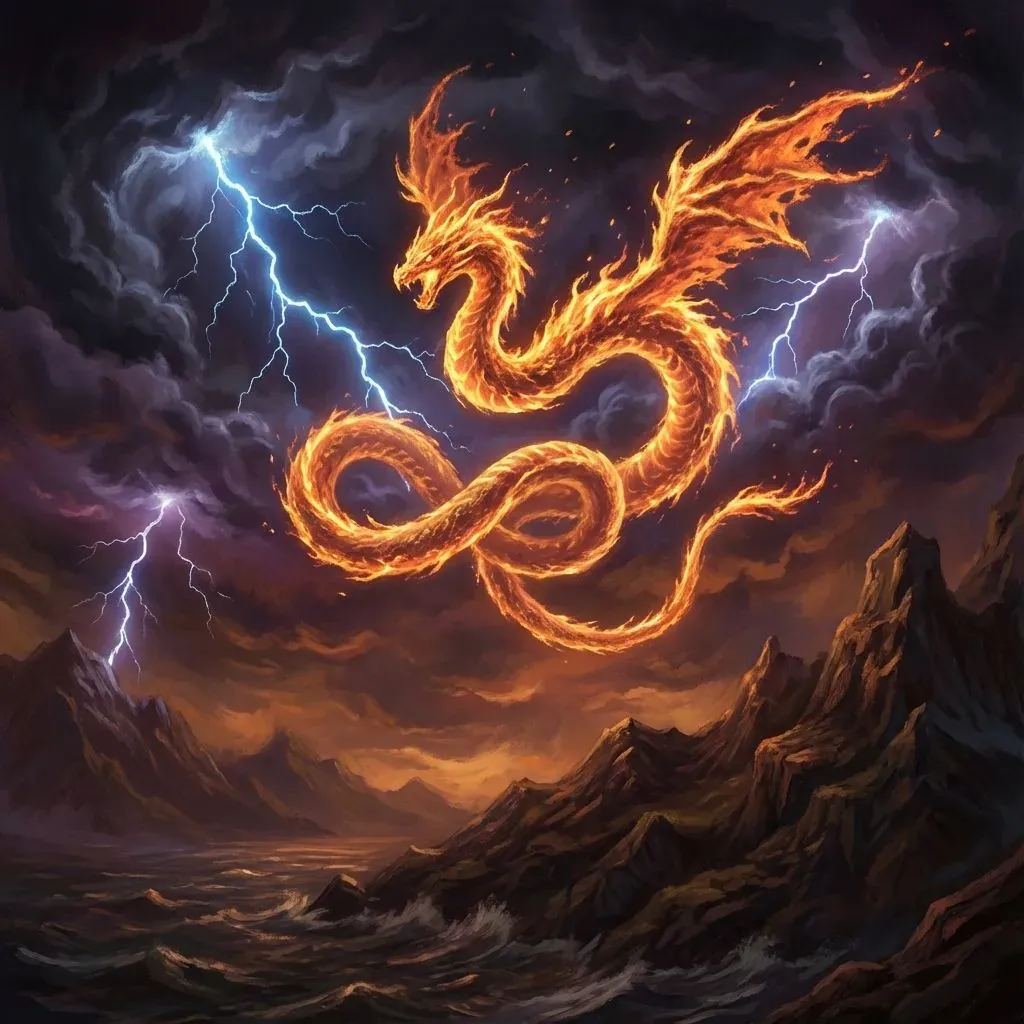
Sugaar crosses the night sky like a blazing serpent of fire whenever he seeks Mari on the sacred mountain summits. Their meeting unleashes storms that water the thirsty valleys and frighten the villages with lightning and thunder.
His nocturnal flight explains the flashes that illuminate the darkness, the hail that falls from enraged heavens, and the untamed power of the sky when it breaks over the earth. Whenever farmers saw a ball of fire tearing through the night, they knew Sugaar was traveling toward his beloved.
The elders said it was a good sign to see Sugaar cross the sky, because it meant rain would soon arrive and the fields would become fertile. The union of Mari and Sugaar was necessary for the balance of the natural world.
From the sacred union of Mari and Sugaar were born Atarrabi and Mikelats, twins of completely opposite nature who embody the eternal duality of good and evil, light and darkness, that governs the universe.
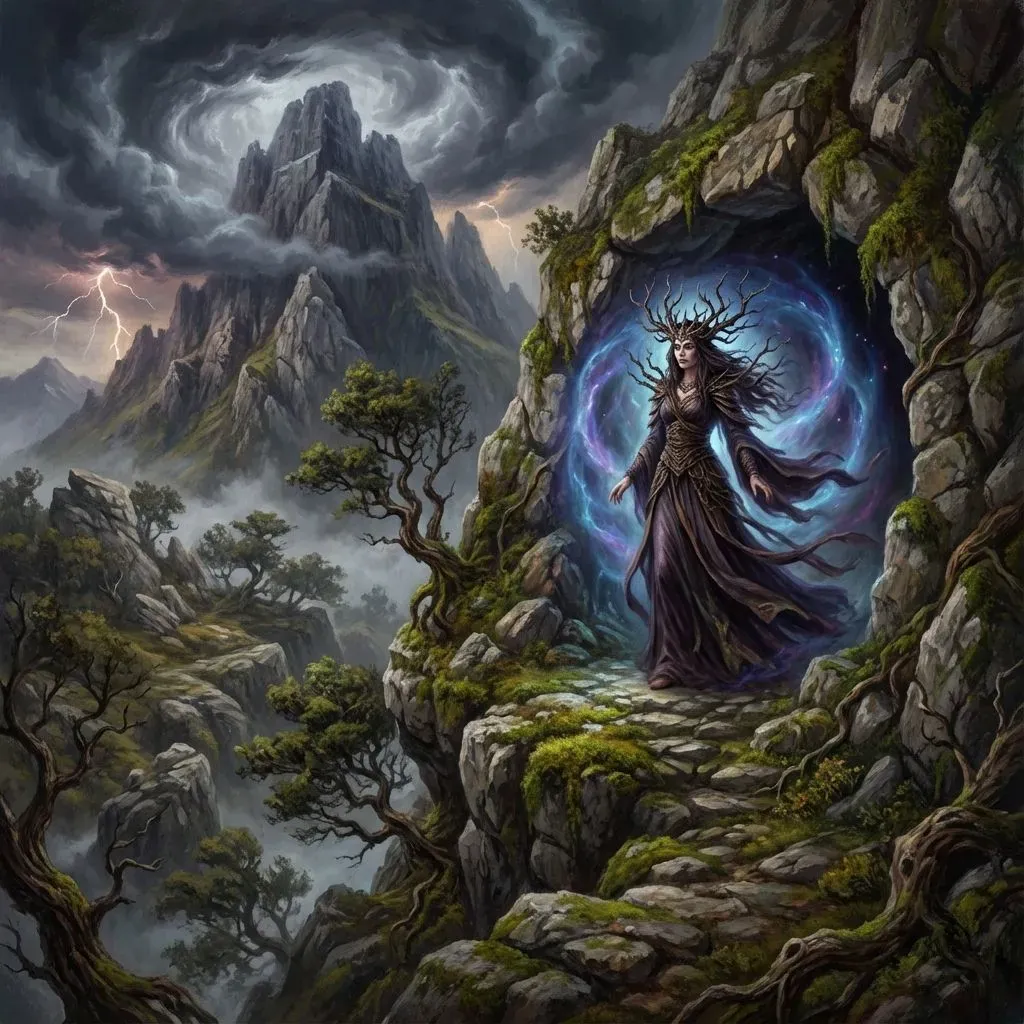
Where Mari awaits the arrival of Sugaar.
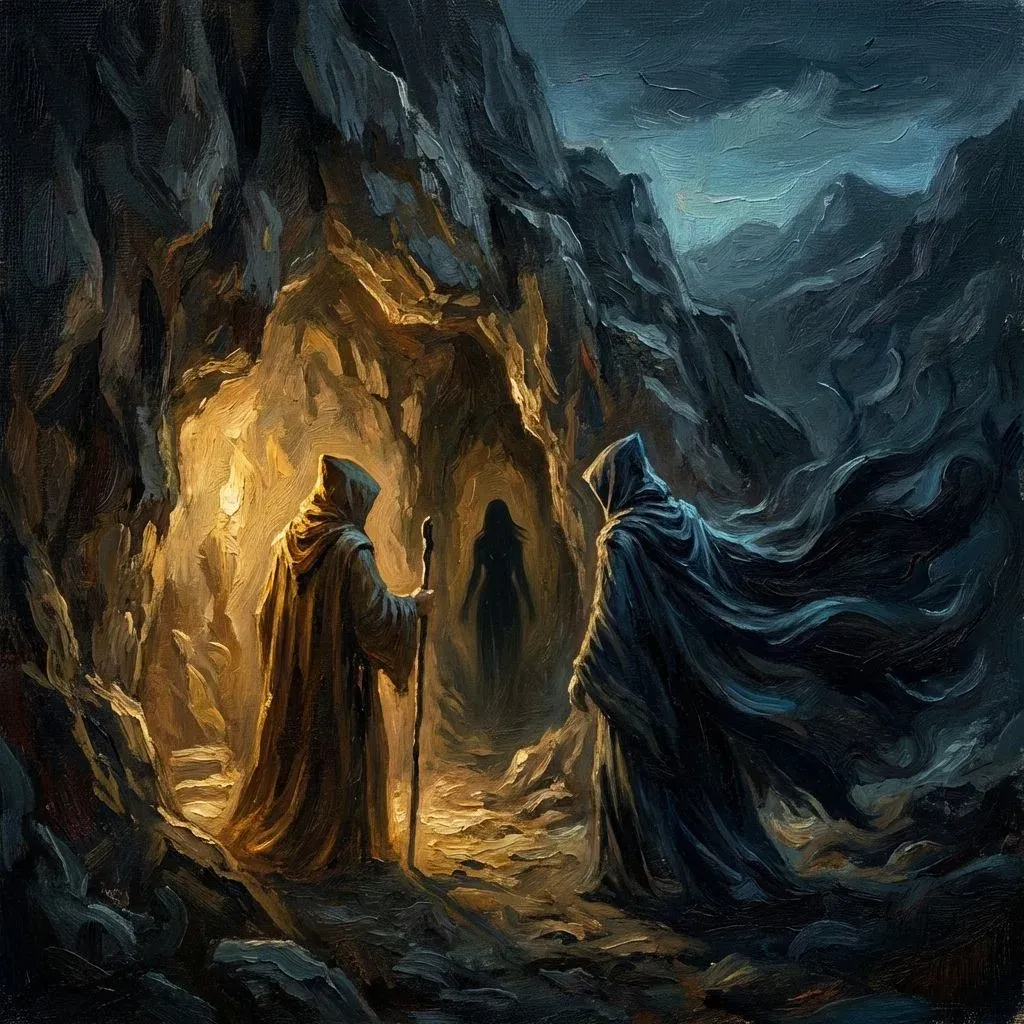
The paths through which Sugaar travels like living fire.
While Mari rules from the sacred heights, Sugaar belongs to the hidden interior of the earth, moving through subterranean passages of water, stone and fire with the strength of a primordial serpent.
Sugaar, whose name is linked to the masculine serpent, rises to the surface as a creature of flame whenever he must meet Mari. That ascent is what turns the sky violent and transforms the landscape into a theater of thunder and rain.
What makes Sugaar especially striking in comparative mythology is that he does not dominate Mari but shares with her a field of divine action. Their union is generative rather than hierarchical, tied to fertility, storm and renewal.
This distribution of power between a subterranean male force and a sovereign female presence of the heights reflects a worldview in which nature is governed by complementary energies rather than a single celestial command.