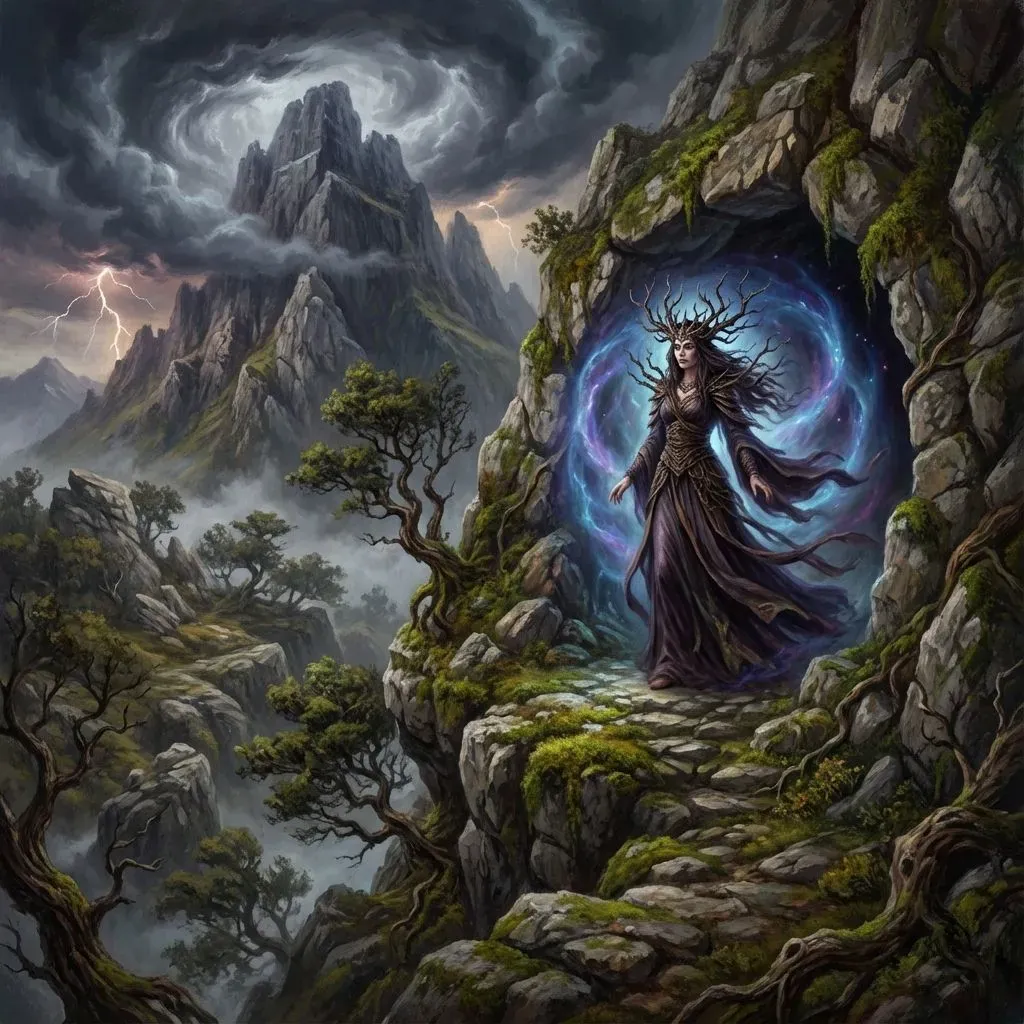
Anboto caves
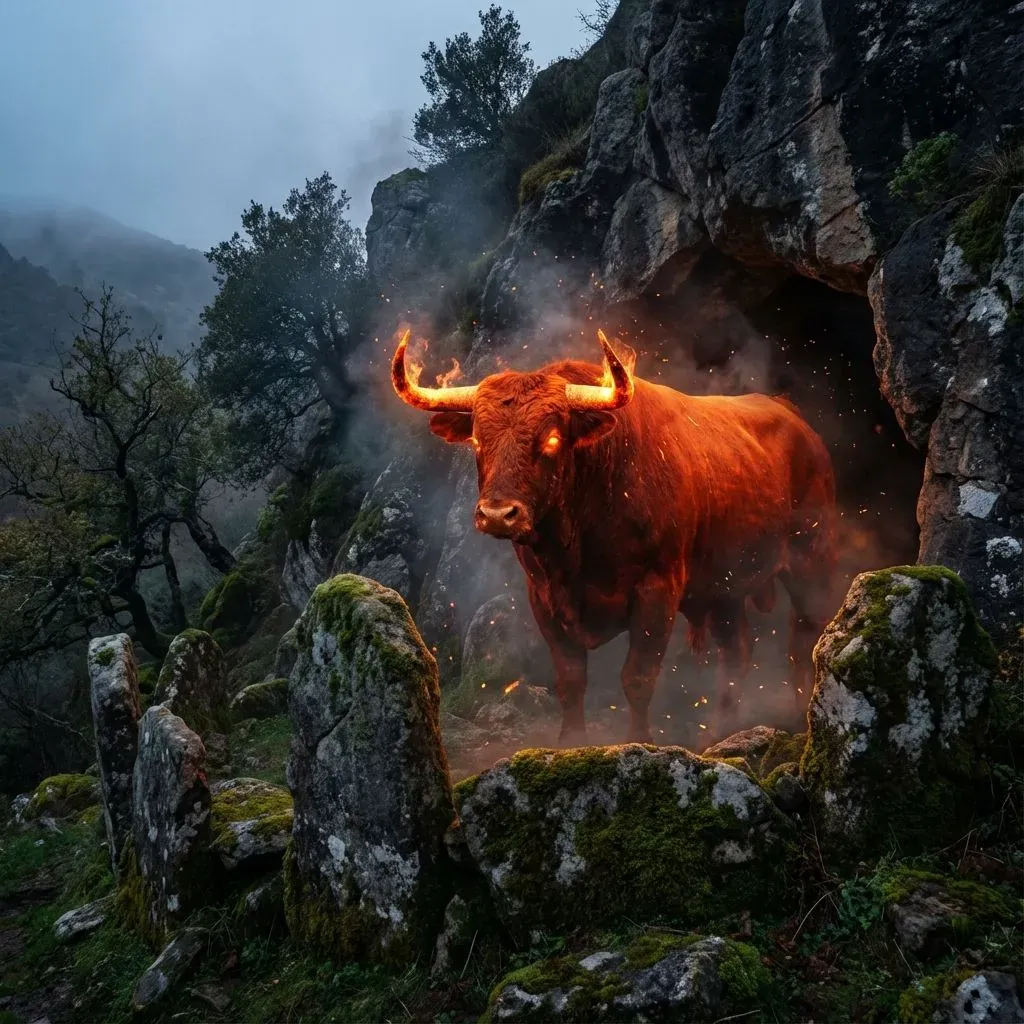
Openings from which the fiery bull is imagined to emerge.
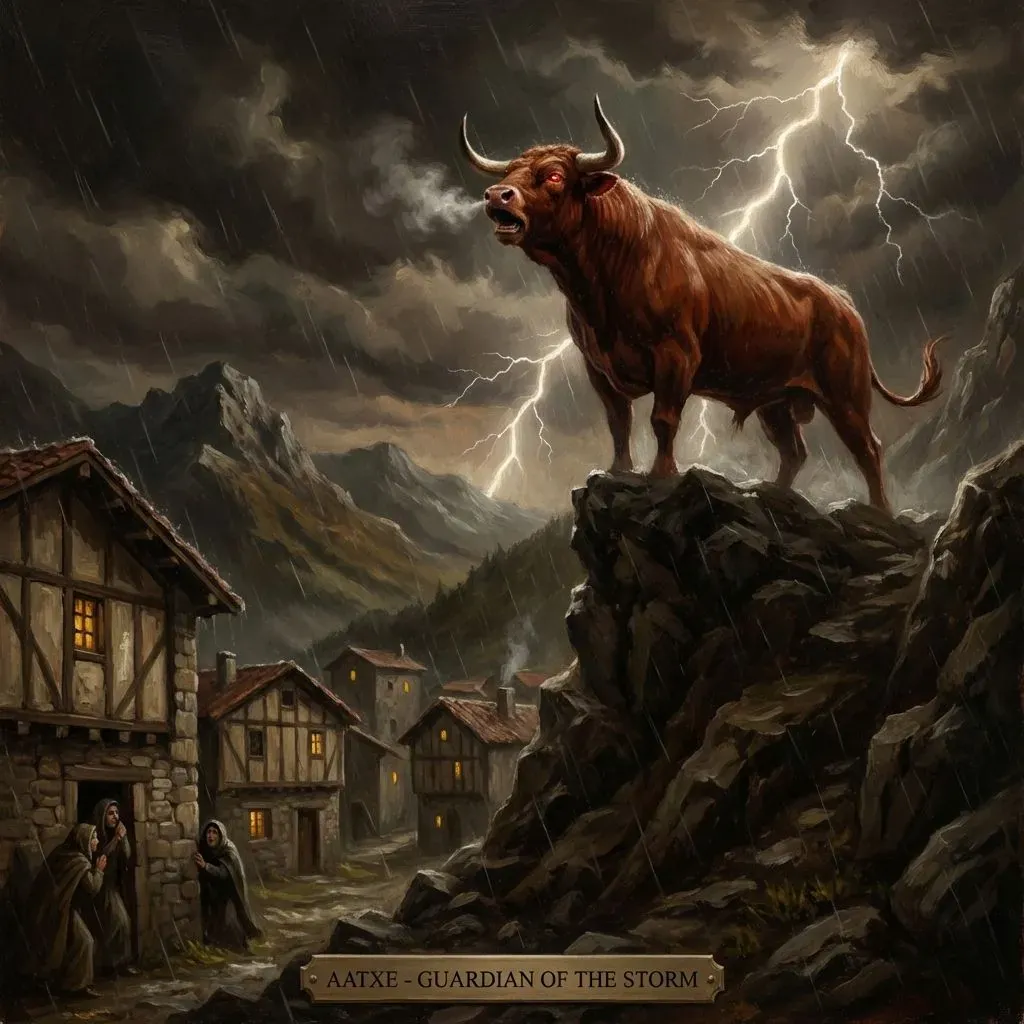
The bull of fire that races across the sky before the storm
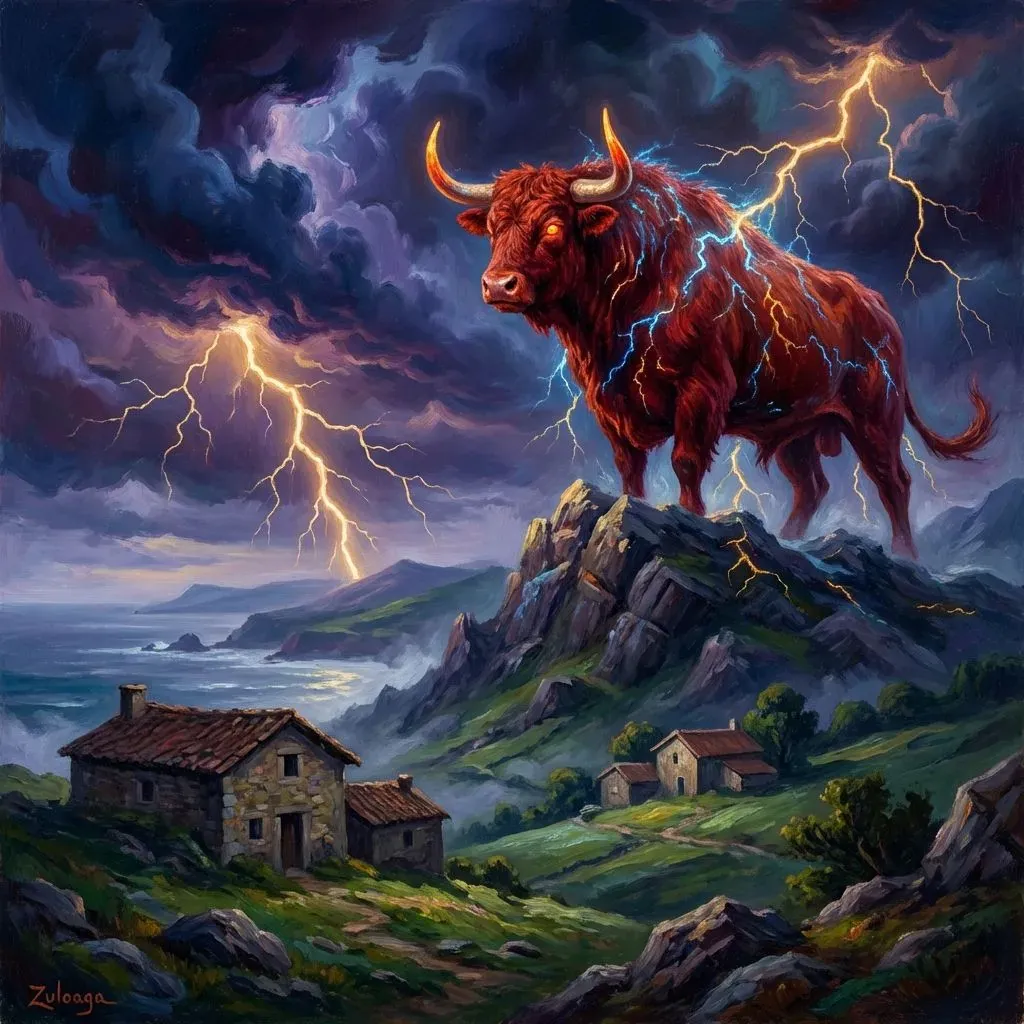
The bull of lightning is one of the most vivid forms taken by the fiery powers linked to Aatxe and Mari. It bursts from caves and chasms as a being of storm, flame, and warning.
Its appearance joins earth and sky. Born from the mountain interior, it crosses the heavens like living fire, announcing thunder, punishment, or the nearness of sacred anger.
The legend makes the storm more than weather. Lightning becomes an animal force, charged with intention and tied to the hidden law of the mountain world.
For the communities that told this story, the bull of lightning was both omen and protector: a terrifying sign that the sacred was moving through the sky.
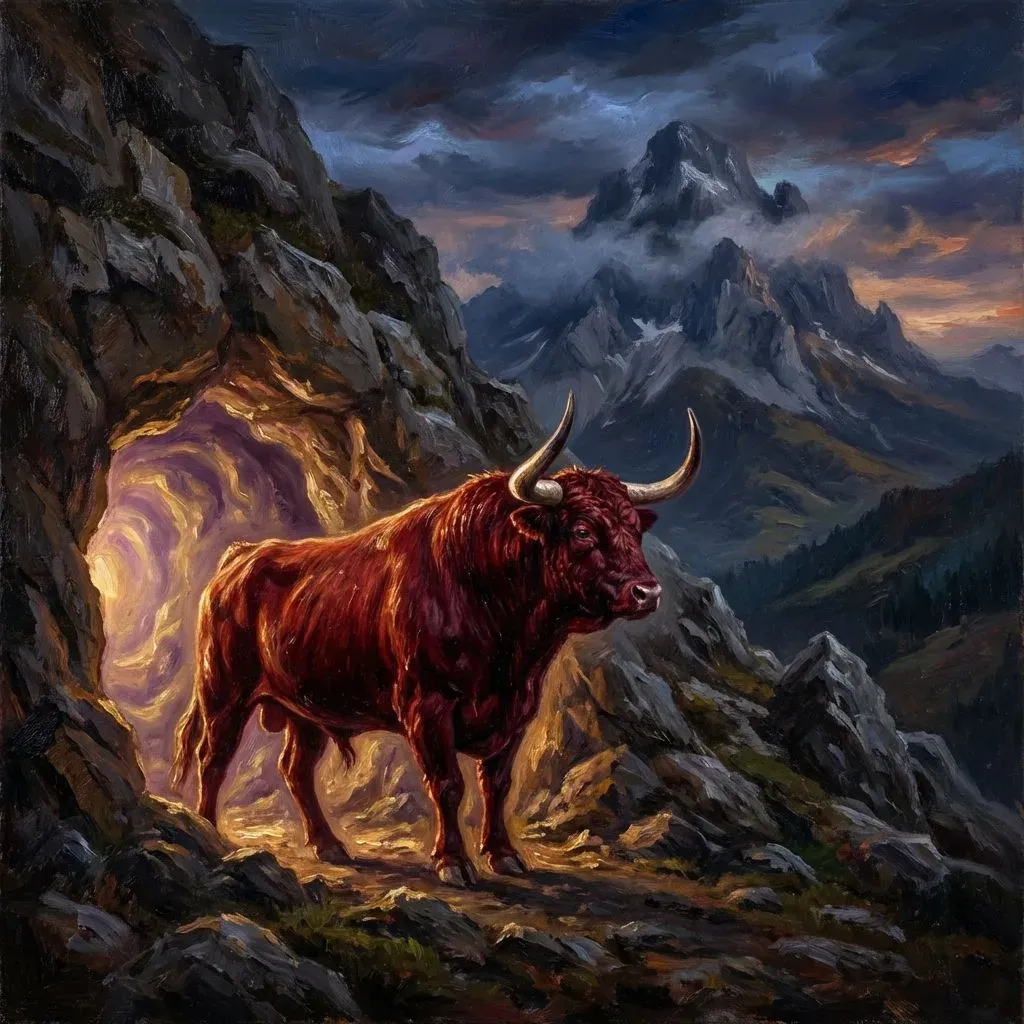
Openings from which the fiery bull is imagined to emerge.
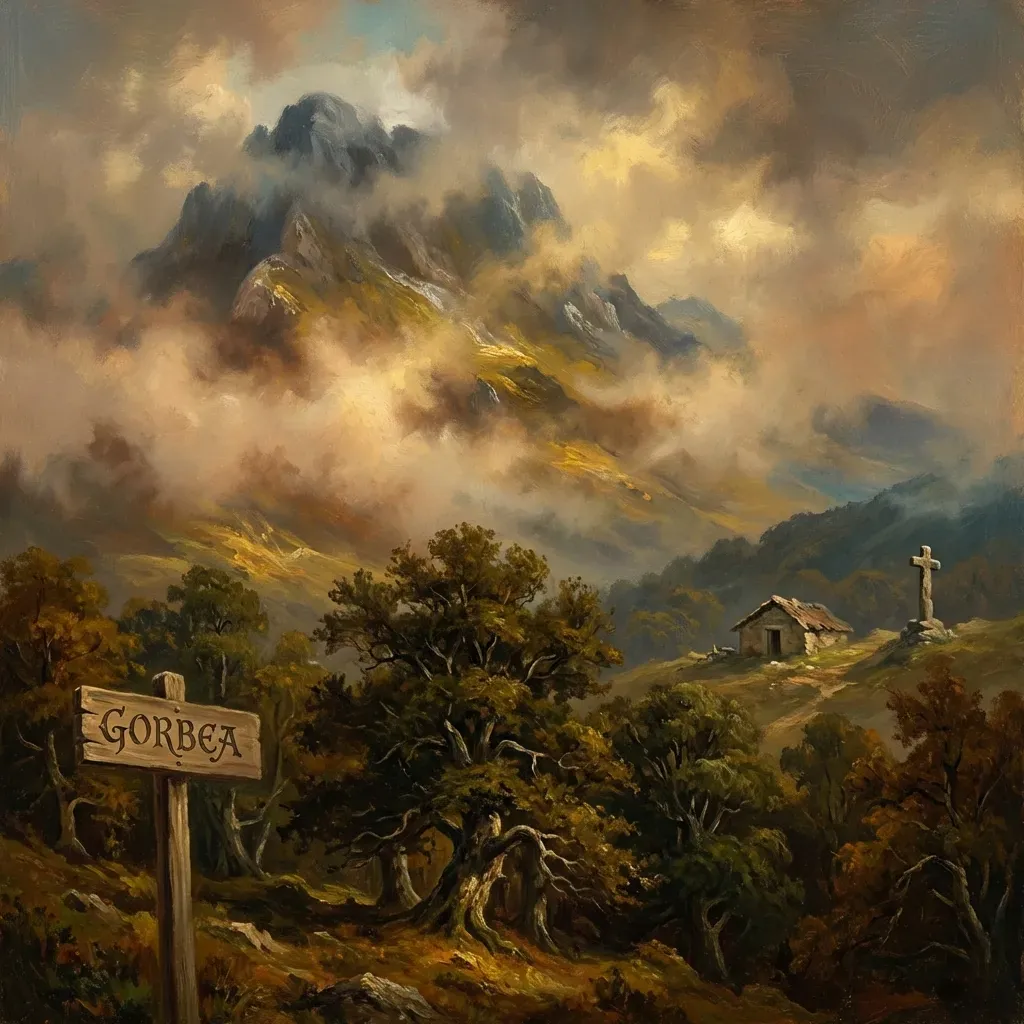
The sky paths where it races before thunder breaks.
This legend gives lightning an embodied shape. Instead of an abstract flash, the storm appears as a charging bull, making atmospheric violence legible through mythic form.
That animal image matters because the bull already carries ancient associations of force, fertility, danger, and sacred authority. When joined to fire, it becomes an almost perfect symbol of uncontrolled storm power.
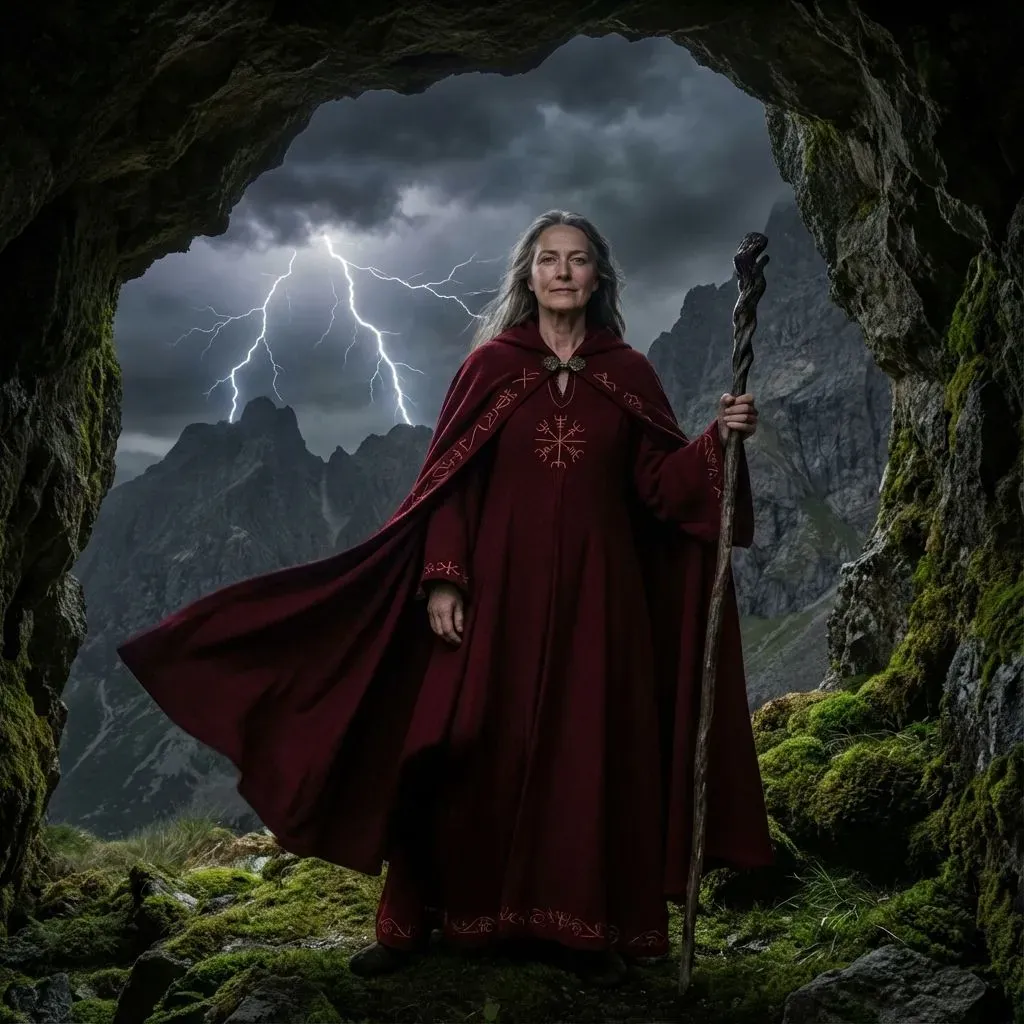
The link to Anboto and Mari also grounds the sky in the mountain. What appears above is understood to emerge from what is hidden below, joining cave, goddess, and tempest into a single imaginative system.
The tale thus preserves a striking intuition: natural phenomena are not inert events but signs of a world alive with intention and sacred movement.