Chasms of Anboto
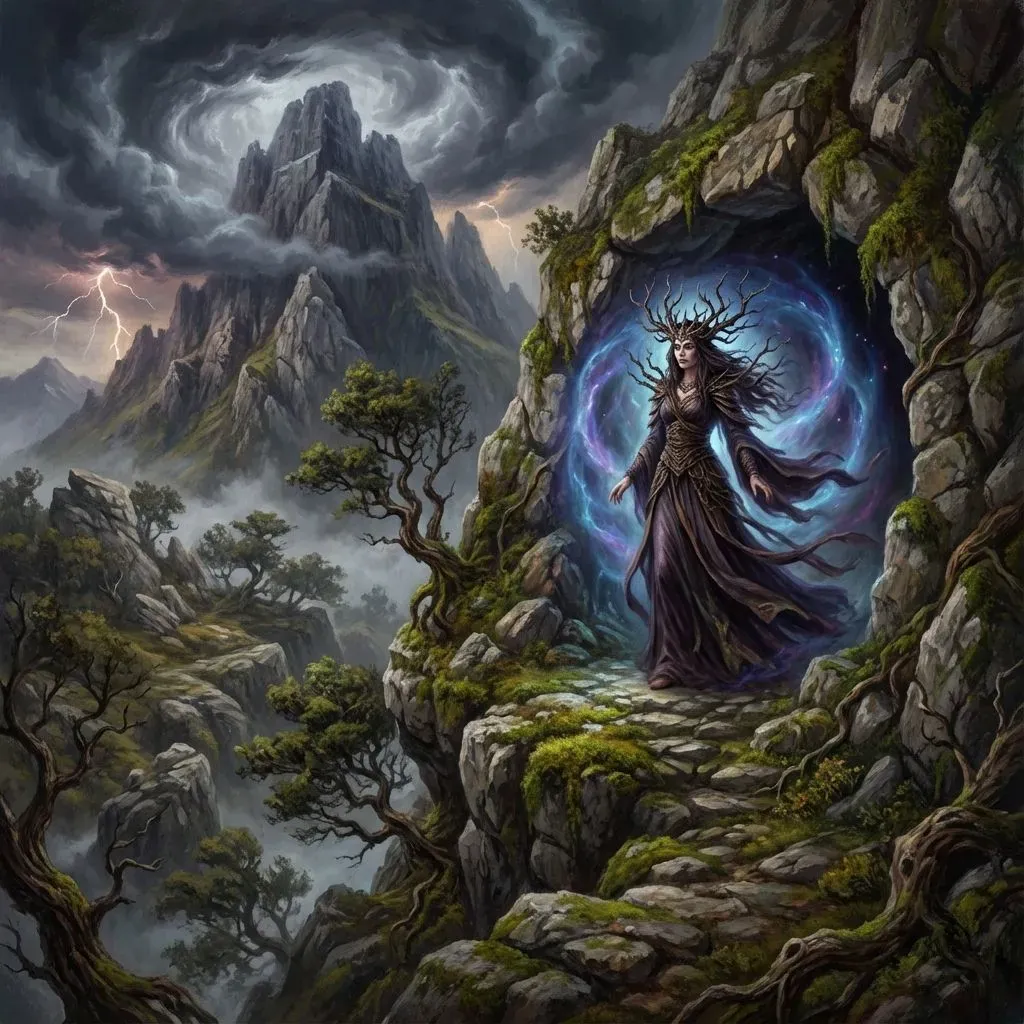
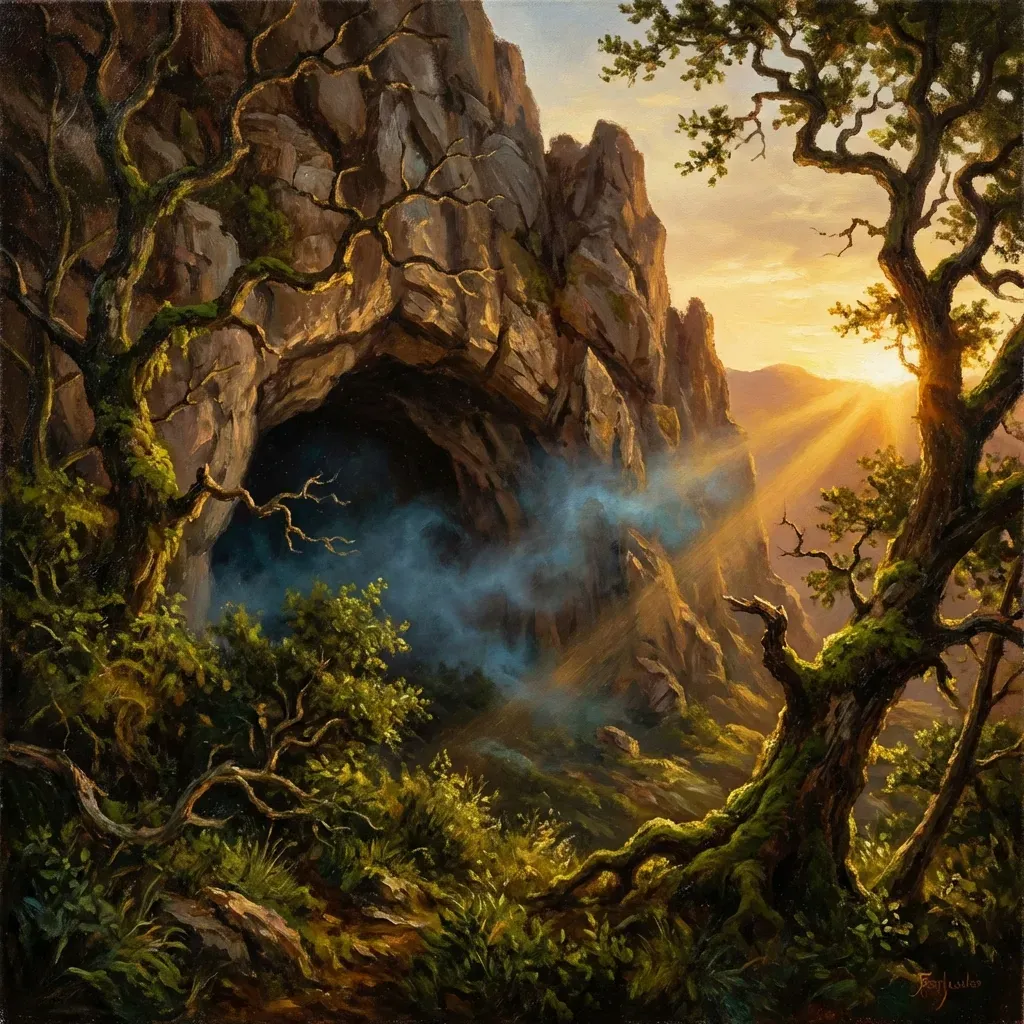
The places from which Aatxe emerges to protect Mari's dwelling.
Guardian bull of the caves
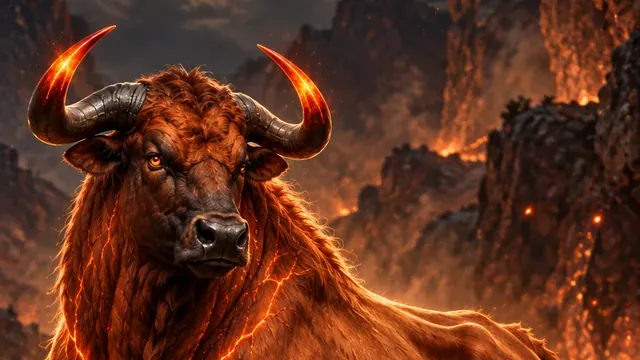
Aatxe is a red bull with blazing eyes that emerges from deep chasms on stormy nights. It is an embodiment of Mari's power, acting as the fierce guardian of the sacred caves of the mother goddess. Its reddish hide and terrifying presence connect it to subterranean fire and divine wrath.
It protects the boundaries of the underworld and harshly punishes those who profane them or travel at forbidden hours. Its appearance announces violent tempests and mortal danger for reckless night travellers. Those who honour the old rules may survive its passage, those who mock them rarely do.
The places from which Aatxe emerges to protect Mari's dwelling.
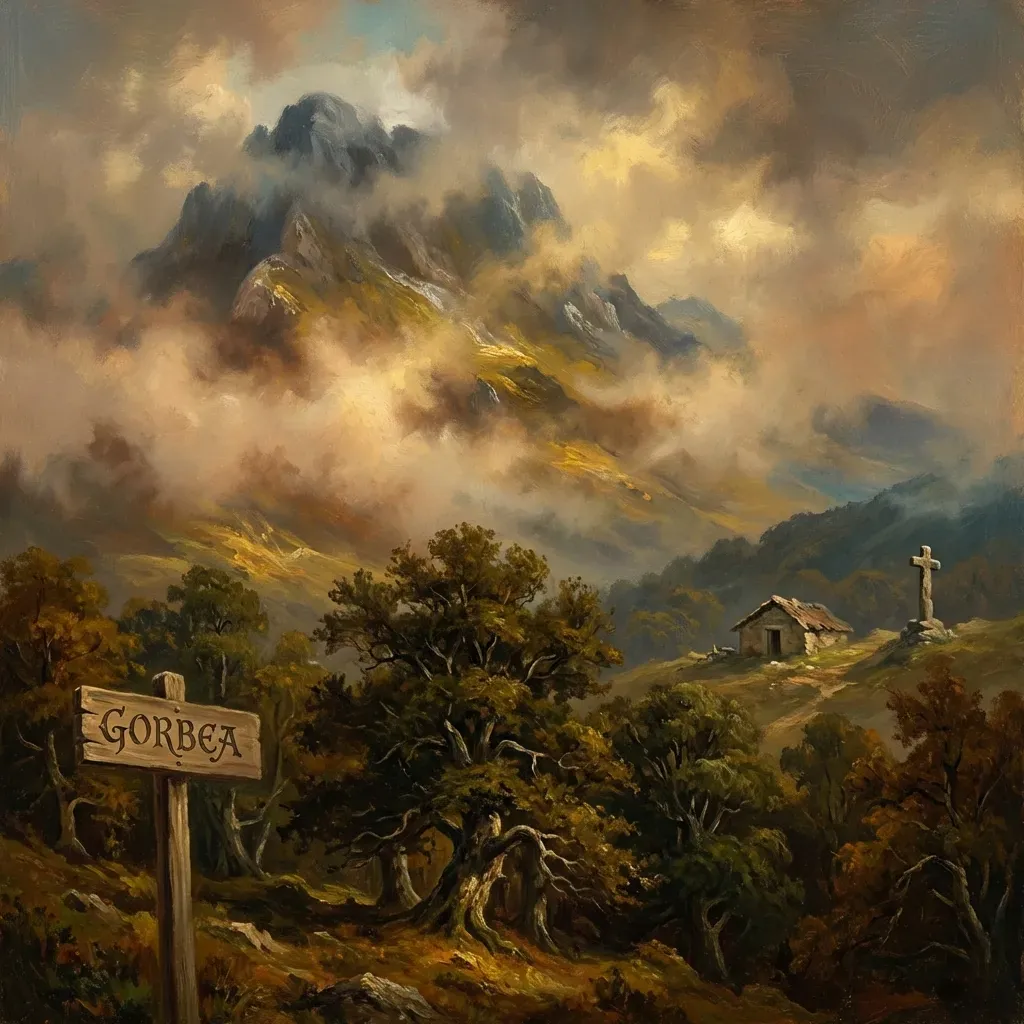
Refuges that the red bull guards against intruders.
Routes where Aatxe appears on nights of storm.
The name Aatxe literally means "young bull" or "calf" in Basque. In some Biscayan and Gipuzkoan districts it is also known as Etsai, the enemy.
Aatxe is a spirit that takes the form of a red bull to punish those who violate the taboos of the night. It lives in Mari's sacred caves and acts as her guardian and enforcer.
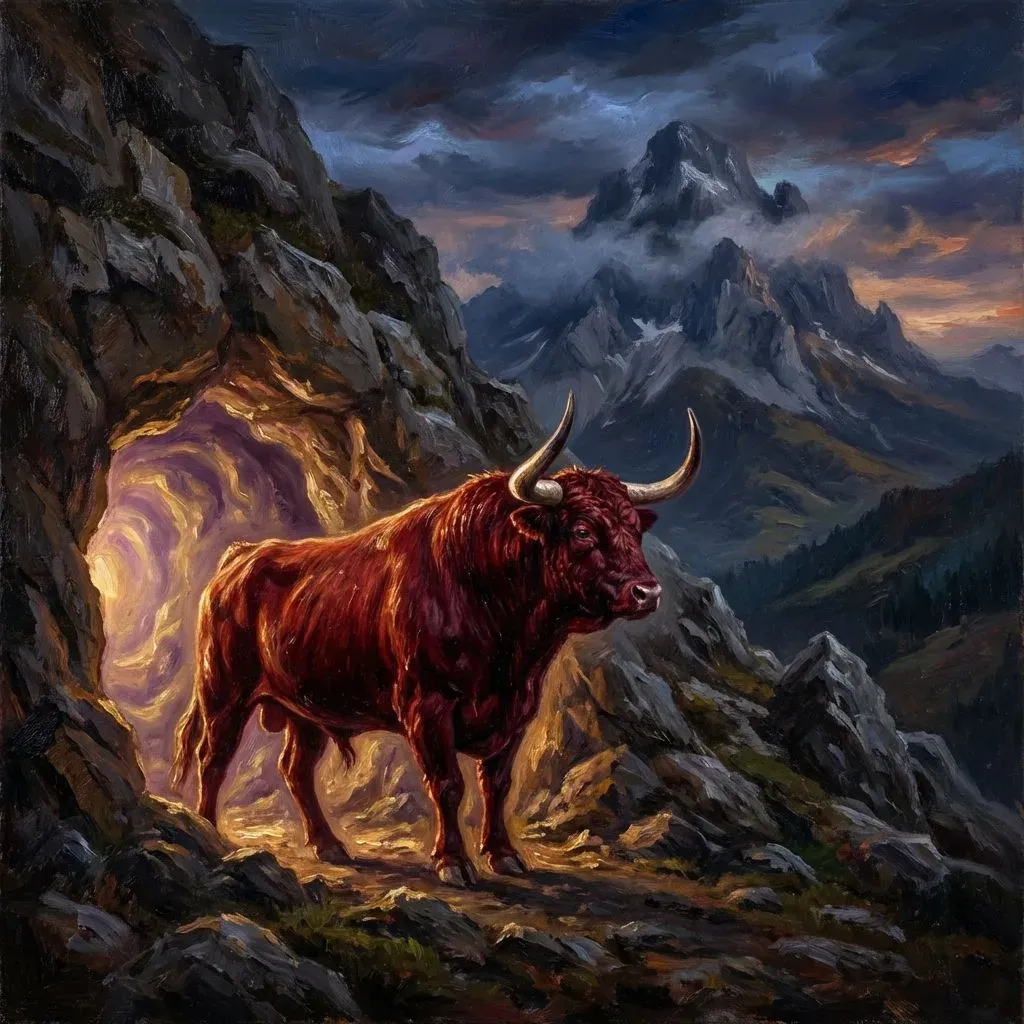
Aatxe belongs to the oldest layer of Basque mythology and can be understood as a sacred bull guardian.
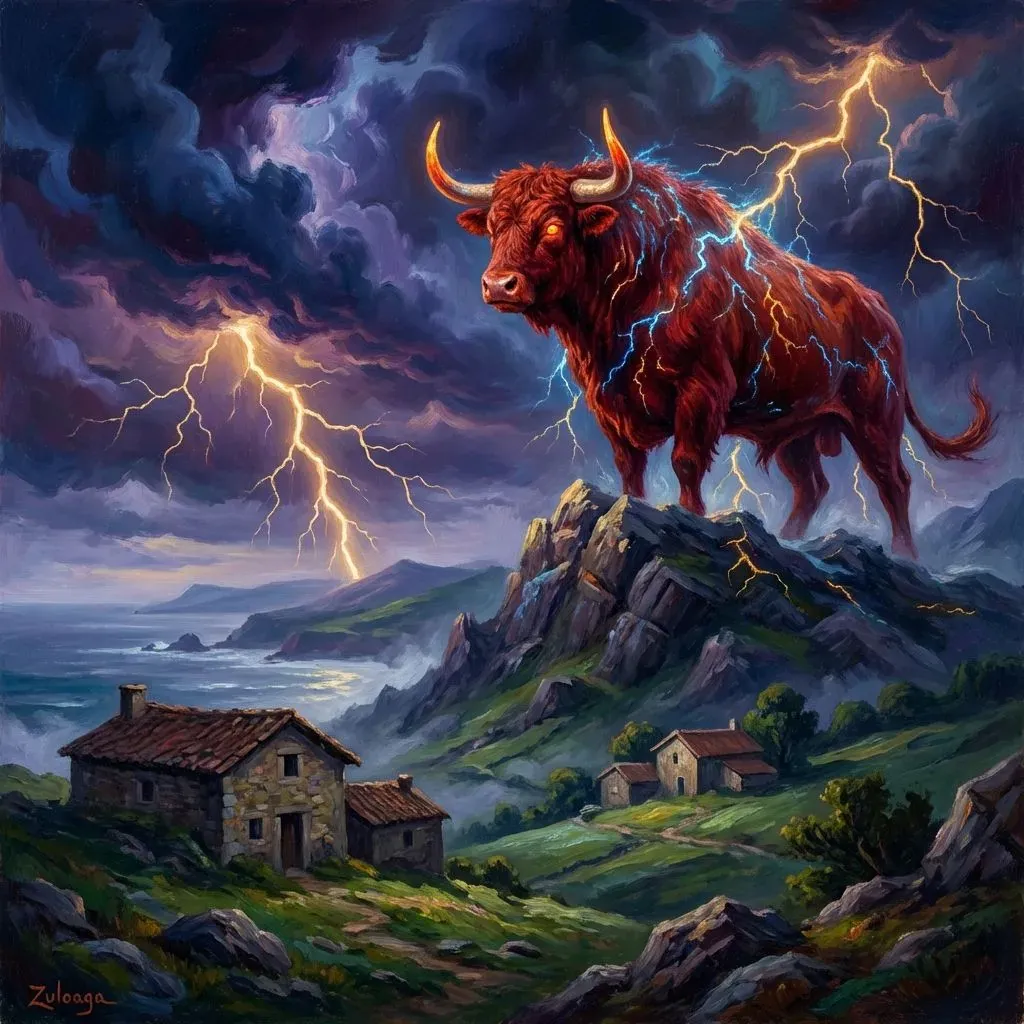
Its stories are closely tied to the caves of Mari and the hidden thresholds of the underworld.
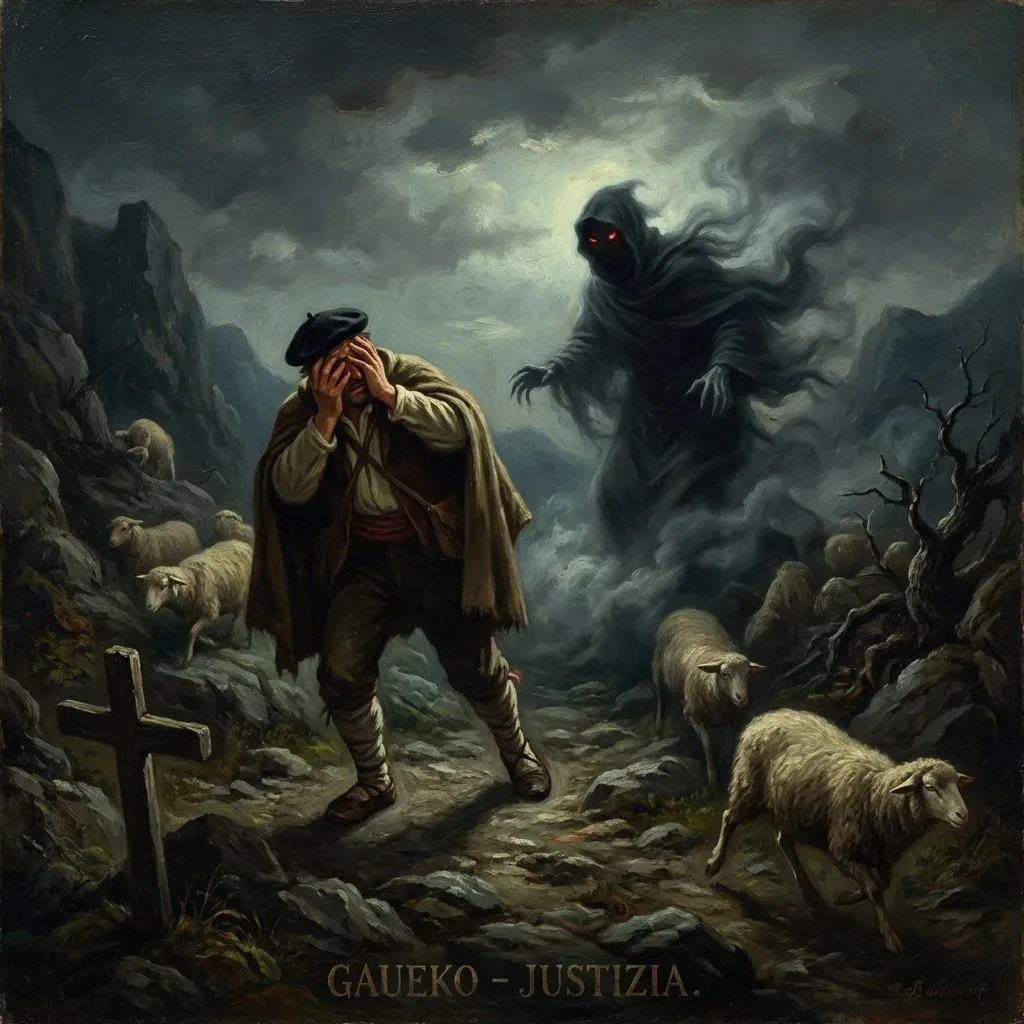
Again and again the tradition returns to storms, sacred caves, punishment and protection.
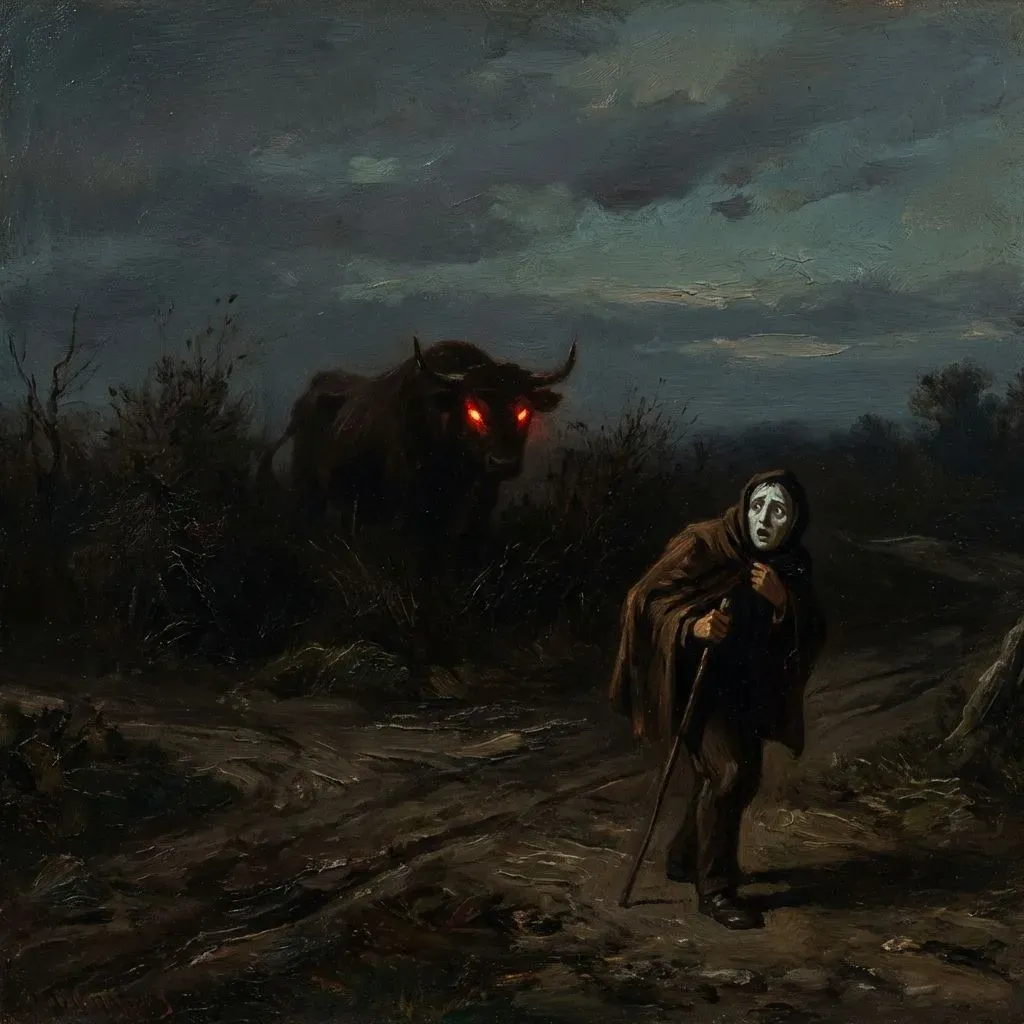
Accounts of people who saw the bull’s fiery gaze.
Rather than a decorative figure, Aatxe helps explain how the Basque world understood danger, order and sacred space.
In many versions, Aatxe marks a frontier between what belongs to human life and what must remain respected from a distance.
That is why the tales about Aatxe often combine fear, wonder and moral instruction in the same narrative movement.
The figure also preserves an older way of reading the landscape, where mountains, houses, storms or caves are never neutral settings.
Through Aatxe, myth gives shape to forces that cannot be seen directly but can still be felt in weather, place, memory and ritual.
Modern readers may approach Aatxe as folklore, yet the character still carries the logic of a living symbolic world.