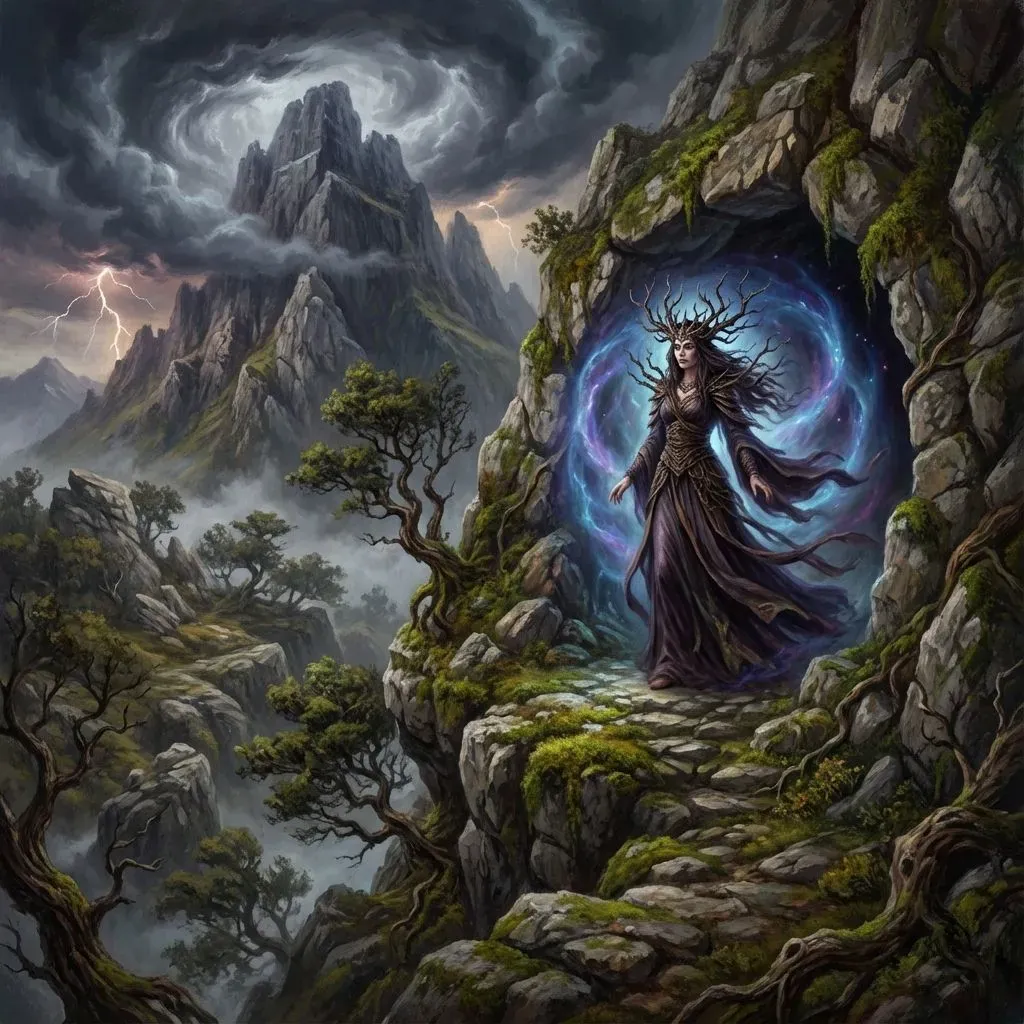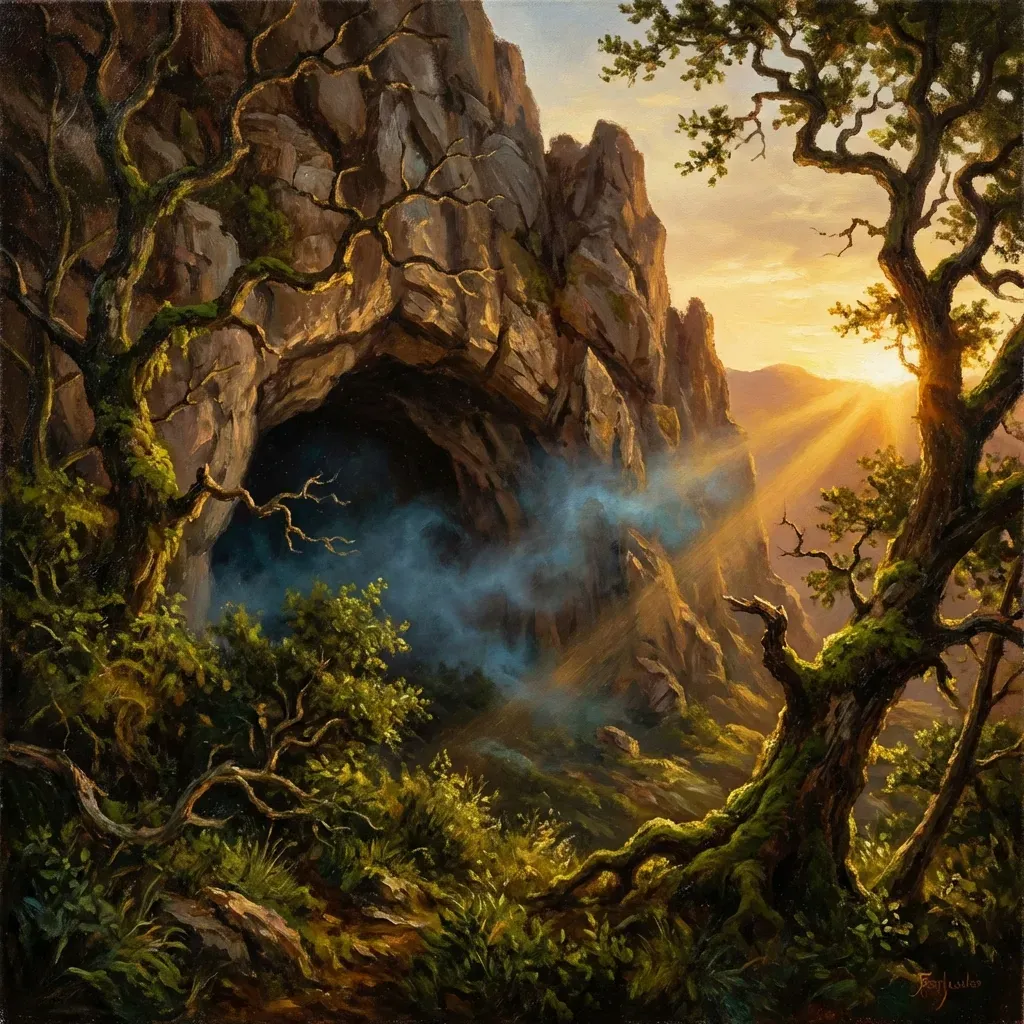
Mythic caves of Euskal Herria
Sacred entrances associated with Mari, Amalur, and the hidden world.
Divine labyrinths of the sacred Pyrenean underworld
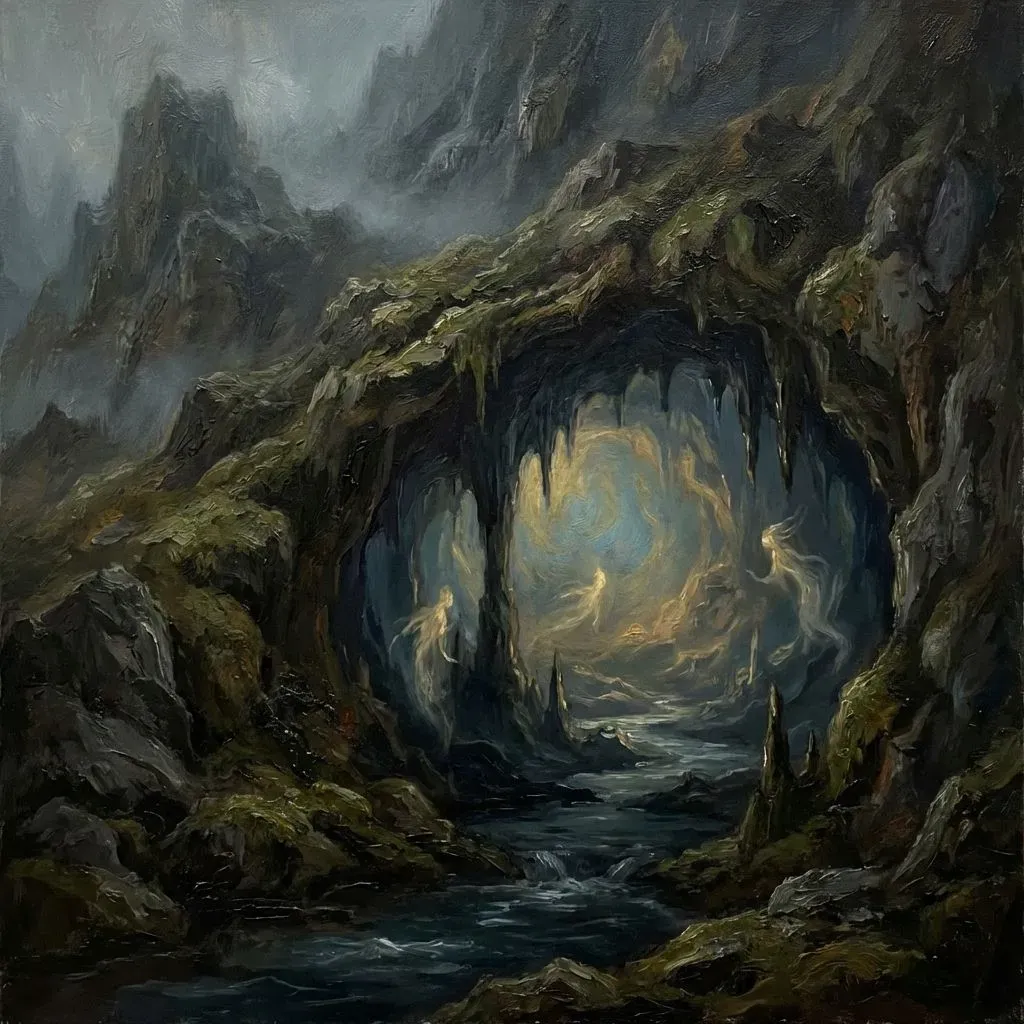
Sacred caves occupy a central place in Basque imagination. They are not merely geological voids, but entrances into a deeper world tied to Amalur, Mari, ancestral spirits, and hidden treasures.
Across Euskal Herria, caves have been imagined as dwellings, thresholds, and places of return. They may shelter divine beings, keep memories of the dead, or serve as the hidden heart of the mountain itself.
That is why they inspire both attraction and fear. A cave offers refuge, but it also demands reverence. To enter without preparation or respect is to risk disturbing powers older than the village above.
The legend of sacred caves gathers many currents of Basque mythology into one image: the earth as living mother, mystery, and doorway to worlds beneath the visible surface.
The sacred cave is one of the most powerful symbols in Basque mythology because it unites origin, concealment, danger, and revelation. It is a place where the land itself seems to open and speak.
In many stories, the cave is not empty space but inhabited depth. Mari resides there, souls may return there, and treasures lie there under protection or taboo.
This transforms the cave into more than a setting. It becomes a cosmological structure, a meeting point between the human settlement above and the hidden order below.
For that reason, the myth of sacred caves preserves a profound intuition: the earth is not inert matter, but a living interior filled with presence, memory, and law.