
Teodosius of Goñi
The Navarrese knight who, deceived by the devil, committed parricide and wandered in chains until Saint Michael freed him at Aralar.
— Nafarroa Beherea —

The caves of Isturitz and Oxocelhaya form one of the most important prehistoric sites in Europe. Located in Lower Navarre, this dual cave system brings together archaeology, underground geology and one of the richest records of human presence in the western Pyrenees.
The upper cave, Isturitz, is world famous for its archaeological discoveries. Some of the oldest flutes known to humankind were found here, carved from bone, along with engravings, tools and portable art that reveal the symbolic complexity of Paleolithic communities.
The lower cave, Oxocelhaya, stands out for its spectacular geological formations. Its galleries are filled with stalactites and stalagmites of extraordinary beauty, making the visit a journey through both deep time and subterranean imagination.
The complex has yielded thousands of objects illustrating cultural evolution from the Neanderthals to Homo sapiens: flint tools, spear points, ornaments and portable artworks now displayed in museums and research centres. It is one of the great archives of human prehistory in the Basque world.
The Navarrese knight who, deceived by the devil, committed parricide and wandered in chains until Saint Michael freed him at Aralar.

The famous inquisitorial trial of 1610 against the Navarrese witches who held akelarres in the sacred cave.

The Basque ambush against Charlemagne's army in the Pyrenean pass where the legendary Roland fell.

The shaggy giant who lives in the forests, protector of flocks and guardian of the secrets of agriculture and the forge.

Seductive nymphs who dwell in rivers and springs, recognisable by bird feet or fish tails, combing their hair with golden combs.
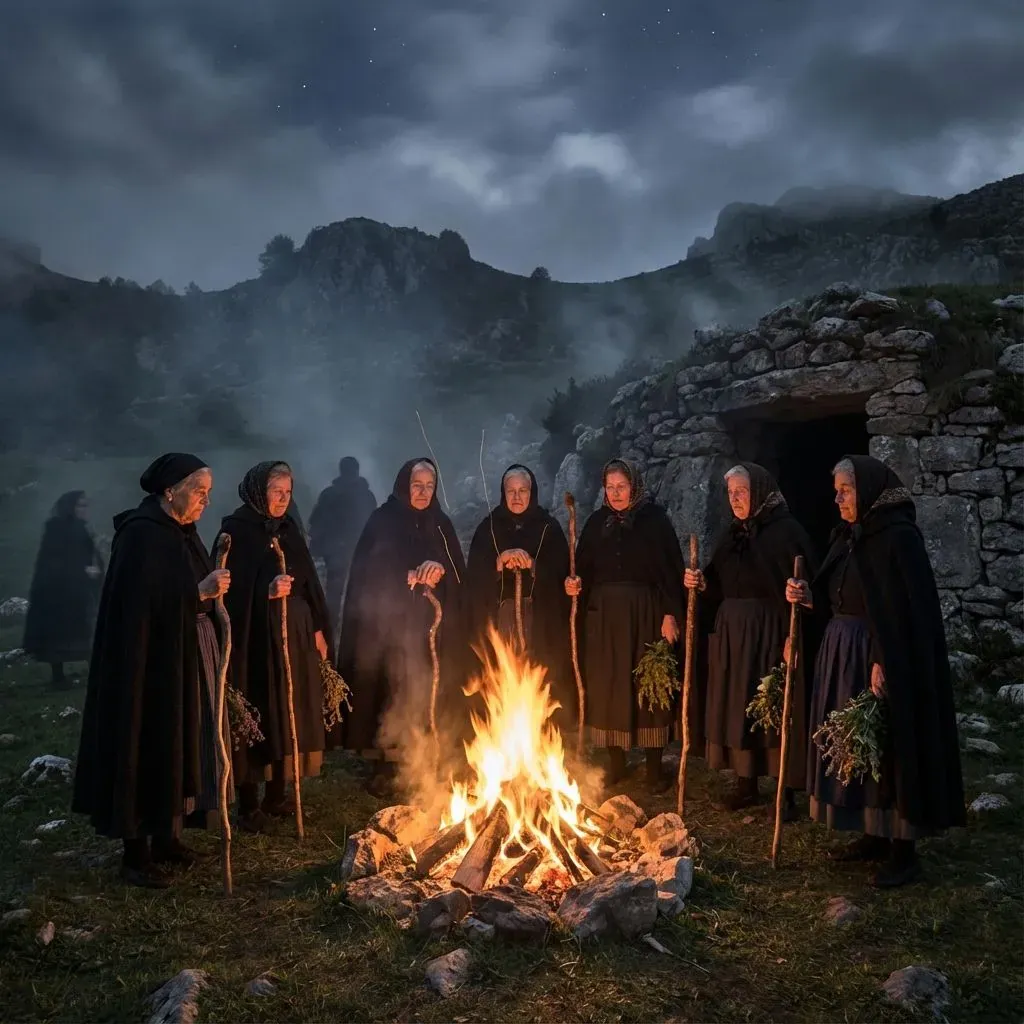
The Basque witches and wise women, priestesses of Mari who mastered potions, curses and the art of flying through the night sky.
Isturitz and Oxocelhaya, linked by the same underground river in the hills of Lower Navarre and Labourd, form one of the western Pyrenees’ richest cave and archaeological complexes. Isturitz holds a major Upper Palaeolithic site of southwestern Europe, while Oxocelhaya impresses with natural calcite columns and curtains.
Isturitz was occupied intermittently from the Mousterian, over eighty thousand years ago, to the Bronze Age. This remarkable duration supports the idea that some Basque sites have exerted a lasting attraction that practical factors alone cannot fully explain. The underground river, habitable space and strategic location account for part of the choice, but not all of it.
Among Isturitz’s most extraordinary finds are fragments of flutes made from bird bones more than thirty thousand years ago. These instruments, among the world’s oldest known examples, raise fascinating questions about the symbolic and spiritual lives of the cave’s Palaeolithic inhabitants. Music, or something recognisable as music, was present in this Pyrenean place thirty millennia ago.
A visit to Isturitz and Oxocelhaya combines archaeological fascination with the natural beauty of the lower cave’s calcite galleries. Few Basque sites engage visitors’ intellectual and aesthetic senses so effectively at the same time.