Teodosius of Goñi
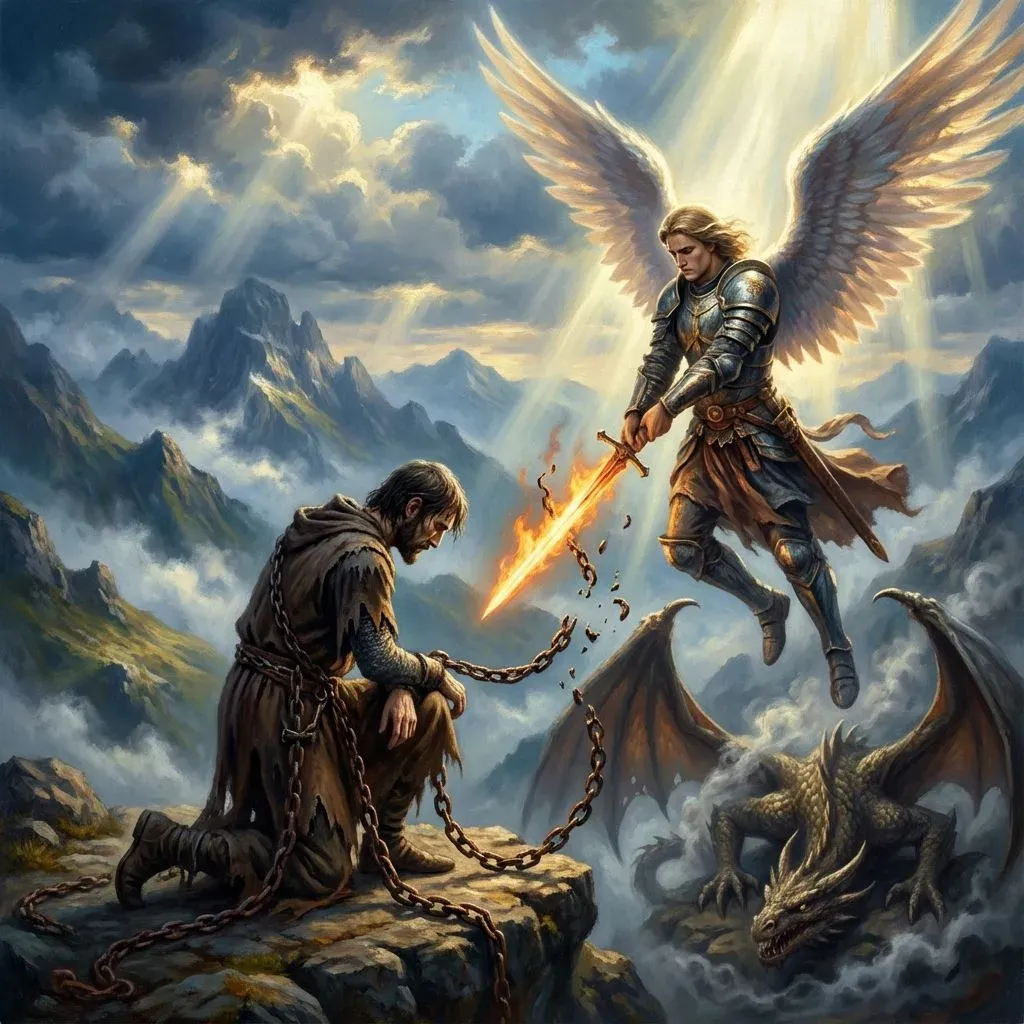
The Navarrese knight who, deceived by the devil, committed parricide and wandered in chains until Saint Michael freed him at Aralar.
— Gipuzkoa —
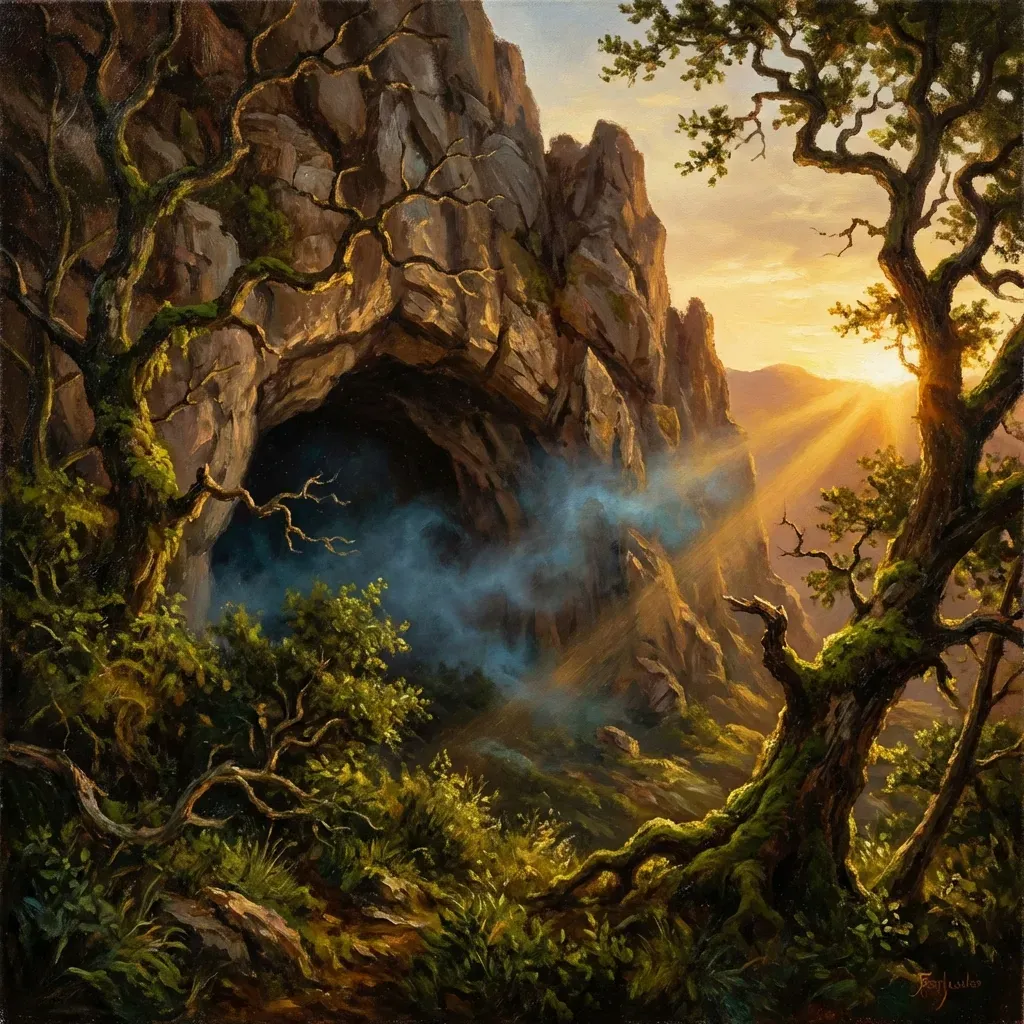
The Arrikrutz Cave System is the largest karst complex in the Basque Country, with more than 14 kilometres of explored galleries beneath the mountains of Onati in Gipuzkoa. This impressive underground labyrinth reveals a hidden landscape of stone, water and darkness shaped over thousands of years.
The cave is famous for its spectacular speleothems: stalactites, stalagmites, columns, flowstones and eccentric formations that create dreamlike subterranean scenery. The Hall of Chaos, with its enormous fallen blocks, is one of the most striking spaces in the complex and gives a sense of the cave's monumental scale.
But Arrikrutz also preserves secrets from the distant past. Its galleries have yielded remains of cave lions, panthers, hyenas and woolly rhinoceroses, animals that lived in these lands during prehistoric times and make the site especially valuable both geologically and archaeologically.
Today, a guided route of about five hundred metres allows visitors to discover the main attractions of this underground world. The experience combines geology, paleontology and the strange beauty of a landscape sculpted by water over millions of years.
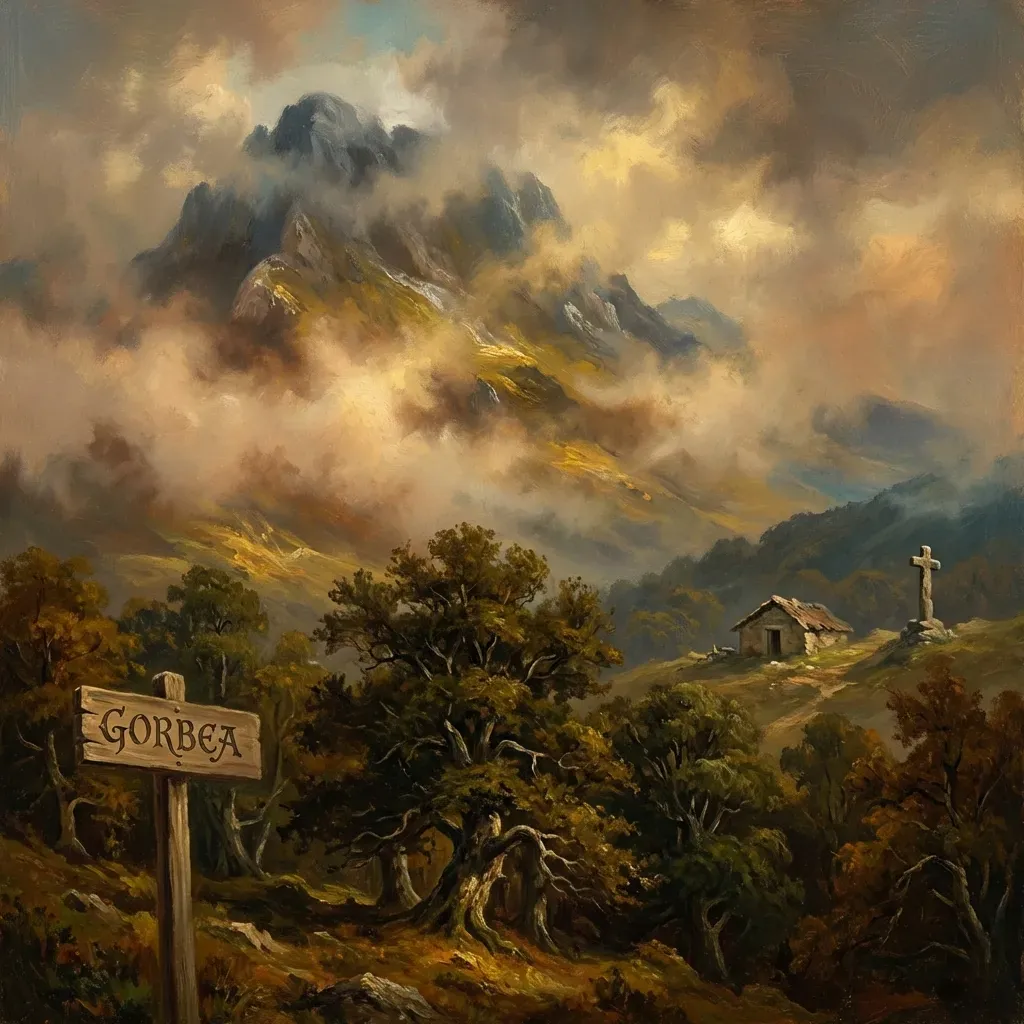
The Navarrese knight who, deceived by the devil, committed parricide and wandered in chains until Saint Michael freed him at Aralar.
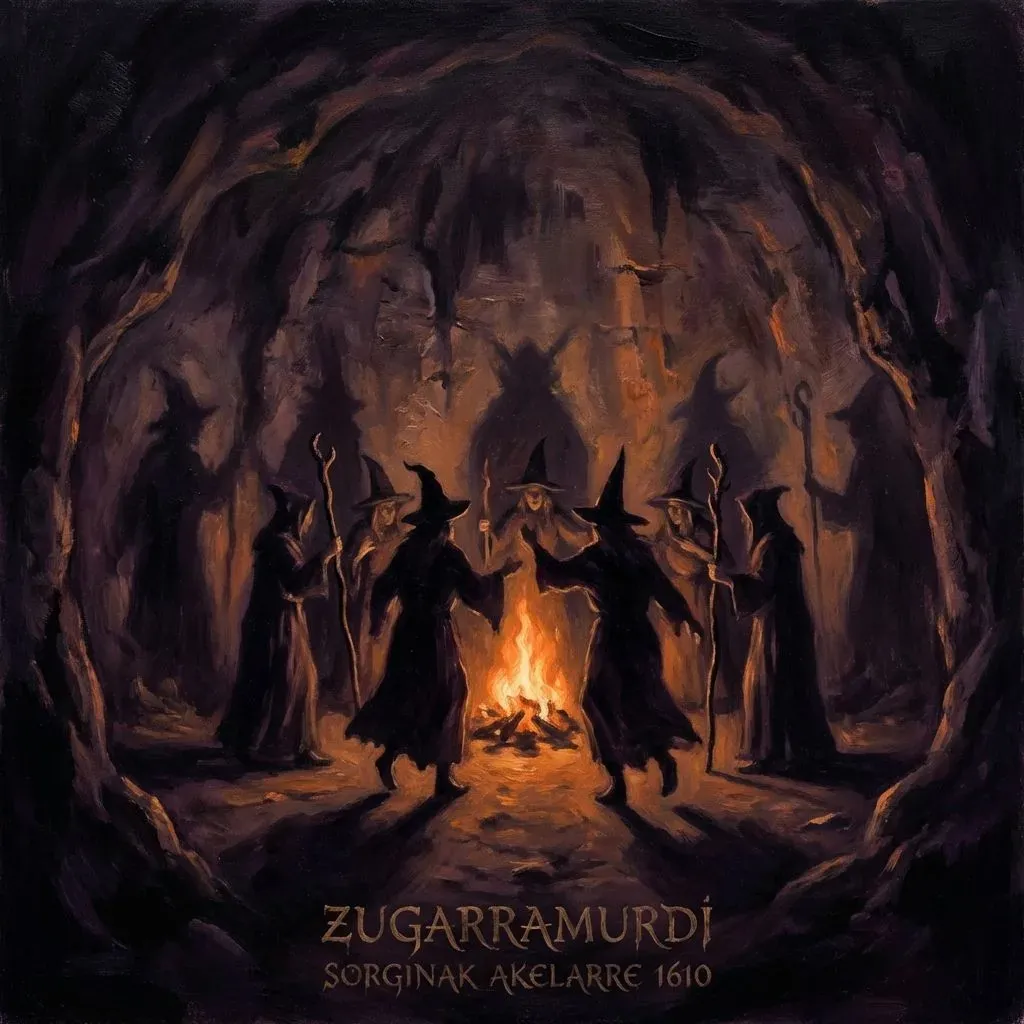
The famous inquisitorial trial of 1610 against the Navarrese witches who held akelarres in the sacred cave.
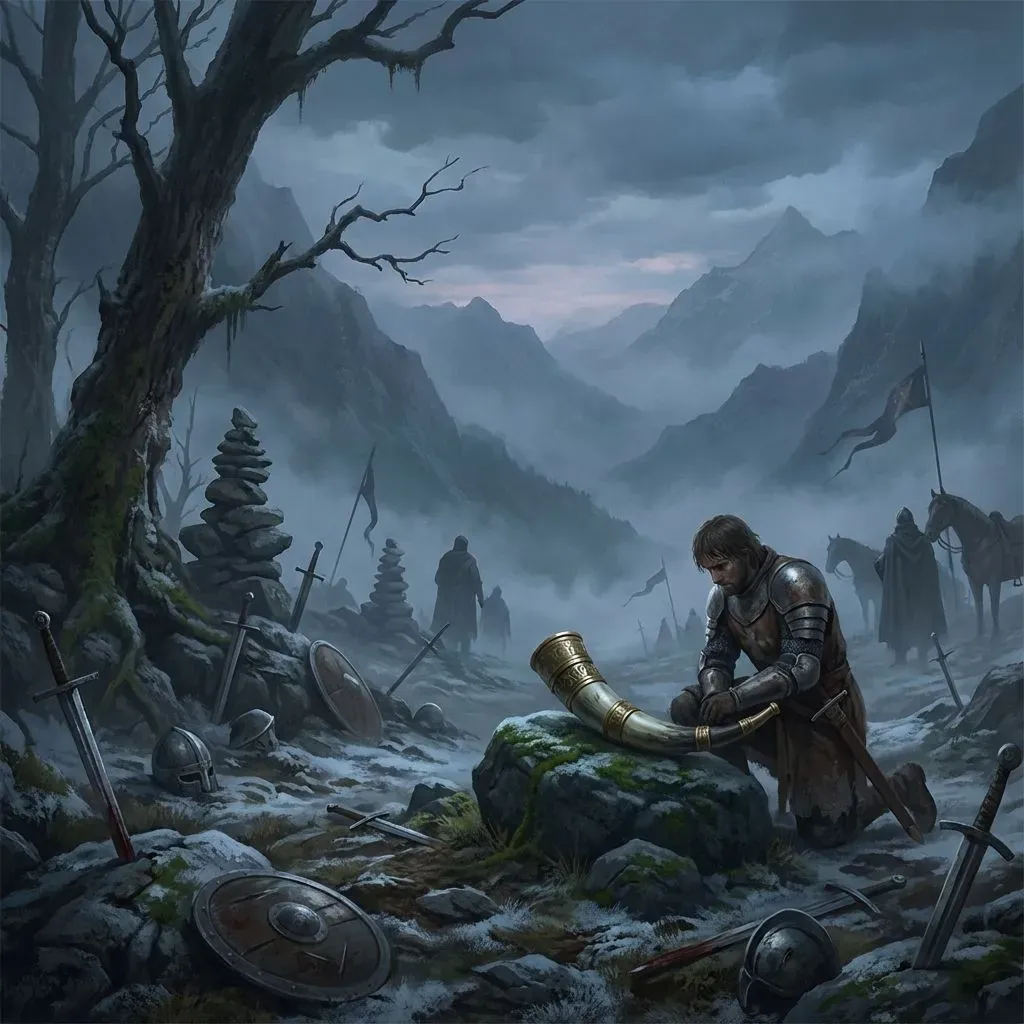
The Basque ambush against Charlemagne's army in the Pyrenean pass where the legendary Roland fell.

The shaggy giant who lives in the forests, protector of flocks and guardian of the secrets of agriculture and the forge.

Seductive nymphs who dwell in rivers and springs, recognisable by bird feet or fish tails, combing their hair with golden combs.
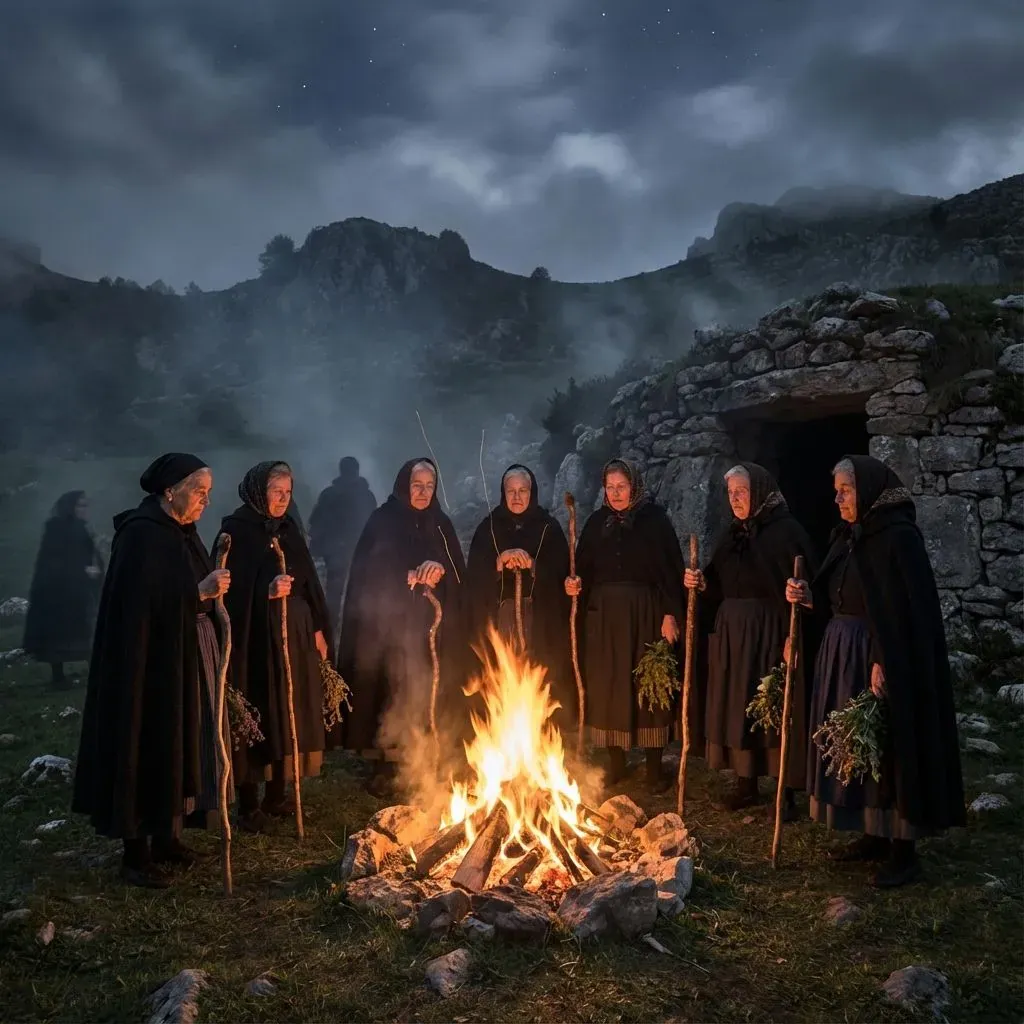
The Basque witches and wise women, priestesses of Mari who mastered potions, curses and the art of flying through the night sky.
Arrikrutz cave, in the Gipuzkoan municipality of Oñati, is one of the largest and most spectacular cavities in the Basque karst. Its galleries, formed over millions of years by water acting on the Aizkorri massif’s limestone, extend for several kilometres and contain some of the most imposing stalactites and stalagmites in the northern Iberian Peninsula.
Beyond its geological spectacle, Arrikrutz is exceptional for its remains of Pleistocene fauna, which help reconstruct the territory’s ecosystem tens of thousands of years ago. Cave bears, spotted hyenas, cave lions and wild horses left their bones in galleries that were both refuge and trap for the large predators of the Upper Palaeolithic.
In the Basque worldview, caves were never merely holes in the rock. They were entrances to Mari’s realm and the underground world known as Lur azpiko mundua. Arrikrutz, with its enormous scale and pitch darkness beyond the reach of any ancient torch, must have powerfully reinforced that perception before electric lighting made it accessible to tourists.
Guided visits to Arrikrutz are among the most popular rural tourism experiences in the upper Deba valley, with good reason. Few experiences make geological time feel so immediate: human presence becomes a barely perceptible variation in a story of millions of years of water, pressure and calcite.