Teodosius of Goñi
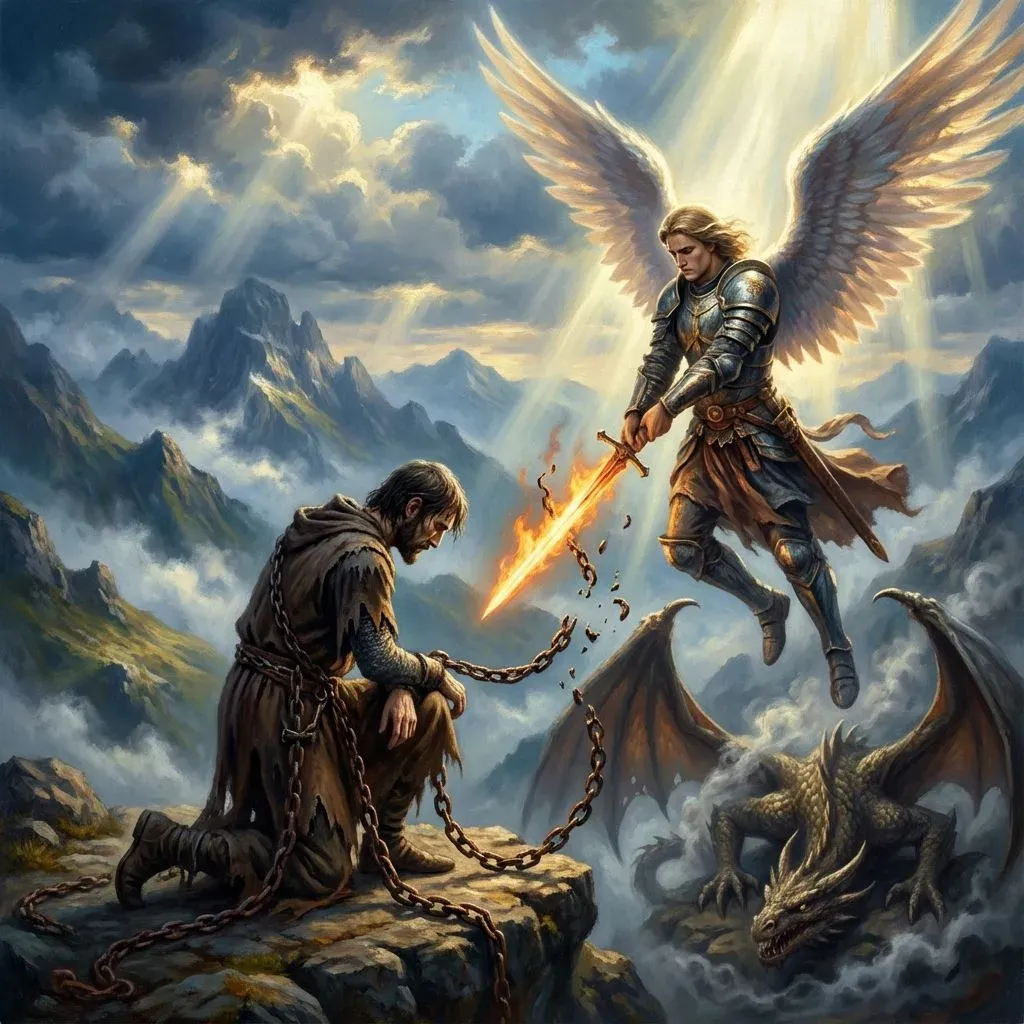
The Navarrese knight who, deceived by the devil, committed parricide and wandered in chains until Saint Michael freed him at Aralar.
— Nafarroa —
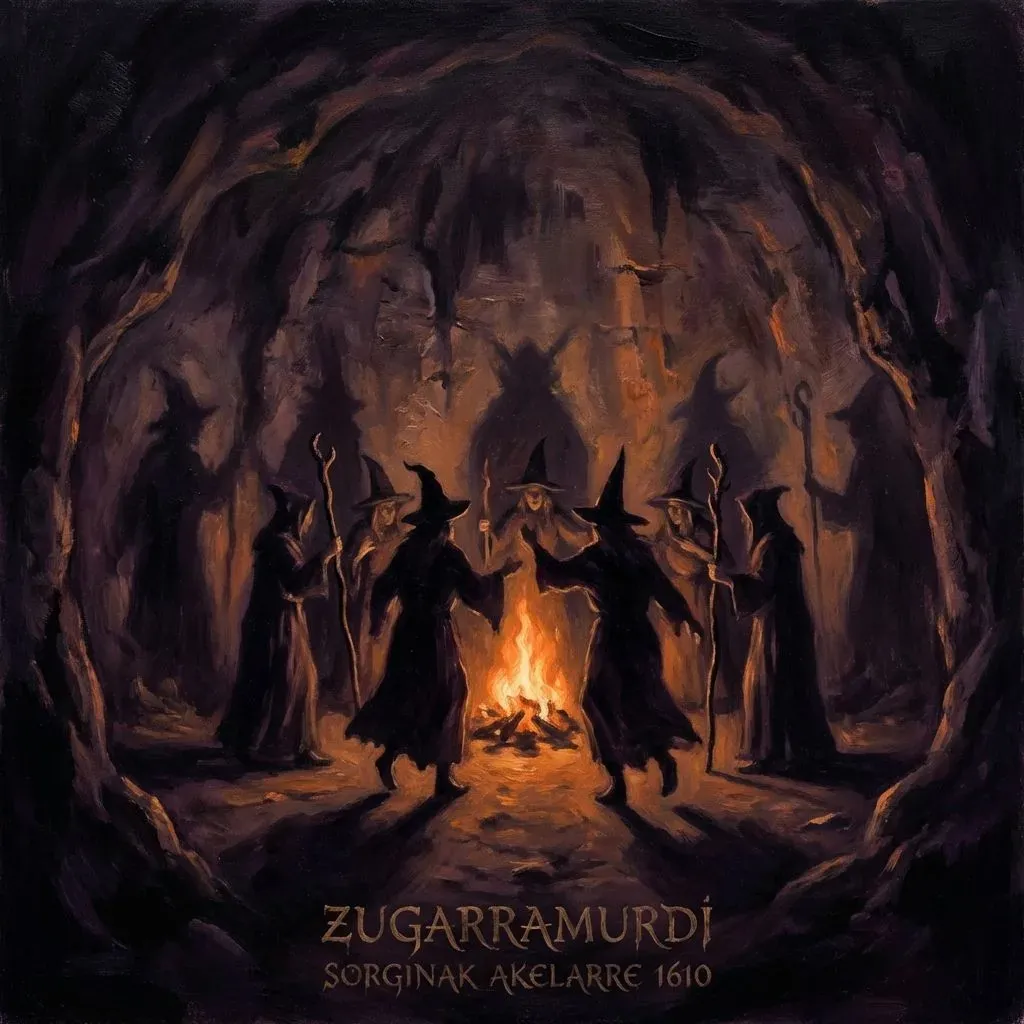
Zugarramurdi Cave is one of the most emblematic and mysterious places in the Basque Country. Located beside the small Navarrese village of the same name, this large karst cavity has become inseparable from the memory of witchcraft, the akelarres and one of the darkest episodes of the early modern Basque world.
Also known as Sorginen Leizea, the Cave of the Witches, it is in fact a natural tunnel around 120 metres long carved by the stream that runs through it. Its wide vault, damp walls and the surrounding woodland create an atmosphere that helps explain why the site became such a powerful setting in popular imagination.
In 1610 the Inquisition tribunal of Logrono held an auto-da-fe in which many inhabitants of Zugarramurdi and nearby villages were condemned on charges of witchcraft. Since then, the cave has remained a place where historical persecution and legendary memory are forever intertwined.
Today the cave is an accessible site where visitors can immerse themselves in the history and traditions of this corner of Navarre. Nearby, the Witches? Museum offers a journey through seventeenth-century daily life and the social mechanisms that led to one of the darkest persecutions in Basque memory.
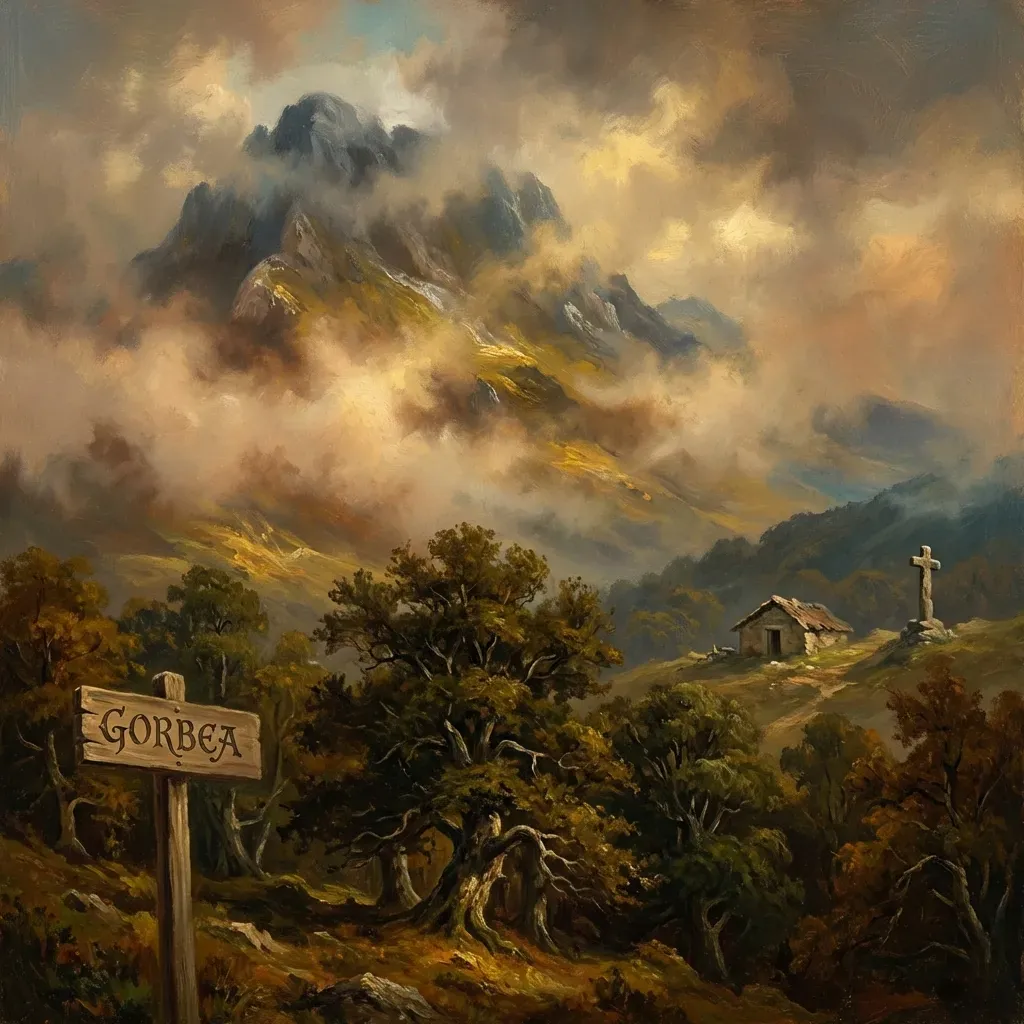
The Navarrese knight who, deceived by the devil, committed parricide and wandered in chains until Saint Michael freed him at Aralar.
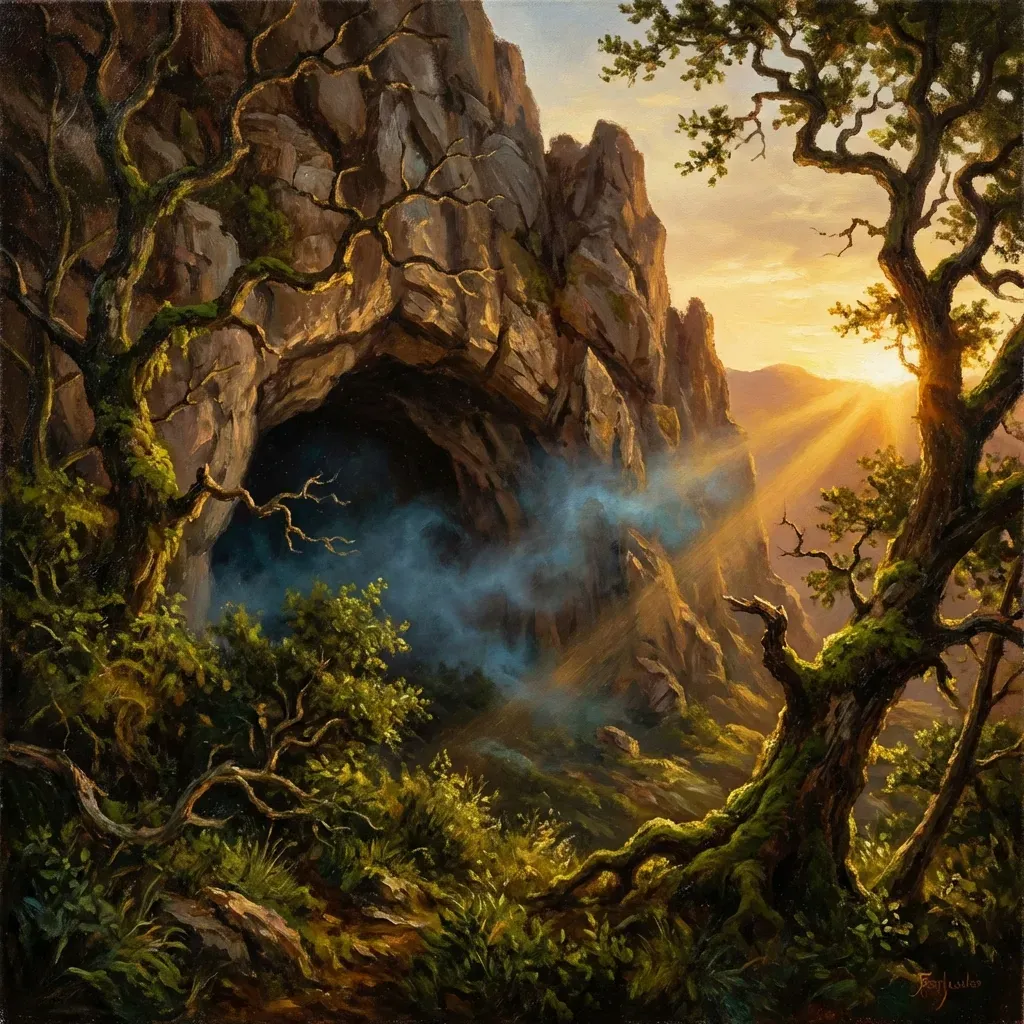
The famous inquisitorial trial of 1610 against the Navarrese witches who held akelarres in the sacred cave.
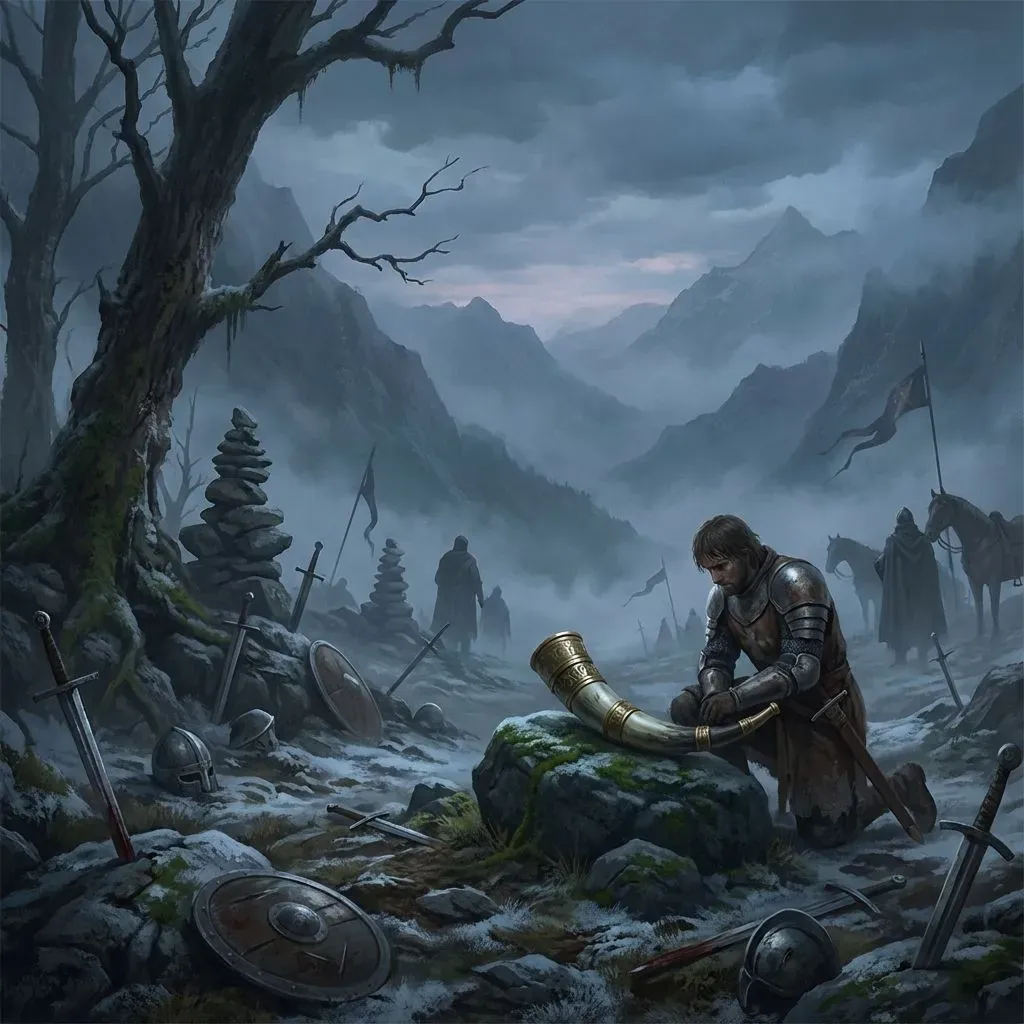
The Basque ambush against Charlemagne's army in the Pyrenean pass where the legendary Roland fell.
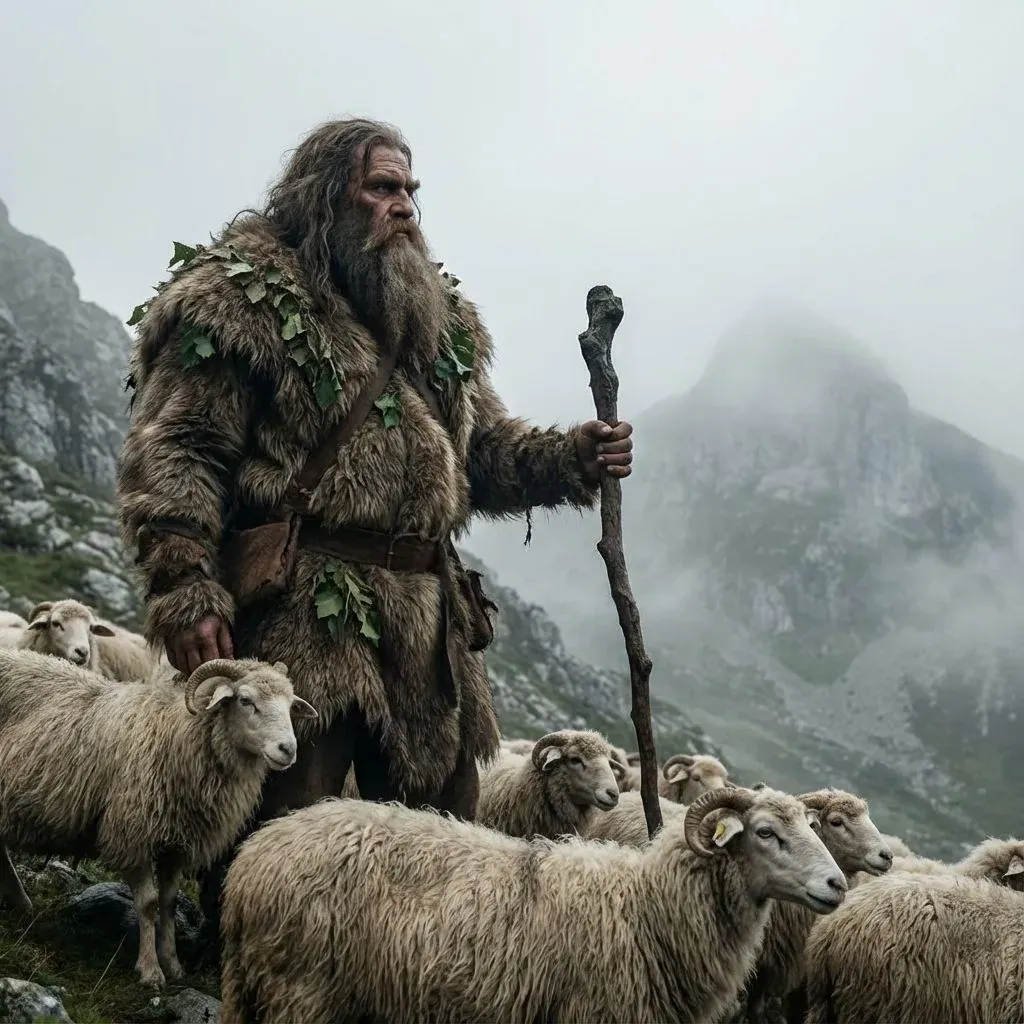
The shaggy giant who lives in the forests, protector of flocks and guardian of the secrets of agriculture and the forge.

Seductive nymphs who dwell in rivers and springs, recognisable by bird feet or fish tails, combing their hair with golden combs.
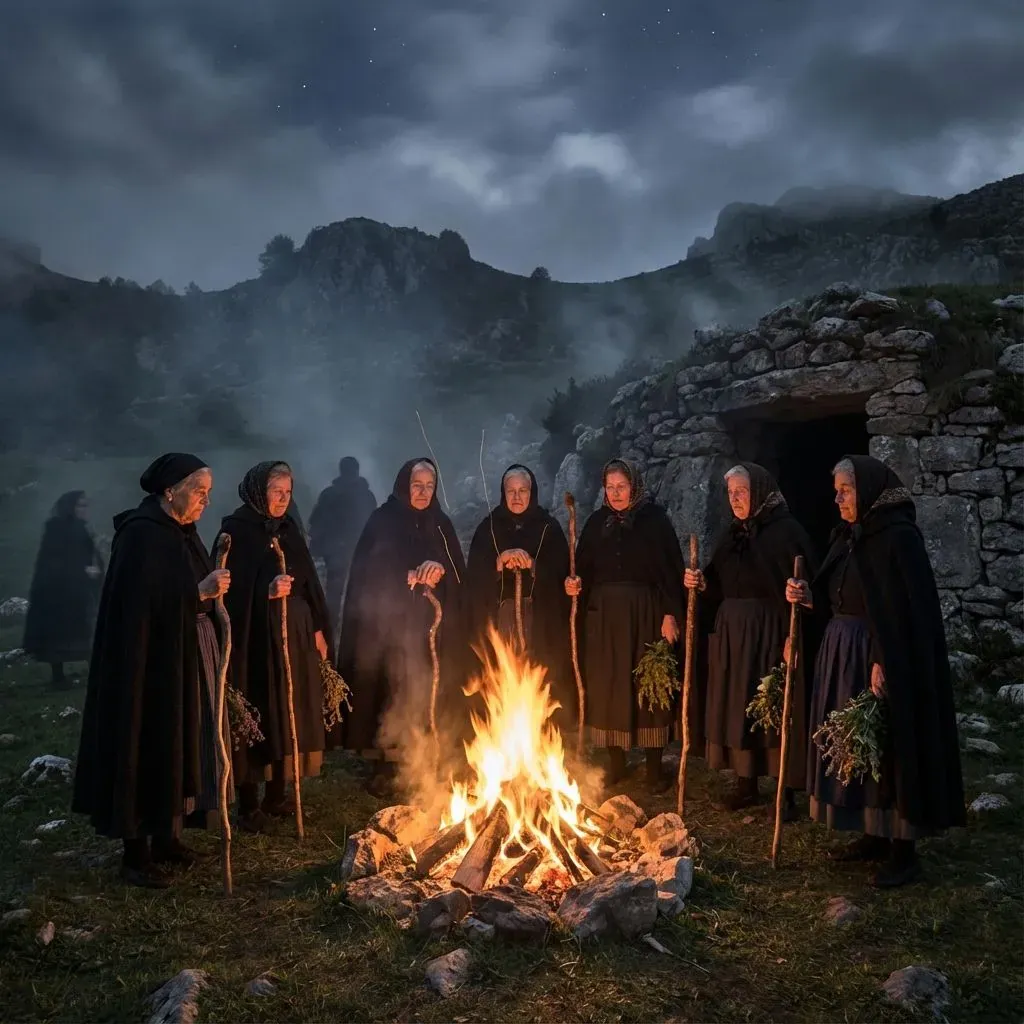
The Basque witches and wise women, priestesses of Mari who mastered potions, curses and the art of flying through the night sky.
Zugarramurdi cave, in northernmost Navarre just kilometres from France, is probably the Iberian Peninsula’s natural site most associated with witchcraft and inquisitorial persecution. An entrance over twenty metres high and an underground river forming a natural passage 120 metres long made it an ideal setting for the nocturnal gatherings that the imagination of the period described in terrifying detail.
More than four centuries have passed since the 1610 auto-da-fé in Logroño condemned several people from Zugarramurdi for witchcraft, yet that trial remains the main lens through which the cave is known. The tragedy of those women and men, whose lives were more complex and less sensational than the tribunal’s account built on coerced testimony, still resonates through the galleries.
The Witches’ Museum in Zugarramurdi provides historical context for a more nuanced cave visit. Understanding the site requires distinguishing the folklore of Basque sorginak, originally associated with herbal knowledge and natural cycles, from the Inquisition’s construction of the witch as an enemy of God.
The cave is also geologically impressive, with limestone vaults, constant humidity and the sound of underground water beneath visitors’ feet. Together with the smaller cavities known as the witches’ caves, it forms one of northern Navarre’s most evocative sites.