Chasms and caves
Deep openings from which the beast was imagined to emerge.
The dark and untamed beast of fire in the ravine
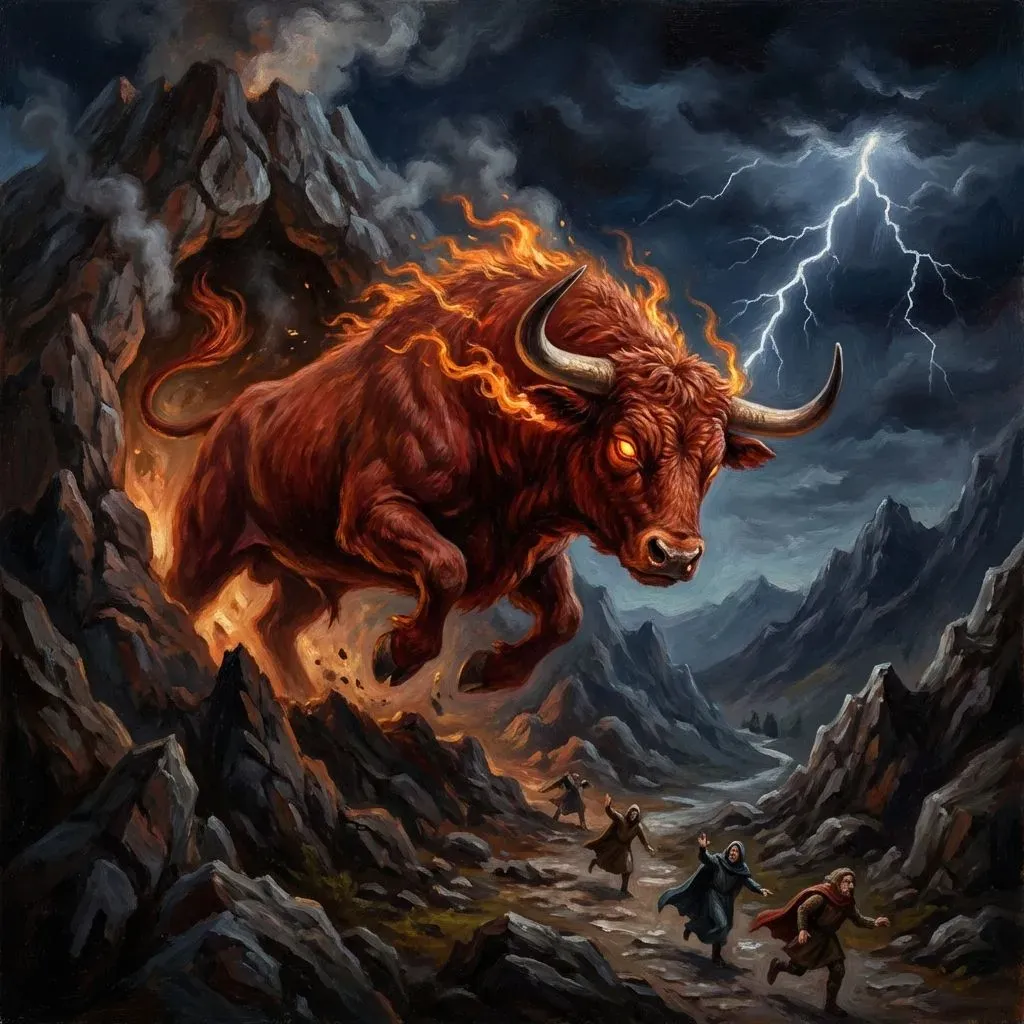
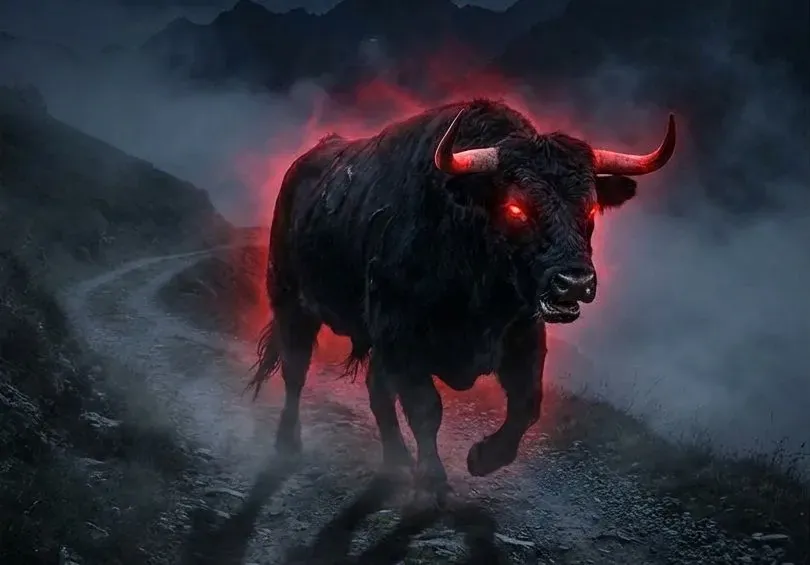
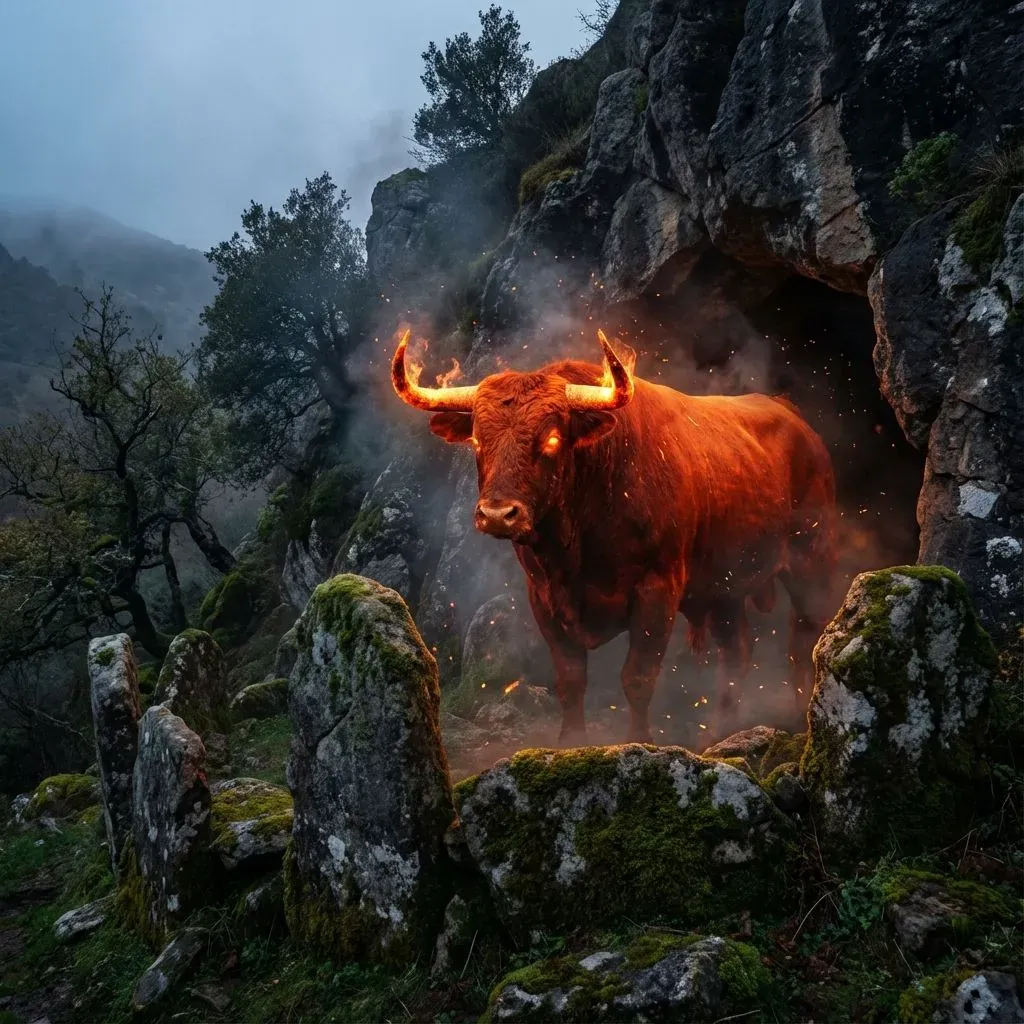
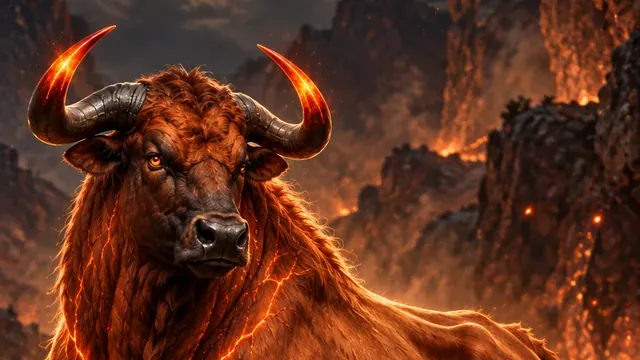
In winter tales told near ravines and caves, villagers spoke of a formless beast of fire that rose from the black openings of the earth. It was not always described in the same way: sometimes dog, sometimes boar, sometimes a mass of living embers.
What mattered was not exact shape, but function. The beast of fire announced approaching calamity, disease, or devastation, appearing as a blazing warning from the hidden depths beneath the mountain.
The only true defense, according to some versions, was iron: a forged cross or heavy metal symbol capable of halting the advance of the fiery terror.
This legend joins fear of epidemic, volcanic depth, and sacred geography into one image. The mountain does not merely shelter life; it can also release warning and destruction.
Deep openings from which the beast was imagined to emerge.
Threshold zones where the fiery omen was believed to threaten the community.
This legend is striking because it treats fire not as abstract element but as a living beast. Disaster becomes animate, something that can be imagined approaching from the depths.
Its shapelessness adds to the fear. The beast may change form, but its message remains the same: something terrible is drawing near from below.
The link to Zezengorri anchors the story in the broader Basque network of fiery guardians and subterranean powers. Warning and punishment emerge from the same mythic geography.
The tale survives because it gives communal dread a body, turning epidemic fear and geological unease into a single unforgettable image.