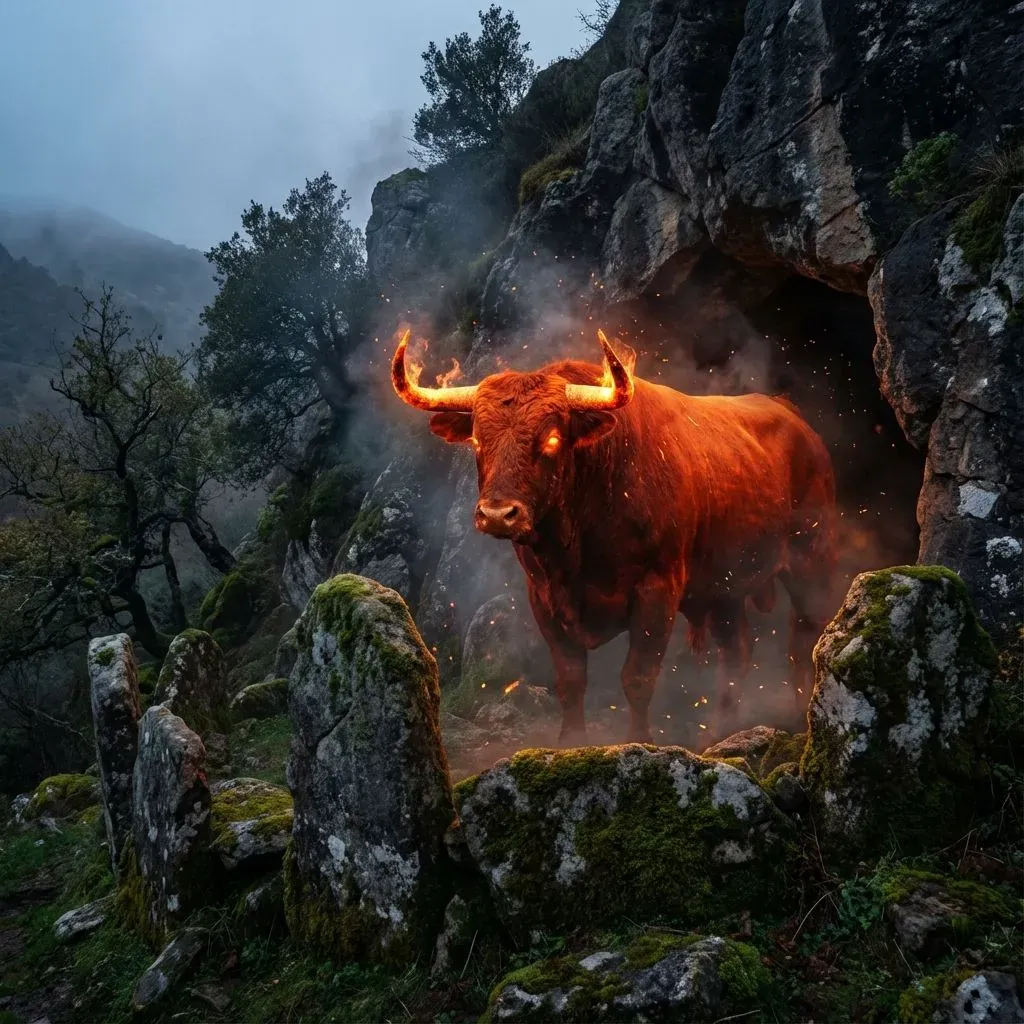
Mountain chasms
Openings and ravines where Zezengorri was believed to appear in defense of the hidden world.
The fiery guardian of chasms and sacred passages
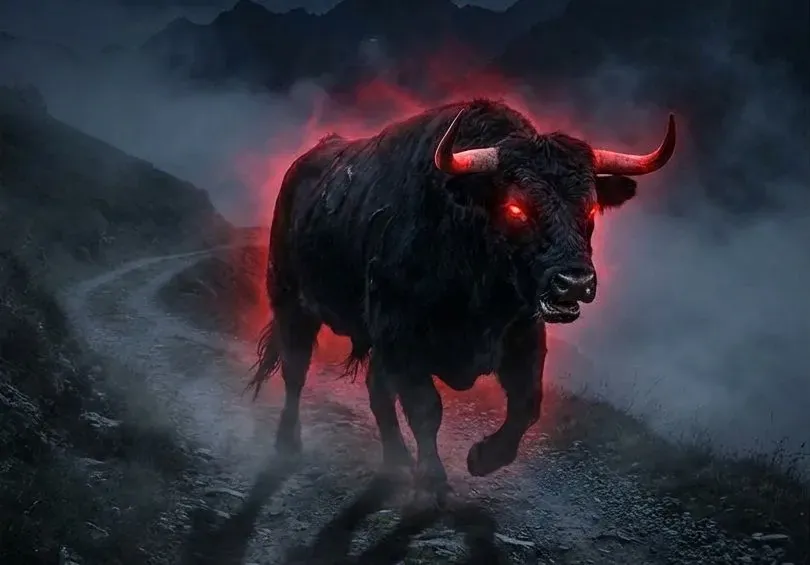
Zezengorri is one of the most powerful and enduring animal beings in Basque mythology. Known as the red bull, he belongs to the network of fiery guardians that protect mountains, chasms, and forbidden entrances.
Although often confused with Aatxe, Sugaar, or other beings of storm and flame, Zezengorri keeps a distinct role: he appears to frighten away intruders, treasure seekers, and the reckless who violate sacred places.
His body is often imagined as covered in fire or glowing from within, and his sudden charge down the slope leaves victims terrified rather than merely injured. His purpose is warning through terror.
The legend links pastoral memory, mountain taboo, and the ancient symbolic force of the bull into a single figure. Zezengorri is not just a monster, but a guardian whose violence protects what should remain hidden.
Openings and ravines where Zezengorri was believed to appear in defense of the hidden world.

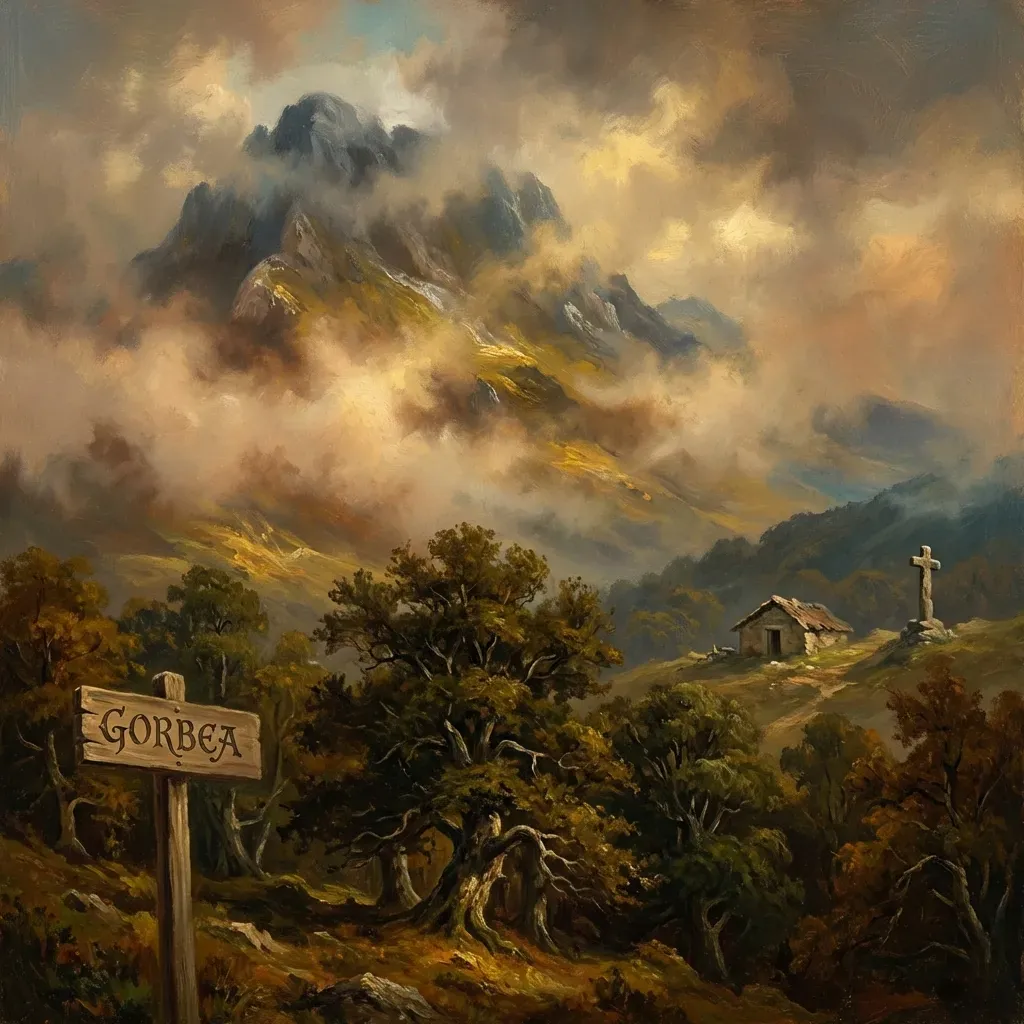
Landscapes where shepherds preserved his memory as a living warning.
Zezengorri condenses several deep layers of Basque symbolism: the bull, the mountain, the hidden treasure, and the sacred fear that protects forbidden places. He is both animal and threshold law.
His importance lies not only in what he is, but in what he prevents. The red bull appears when greed, curiosity, or reckless boldness threaten the boundaries of the hidden world.
That places him alongside other fiery guardians, yet with a clear identity of his own. Zezengorri is the charge of the mountain itself against intrusion.
The tale endures because it makes the landscape morally alive. Ravines and caves are no longer empty features, but watched entrances with memory, force, and will.
The elders’ stories of the fearsome Zezengorri at remote crossroads after dark were more than simple tales to keep children or unwary, drunken shepherds away from treacherous ravines. They embodied a living inheritance of religious reverence for an ancestral animal form of punishment and respect for the environment, rooted in Europe’s Atlantic mountains before the arrival of monotheistic evangelisation.