Farmyard corrals
Rural spaces where the rooster's voice signaled safety and the retreat of night powers.
The red cry that drives back the darkness of Gaueko
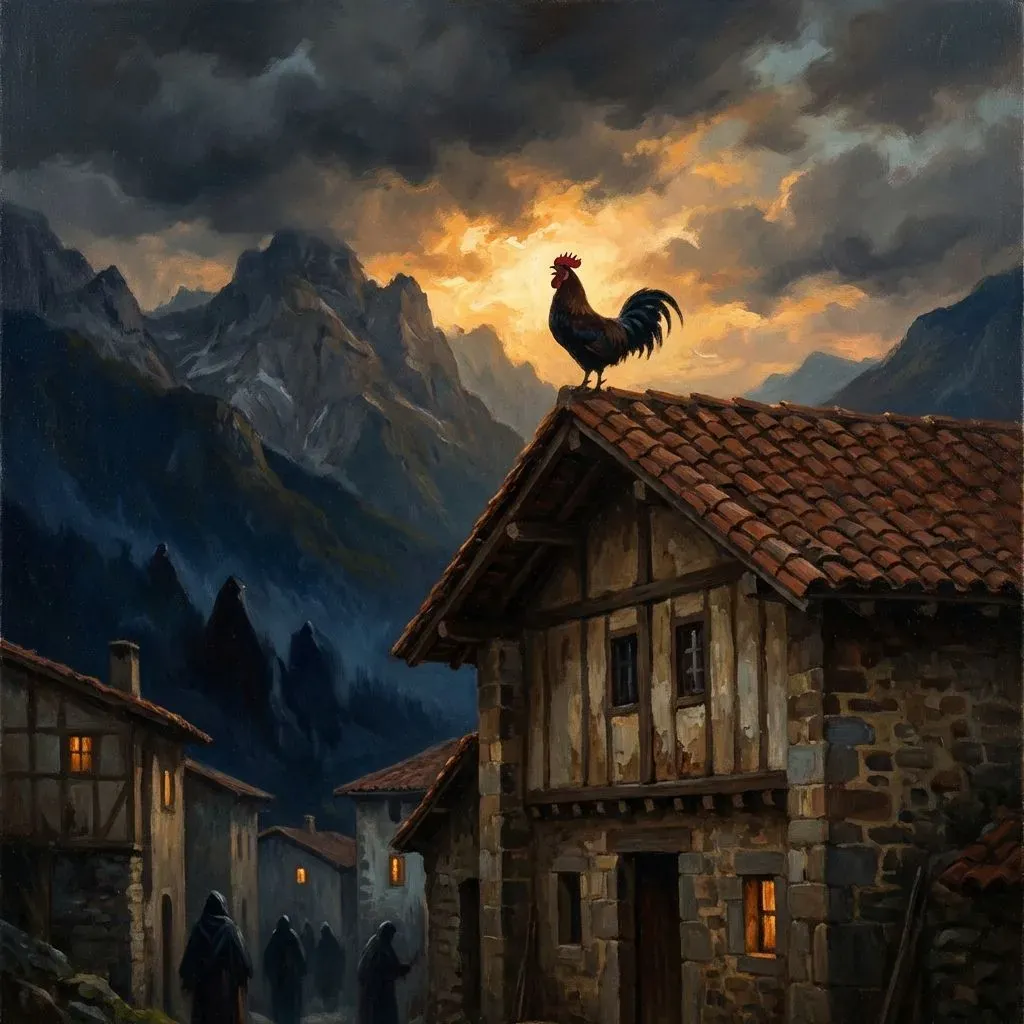
In the deepest hours of darkness, Gaueko and the powers of the night are said to reign without rival. Yet even that dominion has a limit: the cry of the rooster at dawn.
The rooster's crow breaks spells, scatters nocturnal beings, and announces the return of a world ordered by daylight. What belonged to fear and shadow must withdraw before that sound.
For this reason, keeping roosters near the farmhouse was not only practical but symbolic. Their voice was a living defense against witches, specters, and the wandering dangers of the dark.
The legend turns a familiar rural sound into a sacred signal of transition. Dawn is not merely a change of light, but a restoration of rightful order.
Rural spaces where the rooster's voice signaled safety and the retreat of night powers.
Places where labor or danger at night ended with the first cry of morning.
This legend gives extraordinary significance to an ordinary rural sound. The rooster's crow does not merely announce morning; it restores the balance that darkness had unsettled.
That gives the animal a sacred role within the household. The rooster becomes sentinel, herald, and defender, a living boundary between terror and safety.
The tale also reveals how sharply Basque tradition marked the difference between night order and day order. Dawn is not gradual neutrality, but a decisive reversal.
The story endures because it binds sound, time, and protection into one vivid image: the cry that sends the night away.