Hermitage of Saint John
The chapel on the summit of the islet where the saint's footprint is preserved.
? The sacred islet of Gaztelugatxe ?
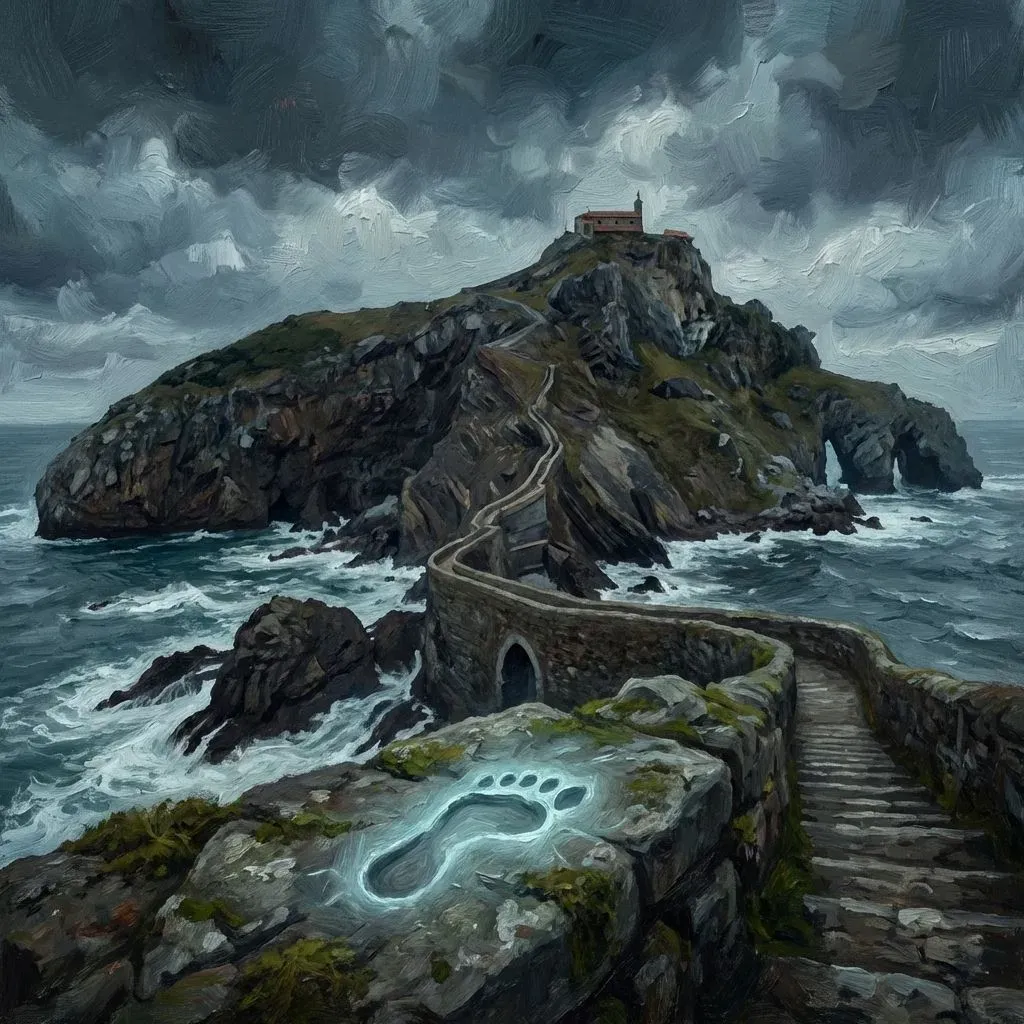
At the top of a rocky islet linked to the mainland by a spectacular stone bridge rises the hermitage of San Juan de Gaztelugatxe. According to tradition, Saint John the Baptist himself reached these shores from the Holy Land, and when he stepped on the rock he left the imprint of his foot behind.
Pilgrims climb the 241 steps that wind up the rock until they reach the chapel on the summit. Once there, they touch the saint's footprint three times while asking for protection and good fortune. They also ring the bell three times so that their deepest wishes may come true.
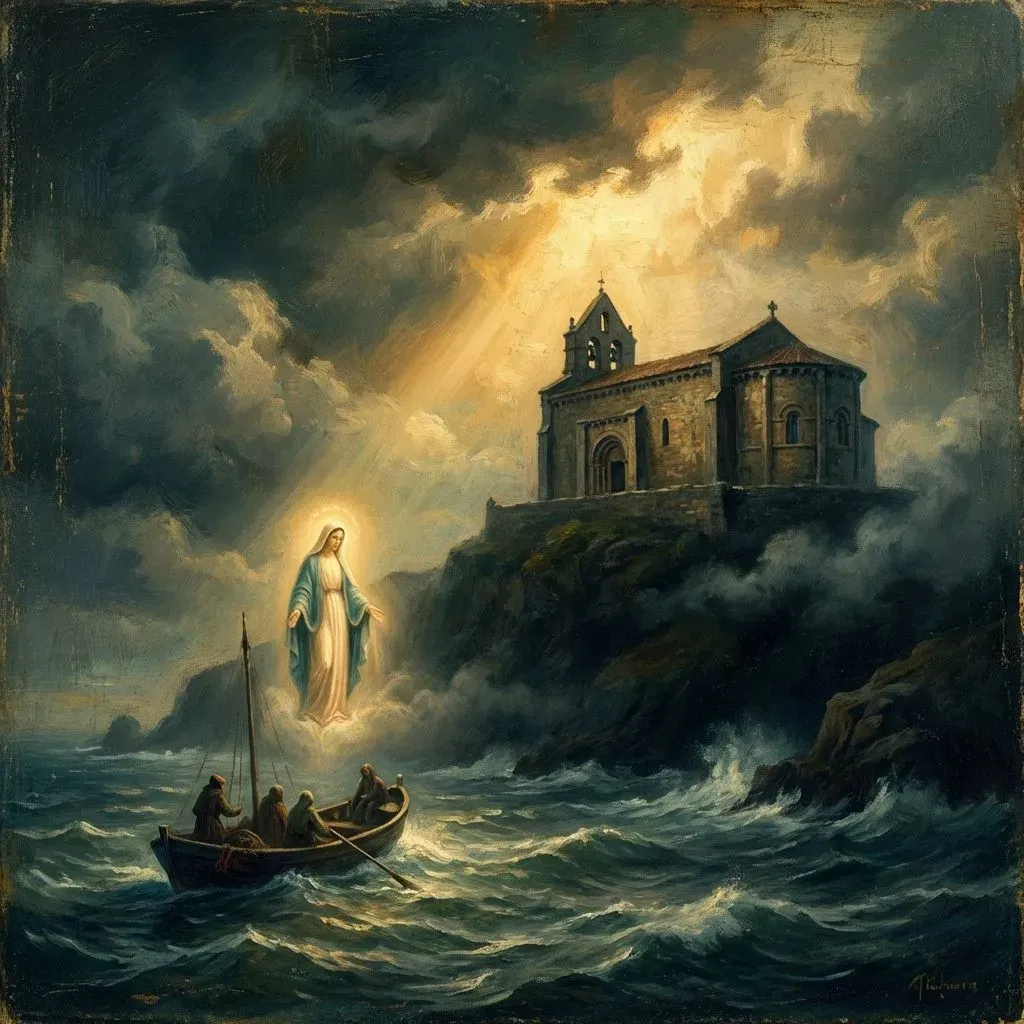
Sailors along the Biscayan coast have venerated this place for centuries as a protector against storms and the dangers of the sea. The hermitage has survived fires, pirate attacks and the harsh weather of the Cantabrian coast, being rebuilt again and again thanks to popular devotion.
The islet of Gaztelugatxe, whose name means ?rock castle? in Basque, blends the supernatural beauty of its landscape with the magic of legend, making it one of the most beloved and visited places on the Basque coast.
The chapel on the summit of the islet where the saint's footprint is preserved.
The dramatic Biscayan shoreline where Gaztelugatxe rises from the sea.
Gaztelugatxe stands on one of the most dramatic landscapes of the Basque coast: a narrow causeway, a staircase carved into the rock, and an islet exposed to wind, spray and storms. This setting explains why legend and devotion became inseparable here, turning the place into both sanctuary and threshold.
The footprint attributed to Saint John the Baptist condenses that sacred prestige. More than a miracle story, it marks the rock itself as touched by holiness, allowing pilgrims to encounter protection through gesture, ascent and repeated ritual. The landscape becomes part of the religious experience.
For generations, the site also carried maritime meaning. Sailors saw the hermitage as a protective presence on a dangerous coast, and its survival through fires, pirate attacks and storms reinforced the idea that Gaztelugatxe stood under special guardianship. Devotion and seafaring fear met in the same place.
The legend therefore helps explain why Gaztelugatxe is not merely a beautiful viewpoint. It is a living node of Basque memory where pilgrimage, coastal danger, Christian symbolism and older senses of sacred landscape still converge today.
The modern rite at Gaztelugatxe still carries the echo of an older sacred geography in which storms, danger and devotion all converged on the same rocky threshold.
In Christian memory the place became a site of protection for sailors and travellers, but the power of the legend comes from the way it preserves the cliff as a place already charged before that devotion took hold.
Climbing to the summit and ringing the bell is therefore both pilgrimage and continuity with a much older intuition: that certain heights answer those who approach them with fear, hope and reverence.