Farmhouses of Euskal Herria
Where Akerbeltz watches over family prosperity.
? The spirit that watches over the prosperity of the Basque home ?
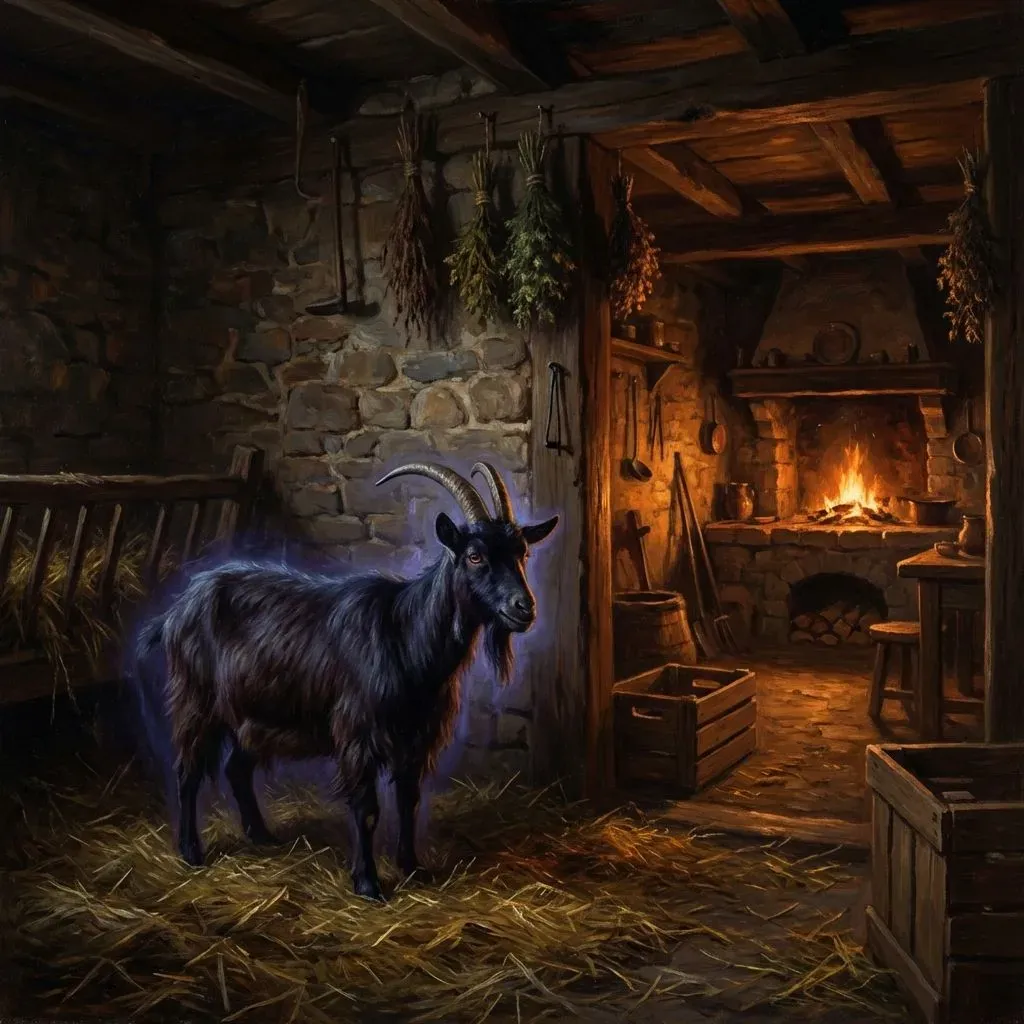
The Basque farmhouse (baserria) is far more than a house: it is the centre of the family universe, the bond with ancestors and land, the inheritance passed from generation to generation. And every worthy farmhouse was believed to have its own numen, its protective spirit: Akerbeltz.
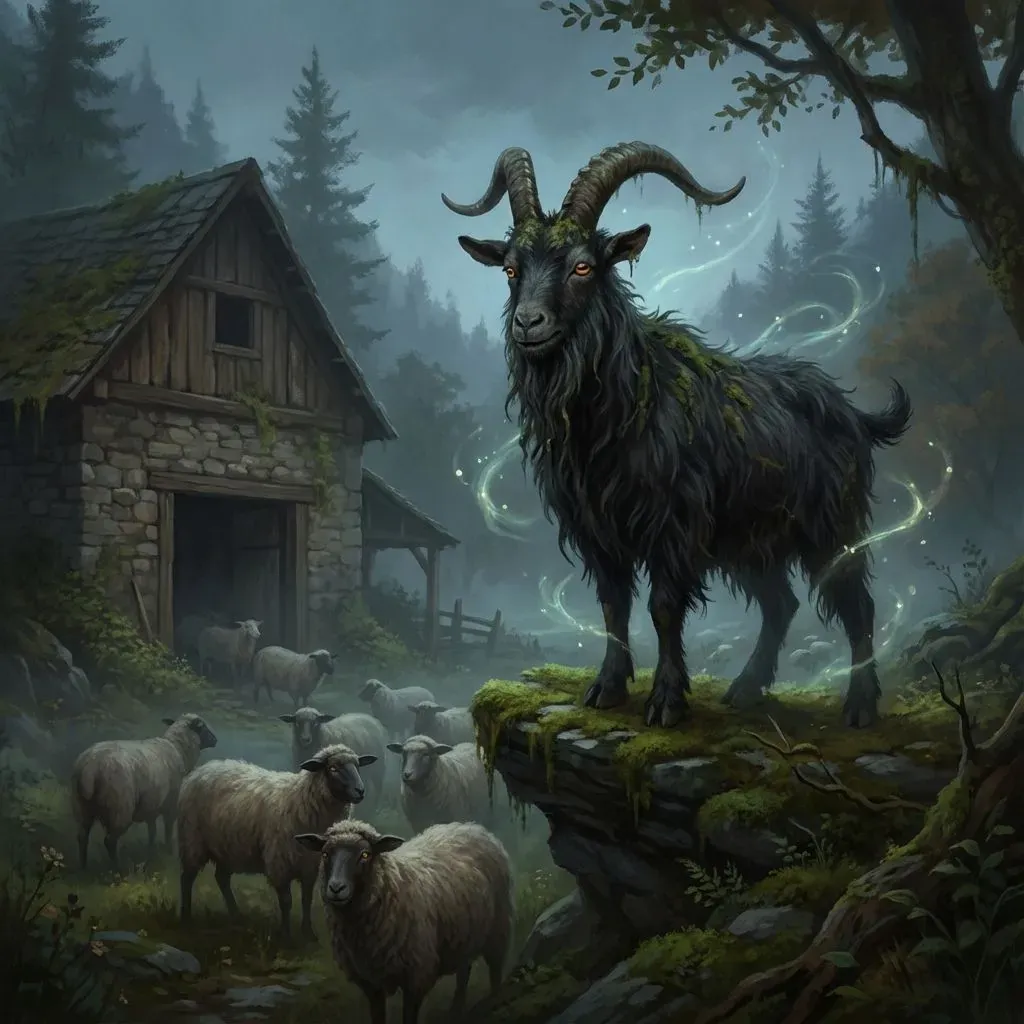
Unlike other domestic spirits that inhabited the hearth, Akerbeltz dwelt in the stable, the lower part of the traditional farmhouse. From there, his presence spread throughout the house, protecting not only the livestock but also the stored crops, the cheeses ripening in the cellar, and the people sleeping on the upper floors.
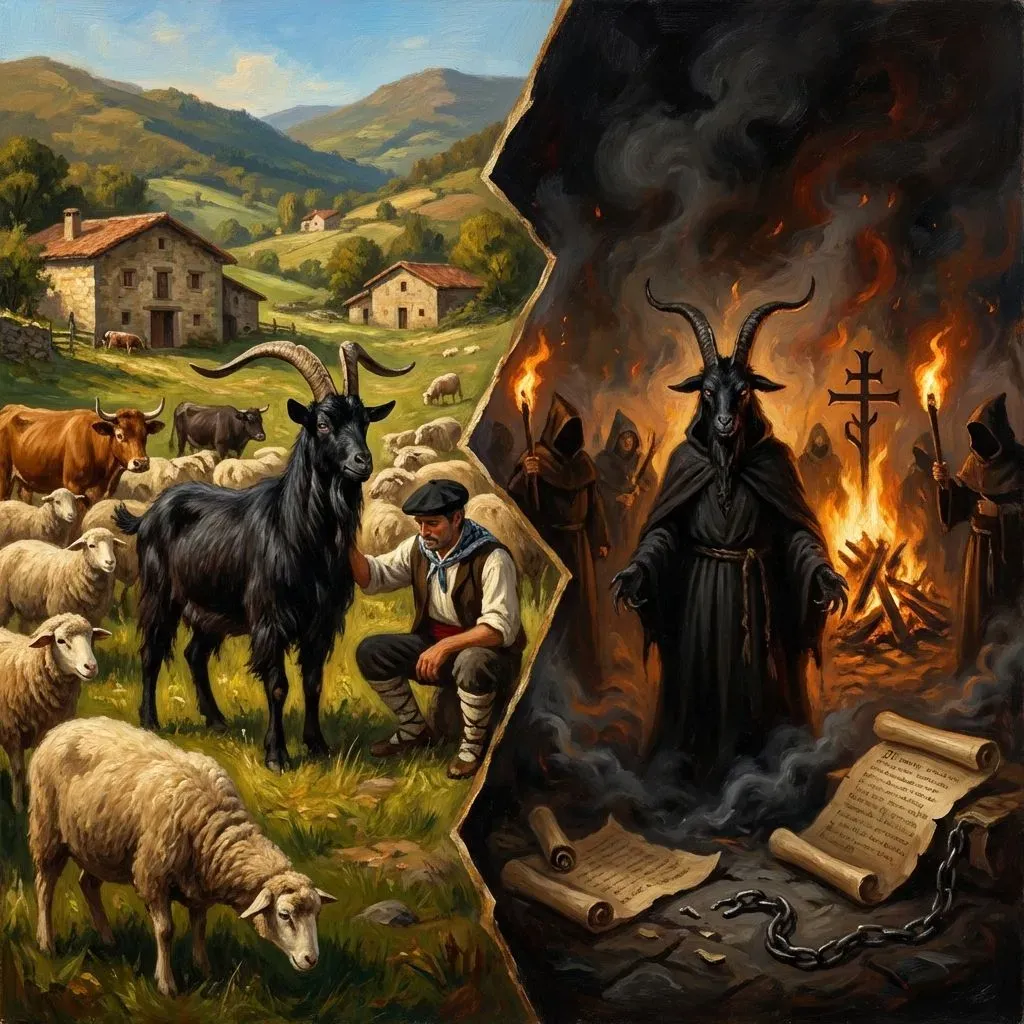
The farmhouses that prospered, that yielded good harvests year after year and saw their herds increase, were those where people ?kept good terms? with Akerbeltz. This meant keeping a black he-goat, but also respecting certain rules: not working on forbidden days, honouring the ancestors, and never lying to or cheating one's neighbours.
If a family abandoned these customs, the numen might withdraw. Then misfortune followed: livestock fell ill, crops failed and accidents multiplied. To regain the favour of Akerbeltz, the farmhouse had to be purified and its ancestral commitments renewed.
Where Akerbeltz watches over family prosperity.

The lower part of the house from which the spirit extends its protection.
The legend of the farmhouse numen reveals how deeply moral order and material prosperity were linked in Basque rural thought. A house thrived not only because of labour, but because it remained aligned with a sacred domestic balance embodied by its protecting spirit.
Akerbeltz is especially important because he unites livestock, household and lineage. Dwelling in the stable, he protects the economic core of the farmhouse while also extending his influence upward to the family itself. The house is imagined as a living organism held together by visible work and invisible favour.
This means that ethics are never secondary. Honesty, neighbourly respect, ritual observance and loyalty to ancestral customs are part of the same structure that keeps crops, animals and people in good condition. Domestic fortune depends on right conduct as much as on skill.
The legend therefore offers more than a charming belief in a house spirit. It expresses a whole Basque philosophy of habitation, in which prosperity flows from a covenant between human behaviour, inherited space and the unseen forces that dwell within the home.