Zugarramurdi
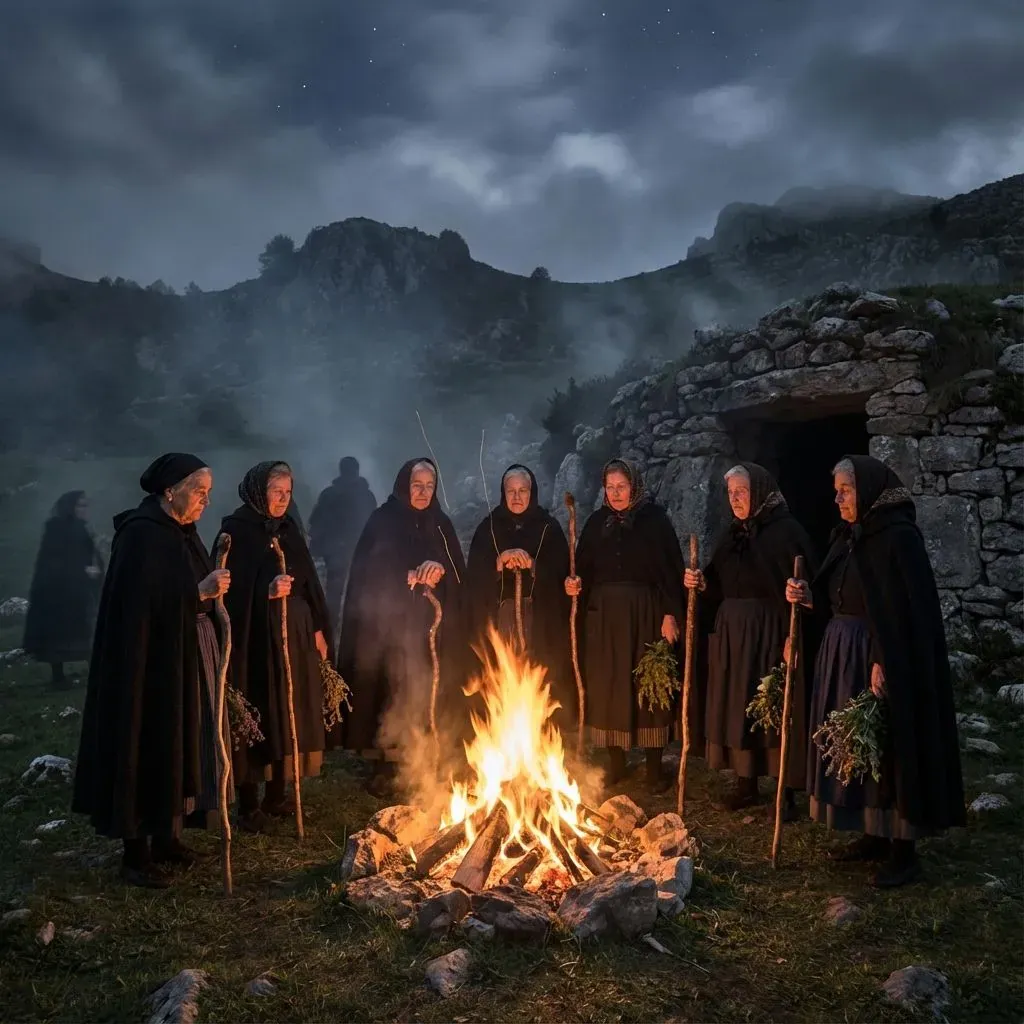
Place of akelarres where Akerbeltz presided over witches' gatherings.
The black he goat
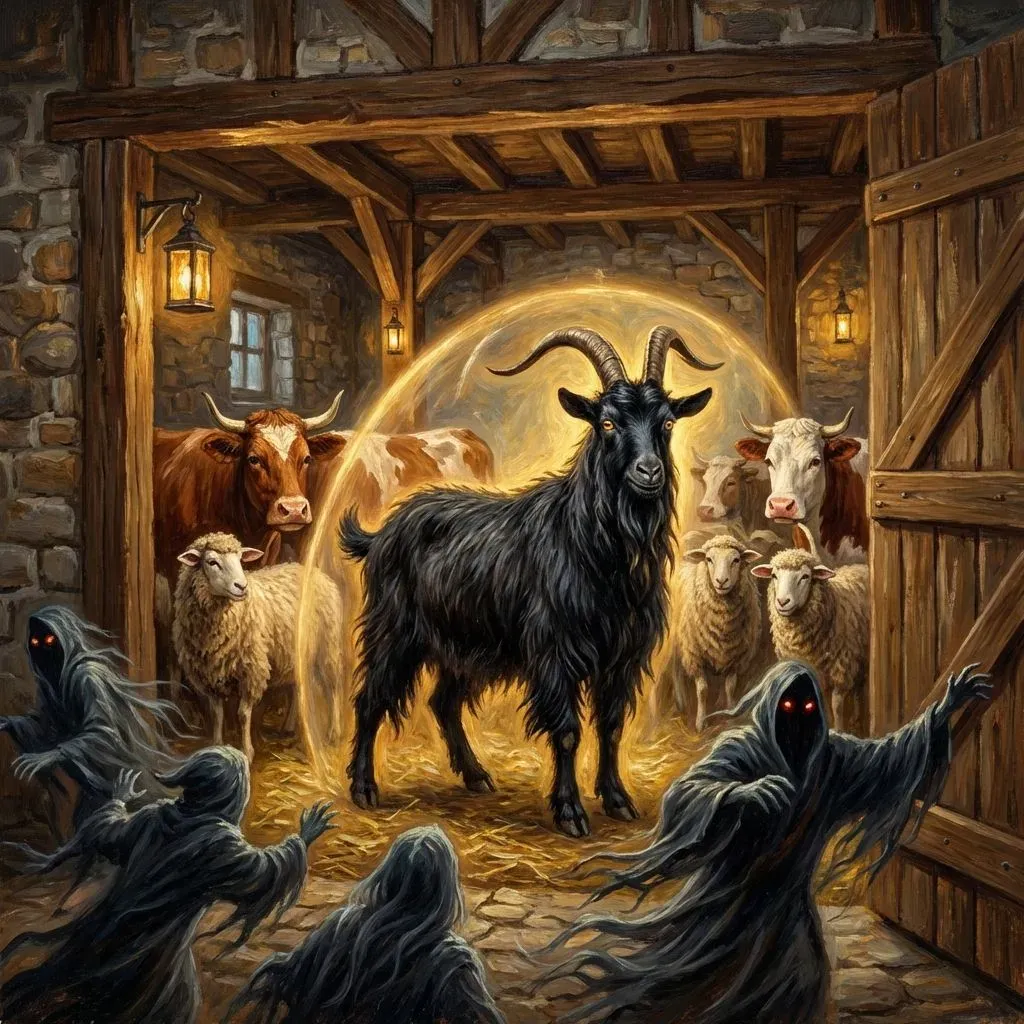
Akerbeltz is the black he-goat, an ancestral protector of livestock in Basque farmhouses. His presence in the stables drove away illness, spells and evil spirits that threatened the herd.
He is an ambiguous figure, poised between protective numen and symbol of nocturnal akelarres. Popular tradition associated him both with the fertility of livestock and with secret gatherings of witches in the night.
Place of akelarres where Akerbeltz presided over witches' gatherings.
Stables where a black goat protected cattle from spells.

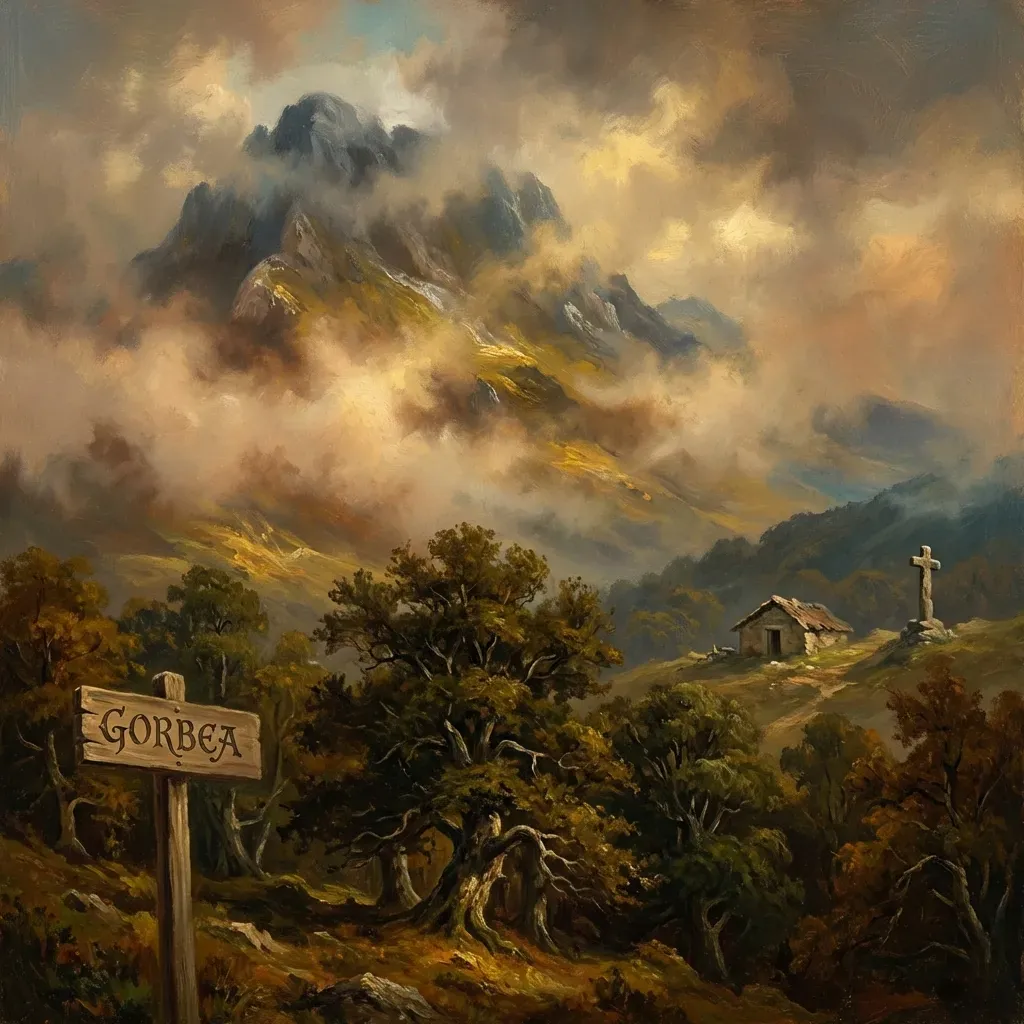
Pastures where Akerbeltz watched over the health of flocks.
The name Akerbeltz comes from Basque: aker, he-goat, and beltz, black. It names both the animal itself and the sacred power associated with it in rural tradition.
The tradition of keeping a black billy goat in the stable survived until recent times. The Inquisition demonised it by associating the practice with witchcraft, although its origins were protective and benevolent.
Akerbeltz belongs to the oldest layer of Basque mythology and can be understood as a black he goat linked to protection and witchcraft.
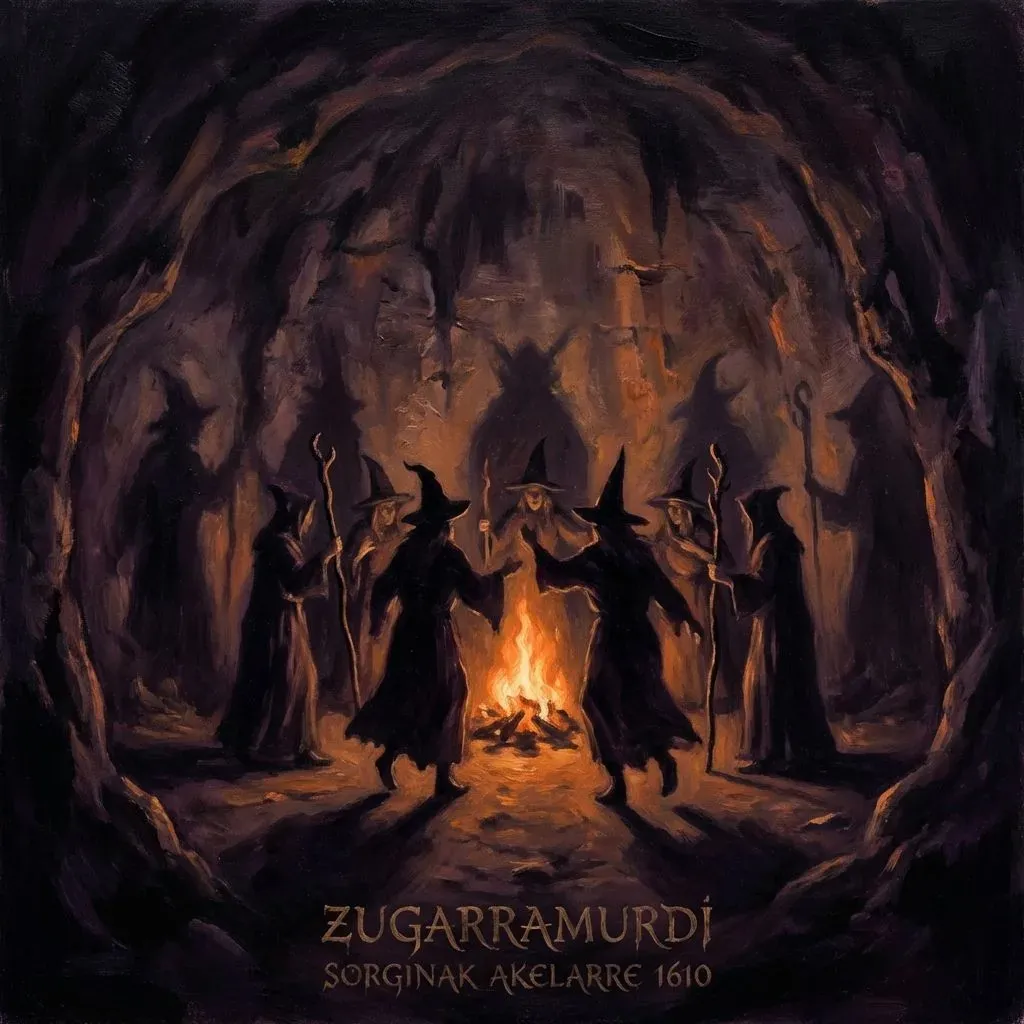
Akelarres presided over by Akerbeltz according to inquisitorial records.
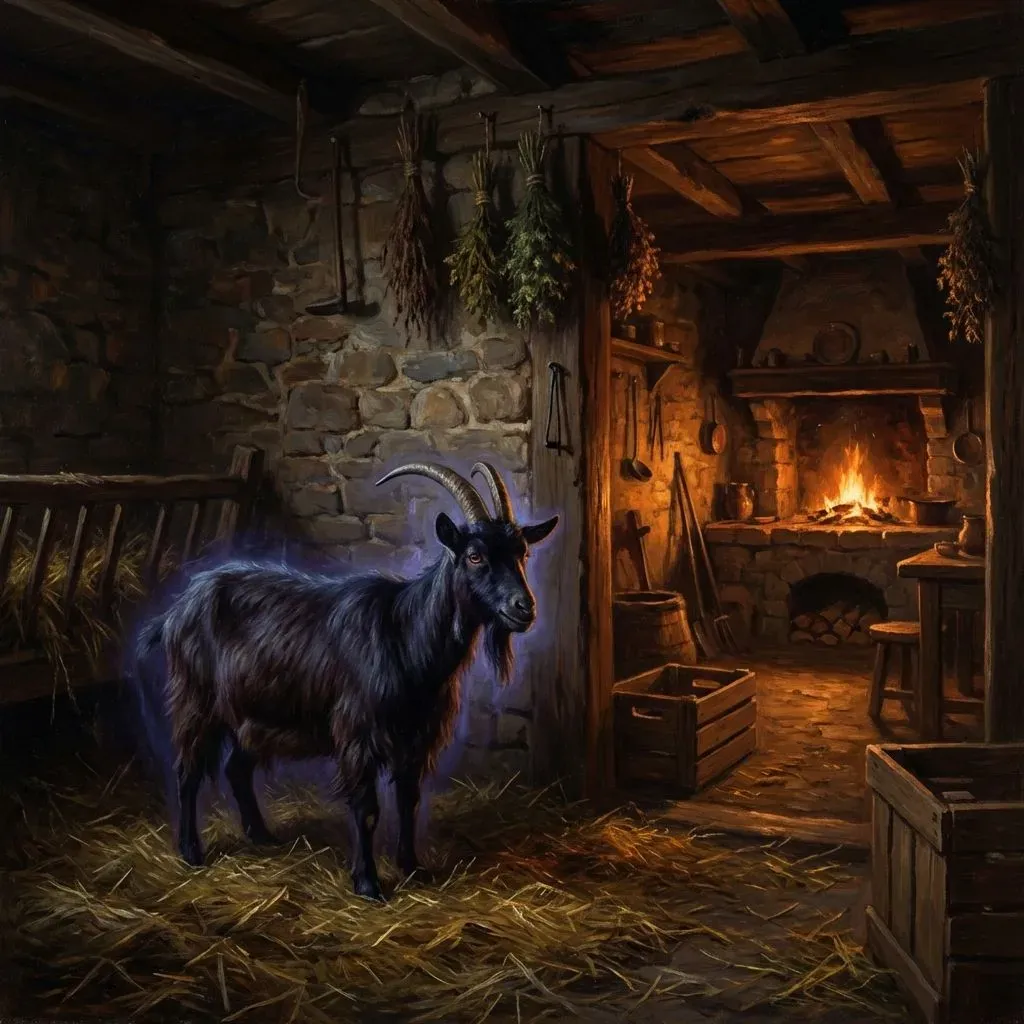
Its stories are closely tied to the stable, the farmhouse and the memory of the akelarre.
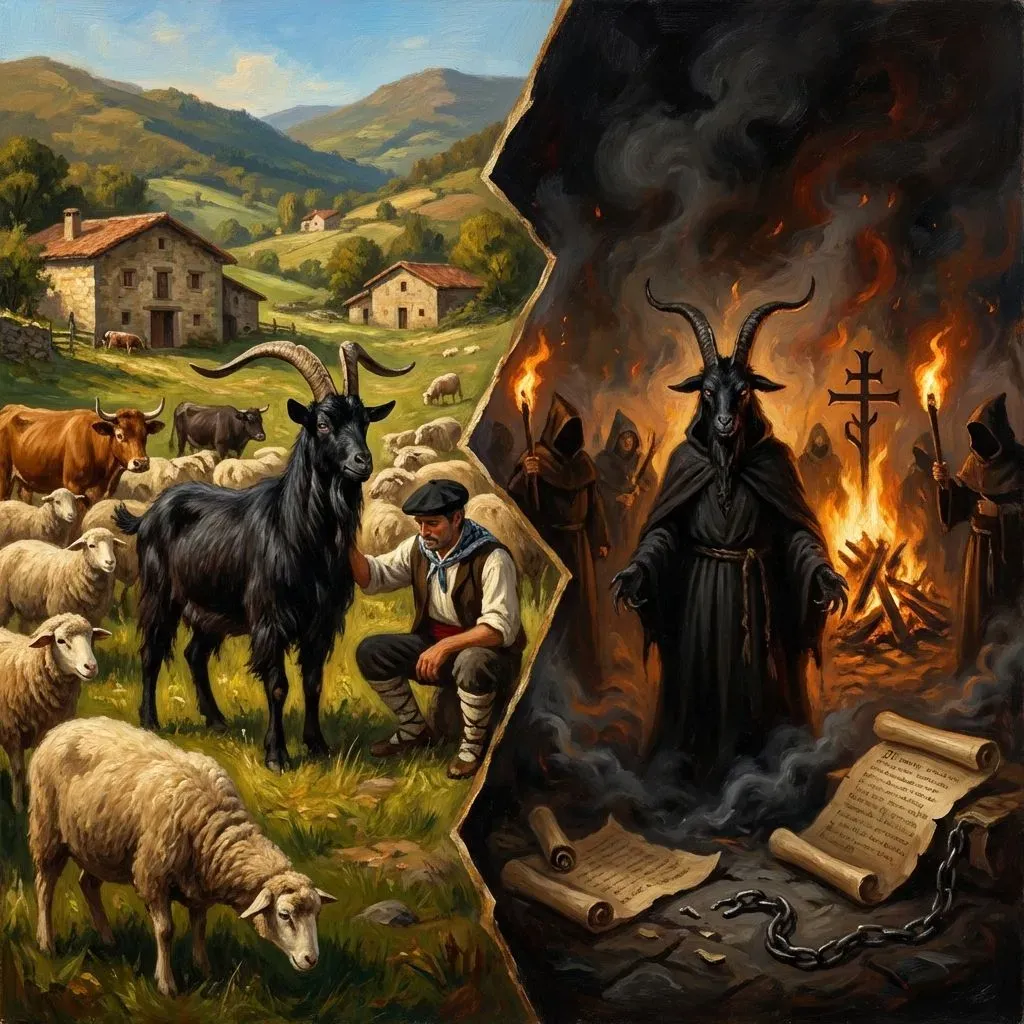
Again and again the tradition returns to livestock, domestic protection, fear and later demonization.
Rather than a decorative figure, Akerbeltz helps explain how the Basque world understood danger, order and sacred space.
In many versions, Akerbeltz marks a frontier between what belongs to human life and what must remain respected from a distance.
That is why the tales about Akerbeltz often combine fear, wonder and moral instruction in the same narrative movement.
The figure also preserves an older way of reading the landscape, where mountains, houses, storms or caves are never neutral settings.
Through Akerbeltz, myth gives shape to forces that cannot be seen directly but can still be felt in weather, place, memory and ritual.