Teodosius of Goñi
The Navarrese knight who, deceived by the devil, committed parricide and wandered in chains until Saint Michael freed him at Aralar.
— Nafarroa —
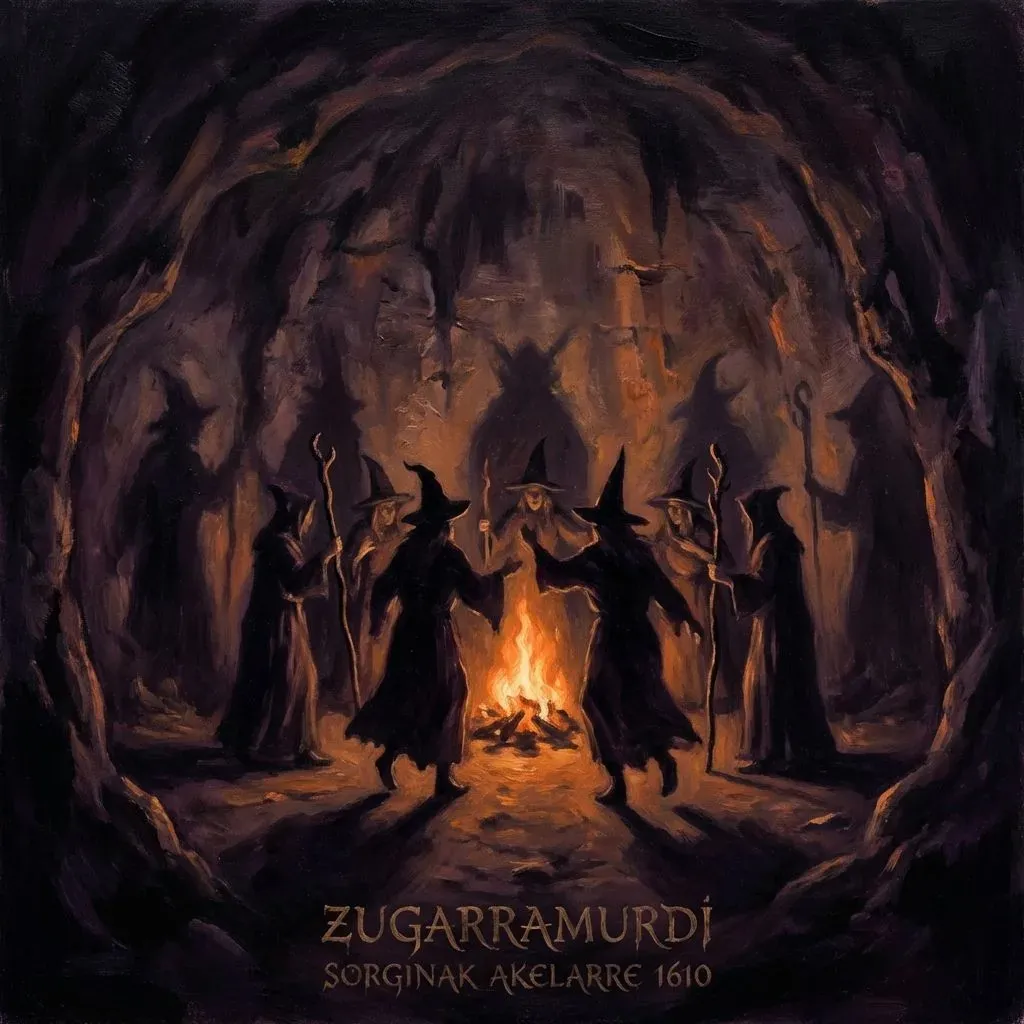
Zugarramurdi is a small village in the Navarrese Pyrenees known worldwide for its association with witchcraft and the legends of akelarres. Located just a few kilometres from the French border, it has become one of the great symbolic settings of the Basque imagination.
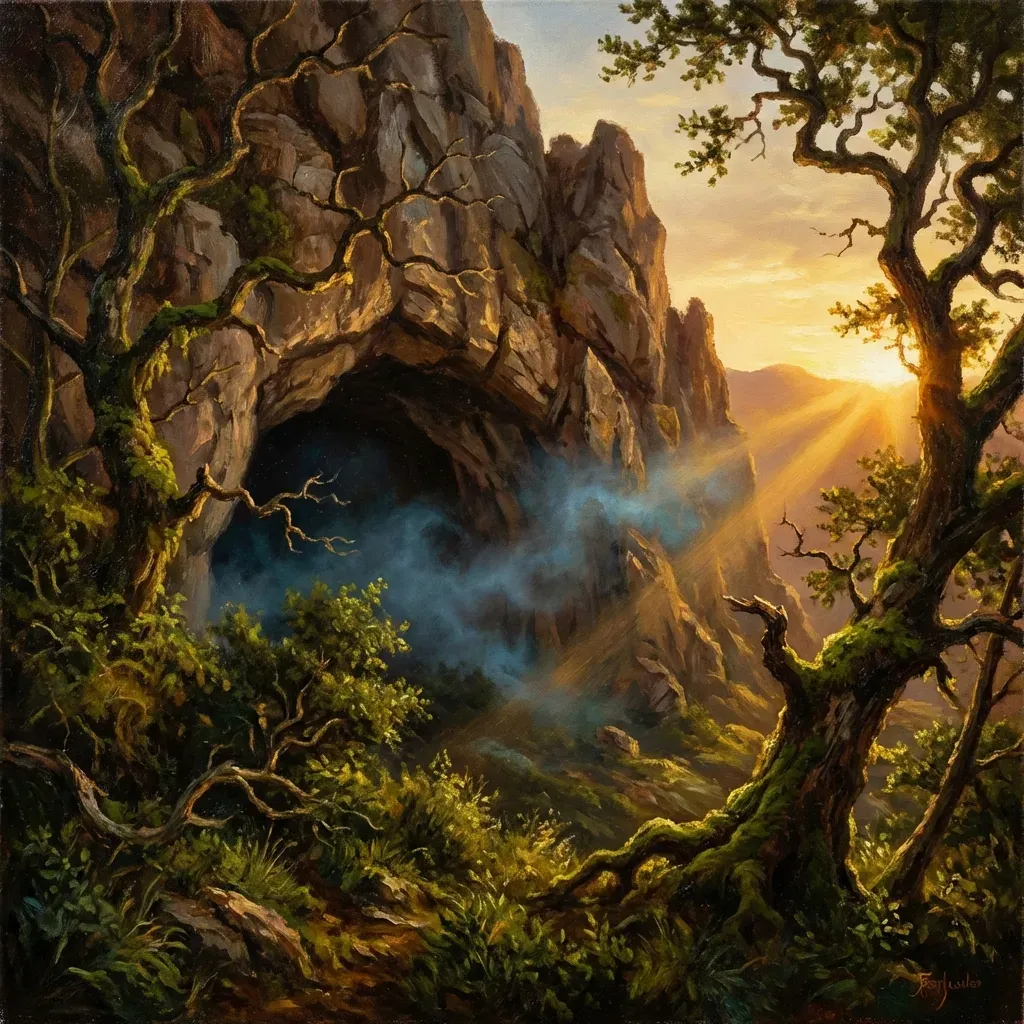
The fame of Zugarramurdi is mainly linked to the Inquisition trials of 1610, when the tribunal of Logrono condemned numerous inhabitants accused of witchcraft. According to the testimonies gathered at the time, gatherings, dances and nocturnal rituals were said to take place in the nearby cave and the surrounding meadows.
The Witches Museum, housed in a former hospital building, offers a powerful journey through daily life in the seventeenth century and the circumstances that led to the great witchcraft trial. Today the village preserves its quiet rural character while remaining one of the key gateways into the history and mythology of the western Pyrenees.
Beyond its witchcraft associations, Zugarramurdi has its own charm: stone farmhouses, narrow lanes, a Romanesque church and a beautiful Pyrenean foothill setting. Its summer-solstice Akelarre festival attracts thousands of visitors.
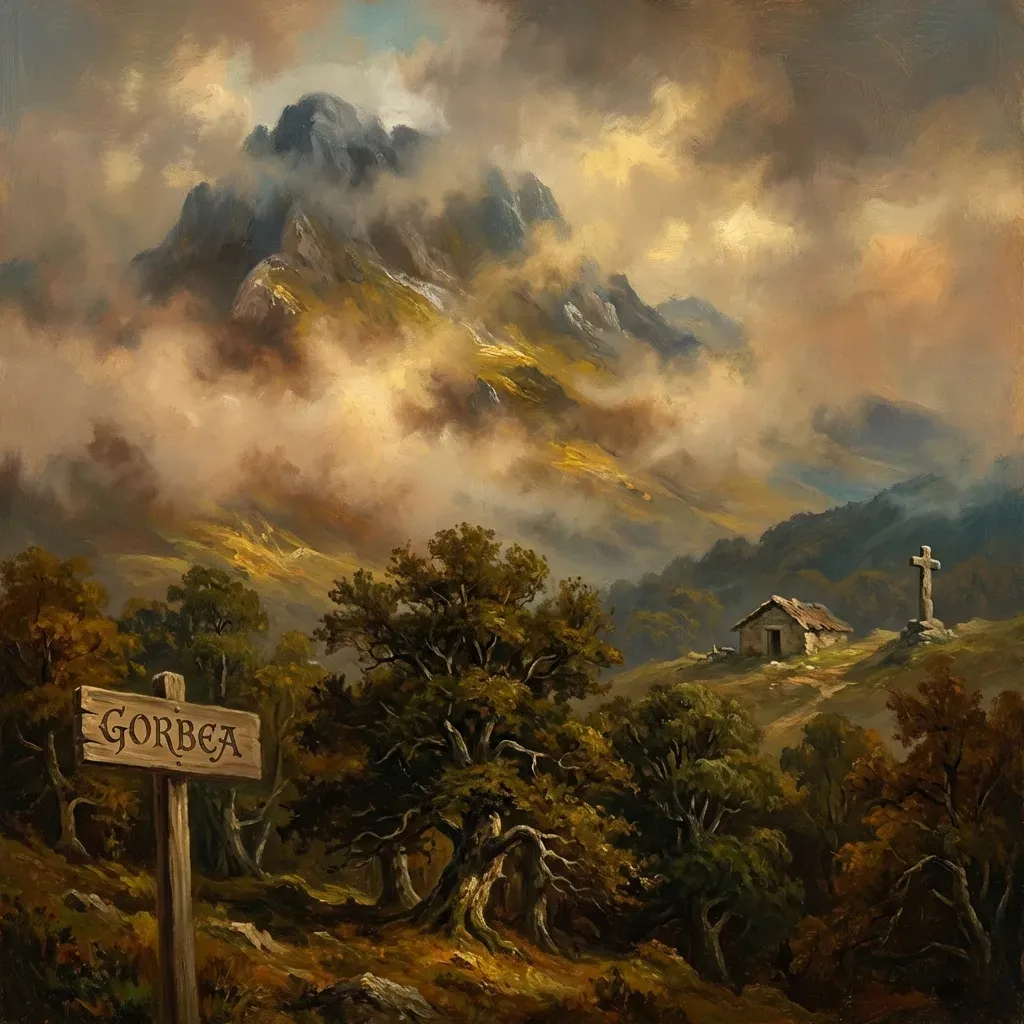
The Navarrese knight who, deceived by the devil, committed parricide and wandered in chains until Saint Michael freed him at Aralar.
The famous inquisitorial trial of 1610 against the Navarrese witches who held akelarres in the sacred cave.
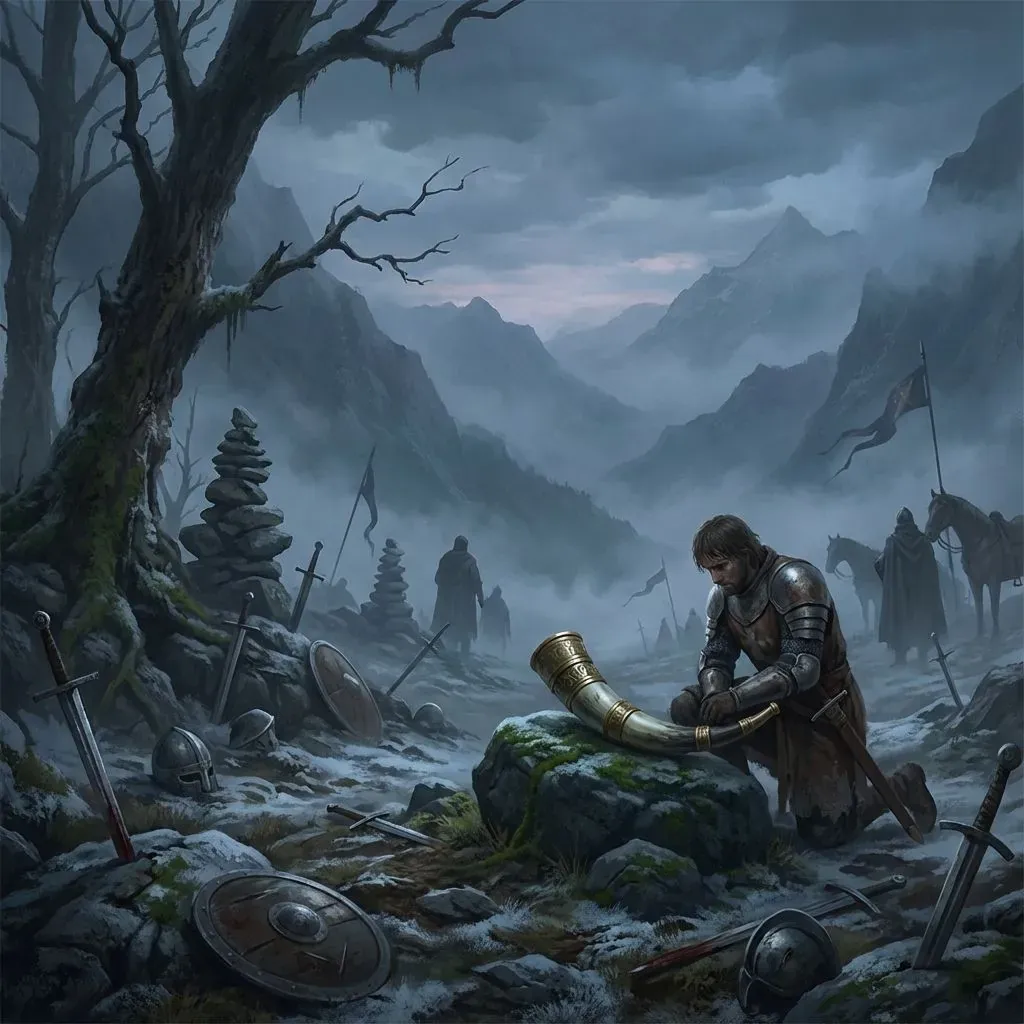
The Basque ambush against Charlemagne's army in the Pyrenean pass where the legendary Roland fell.
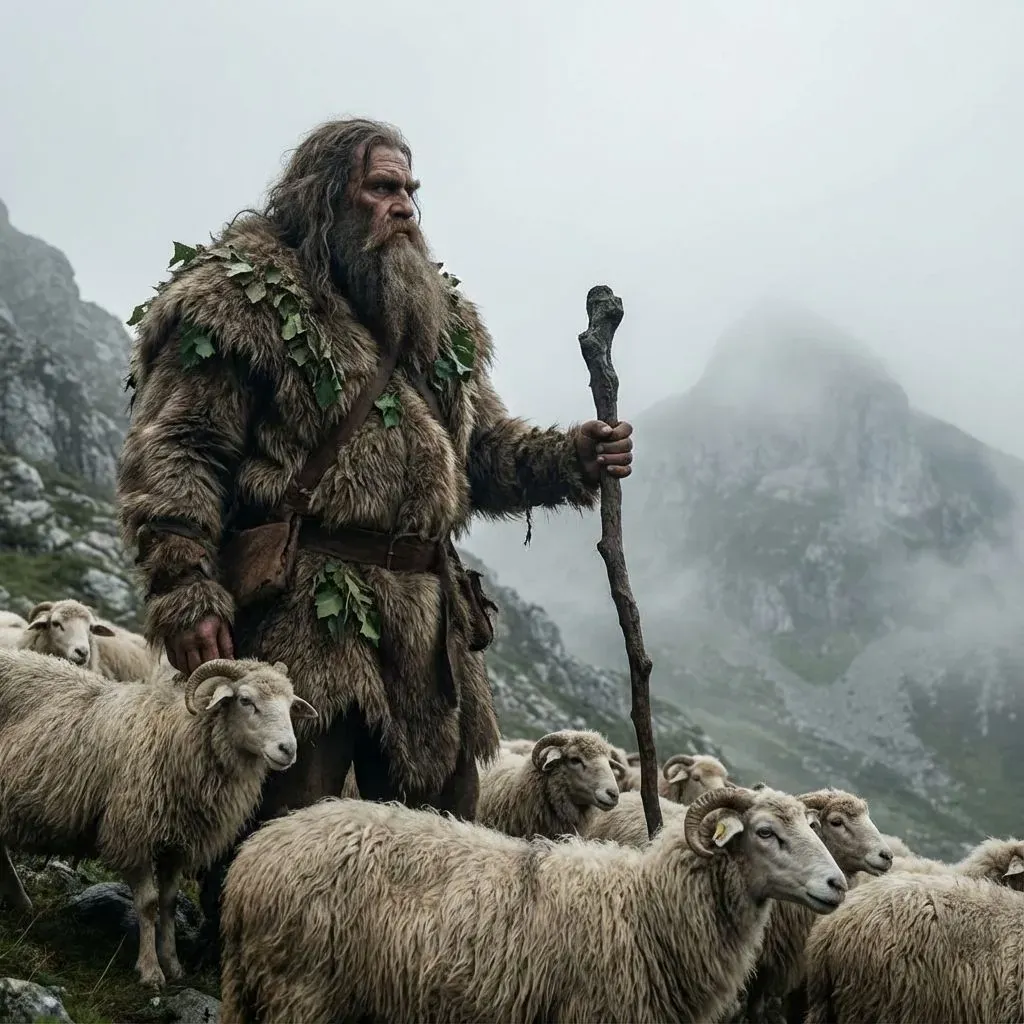
The shaggy giant who lives in the forests, protector of flocks and guardian of the secrets of agriculture and the forge.

Seductive nymphs who dwell in rivers and springs, recognisable by bird feet or fish tails, combing their hair with golden combs.
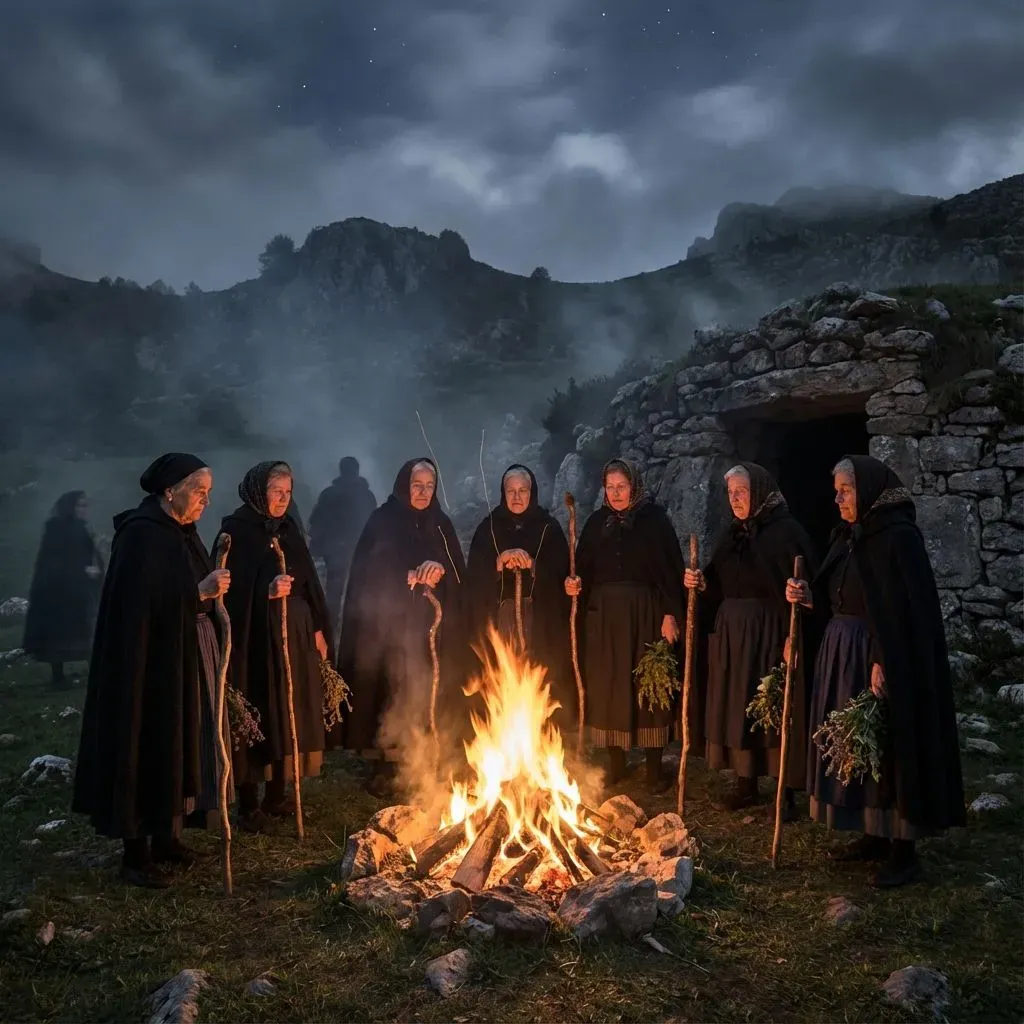
The Basque witches and wise women, priestesses of Mari who mastered potions, curses and the art of flying through the night sky.
Zugarramurdi, in northwestern Navarre near France, is a resonant name in Basque folklore and the history of inquisitorial persecution. Its caves were central to northern Spain’s major witch trials of 1609–1610. For four centuries, residents have lived with that fame through a mixture of cultural pride and critical historical awareness.
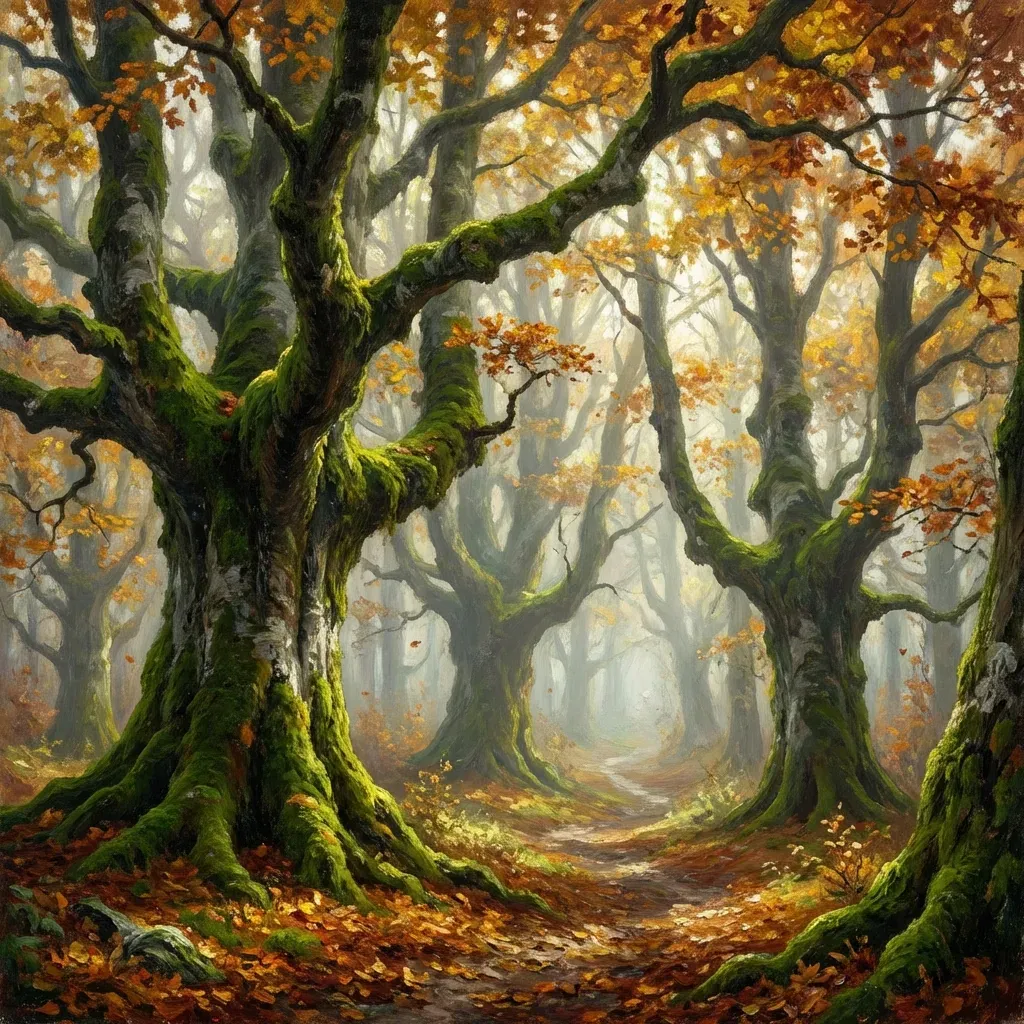
Beyond its caves, Zugarramurdi preserves the character of a traditional Navarrese village. Sandstone farmhouses and cobbled streets sit among humid beech woods. In mist, the setting resembles the scene one might imagine from inquisitors’ accounts of nocturnal gatherings, described with such detail and invention.
Zugarramurdi’s Witches’ Museum looks beyond sensationalism to explain the events of 1610 historically. Its thoughtful approach distinguishes Basque sorginak folklore from the Inquisition’s image of the witch as the devil’s agent, presents the individuals tried and asks why persecution emerges during intense social tension.
Each August, Zugarramurdi holds a witches’ festival that has helped create tourism income for this small community. Turning a real historical tragedy into celebration remains ambiguous: the tension between respectful remembrance of victims and festivities based on the myth that demonised them has no easy resolution, but invites reflection.