The caves of Zugarramurdi
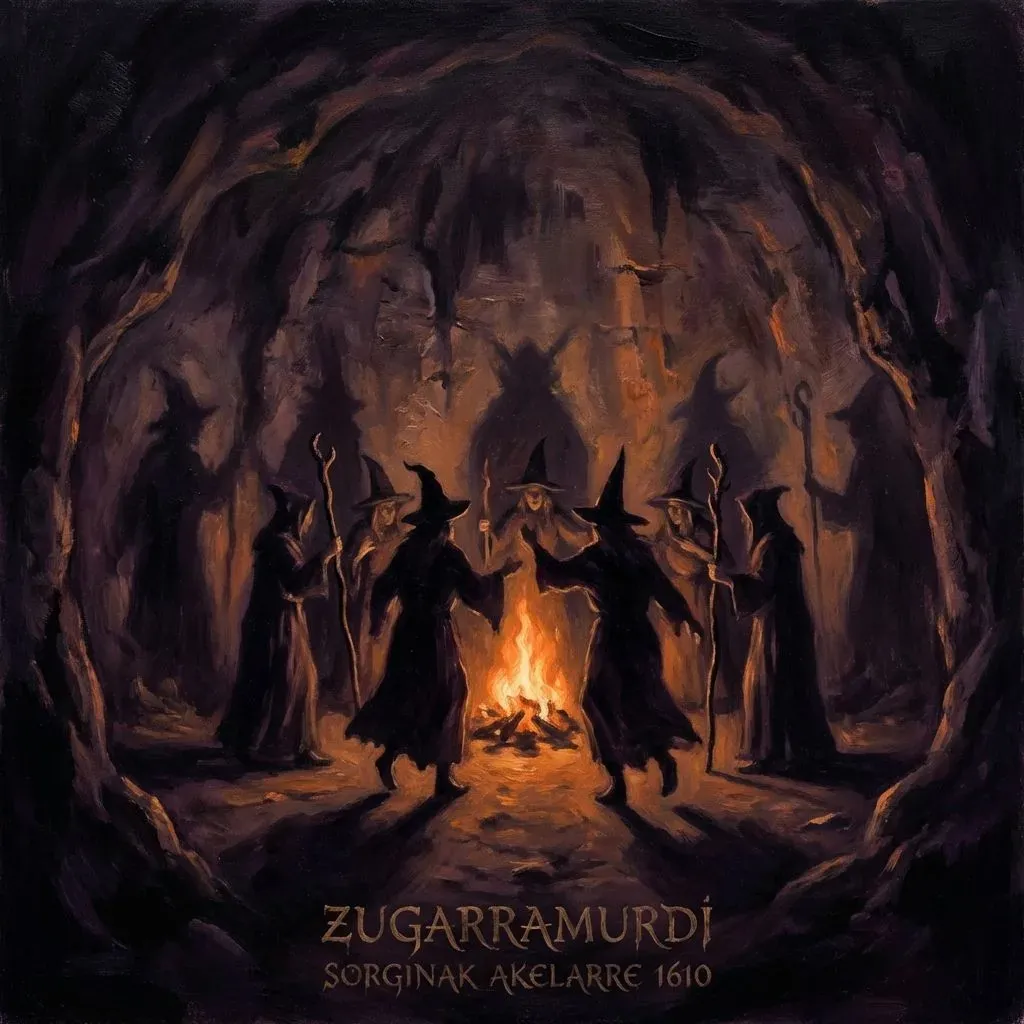
Legendary setting of sabbaths said to be led by Akerbeltz.
? From household guardian to demonic image ?
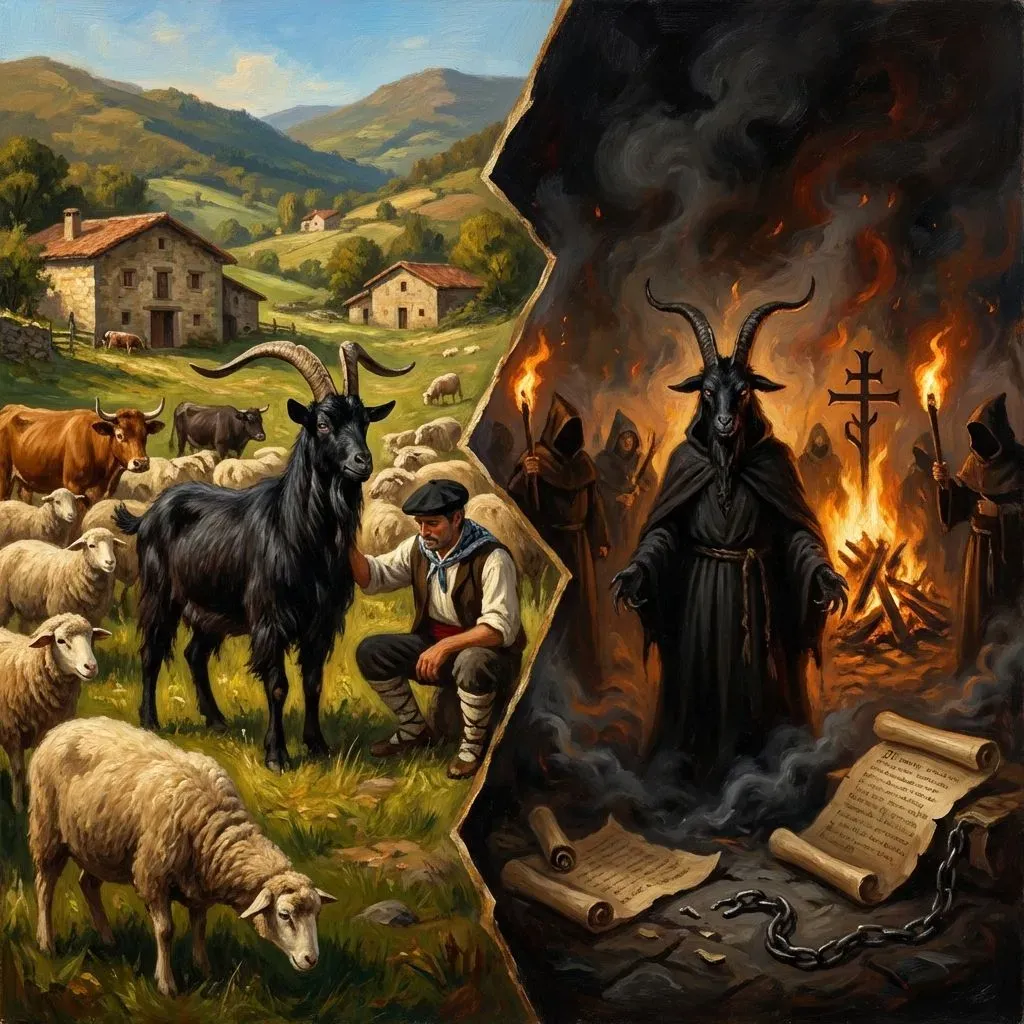
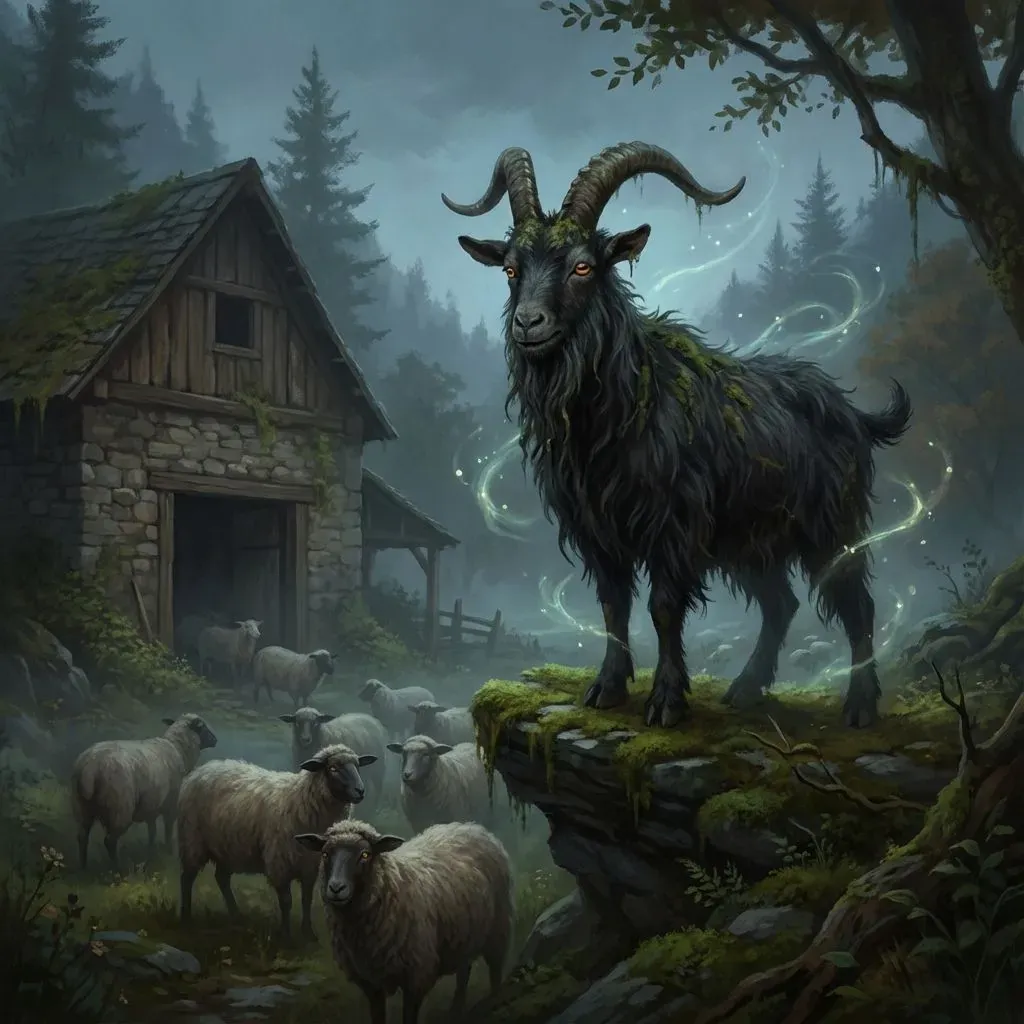
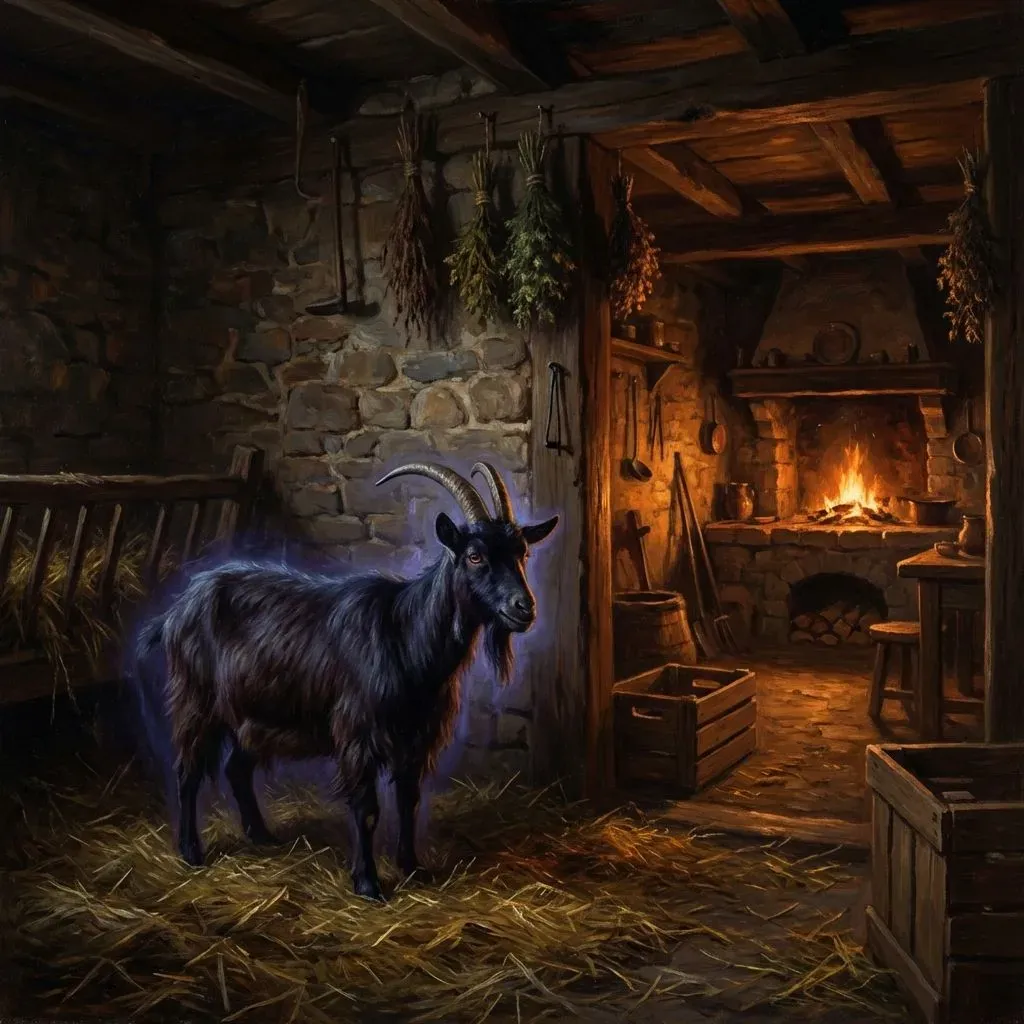
For centuries, Akerbeltz was simply the protective spirit of Basque herds and farmhouses. He was a benevolent numen, respected by the baserritarras who kept black goats to channel his protection. But the arrival of the Inquisition changed his image forever.
The inquisitors, searching for signs of heresy and witchcraft in the Basque Country, encountered customs linked to the black male goat. For them, an animal associated elsewhere in Europe with the Devil was proof of satanic worship. According to trial records, the witches' sabbaths were presided over by a great black goat: the Devil himself.
In this way, Akerbeltz underwent a forced transformation. A guardian spirit became a demonic manifestation. Women who preserved the old rites were accused of witchcraft. The famous Auto-da-f? of Logroño in 1610 and the trials of Zugarramurdi stand as tragic examples of that persecution.
Yet in the Basque popular imagination, Akerbeltz kept his dual nature: publicly feared in order to avoid conflict with the Church, but secretly venerated as a protector. This double face?benevolent and malignant?still survives in the legends that mention him.
Legendary setting of sabbaths said to be led by Akerbeltz.
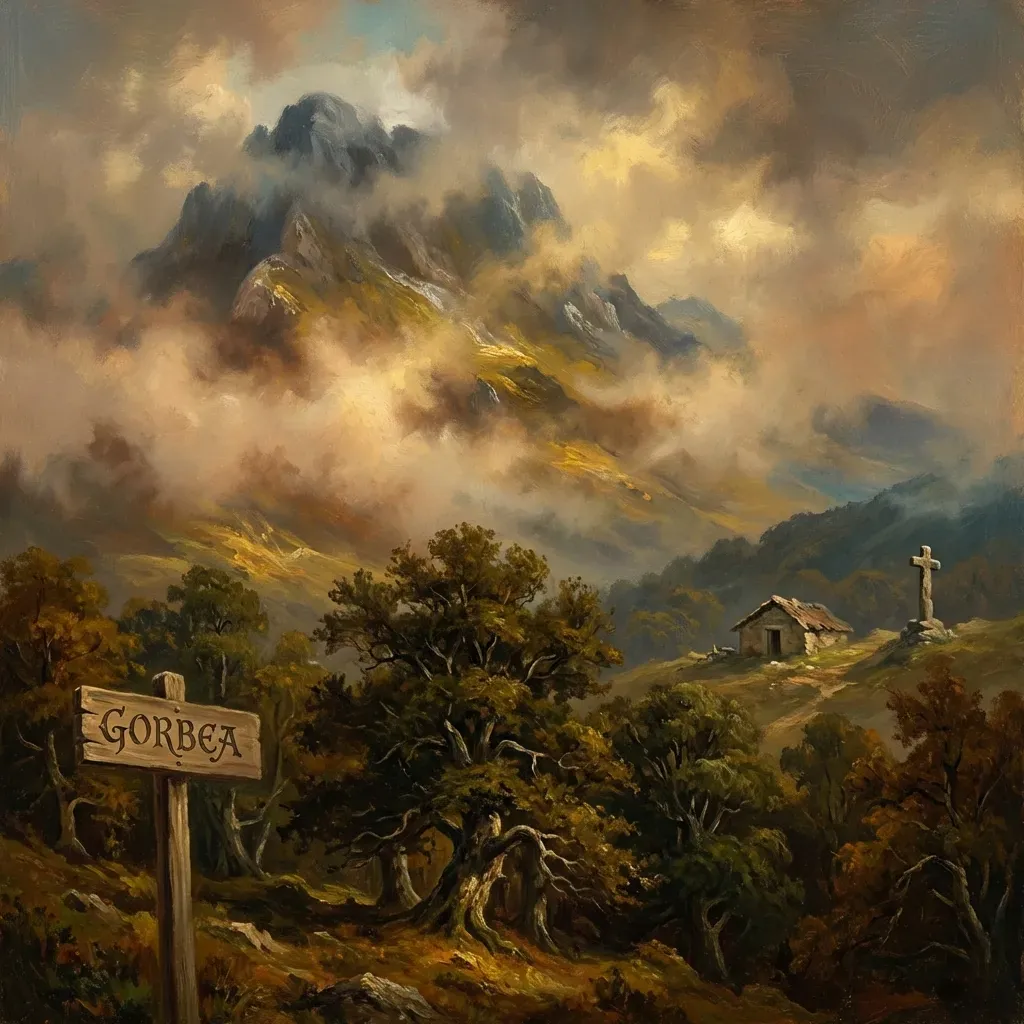
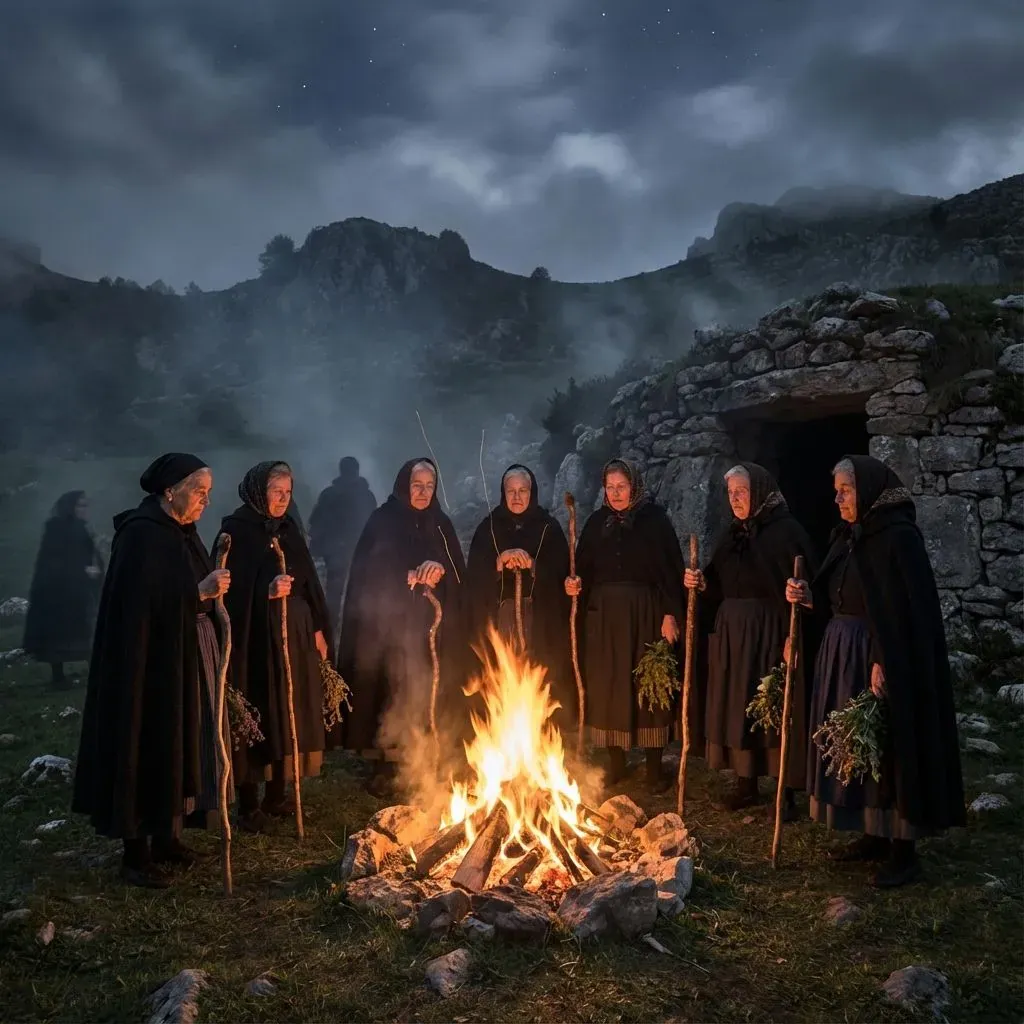
Where Akerbeltz was still honored in secret.
The Basque image of Akerbeltz condenses one of the great cultural reversals of early modern Europe: the transformation of a local protective figure into a sign of diabolical evil by an outside interpretive framework. What had been part of an older symbolic order was recoded as evidence of sin.
The black goat was not originally terrifying in the Basque world. It belonged to a system of pastoral protection, fertility, and domestic guardianship. Yet once inquisitorial categories were imposed, its horns, color, and nocturnal associations made it easy to reinterpret as the Devil?s embodiment.
This is why legends about Akerbeltz often hold two truths at once. On the surface, he appears as a fearful or forbidden being, because that is how he had to be spoken of under persecution. Underneath, he remains a guardian tied to animals, farmhouses, and a landscape older than Christian policing.
This double reading is not a contradiction but a survival strategy. It allowed memory to preserve an ancestral figure while adapting its language to hostile times. The legend of the goat's dual nature is therefore also a legend about cultural resistance.