Farmhouse stables
Where Akerbeltz watched over the health of the herd.
? Akerbeltz, the goat who protects the herd ?
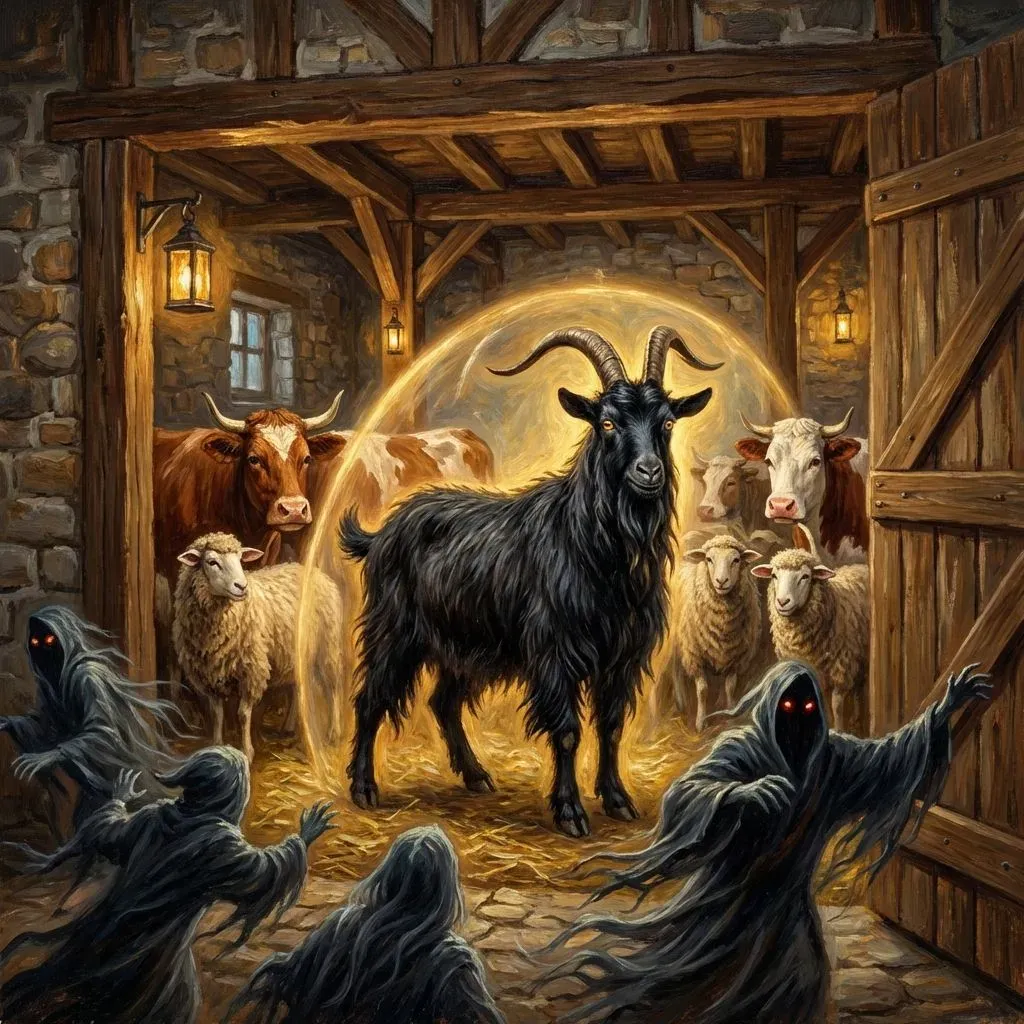
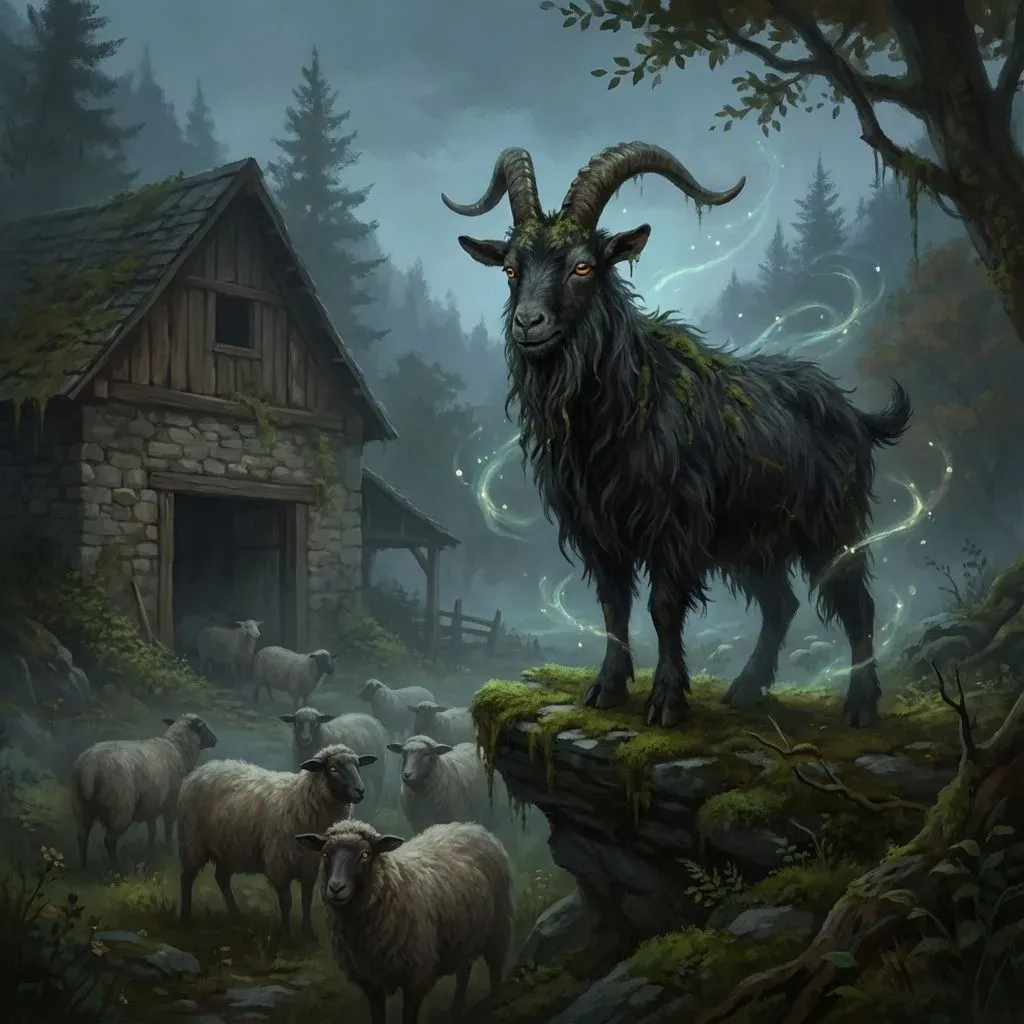
In Basque farmhouses there was once a custom of keeping an aker beltz, a black he-goat, inside the stable with the rest of the animals. This goat was not just another member of the herd: it was the spiritual guardian that protected cows, sheep and horses from disease and witchcraft.
People believed that Akerbeltz, the numen of the black goat, dwelt in every dark-coated animal kept in the stable. His presence drove away the malicious beings that caused epidemics among the herd, the witches who could bewitch cows so they would stop giving milk, and the spirits that brought miscarriages to pregnant sheep.
The black he-goat had his own rituals of care. He was fed before the other animals, his favourite place in the stable was respected, and nobody struck him or treated him with contempt. To offend the black goat was to offend Akerbeltz, and misfortune would fall upon the livestock.
This tradition survived well into the 20th century in rural parts of Euskadi, even though the Church tried to suppress it by associating it with diabolical practices. For the baserritarras, however, it was simply the ancestral way of protecting the wealth of the farmhouse.
Where Akerbeltz watched over the health of the herd.

The domestic world where these protective rites endured.
The stable was imagined as more than shelter for livestock: it was a protected domestic world watched over by a spirit that favoured order, care and respect for animals.
That guardian was felt as a silent presence woven into the rhythms of feeding, grooming and sheltering the herd. Protection came through continuity and attention, not spectacle.
Stories of neatly braided manes or inexplicable calm among the animals were taken as proof that the stable spirit had passed through during the night.
In the morning, intricate braids and tightly woven knots might appear in the animals’ manes, their neatness and complexity seeming impossible to explain. These surprising signs were interpreted as the guardian’s gifts: promises of prosperity, warmth, calm, good health and good fortune for the household.