Summits of Euskal Herria
Especially destructive storms.
The wrath of Mikelats shaking the mountains
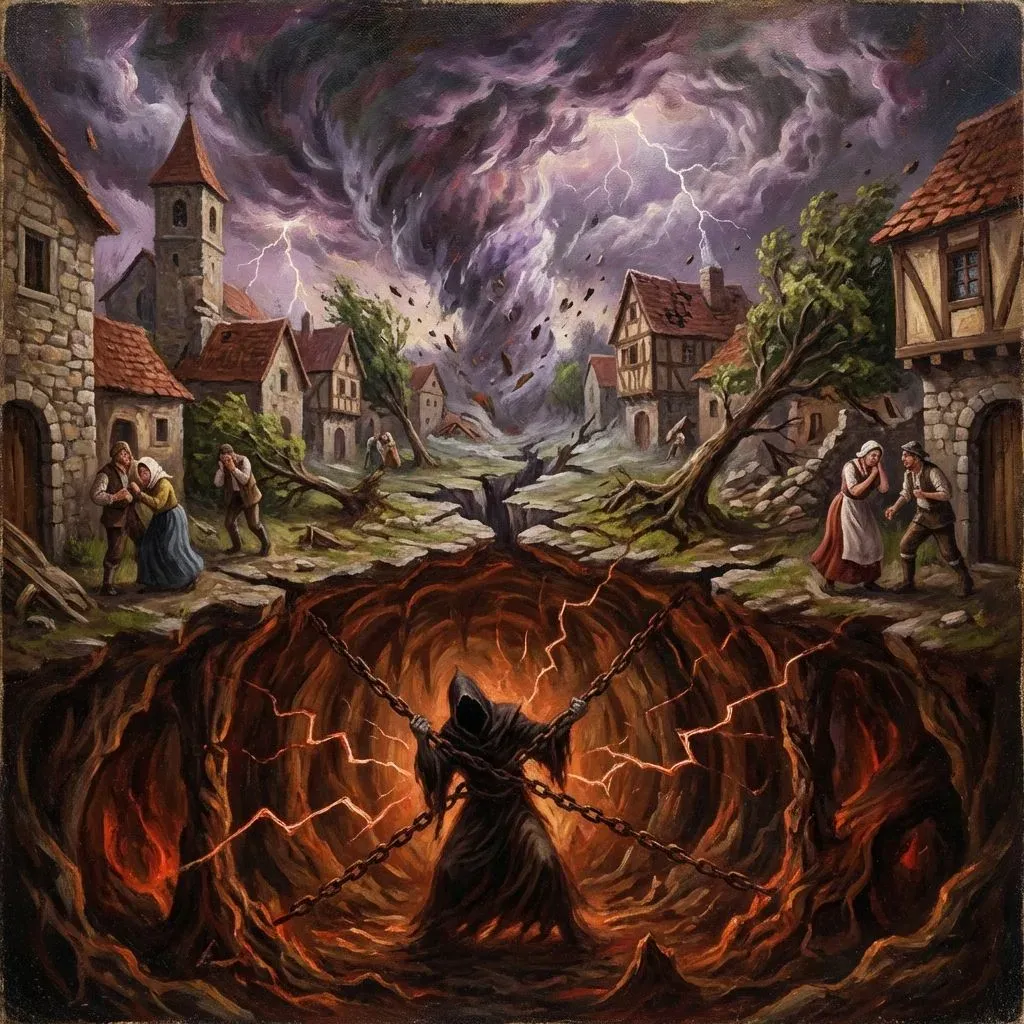
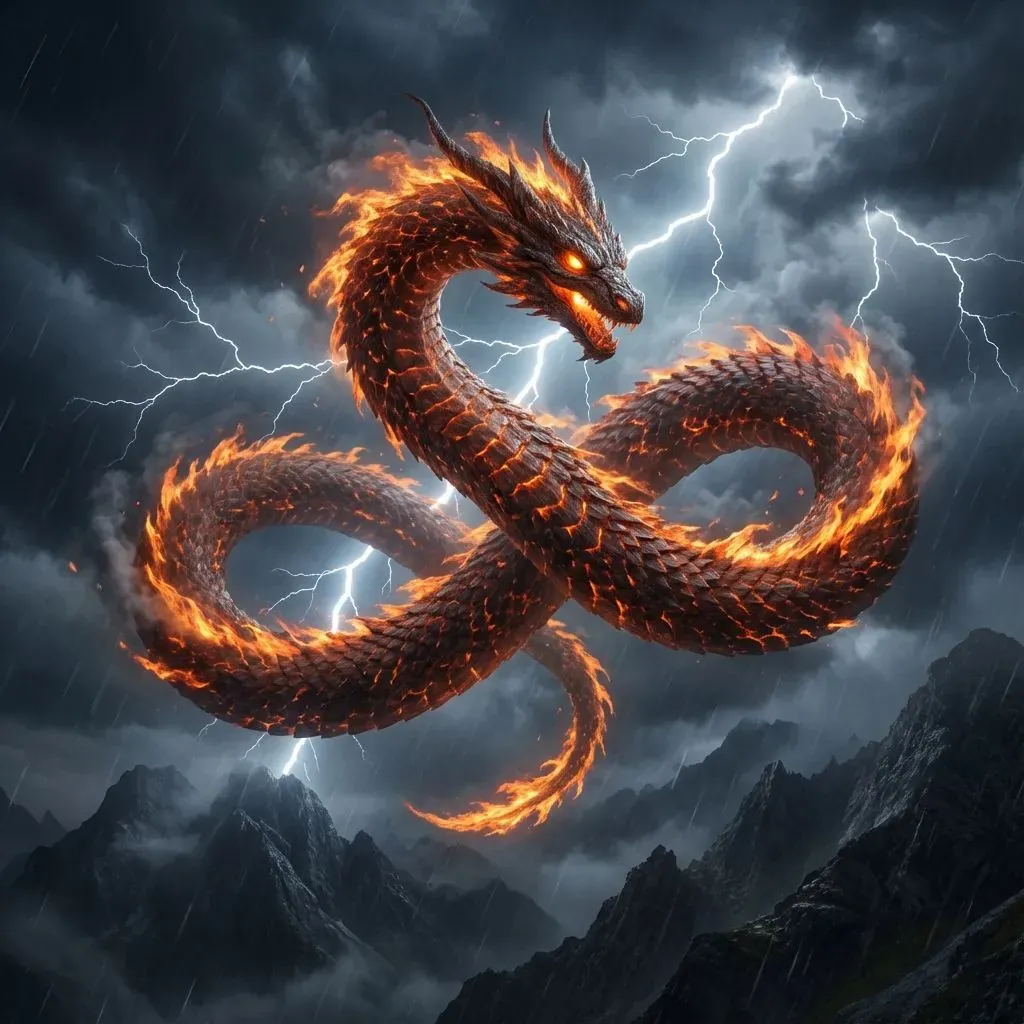
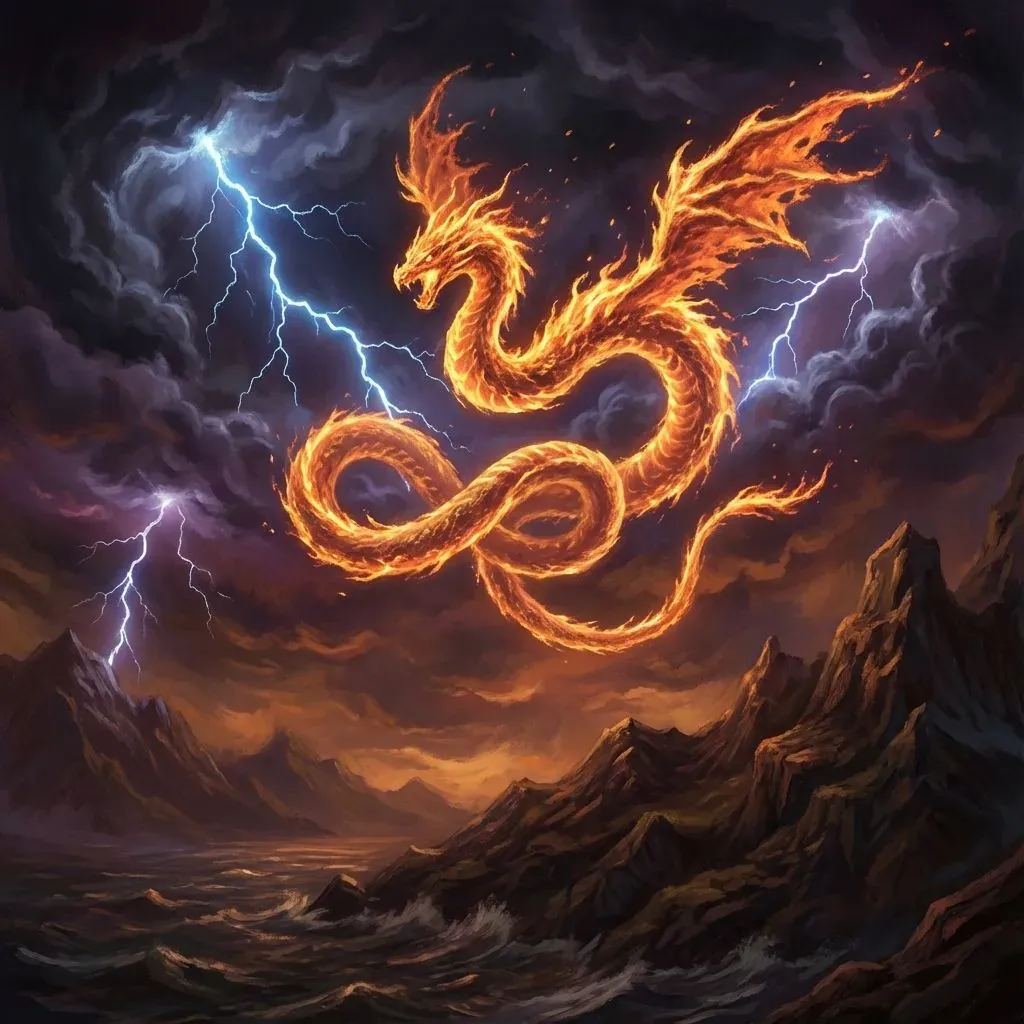
Although Mikelats remains chained in the depths of his mother's cave, his power has not been destroyed, only contained. And sometimes, when his frustration reaches its limit, that power seeps to the surface in the form of devastating storms.
Basque elders knew how to distinguish ordinary storms from storms of chaos. The first, caused by Sugaar and Mari, were intense but predictable: they arrived from the west, lasted a few hours and fertilised the land. The second arrived without warning, from unexpected directions, with a violence that felt almost personal.
When out-of-season lightning shattered ancient trees, when strange hailstorms devastated crops in the middle of summer, when inexplicable winds tore roofs away without touching neighbouring houses, then people knew that Mikelats was raging in his prison.
The traditional response was twofold: on the one hand, take shelter and wait for the fury to pass; on the other, examine the collective conscience. Had someone in the community broken sacred laws? Had Mari or the ancestors been dishonoured? The storm of chaos was a warning.
Especially destructive storms.
Anomalous meteorological phenomena.
The belief in cosmic justice.
Where the storms of chaos strike with greatest force.
Where the fury of Mikelats causes the most damage.
The destructive face of Mari is the least romanticised aspect of her character, but perhaps the most honest about the nature of the forces she represents. When the goddess is enraged by some grave transgression against natural order or against her own rules, the response is not proportionate or measured, but total and devastating.