Skies of Euskal Herria
Where the ortzadar appears after the storms.
Ortzadar: the rainbow as a divine manifestation
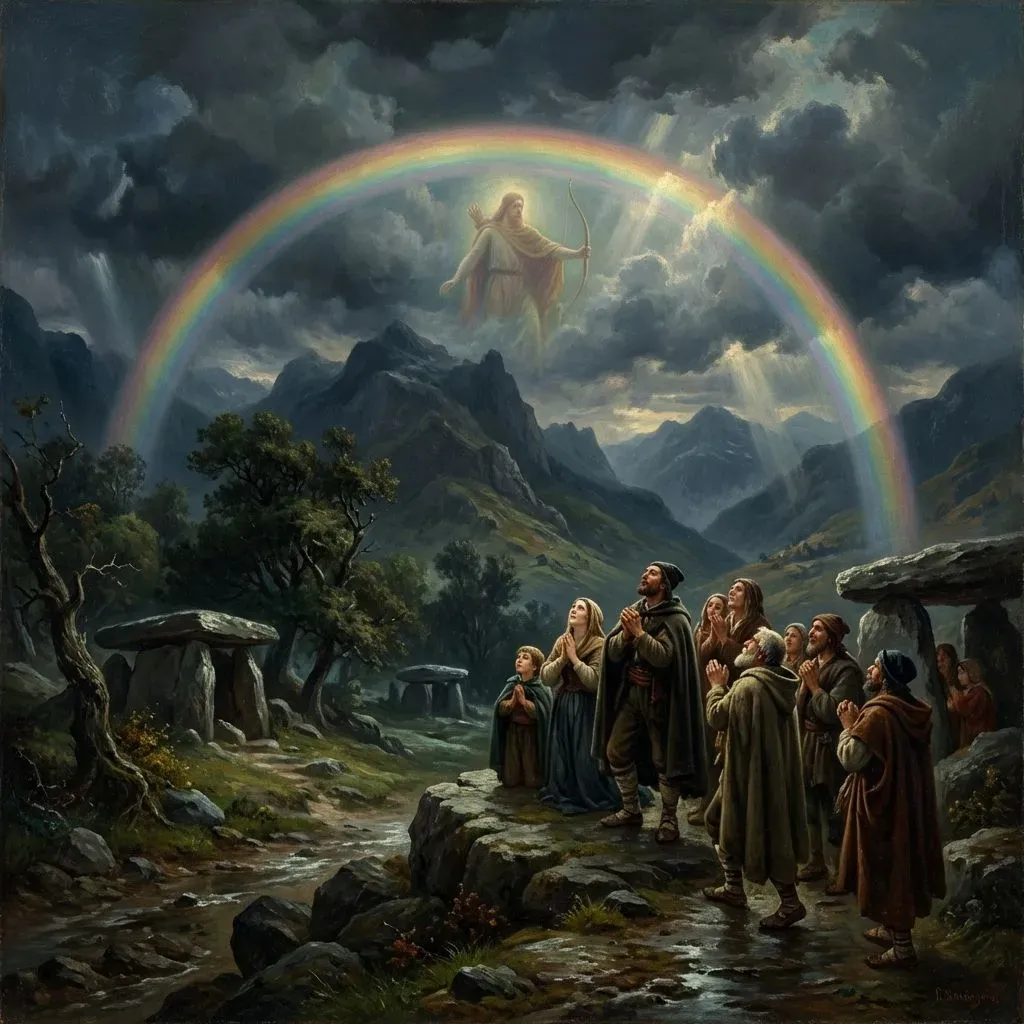
When the rain stops and sunlight pierces the last drops suspended in the air, a seven-colored bow appears in the sky. Basques call it ortzadar, literally the bow of the sky or the horn of Ortzi. It is the visible manifestation of the ancient god Ortzi, lord of the firmament.
Some said that the rainbow was Ortzi's hunting bow, stretched between the clouds when the god went out to survey his domain. Others believed it was a bridge between heaven and earth, along which celestial spirits descended and the souls of the just ascended.
In some regions, seeing the rainbow was a good omen: it meant the storm had ended and Ortzi was satisfied. Elsewhere, children were warned not to point at it with a finger, for they might offend the god and draw down his wrath in the form of new storms.
The rainbow also marked, according to some stories, the place where treasures were hidden: the gold of the Jentilak and the jewels of the lamias. But whoever tried to reach the foot of the bow never found it, because Ortzi always moved it farther away.
Where the ortzadar appears after the storms.
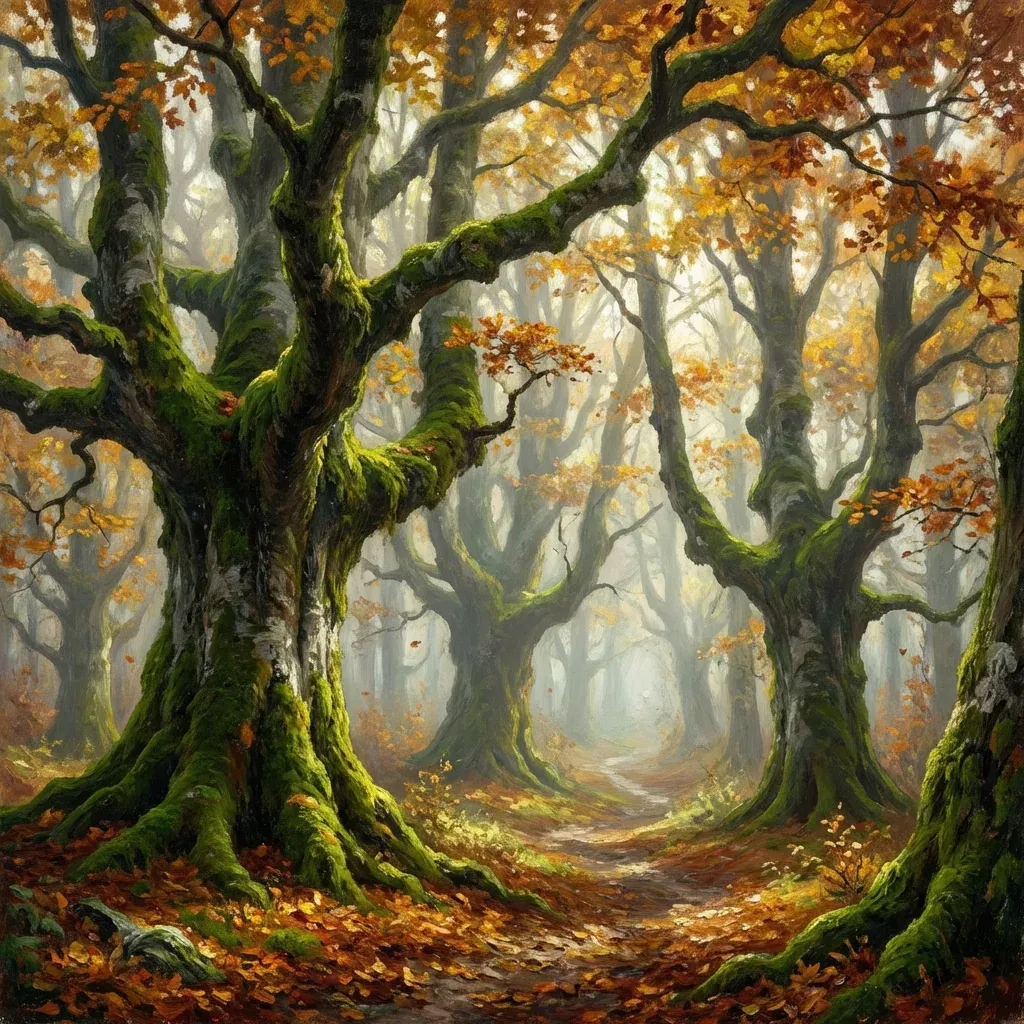
Landscapes where the bow of Ortzi seems to touch the earth.
The rainbow in Basque tradition is not merely a visual effect after rain. It is a sign that weather, color, and divinity are woven together in a living sky ruled by intention.
As Ortzi's bow, the rainbow turns the storm into a narrative. Violence gives way to beauty, and the heavens display not only power but a momentary sign of divine presence.
The many beliefs tied to it, from treasure to taboo, show how the rainbow stands between wonder and danger. It attracts desire while reminding people that some thresholds cannot be crossed.
That is why the tale endures so strongly. It transforms a fleeting atmospheric event into a sacred image of distance, promise, and unreachable splendor.