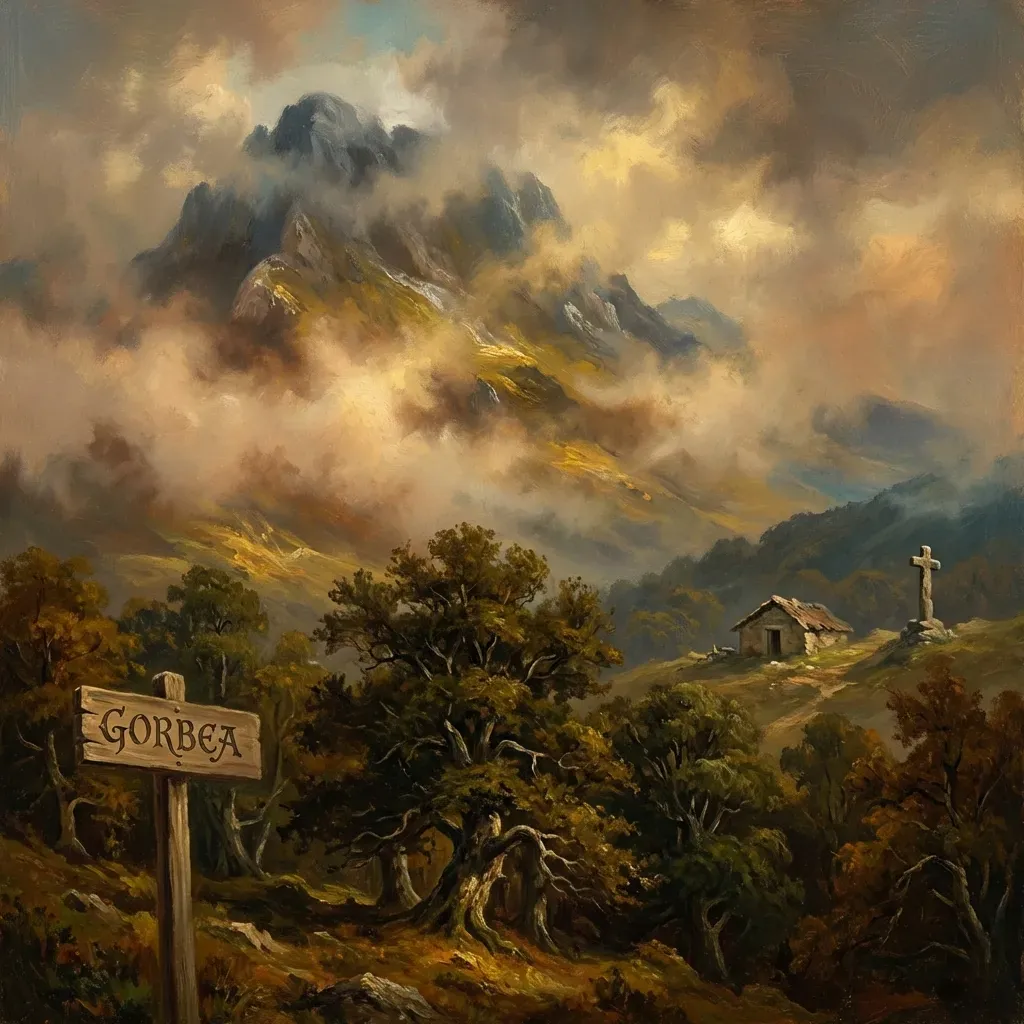
Mount Gorbea
Summit where Ortzi's voice is heard in the form of thunder.
Ancient god of the sky
Ortzi, also called Urtzi, is the ancient god of the sky whose name survives in words such as ostirala, Friday, and ortzadar, rainbow. His voice is the thunder that echoes over Basque valleys, and his breath is the wind that shakes the highest ridges.
He embodies the divinised sky vault and the most imposing atmospheric phenomena. He is one of the oldest divinities in the Basque pantheon, older even than some later figures associated with mountain sanctuaries and caves. His cult reaches back to very ancient times.
Summit where Ortzi's voice is heard in the form of thunder.
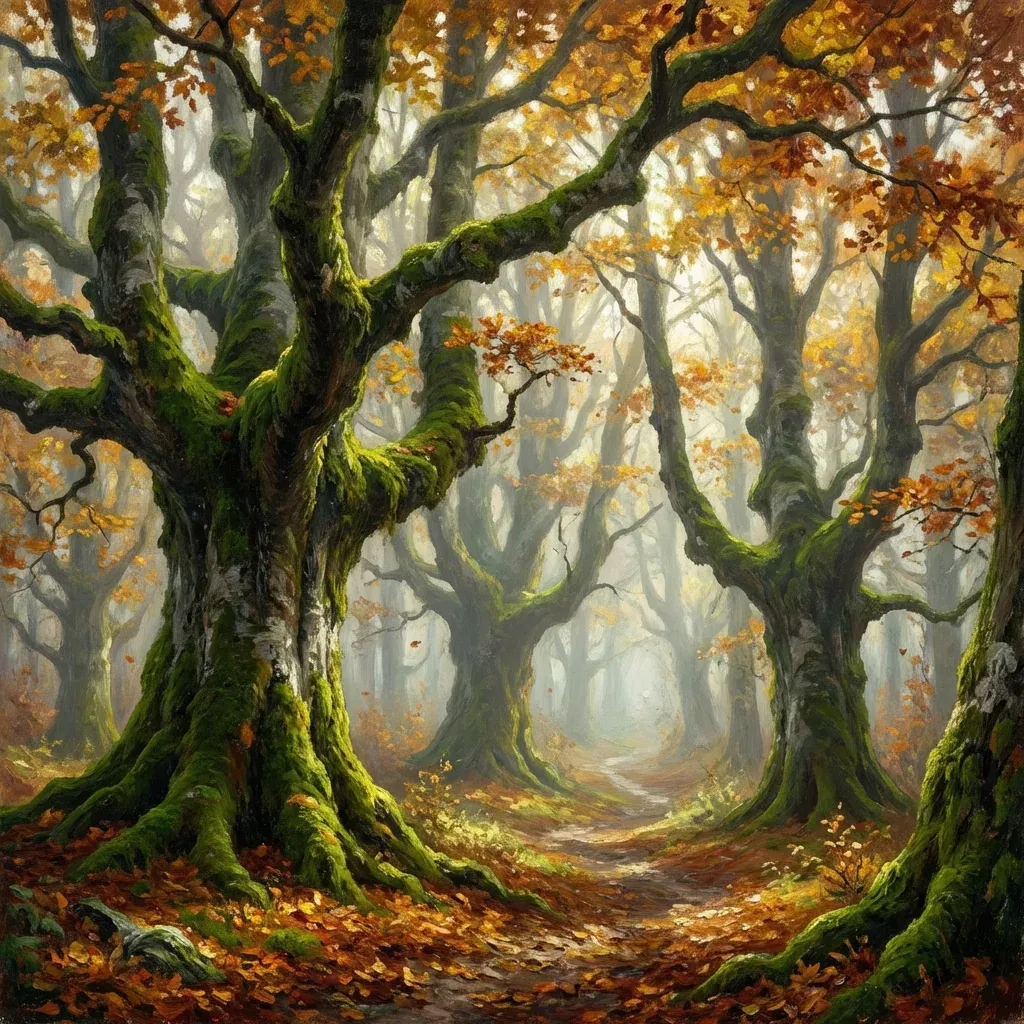
The highest ridges where Ortzi manifests his atmospheric power.
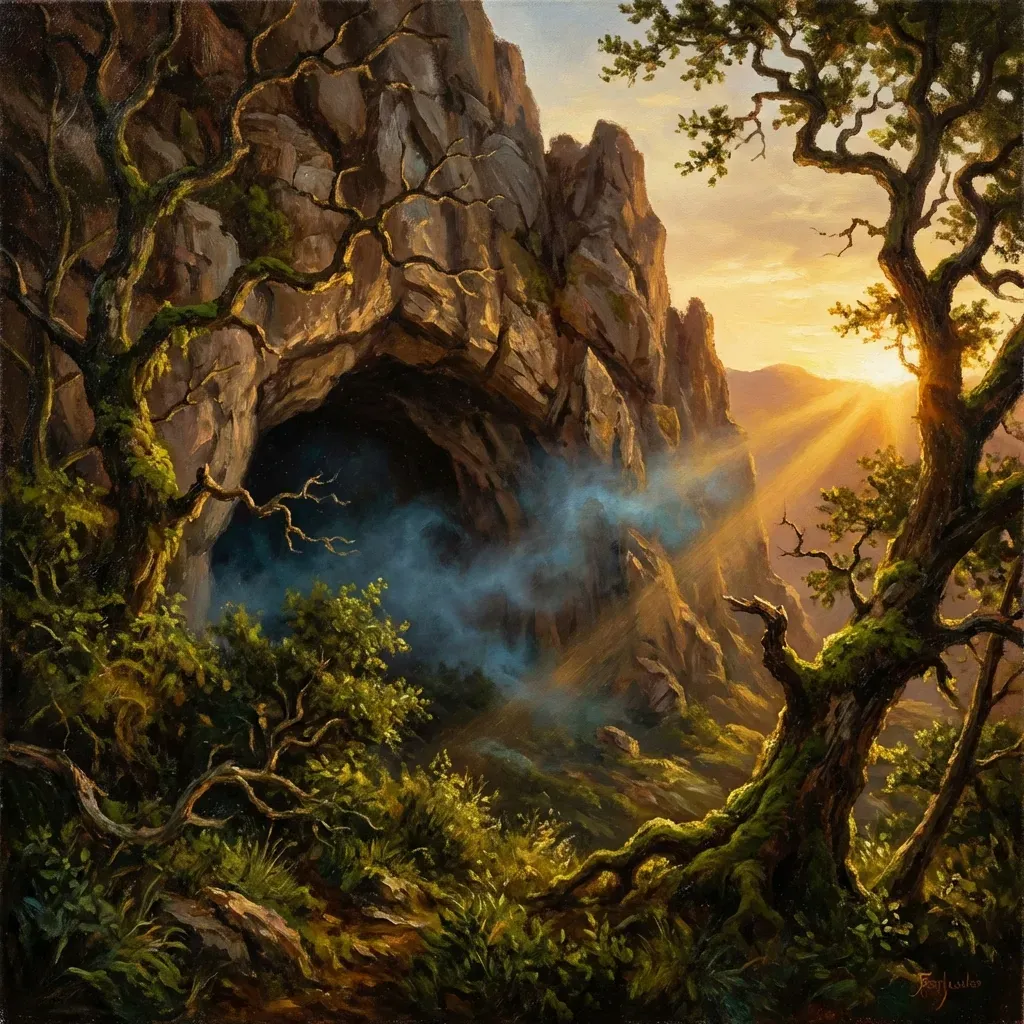
Places where the echo of thunder resounds as the voice of the ancient sky god.
The name Ortzi is tied to the old Basque idea of sky and firmament. Its memory survives in words such as ostirala and ortzadar, which preserve traces of the ancient sacred sky in everyday language.
Some researchers connect Ortzi with very old roots associated with a celestial divinity. He is among the oldest names in the Basque pantheon, representing the sky itself made sacred in ancestral worldview.
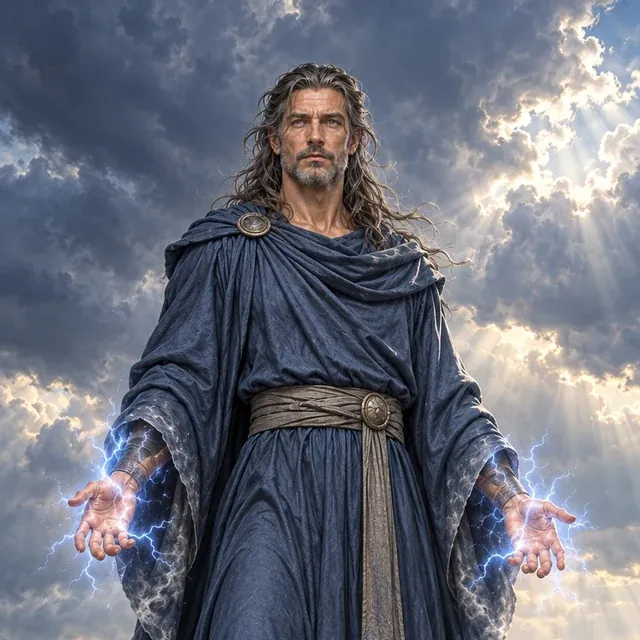
Ortzi belongs to the oldest layer of Basque mythology and can be understood as the ancient god of the sky and thunder.
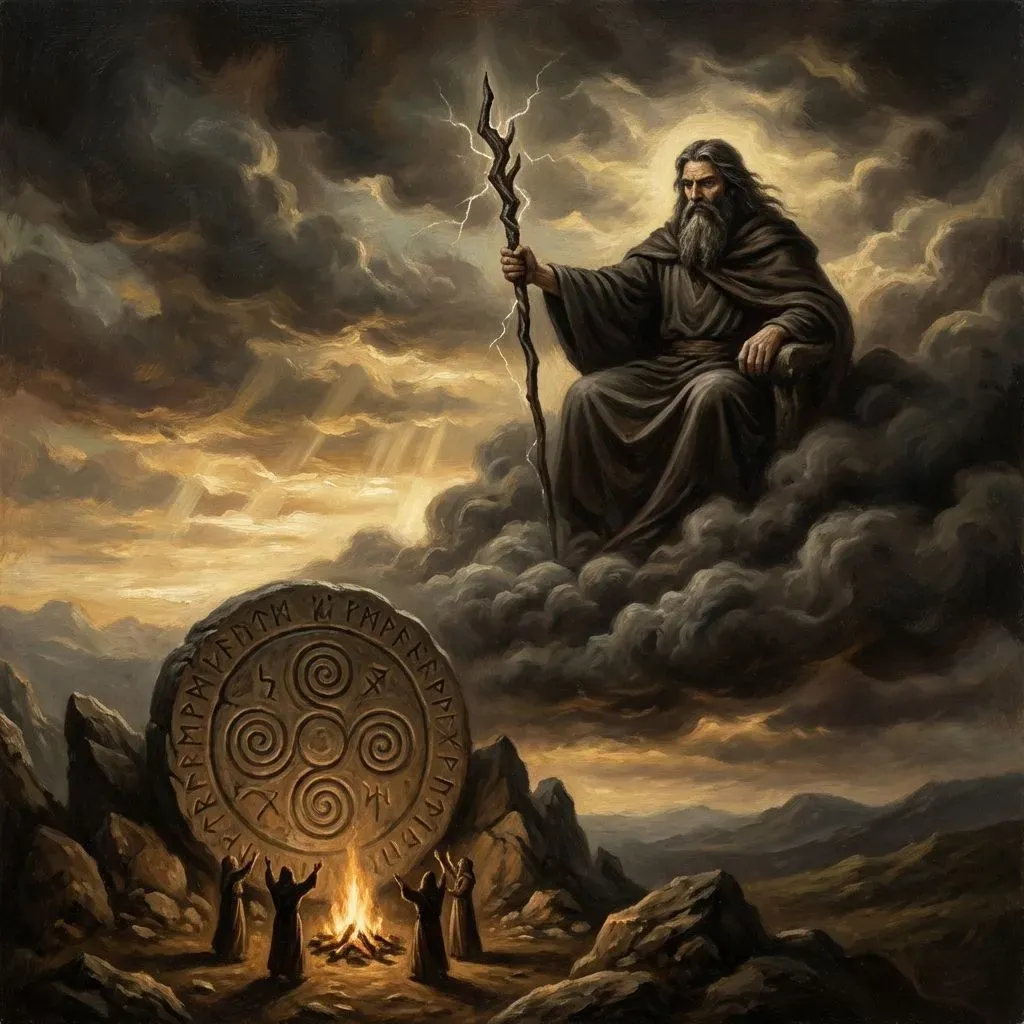
Its stories are closely tied to storms, the celestial vault and linguistic memory.
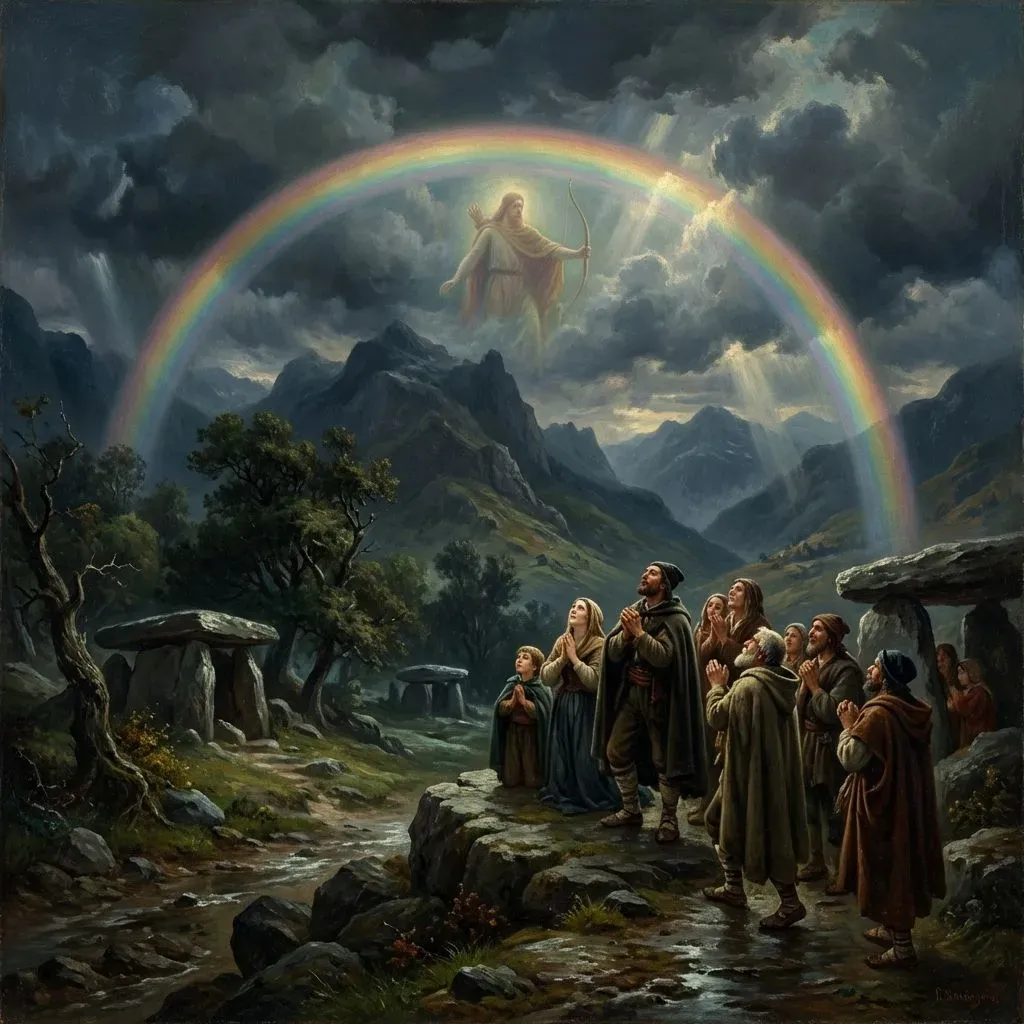
Again and again the tradition returns to thunder, rainbow, sacred sky and old belief.
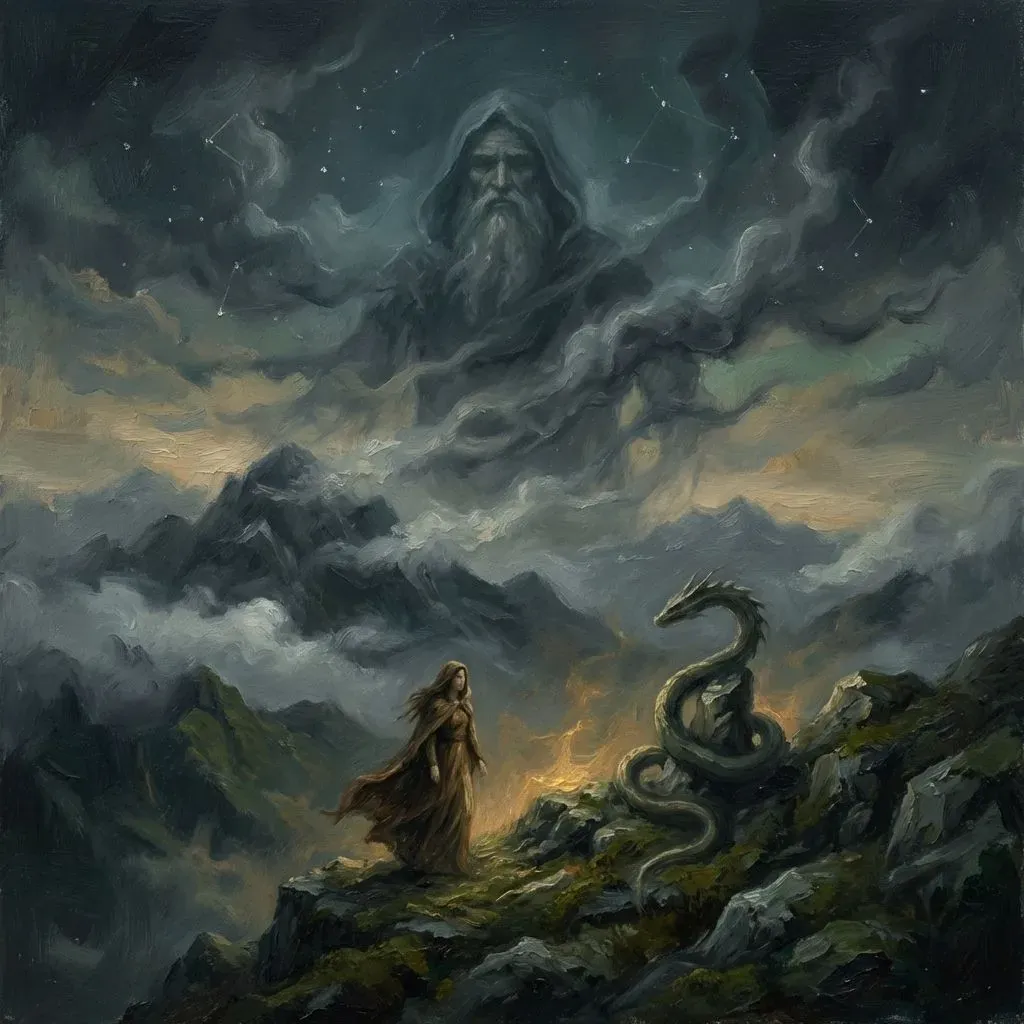
How Mari and Sugaar eclipsed the ancient lord of the Basque sky.
Rather than a decorative figure, Ortzi helps explain how the Basque world understood danger, order and sacred space.
In many versions, Ortzi marks a frontier between what belongs to human life and what must remain respected from a distance.
That is why the tales about Ortzi often combine fear, wonder and moral instruction in the same narrative movement.
The figure also preserves an older way of reading the landscape, where mountains, houses, storms or caves are never neutral settings.
Traces of Ortzi’s sovereignty survive in one of the central structures of ancestral Basque farming and pastoral society: the calendar of pre-Roman pagan days. The prefix Ost- or Ortz- appears in the names of two significant days of the week.
Through Ortzi, myth gives shape to forces that cannot be seen directly but can still be felt in weather, place, memory and ritual.
This imprint reveals Ortzi’s enduring influence on worship.
Modern readers may approach Ortzi as folklore, yet the character still carries the logic of a living symbolic world.
In that sense, Ortzi remains a key doorway into the deeper structure of Basque imagination.