Dolmens of Euskal Herria
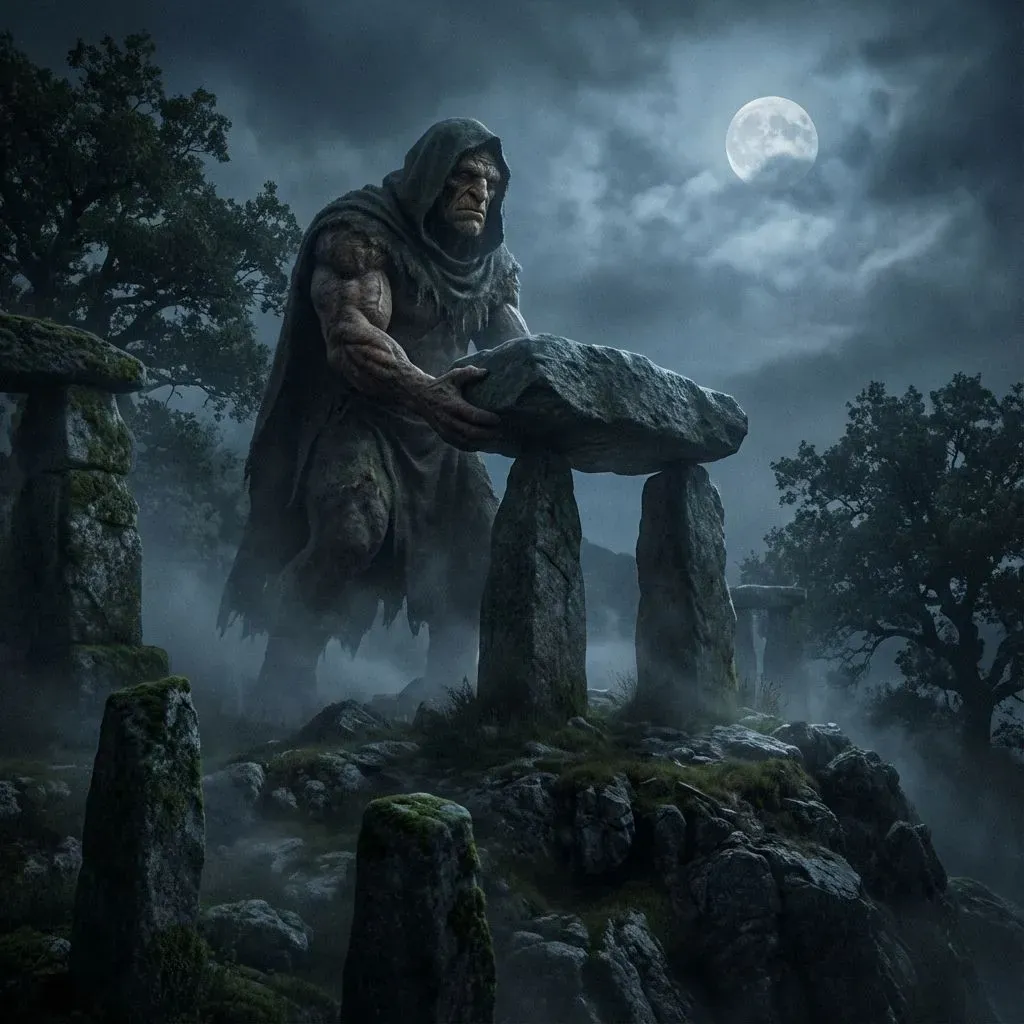
The funerary structures attributed to the giants.
The giants who raised impossible stones
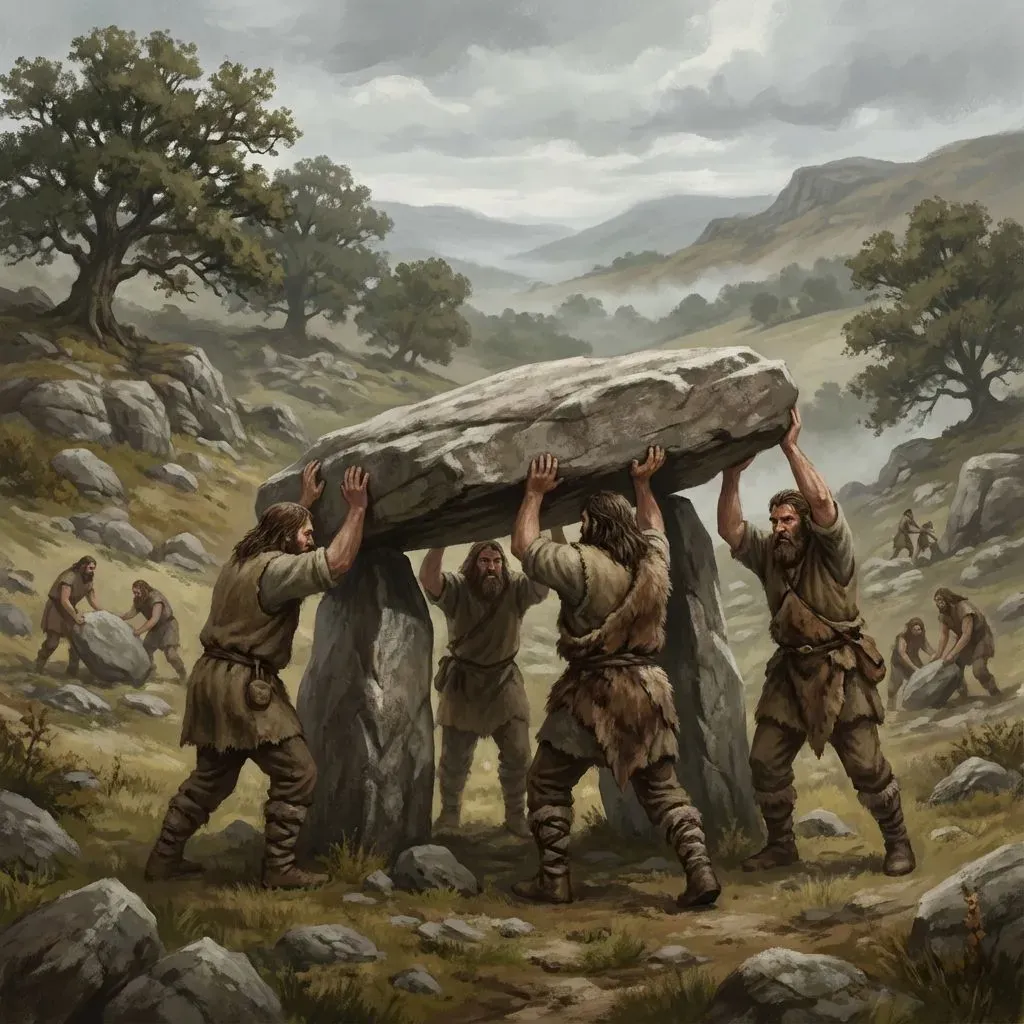
The dolmens, cromlechs, and menhirs scattered across the mountains of Euskal Herria provoke an obvious question: who could have moved stones so enormous? Old Basque tradition gave a clear answer: the Jentilak.
These giants of the pre-Christian age possessed overwhelming strength. They could lift rocks weighing several tons with one hand and hurl them across great distances. Bowling with stones the size of houses was, for them, little more than a pastime.
Dolmens were said to be their burial places. Cromlechs were their gathering grounds. Menhirs marked the boundaries of their lands. Every megalithic monument became a sign of their power, a footprint left in the landscape by a race that walked these mountains before humankind.
Although the Jentilak disappeared with the coming of Kixmi, their constructions remain as a reminder that there was once an age when giants inhabited the Basque highlands.
The funerary structures attributed to the giants.

Stone circles standing on the Pyrenean summits.
Scattered across the high pastures and limestone ridges of the Basque Country, menhirs and dolmens have withstood wind and rain for thousands of years without yielding an inch. Modern archaeology dates them to the Neolithic, but Basque oral tradition preserves a far more vivid explanation.
The Jentilak, those rough-haired giants of immense strength, carried these slabs out of the heart of the mountains with the same ease a shepherd carries a lamb into the fold. For them, raising a dolmen was not a feat of architecture but an ordinary act.
Each dolmen was also a dwelling for the dead of their clan, a threshold between the visible world and the underground realm where ancestral souls endured. The living passed them with restrained respect, knowing those stone chambers held more than bones.
Even today the monuments still stand while empires and entire civilizations have disappeared around them. The popular belief that giants built them is not merely naive wonder; it is a human way of recognizing that some works exceed the scale of ordinary understanding.