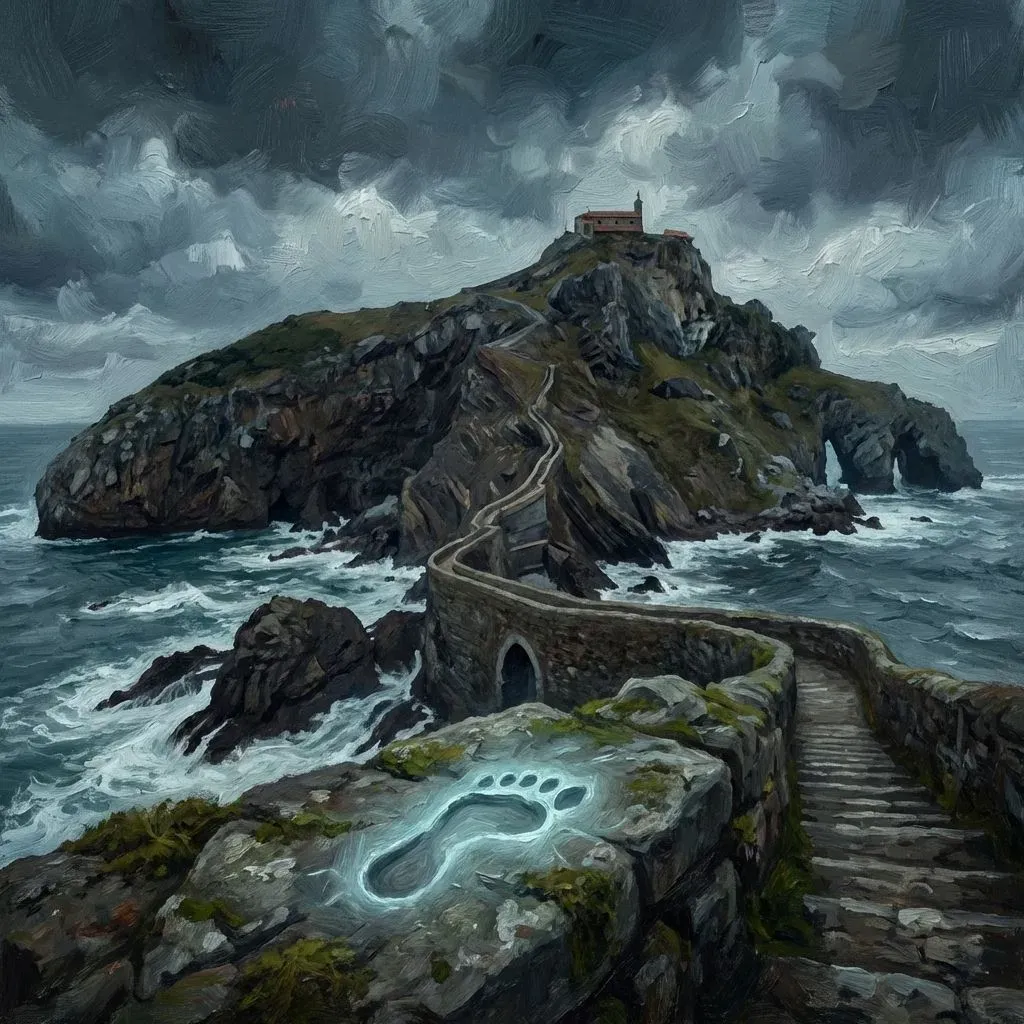
Cantabrian coast
Where the tides reveal Ilargi's power over the waters.
? Ilargi's power over the waters of the sea ?
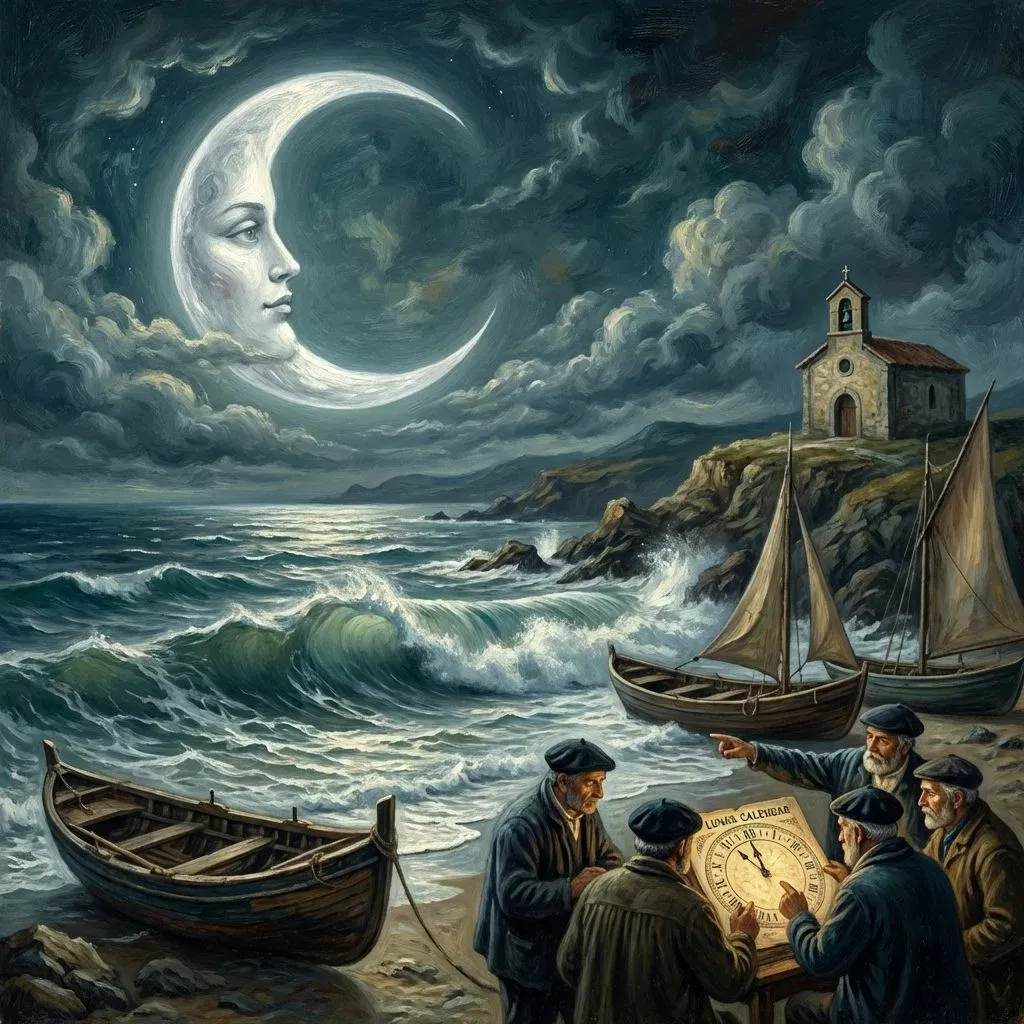
Basque fishermen always knew that Ilargi ruled the sea. When the Moon rose full in the night sky, the waters of the Cantabrian coast lifted in obedience, flooding beaches and entering the estuaries. When Ilargi waned, the waters respectfully withdrew.
People said that Ilargi and the sea kept an ancient pact of love. The Moon pulled the waters toward her, longing for them, and the sea answered by rising to draw closer to its beloved. Twice a day this courtship was repeated: high tide when Ilargi called with greater force, low tide when her influence weakened.
Sailors consulted the phases of the Moon before setting out. New moon and full moon brought spring tides, stronger and more dangerous. The waxing and waning quarters produced gentler tides, better for navigation. To ignore Ilargi was to risk one's life at sea.
This belief had practical value: it told people when fish would come close to shore, when shellfish could safely be gathered on the rocks, and when boats could dock. Ilargi did not only guide the dead; she also directed the lives of the living.
Where the tides reveal Ilargi's power over the waters.

Where sailors watched the Moon before putting out to sea.
Along the misty Basque coast, the rhythm of the sea never seemed random. The people who lived facing the Cantabrian waters read each advance and retreat as a visible sign of a greater order, one tied to the Moon and to the hidden pact that joined sky and ocean.
In that worldview, the tides were not a cold astronomical mechanism but the living response of the sea to Ilargi's call. The Moon drew the waters upward, and the waters answered. What modern science explains with gravity, oral tradition expressed through intimacy, longing and sacred rhythm.
That interpretation shaped everyday life. Fishing, shellfishing, harbour work and travel all depended on knowing when the water would rise or fall. Myth and practice were not separated: belief offered a language for understanding the same natural reality that sustained the community.
The legend therefore preserves more than poetic imagery. It shows how Basque coastal culture transformed close observation of nature into a symbolic story, turning Ilargi into the visible face of the cosmic order that governs both the dead and the living.