Springs and fountains
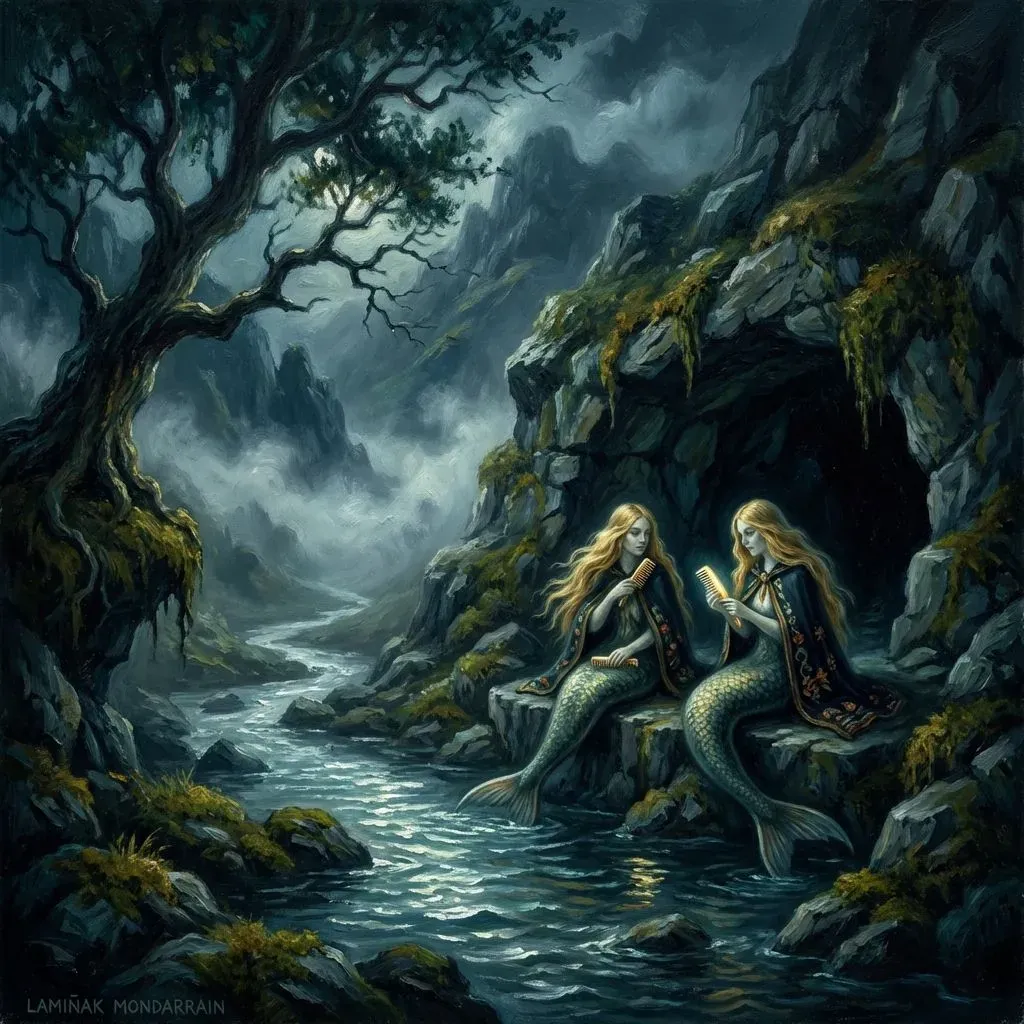
Water sources are the favorite places of the lamias, who sit there to comb their hair.
— The encounter beside the spring —
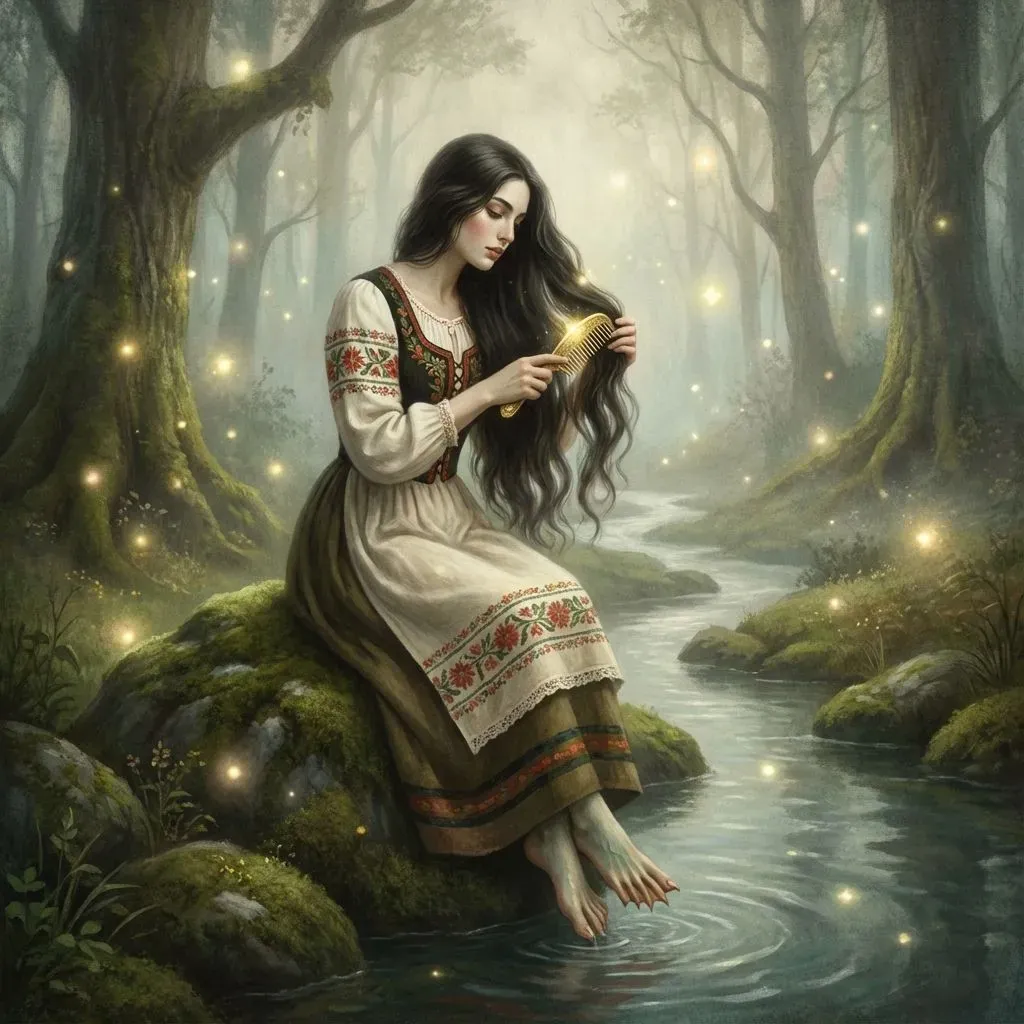
Beside crystal springs and mountain streams, travelers may come upon a lamia combing her long golden hair with a comb of pure gold. The sight enchants whoever beholds it: a woman of extraordinary beauty, with webbed feet hidden under the water, singing soft melodies.
Many have fallen into the temptation of stealing the precious comb while the lamia is distracted. But whoever commits such boldness soon discovers the mistake: the lamia pursues the thief without rest, day and night, across mountains and valleys, giving no peace.
Only by returning the comb can the thief free himself from the curse and recover calm. The lamia does not seek revenge, but justice: what belongs to her must return to her. Some say that whoever restores the comb with sincere regret receives a gift in return, such as knowledge of hidden treasures or the blessing of good harvests.
The myth warns against greed and against taking what belongs to the supernatural world. What glitters beside the water may come at too high a price.
Water sources are the favorite places of the lamias, who sit there to comb their hair.
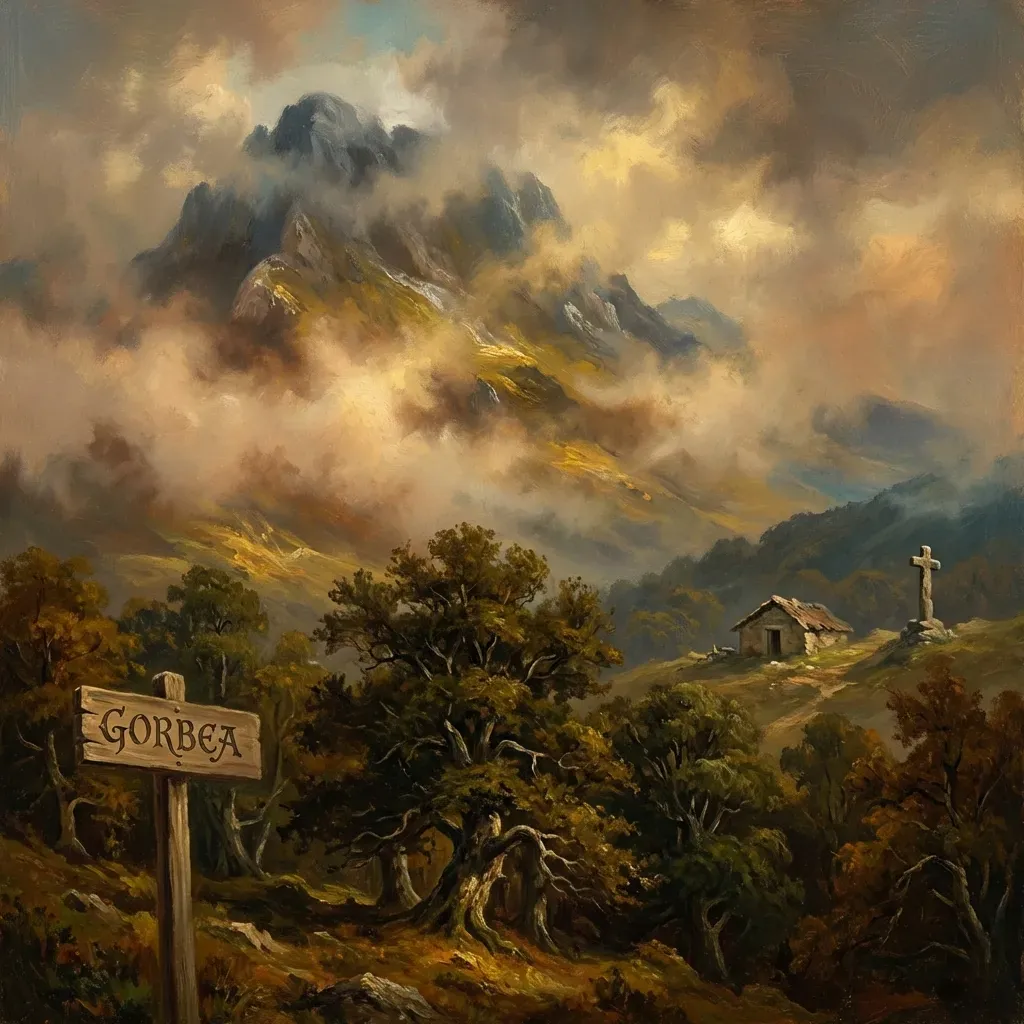
The currents where travelers encounter the lamiak.
The story of the golden comb is one of the clearest lamia legends about attraction, temptation and forbidden possession. The object shines with wealth, but it is not meant to be taken into the human world without consequence.
The lamia herself embodies that same ambiguity. She is beautiful, musical and alluring, yet she belongs to the borderland between water, enchantment and danger. To encounter her is to approach a beauty that cannot be possessed.
That is why the theft of the comb always becomes a moral test. The human who seizes it mistakes wonder for property and soon learns that greed can unleash a persecution far more intense than the value of the treasure itself.
In the end, the legend does not celebrate conquest, but restitution. Peace comes only when what was stolen is returned, and when humans accept the limits separating their world from the older powers of springs and streams.