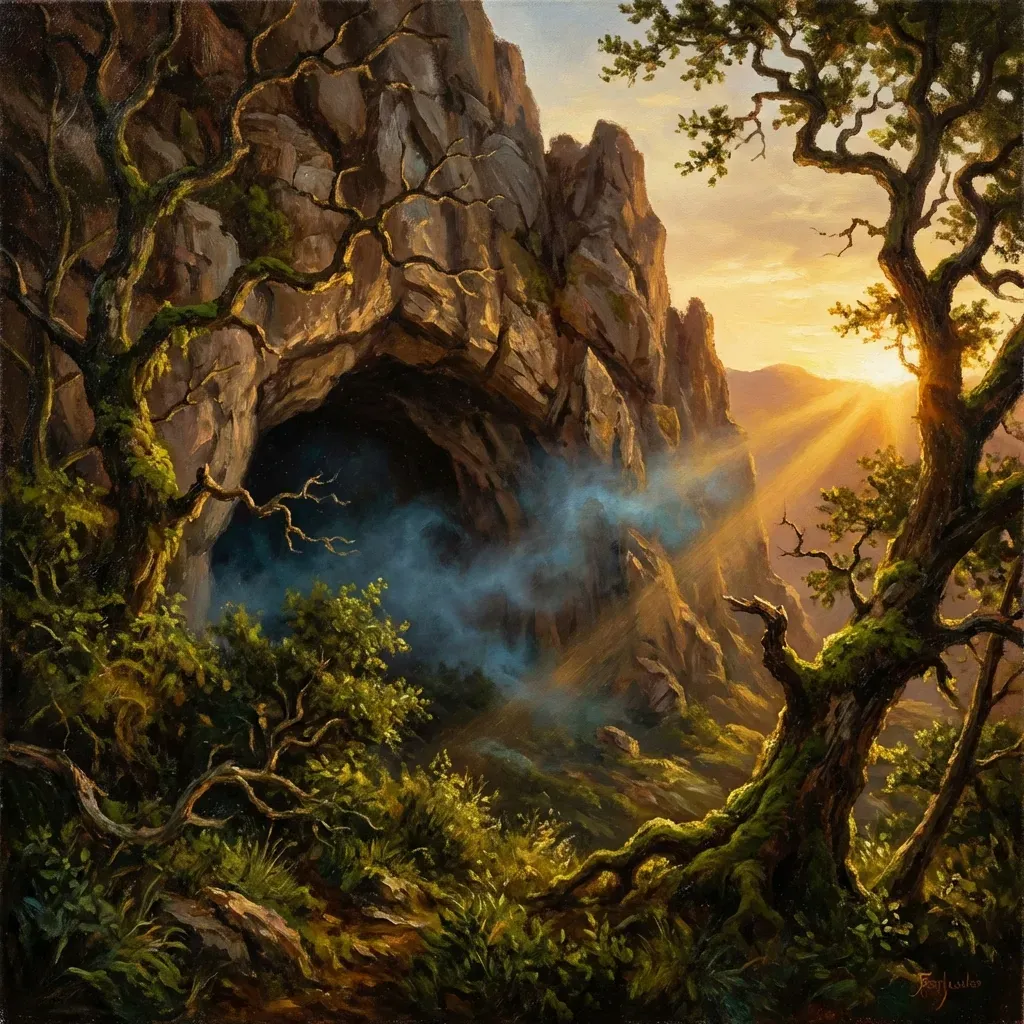
The caves of Isturitz
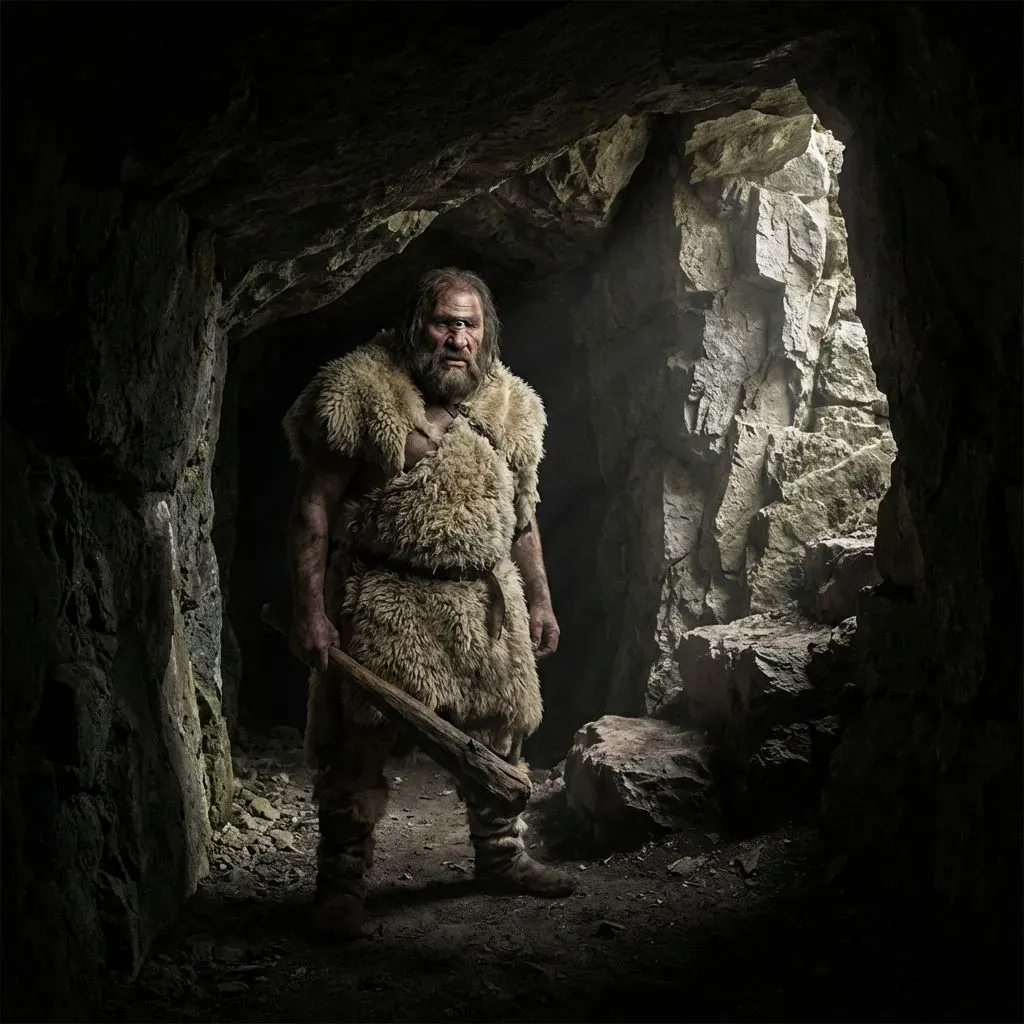
One of the places imagined as Tartalo's lair.
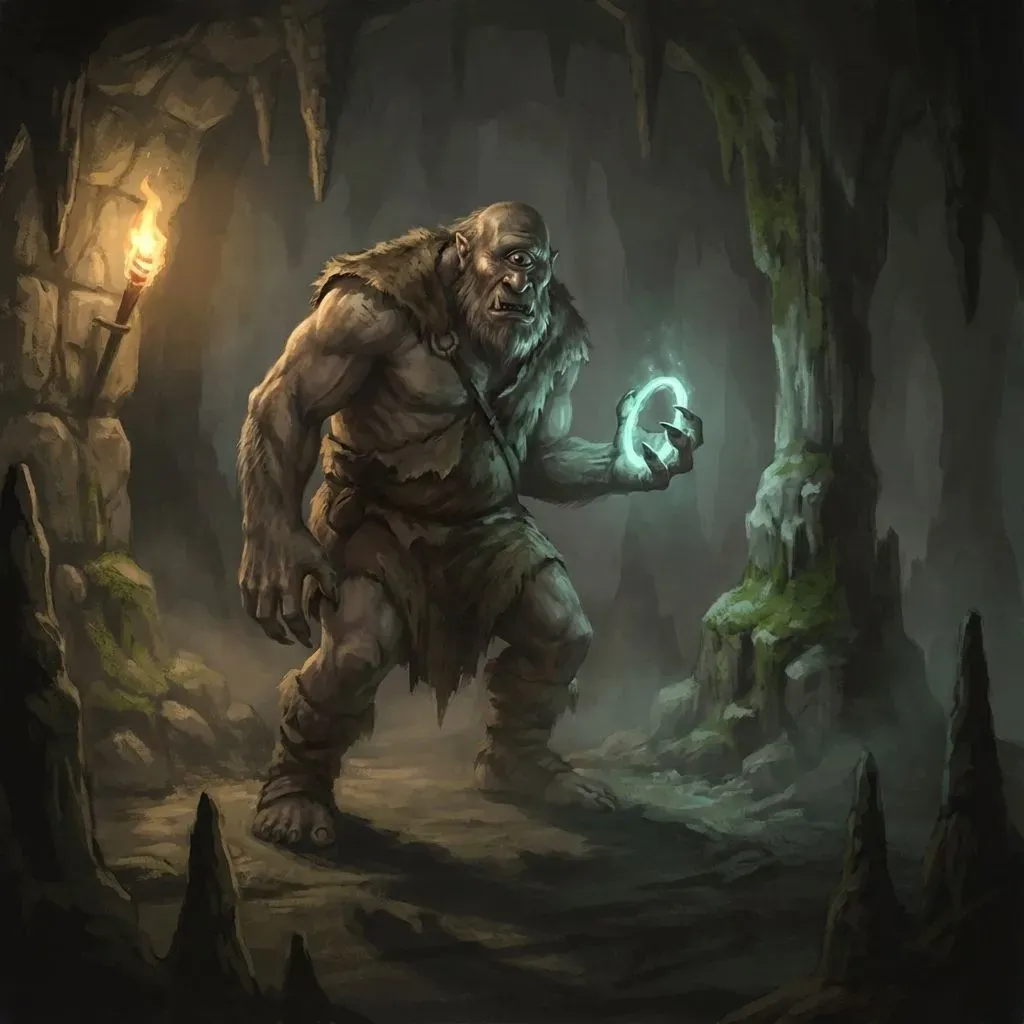
? The lair of the devouring cyclops ?
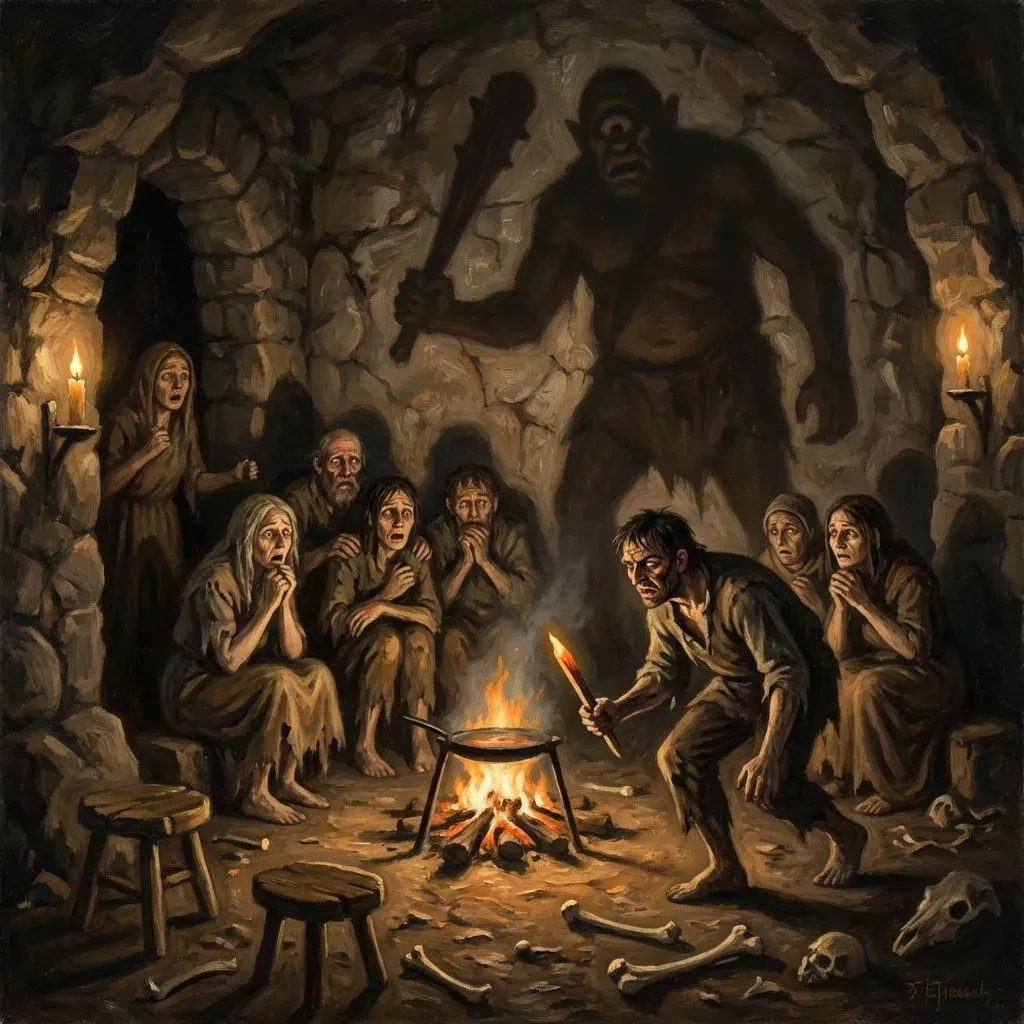
The cave of Tartalo was a place of nightmare. Dark as the blackest night, it stank of death and rotting bones. On its walls could be seen the marks of those who had tried to escape, scratching at the stone with their fingernails until they tore them away. It was a prison from which no one was ever meant to return.
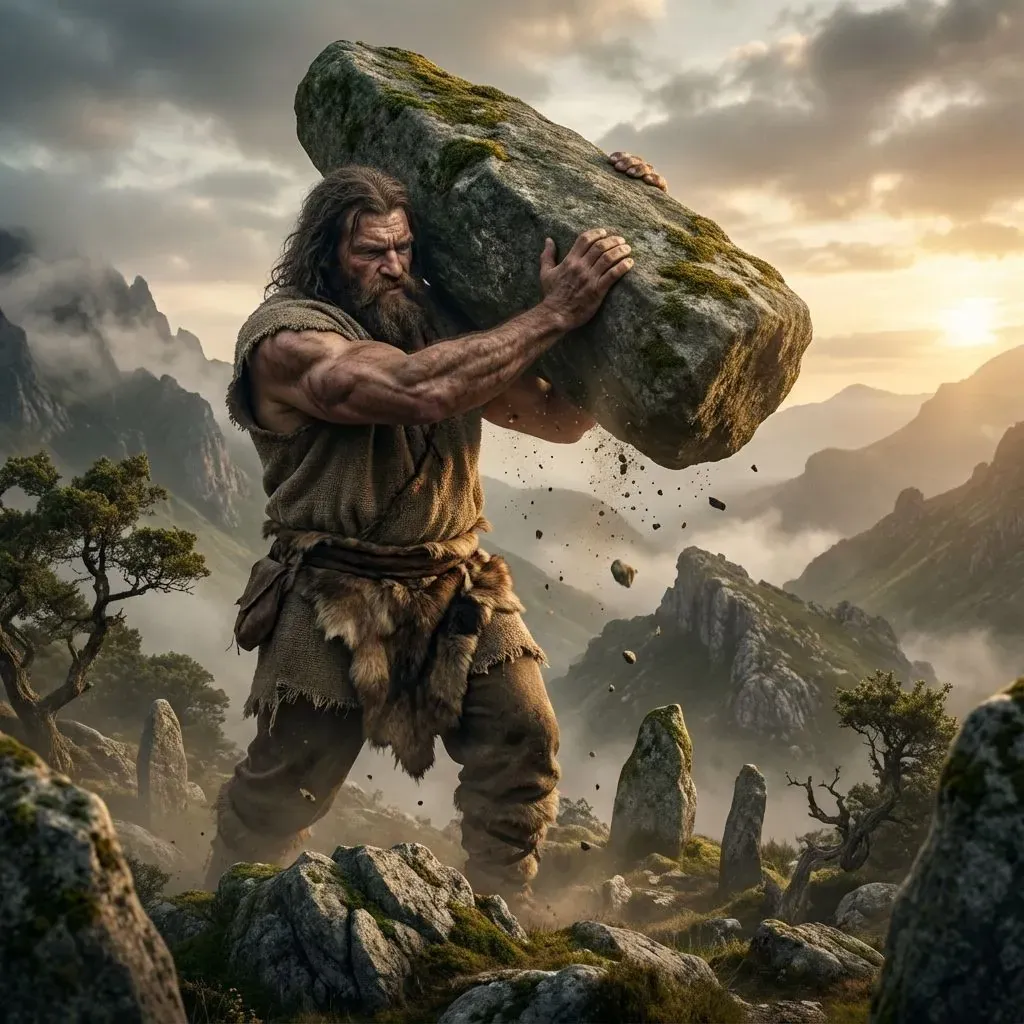
The giant blocked the entrance with a rock so immense that no human could move it, not even twenty men together. Inside, he kept his victims as a living pantry, feeding them scraps to keep flesh on their bones. Each night he chose one to devour while the others listened to the screams from the dark.
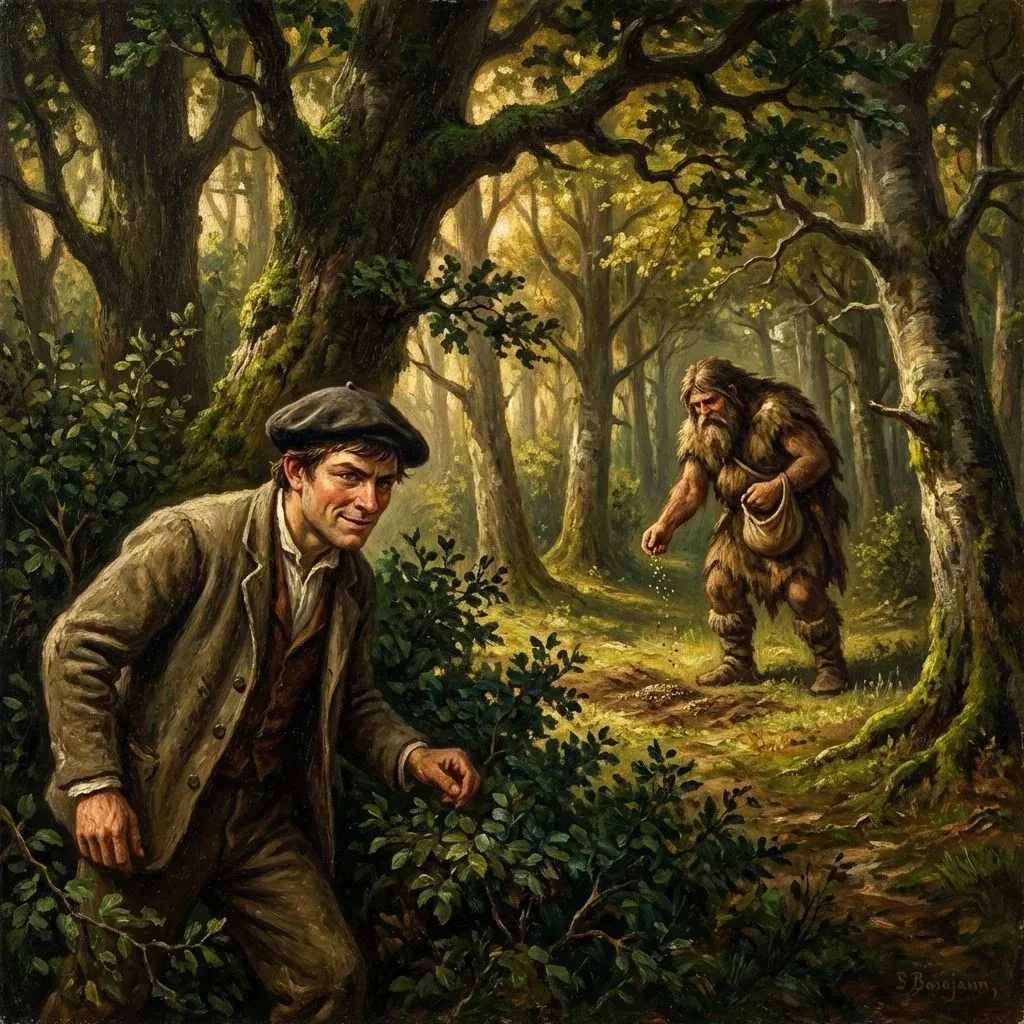
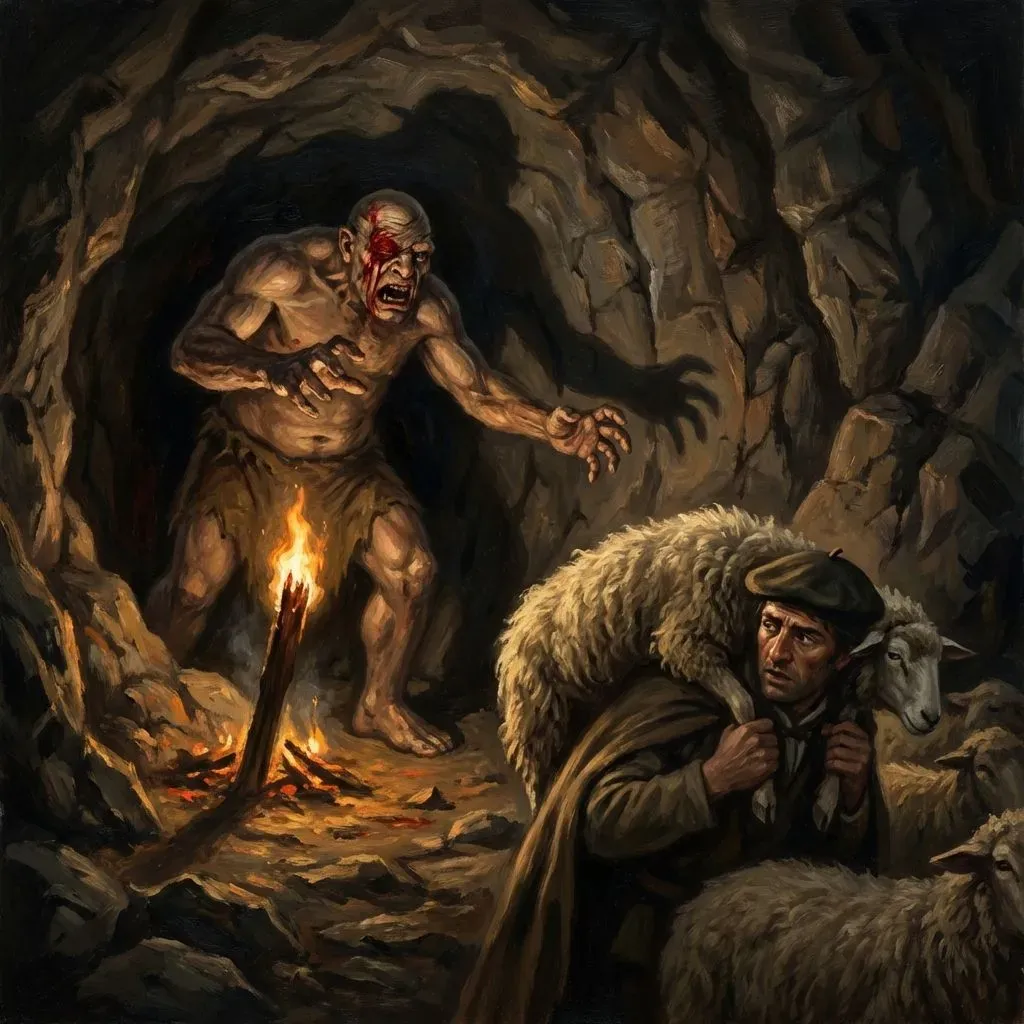
Only one young shepherd from Lesaka managed to escape. He blinded the monster with a red-hot iron while Tartalo slept in drunken stupor, and at dawn, when the cyclops opened the cave so that his flock could leave, the shepherd clung to the belly of the largest ram and slipped outside with the animals.
Since then, people say that Tartalo roars in storms, searching for the man who stole his sight. The caves identified with his lair are found at several points across the Basque Pyrenees, and villagers avoided approaching them even by day, fearing that the echo of footsteps might awaken the blind monster still thirsting for revenge.
One of the places imagined as Tartalo's lair.

Homeland of the shepherd who escaped the cyclops.
Caves occupy an especially powerful place in Basque myth because they are thresholds: entrances into the hidden body of the mountain, places where the ordinary world gives way to the subterranean and the unknowable. In that setting, Tartalo becomes more than a monster. He becomes the guardian of absolute confinement.
What makes the legend so intense is not only the cyclops himself, but the setting of total enclosure. The sealed entrance, the darkness, the bones, and the waiting victims turn the cave into a mythic image of helplessness. The mountain is no longer shelter, but trap.
That is why the hero's escape matters so much. Strength does not free him; cunning does. The red-hot iron and the ram?s belly repeat one of the oldest patterns of monster tales: intelligence as the only answer to brute violence.
The story endures because it condenses several primal fears at once?being trapped, being eaten, being unable to find the exit?and then resolves them through nerve, strategy, and the smallest opening toward daylight.