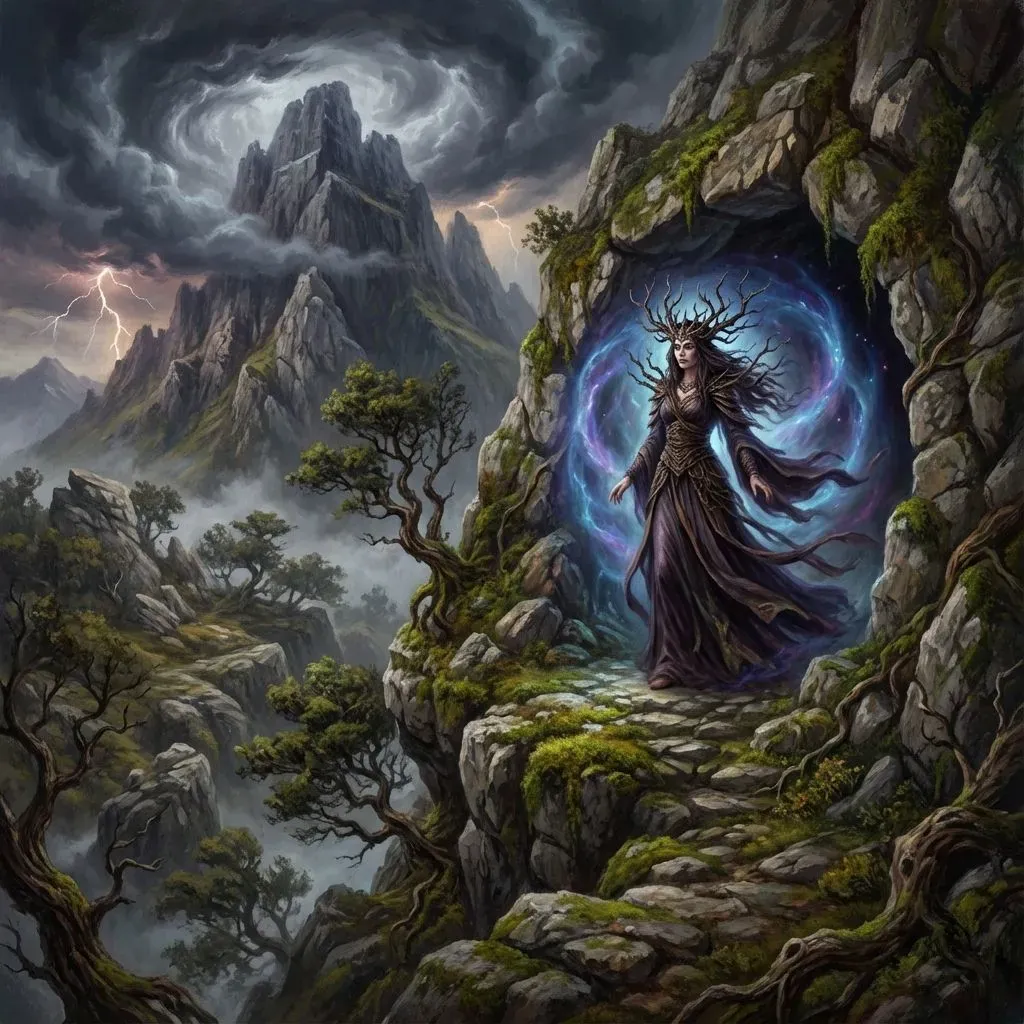
Mountain caves
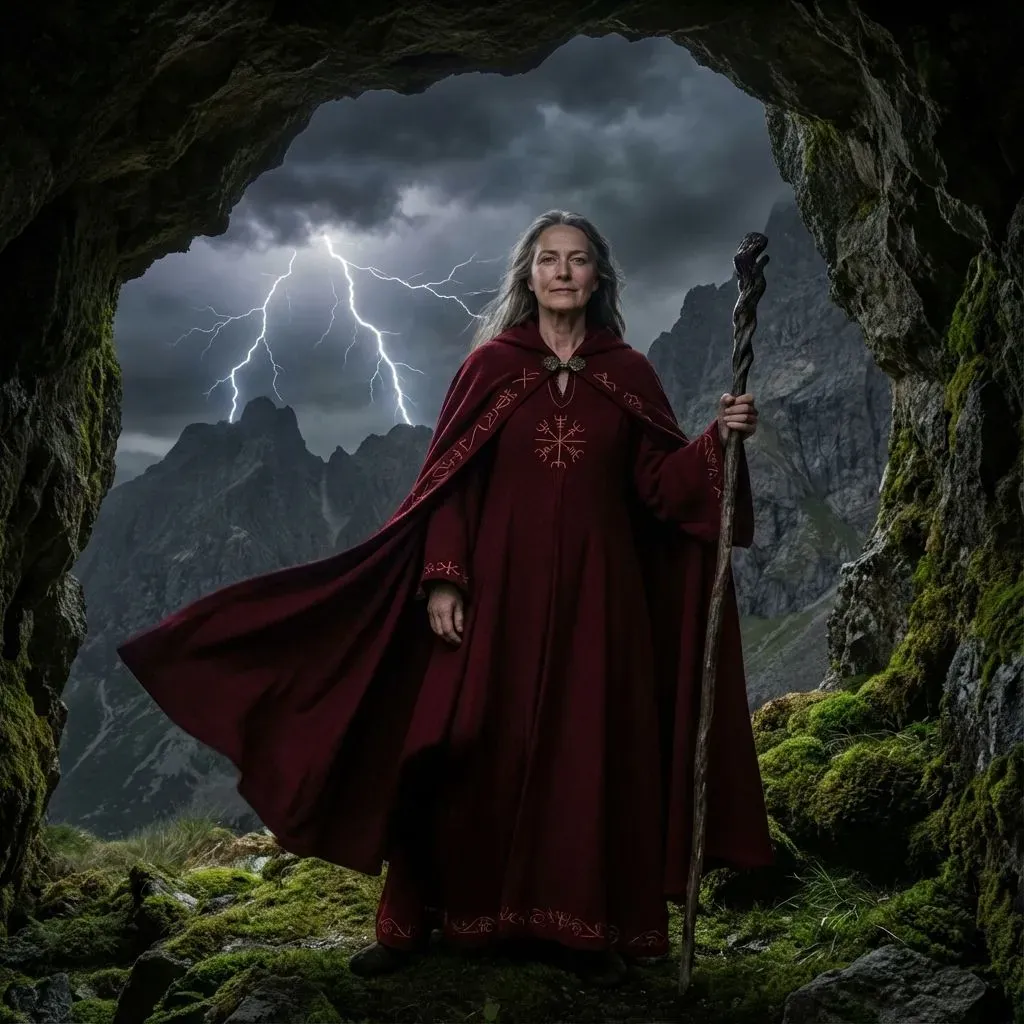
Entrances to the earth where Mari's presence is concentrated.
Mari as the eternal principle of the earth that gives all things
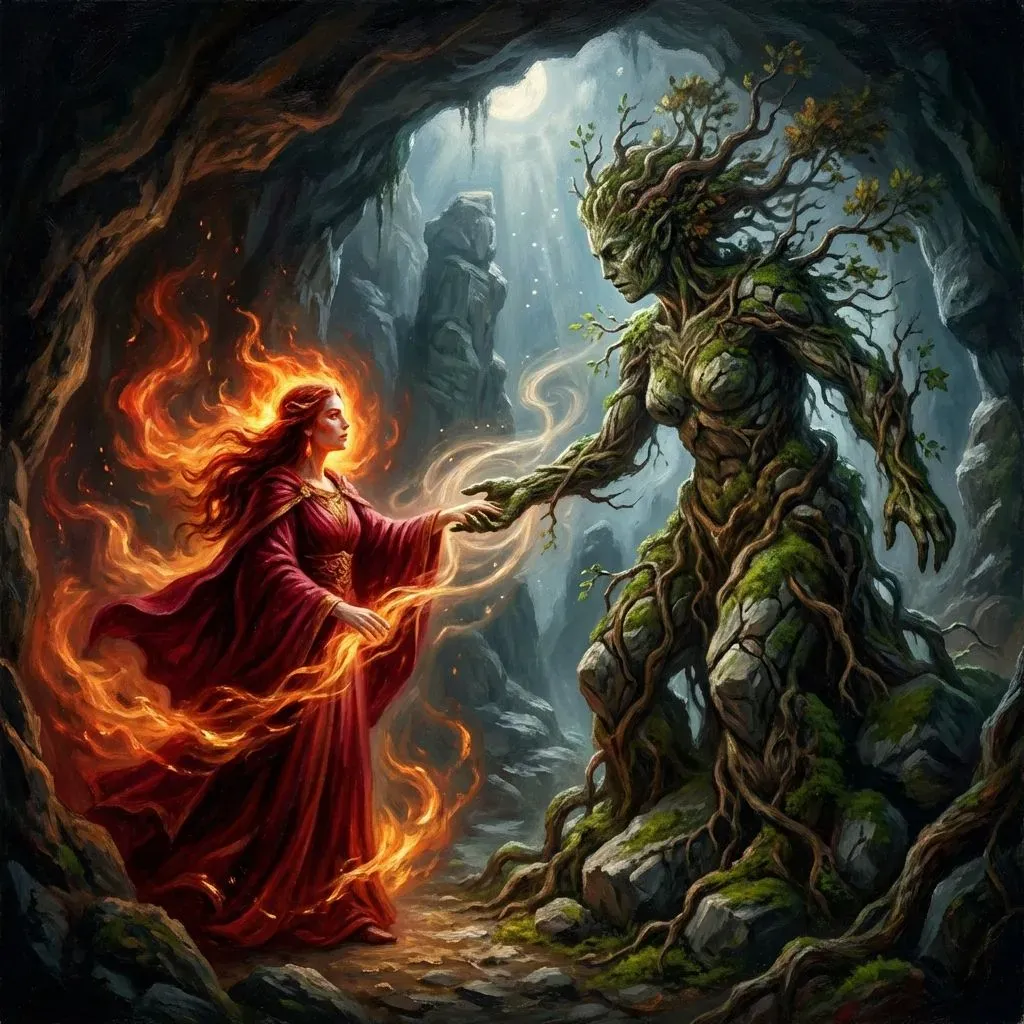
Beyond her many forms as woman of fire, storm cloud, or luminous apparition, Mari represents the earth itself as a living and conscious presence. She is not simply a goddess on the land, but the land taking divine form.
This makes her the source of fertility, abundance, and the hidden strength that feeds the visible world from below. Healthy flocks and fruitful fields depend on the balance she maintains in the depths.
As mother earth, Mari is not permissive. Those who take too much, damage the waters, or strip the land without measure encounter her answer through drought, snow, illness, or loss.
The legend reveals that ecological consciousness in Basque culture is far older than modern language. Respect for the land was already imagined as respect for a living maternal power.
Entrances to the earth where Mari's presence is concentrated.
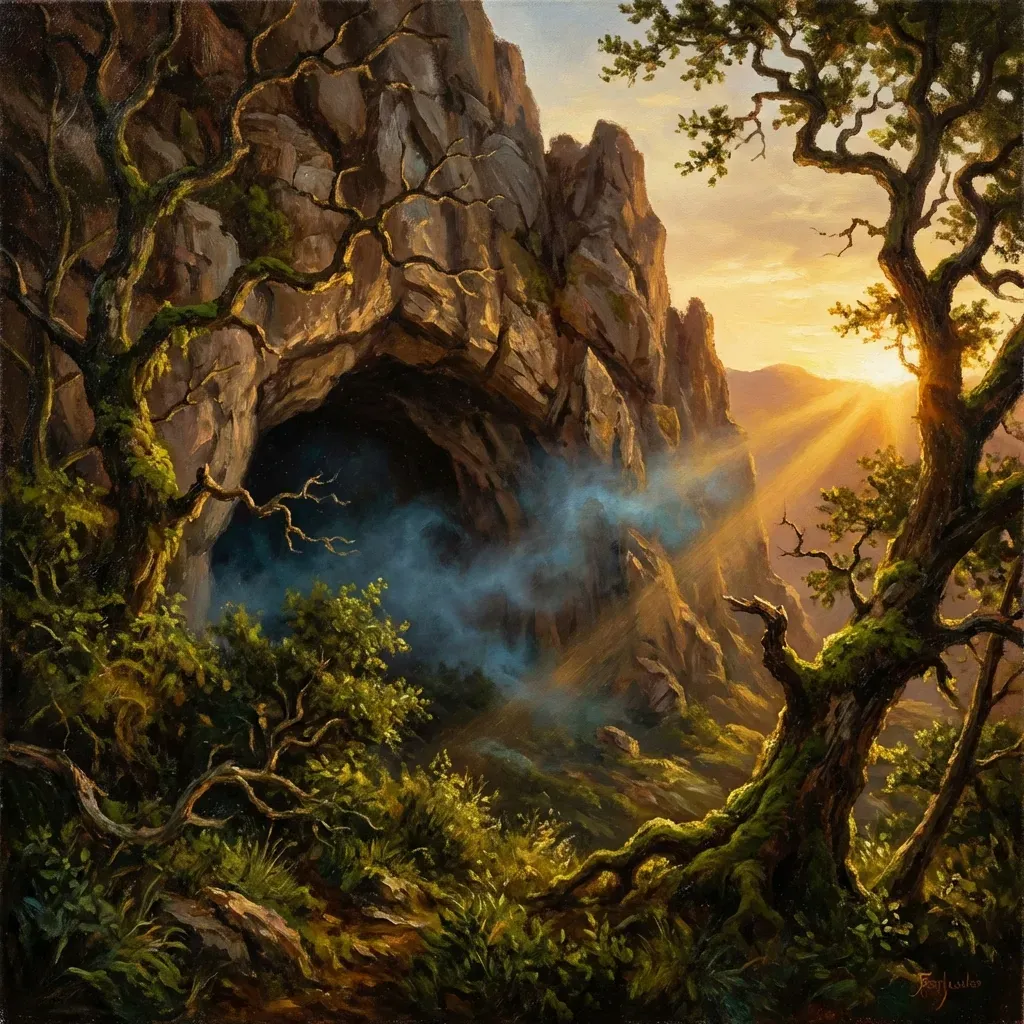
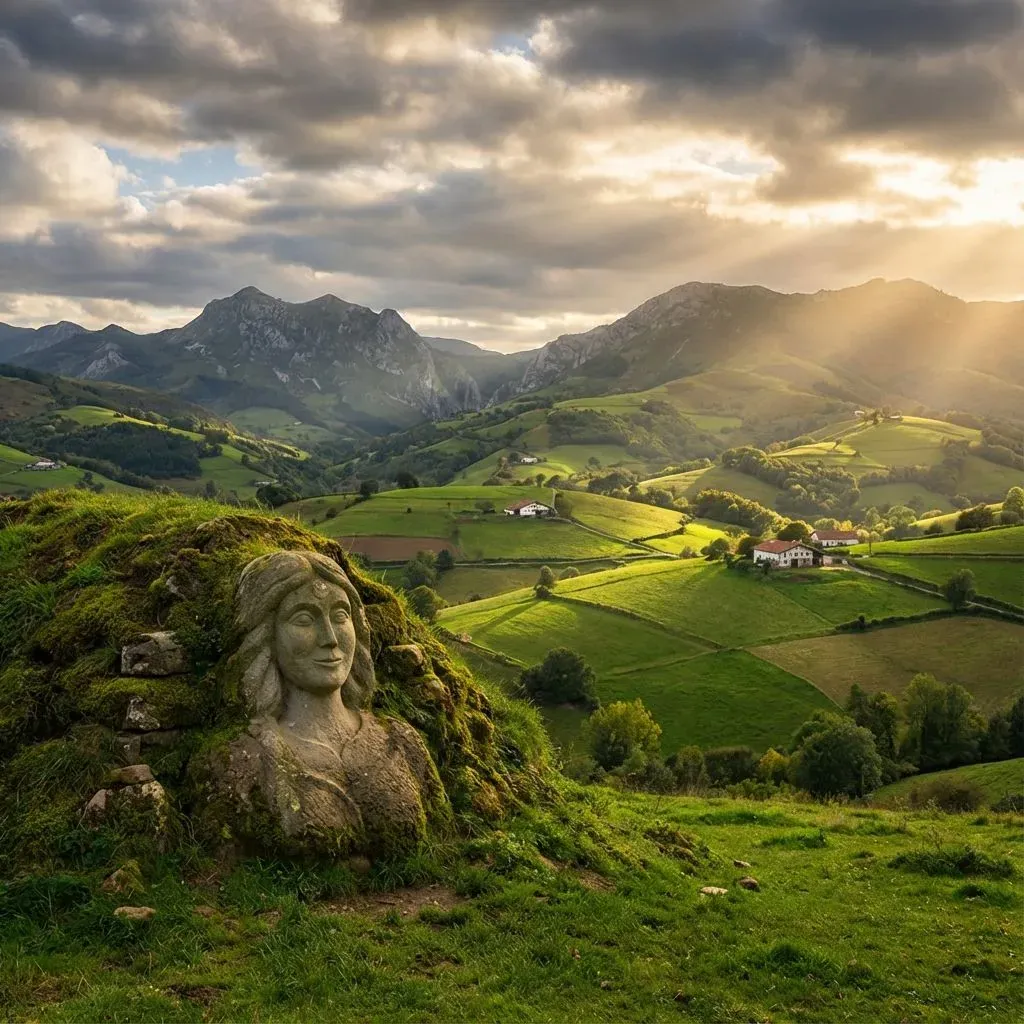
Fields and pastures understood as gifts sustained by subterranean balance.
This legend reaches the deepest theological dimension of Mari. She is no longer merely a figure within nature, but nature itself understood as conscious, fertile, and morally responsive.
That gives everyday life sacred stakes. Farming, grazing, and taking from the land are never neutral acts if the land is alive and watching.
The relation to Amalur makes this especially powerful: the motherly dimension of the earth is not sentimental, but balanced by law, limit, and consequence.
The tale endures because it expresses with great clarity a truth that modern ecology later reformulated: to damage the land is to provoke the source of life itself.