Basque farmhouses
Where the prayer was recited nightly before bed to protect the family.
— The ancestral prayer against the demon of nightmares —
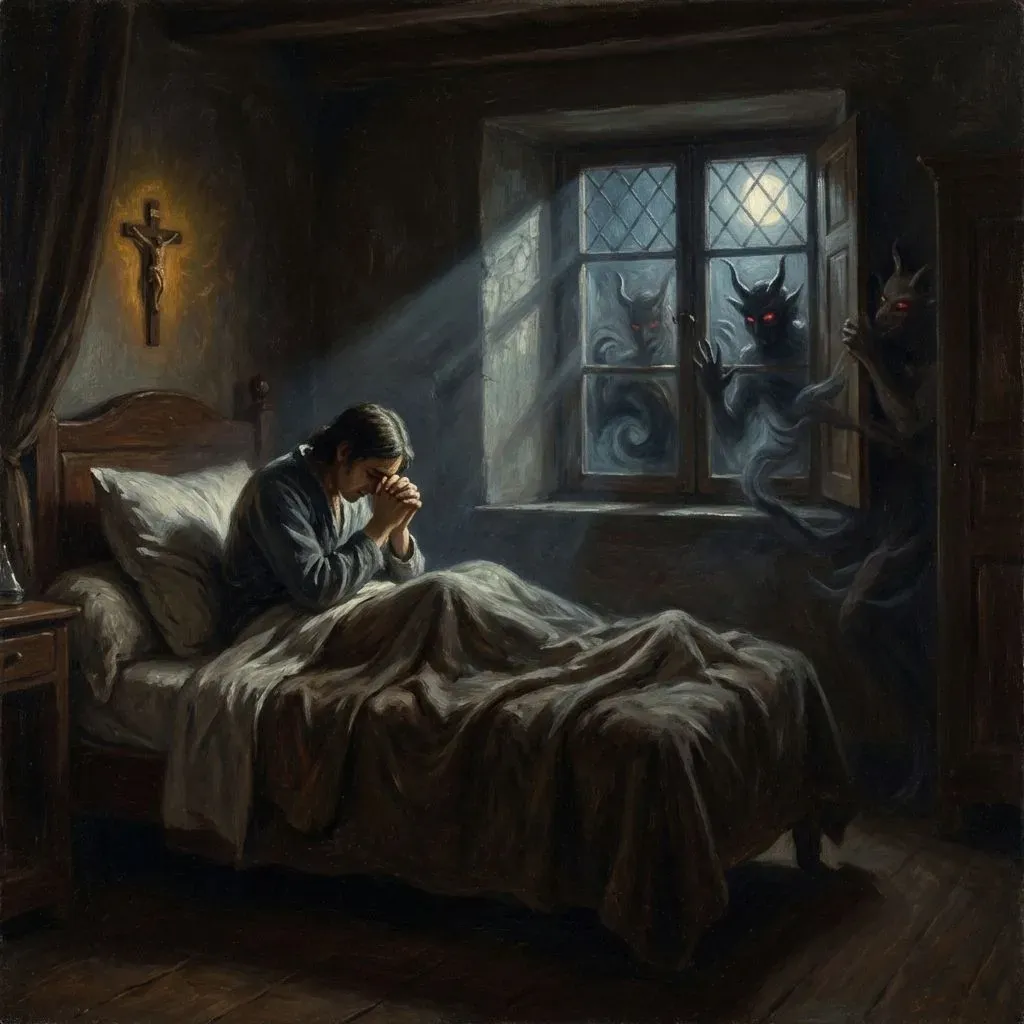
Before closing their eyes each night, Basque elders recited a special prayer to protect themselves from Inguma, the nightmare demon. This prayer was passed down from generation to generation, a magical formula that kept the evil spirit away from the home during the hours of darkness.
The best-known prayer said: “Inguma, I tell you to leave me in peace tonight. From one until two, from two until three, from three until four, from four until five, from five until six, from six until seven. Day will break and my soul will be at peace.”
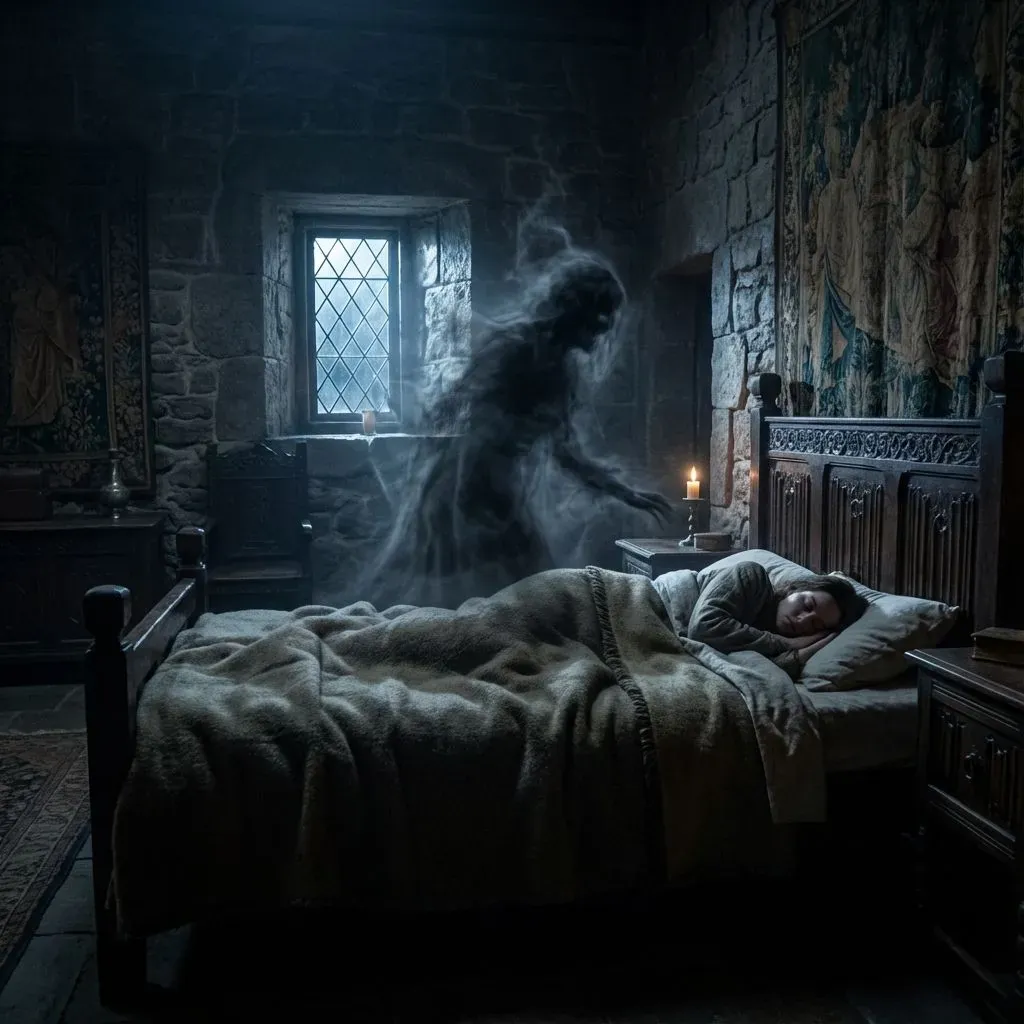
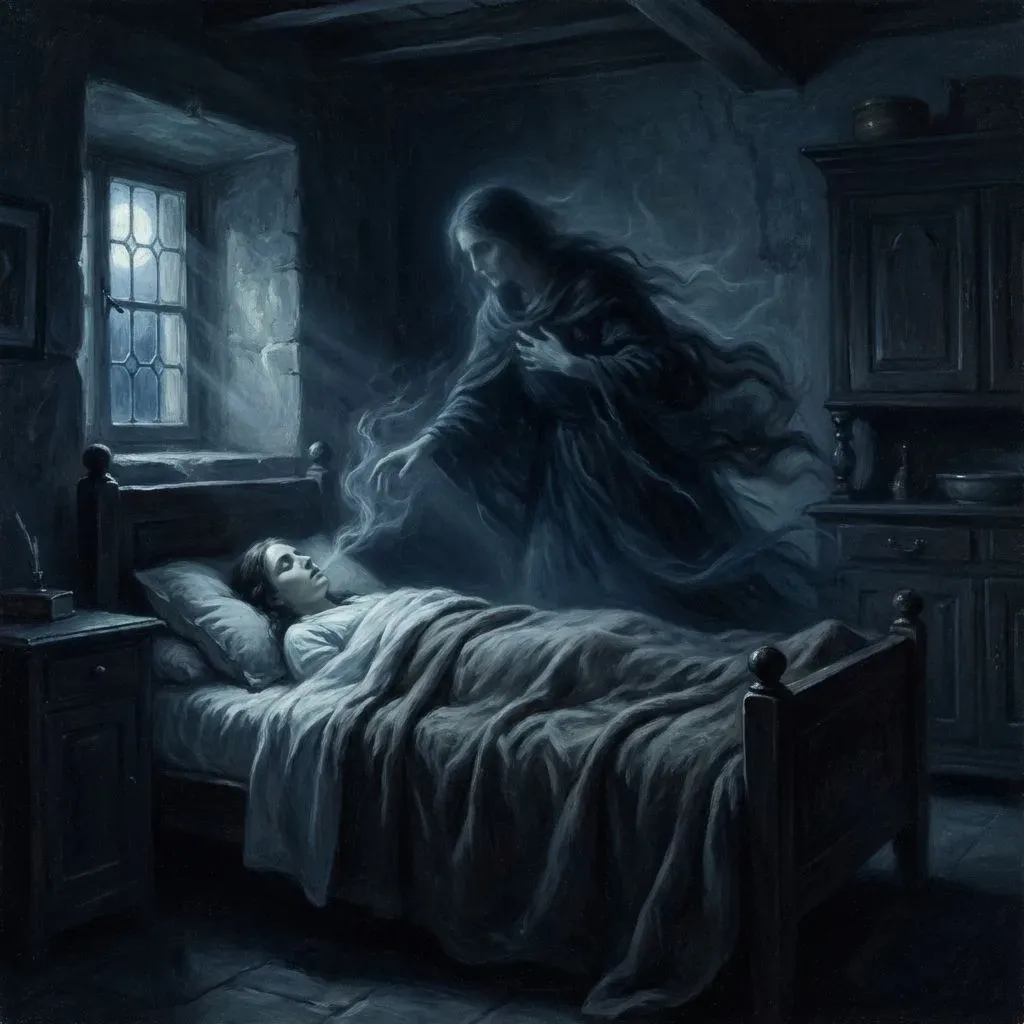
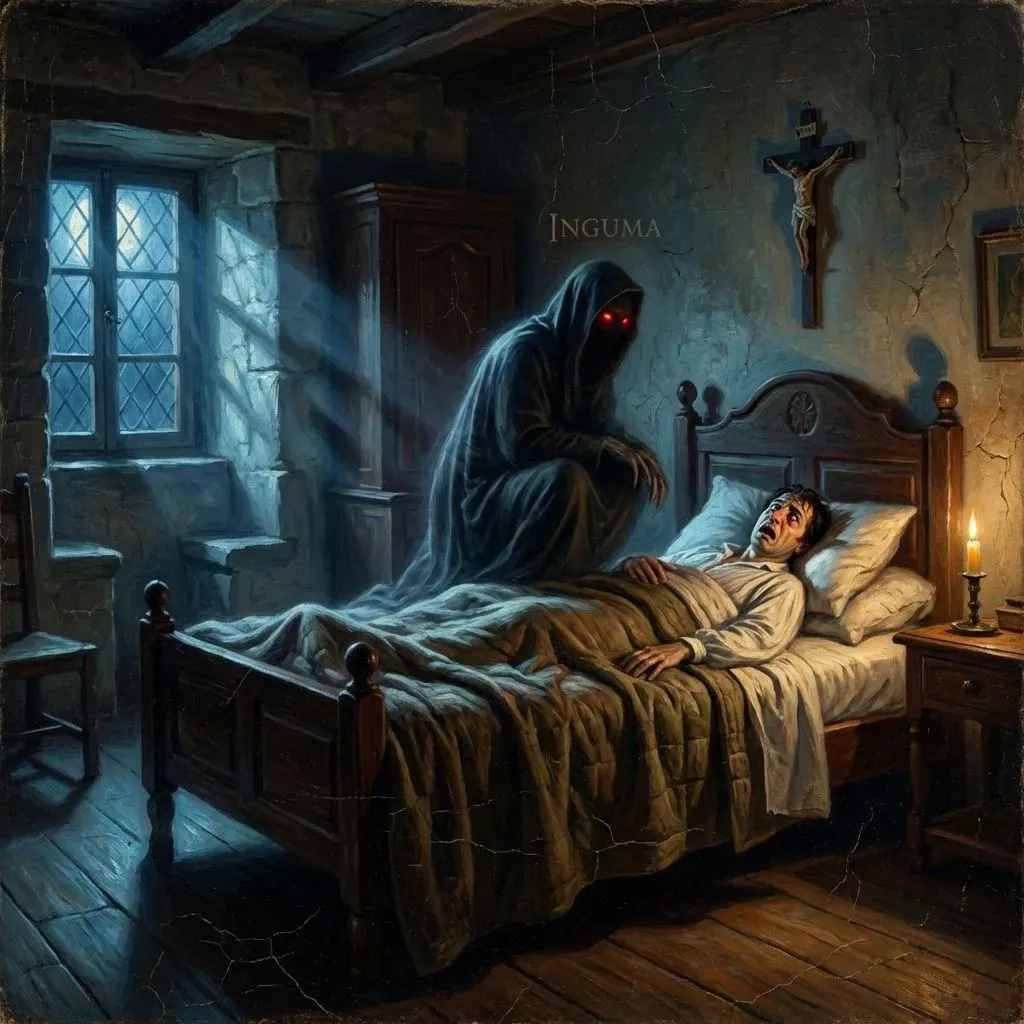
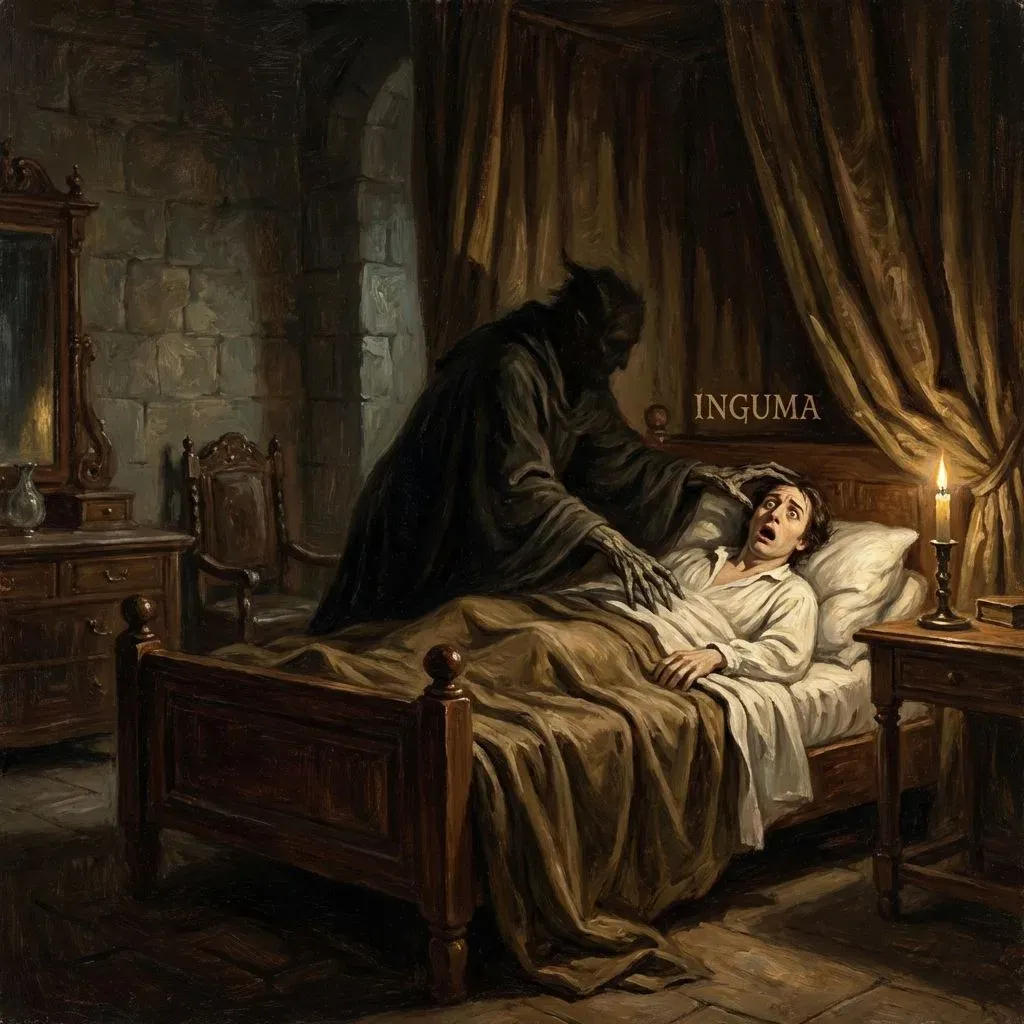
Anyone who forgot to recite the prayer was believed to be unprotected against the nocturnal visitor. Inguma would then slip through the cracks in the window, invisible as the wind, and settle on the sleeper’s chest to steal their breath as they slept helplessly.
Mothers taught this prayer to their children from an early age, as they would teach any fundamental truth of life. It was as important as learning to close the door properly or bank the fire before bed: a precaution against the invisible dangers that lurk when night falls over the farmhouses.
Where the prayer was recited nightly before bed to protect the family.

Places where the prayer had to be spoken to seal the room against Inguma.
In the vast defensive arsenal of Basque popular culture, protective prayers held a place as important as physical amulets or rituals involving fire and salt. Certain verbal formulas, secretly passed from elders to younger family members, activated invisible shields that endured as long as the words were remembered and spoken correctly.
These were not prayers in the conventional religious sense, although many included saints’ names or references to the Christian calendar. They were hybrid texts combining different layers of time, in which the new God shared a verse with much older beings without anyone finding this inconsistent.
Strict conditions surrounded the transmission of these formulas. They could be taught only to a blood relative, only at certain times of year, and always from memory, without writing them down. Writing was believed to strip power from words that needed to live in the voice to remain effective.
When a family line died out without passing on its formulas, the farmhouse was said to be “naked” before the forces around it. This image of a spiritually exposed home without its inherited words shows how much Basque culture valued the continuity of a family’s oral knowledge.