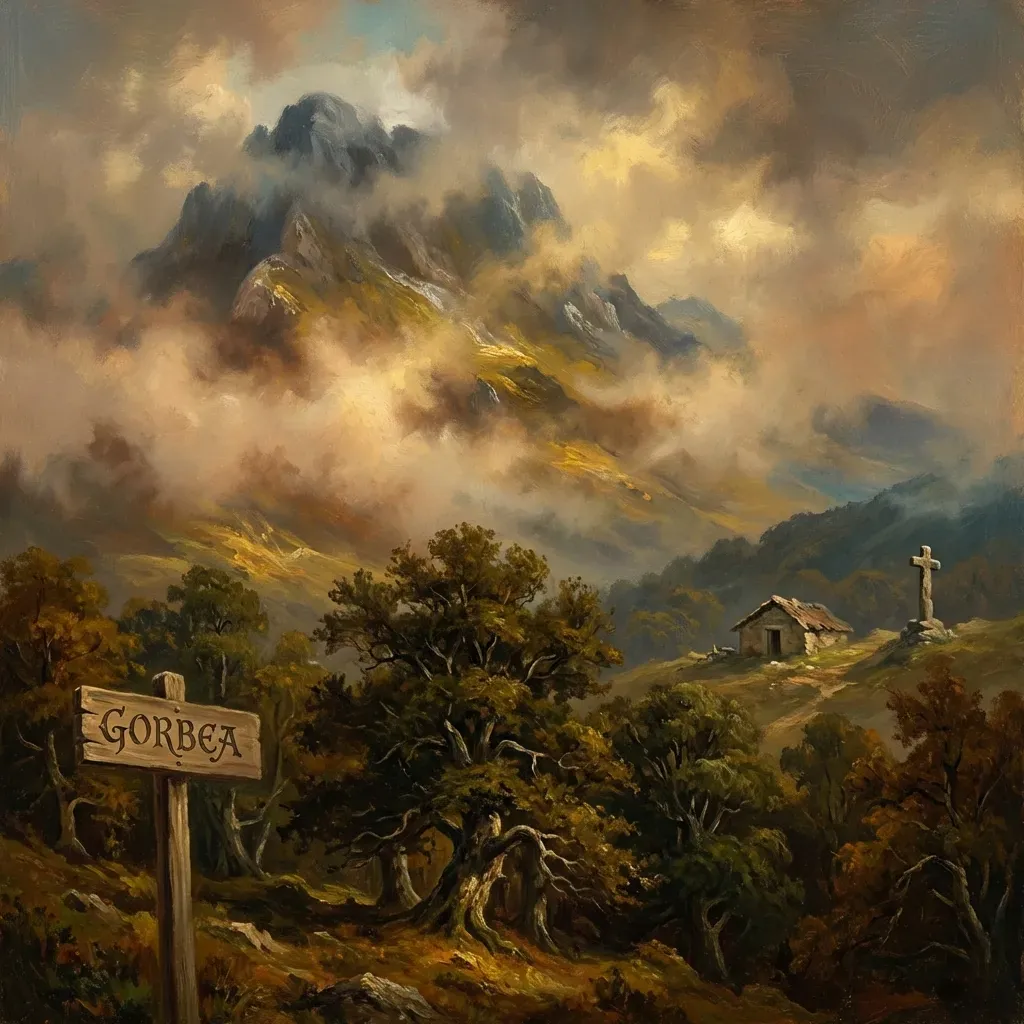
Basque bedrooms
Where Inguma slips in to oppress sleepers.
Demon of nightmares
Inguma is the demon of nightmares that presses on the chest of defenseless sleepers during the night. He slips silently through windows and locks when the house falls deeply quiet, taking advantage of the darkest hours to attack his victims while they lie paralyzed with terror.
Basque elders recited protective prayers before closing their eyes each night. Inguma was held responsible for the night terrors and sleep paralysis that seized sleepers. His malignant nature made him one of the most feared beings among families, who placed charms above beds to keep him away.
Where Inguma slips in to oppress sleepers.

Homes where the visit of the nocturnal demon is most feared.
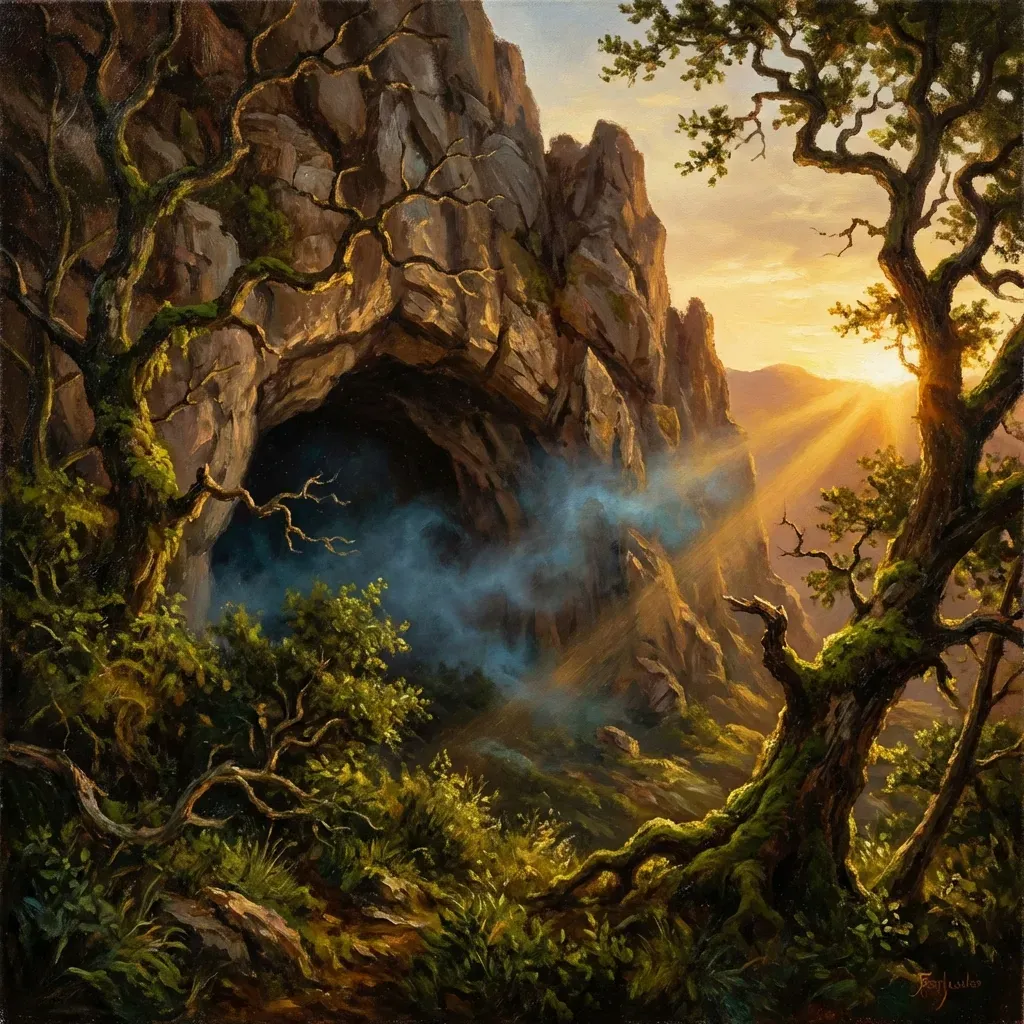
Through these cracks Inguma enters once the house is silent.
The name Inguma may derive from roots associated with surrounding, pressing or suffocating during sleep.
Inguma personifies sleep paralysis and nightmares. He enters homes by night and sits on the chest of sleepers, causing terror and difficulty in breathing.
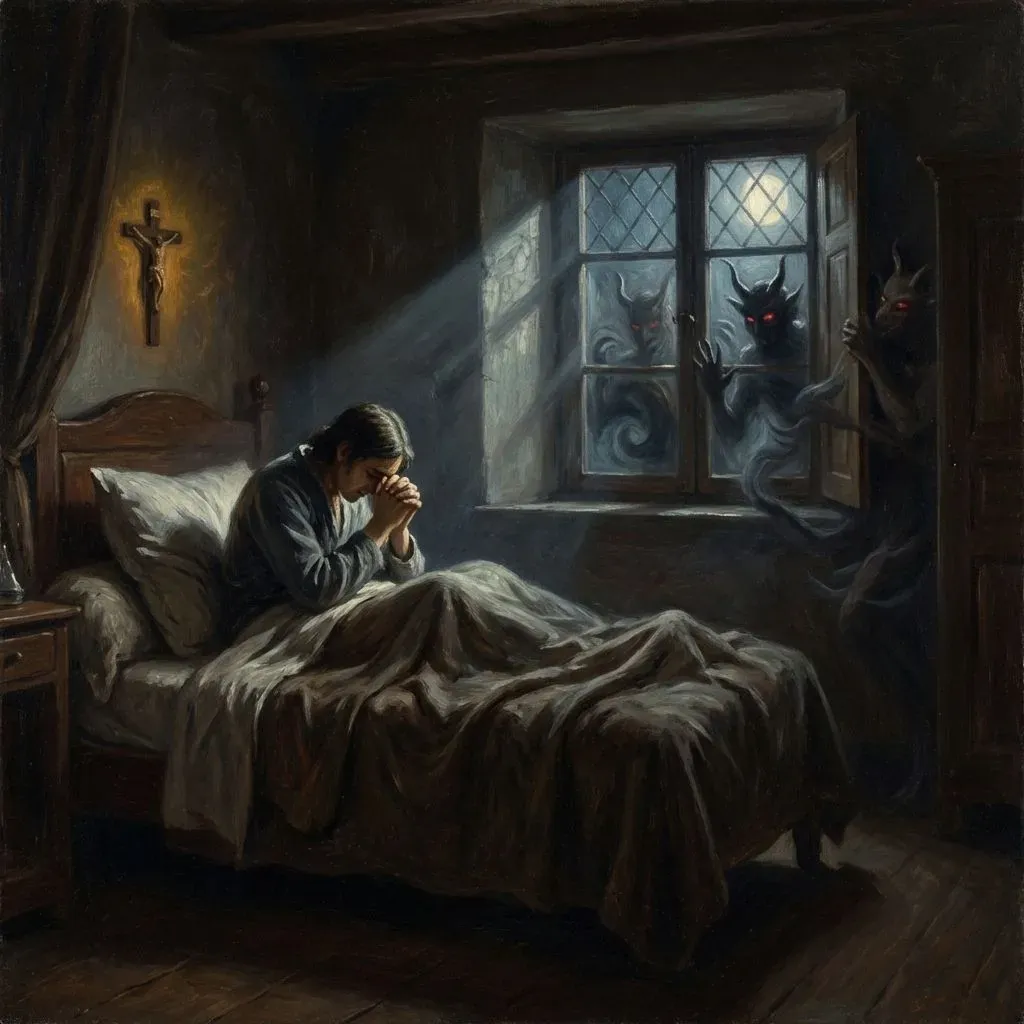
Inguma: the oppressor of sleep and nocturnal anguish
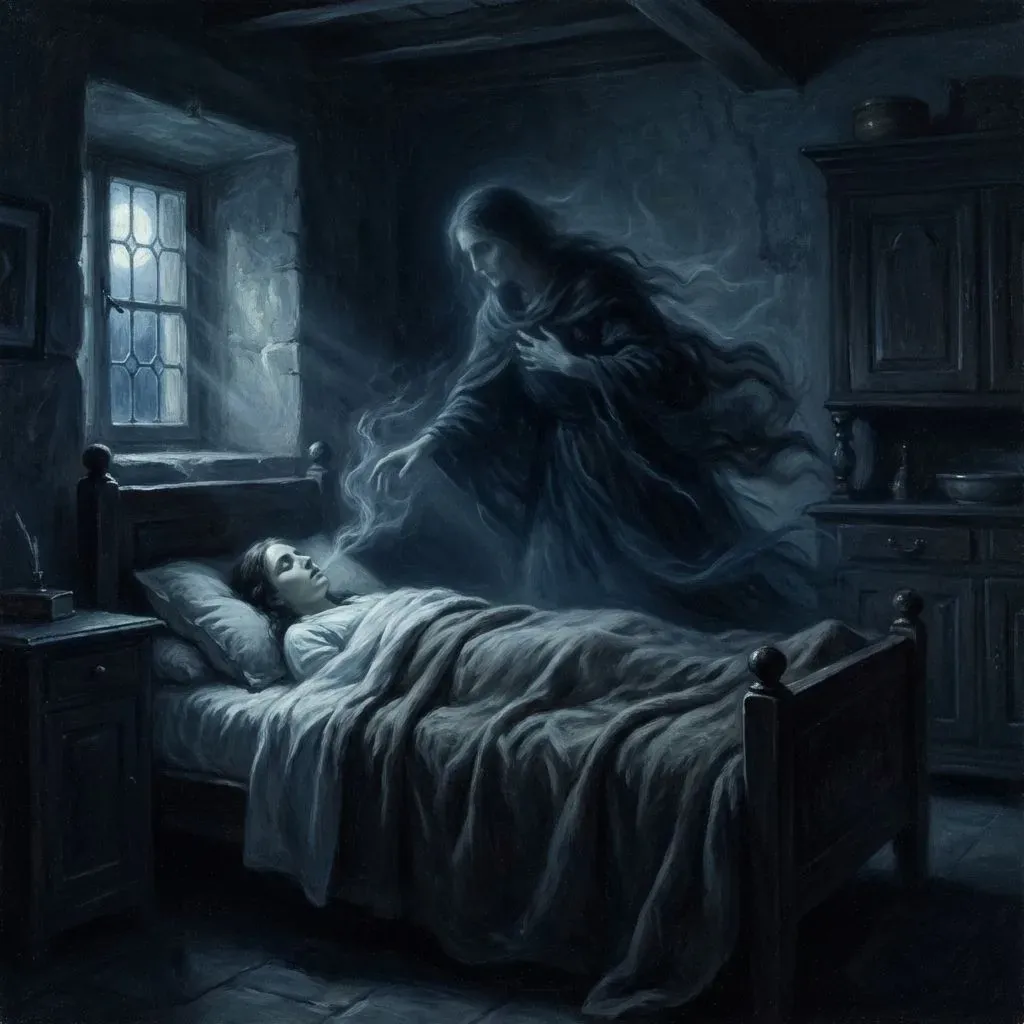
Inguma stands for one of the most visceral fears in human experience. In Basque mythology, he is the folkloric cause of sleep paralysis, nocturnal suffocation and the dreadful sense of being trapped between nightmare and waking.
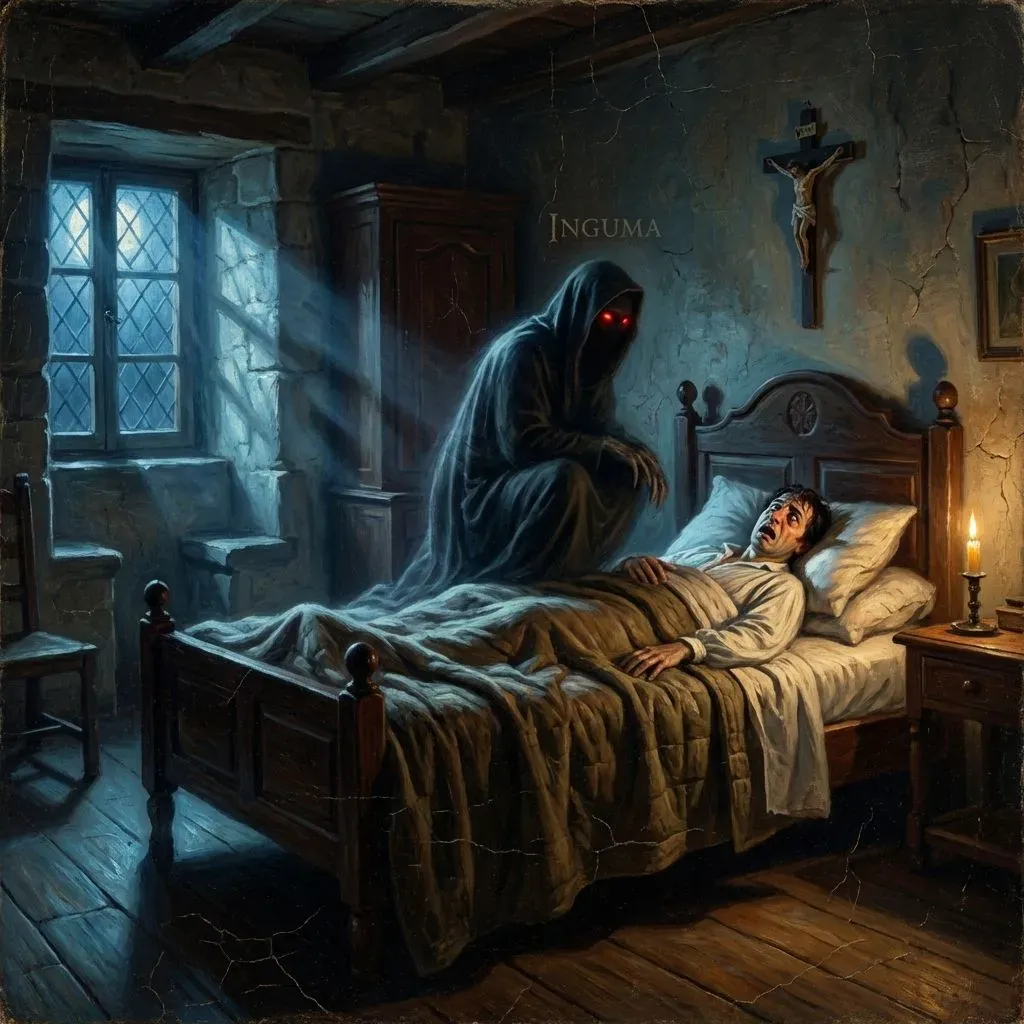
This malign genius, almost invisible in the darkness through which he moves, embodied a tangible psychological terror for rural families.
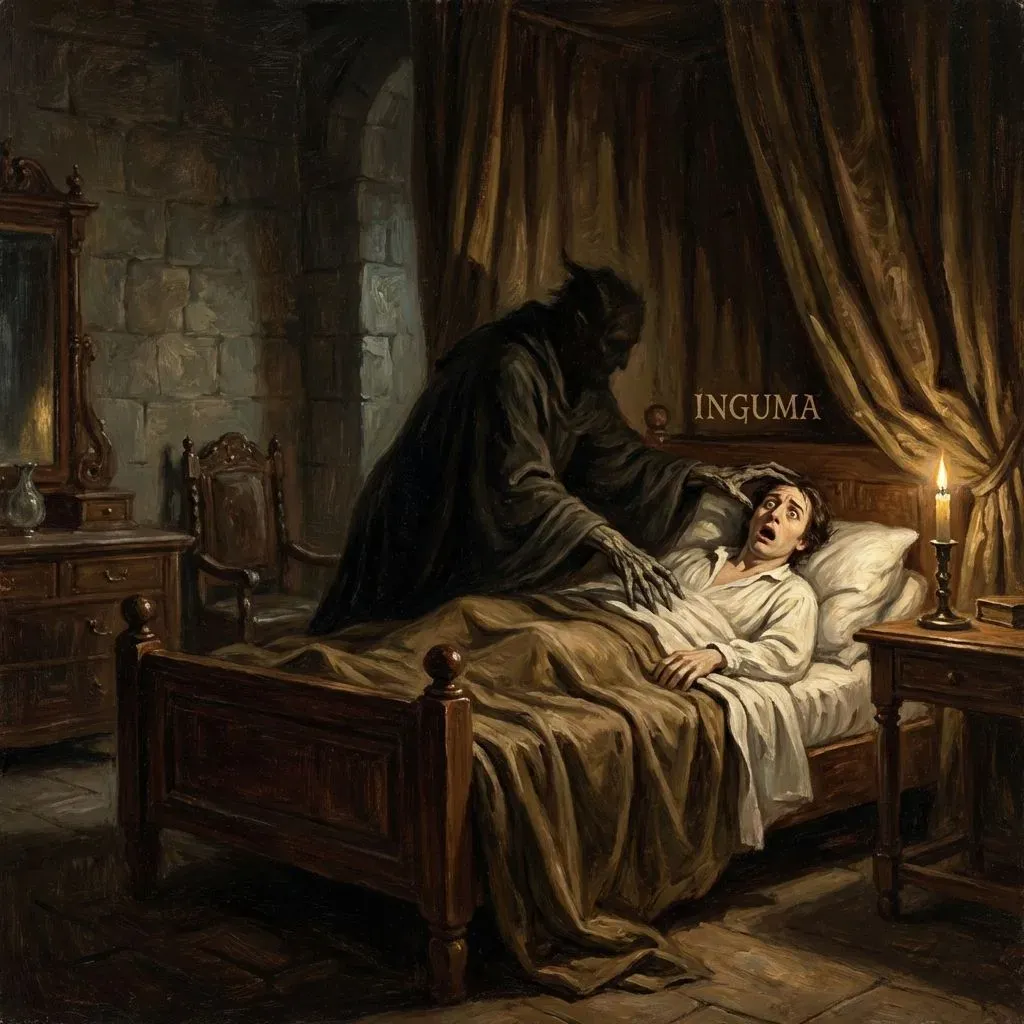
An invisible specter upon the chest
Inguma does not batter down farmhouse doors like the giants do. His power lies in his subtle and invasive ability to slip through the smallest keyhole or the cracks in wooden shutters. Once inside the family home, he moves silently in search of the most defenseless sleeper.
Rural tradition tells with crude precision that the being literally climbs upon the bed, pressing the chest with invisible force and choking the neck of the victim, who cannot cry out and suffers the torment between nightmare, paralysis and desperate wakefulness.
Protective conjurations at the bedside
Because his attack depends on the weakness of the sleeping body, Basque communities developed an entire repertoire of protective prayers and conjurations to ward him off. In countless villages, ancestral verbal formulas were whispered by the grandmother of the house before sleep for the whole family.
This preventive culture reveals the lasting dread with which unexplained nocturnal apnea and paralysis were experienced in the old rural world. Inguma gave a face to terror, and in naming him, people also tried to defend themselves against him.
Inguma belongs to the oldest layer of Basque mythology and can be understood as the nightmare being who steals breath.