Sleeping rooms
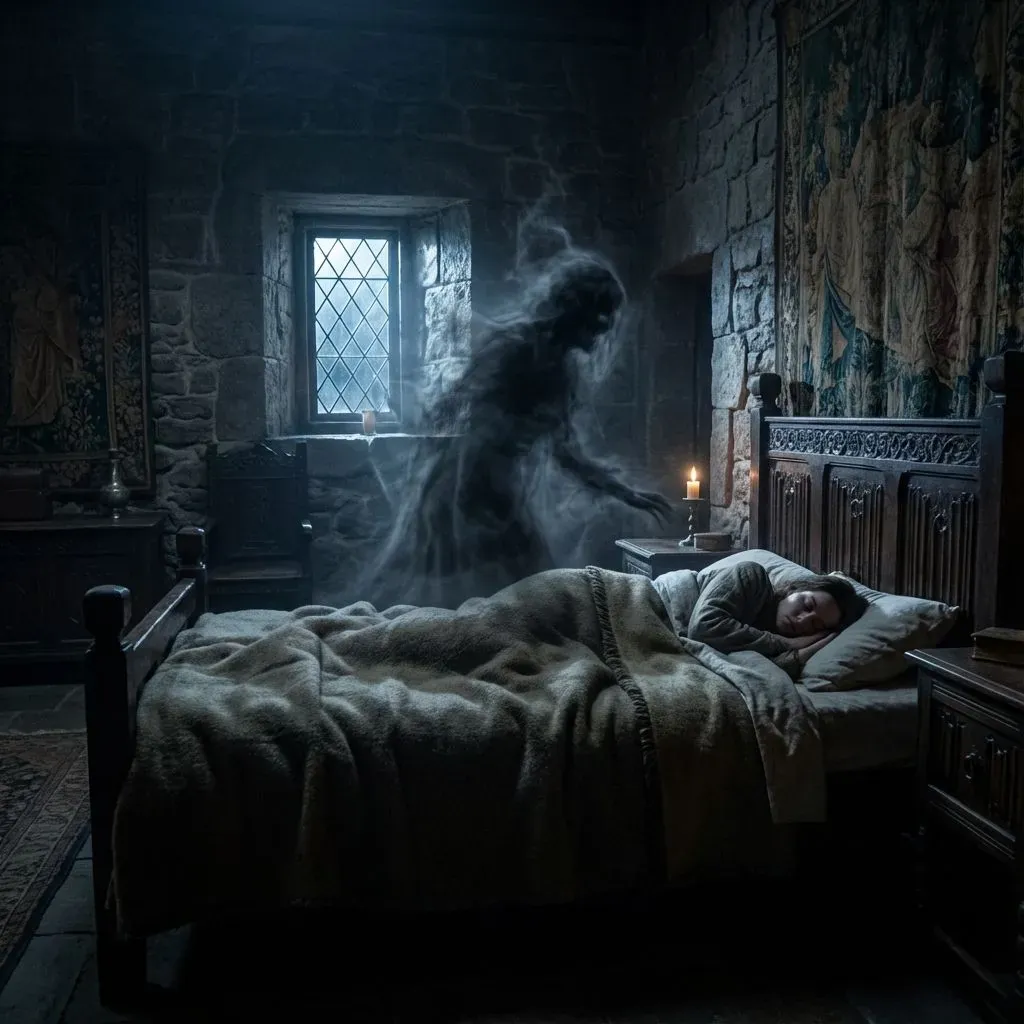
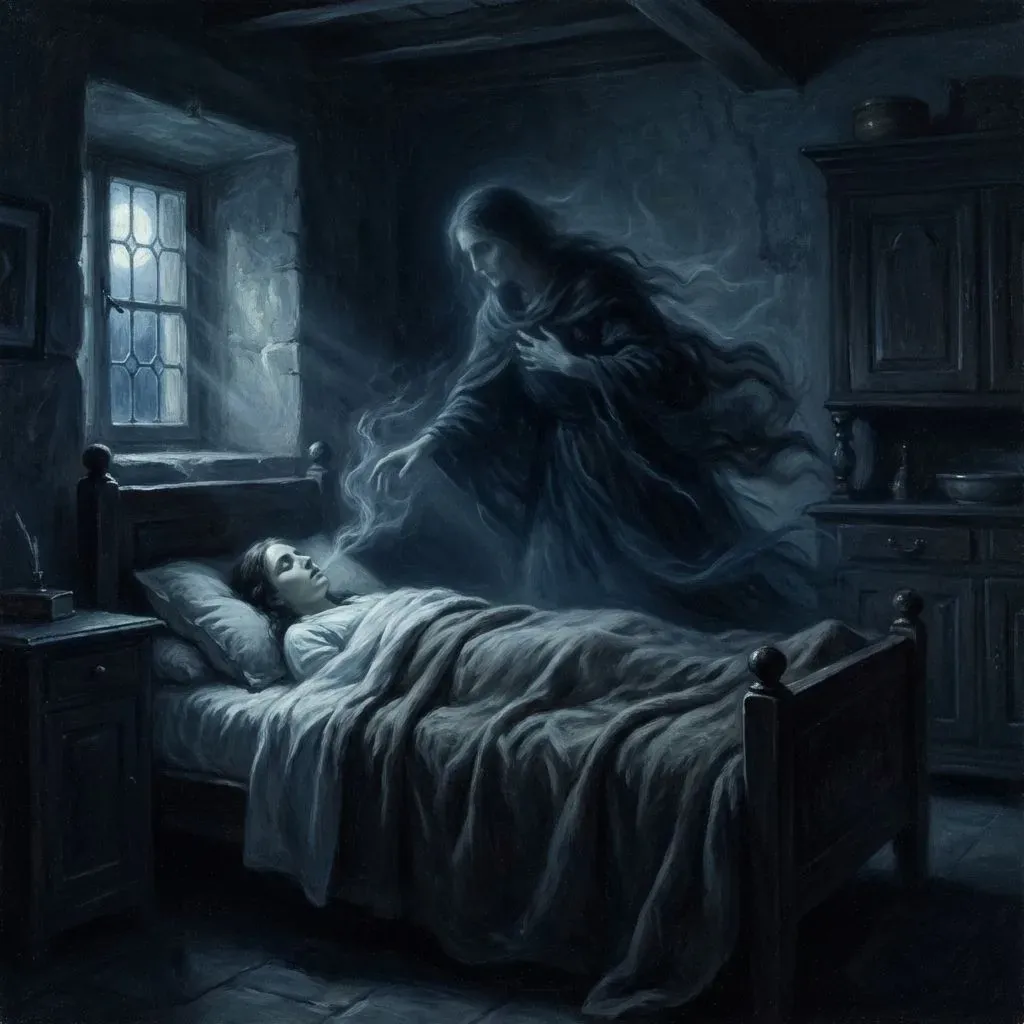
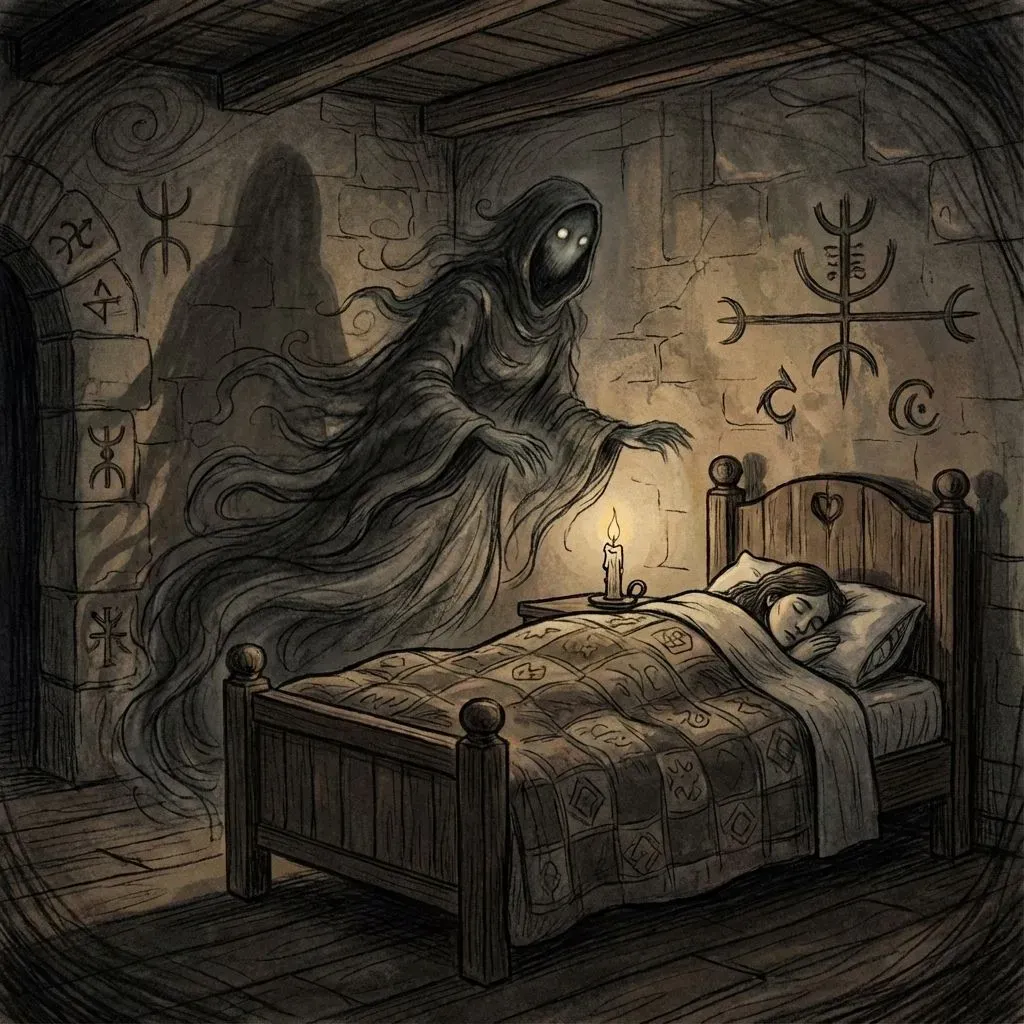
Domestic spaces where the pressure on the chest was feared during the deepest hours of sleep.
The dark pressure that crushes the sleeper before dawn
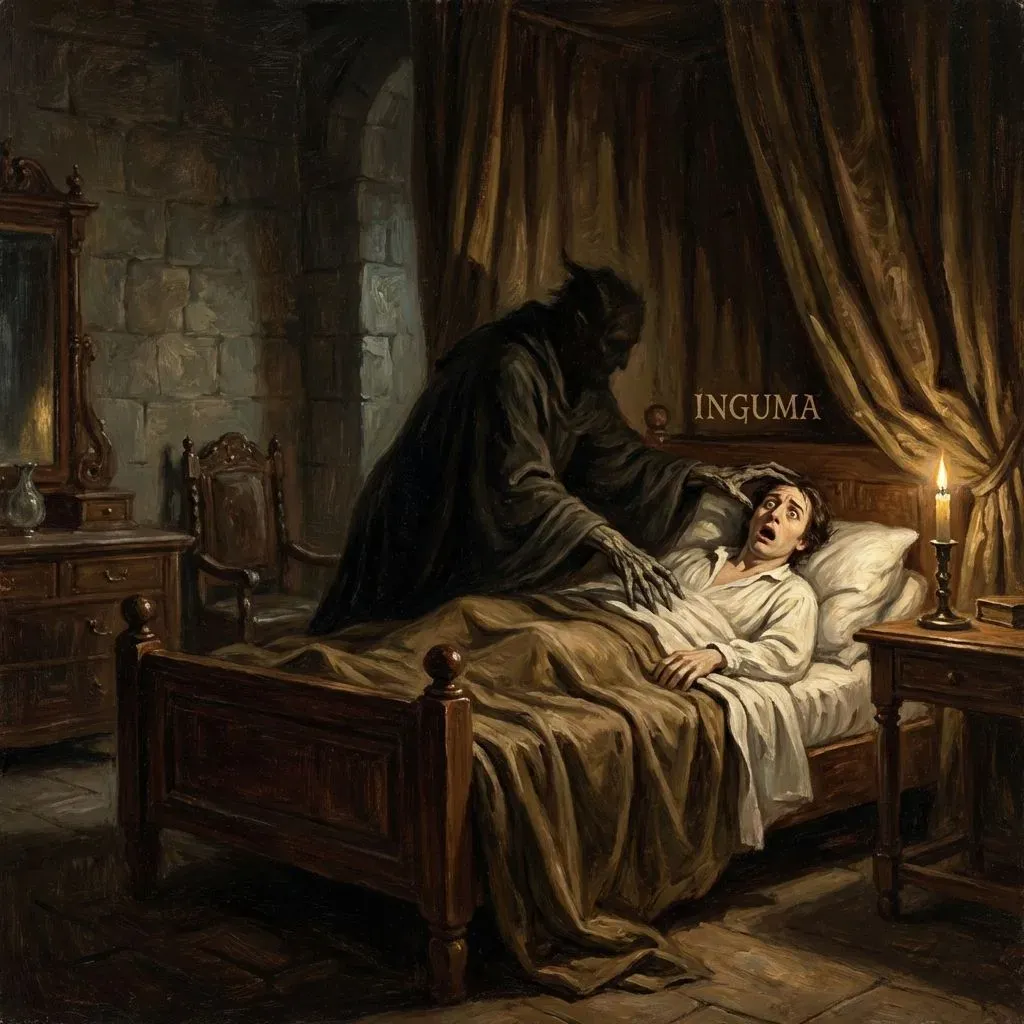
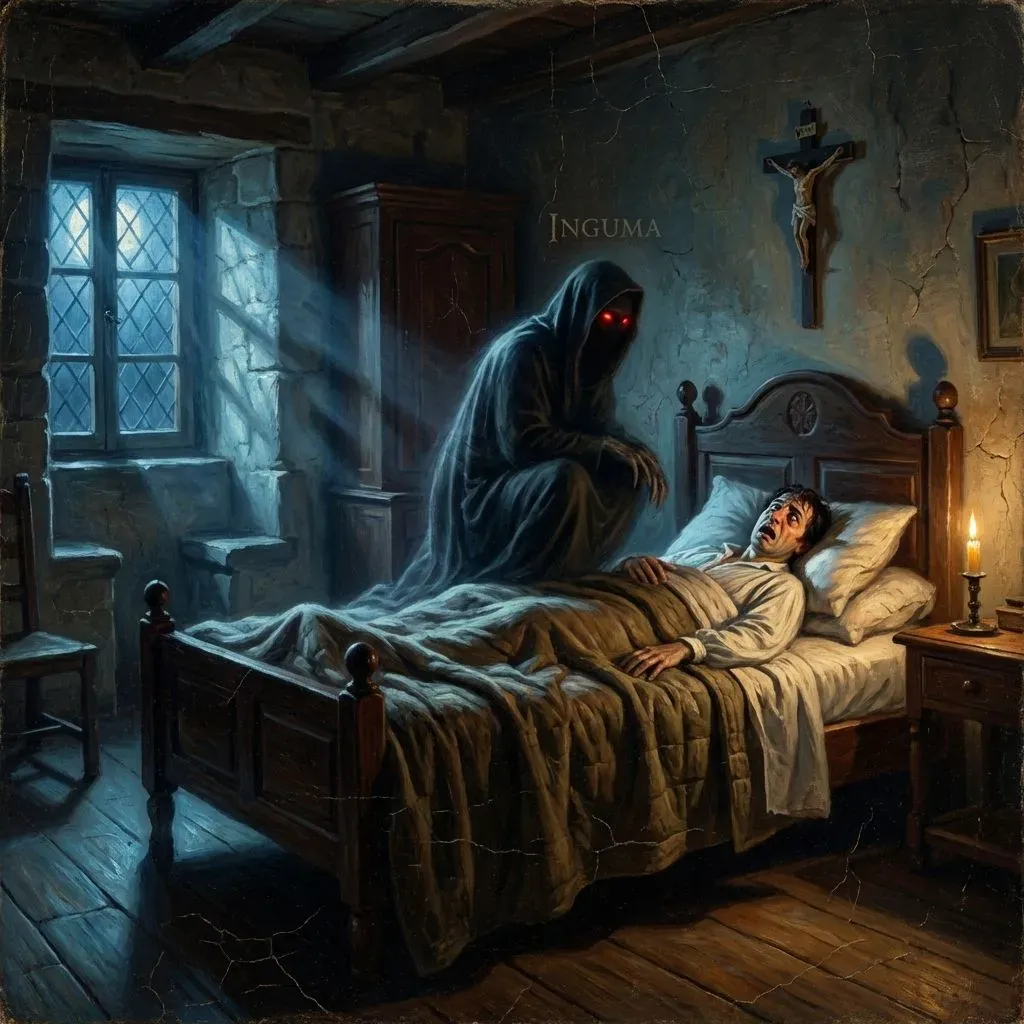
Sleep paralysis received different names and explanations across the Basque Country, but one sensation remained constant: the crushing certainty that something real and external was pressing upon the chest of the sleeper.
Some places blamed Inguma, others a spectral cat or an unnamed nocturnal presence. The body could not move, even while the room and its familiar objects seemed painfully clear.
Those who had survived repeated visits taught that the first rule was not to fight in panic, but to breathe slowly and wait for the body to return to itself. Resistance only made the oppression worse.
The legend is remarkable because its practical wisdom resembles modern advice for sleep paralysis. Folklore turned terror into a method of endurance.
Domestic spaces where the pressure on the chest was feared during the deepest hours of sleep.
The intimate night world in which the body feels trapped between dream and waking.
This legend translates a deeply physical terror into mythic language. The pressure on the chest feels so immediate and external that tradition naturally imagined an agent behind it.
Its power lies in the mixture of helplessness and lucidity. The sleeper often sees the room clearly, yet cannot move or call for help, which makes the experience feel more like visitation than dream.
By linking the event to Inguma, folklore gives shape to the fear and turns coping into ritual knowledge. Naming the enemy is already a form of defense.
The tale survives because it offers meaning and method to one of the most frightening experiences of the night body.