Farmhouse bedrooms
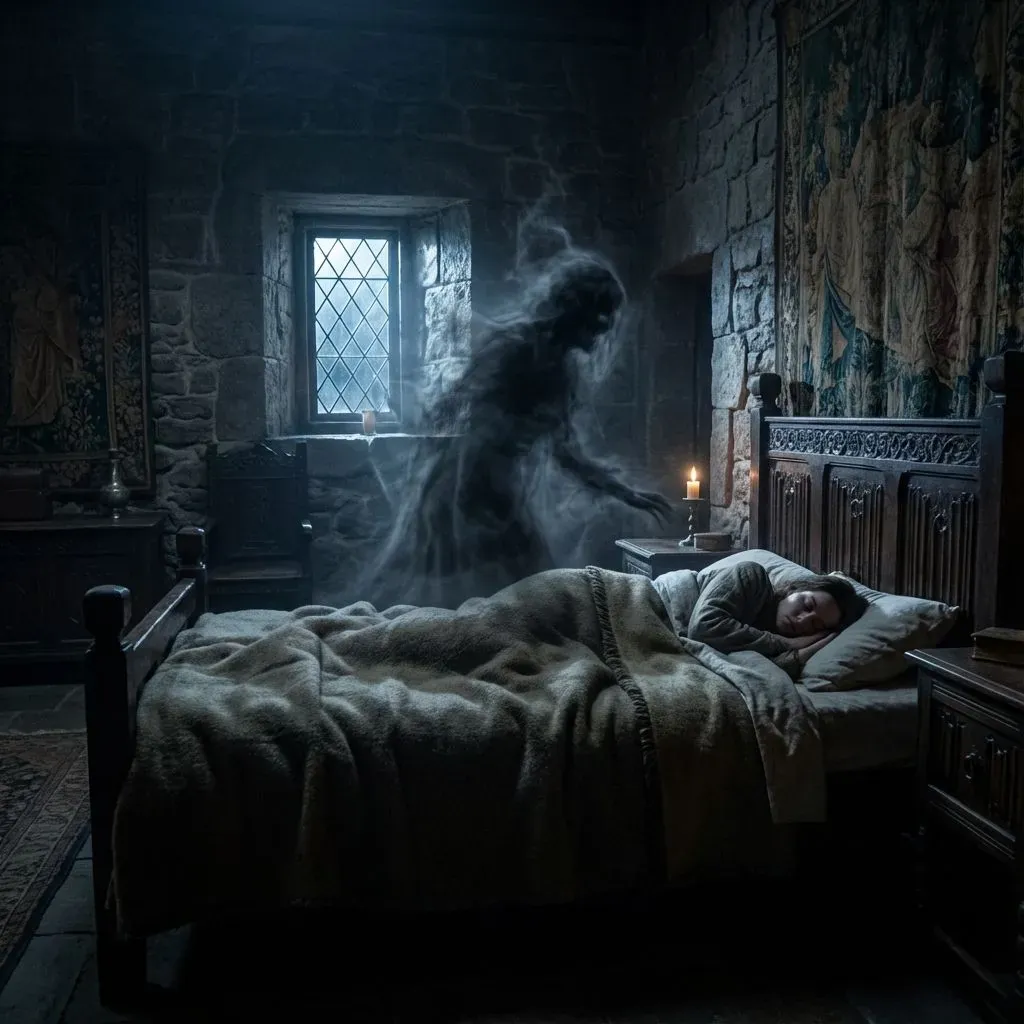
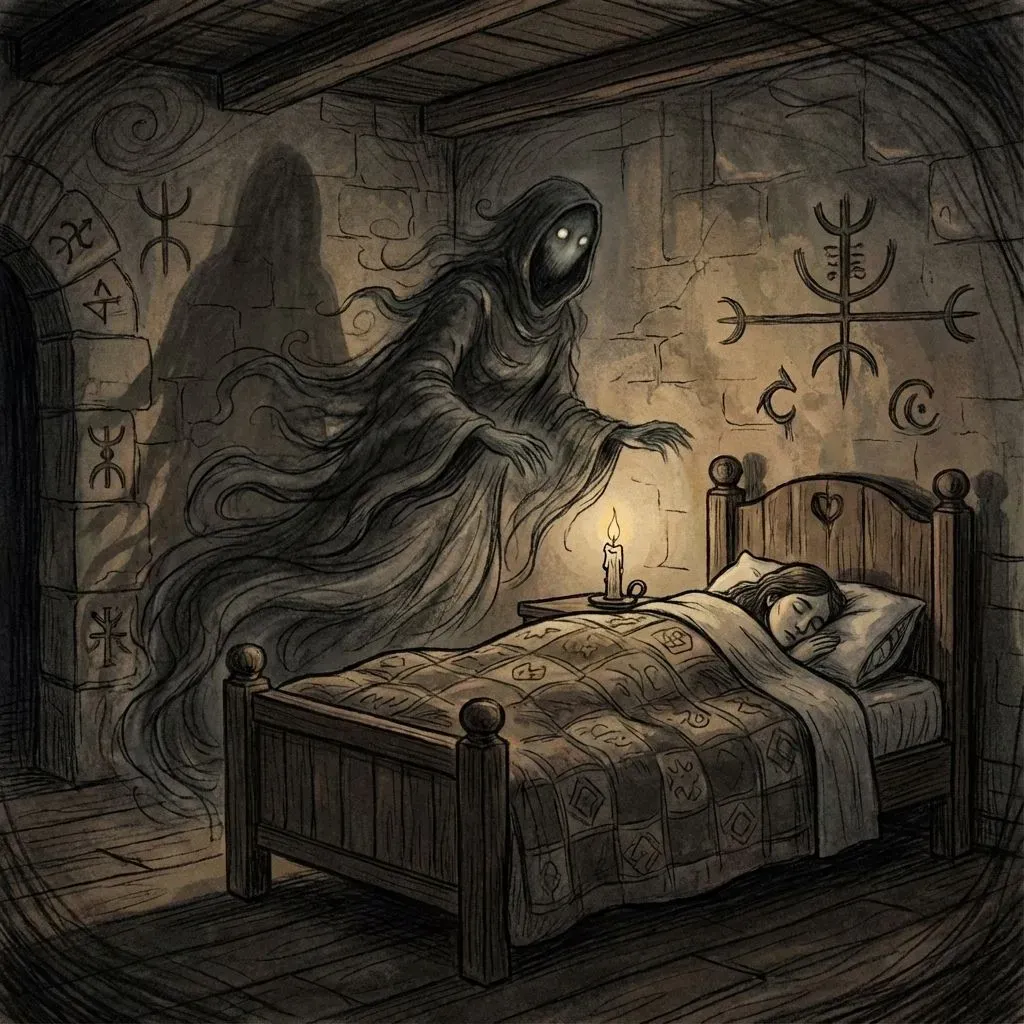
Interior spaces where the presence of Inguma was feared during sleep.
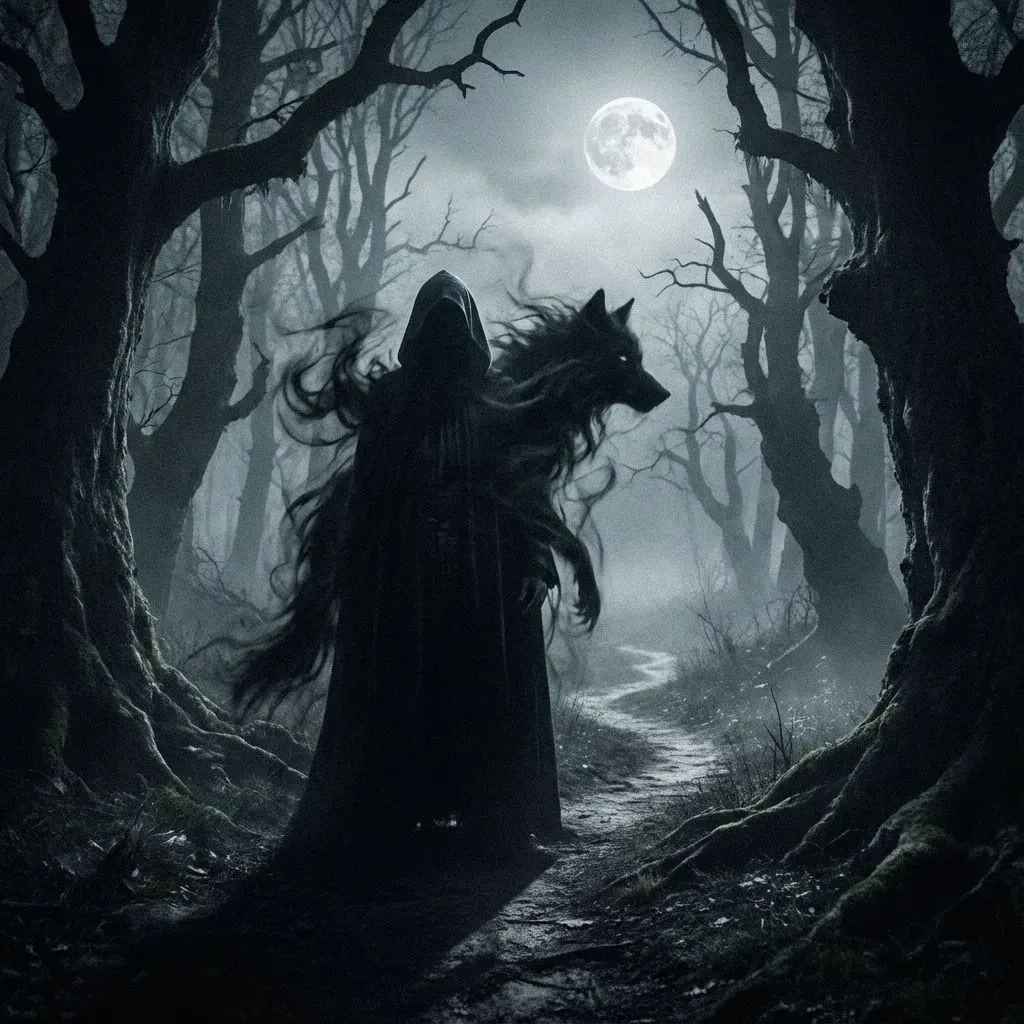
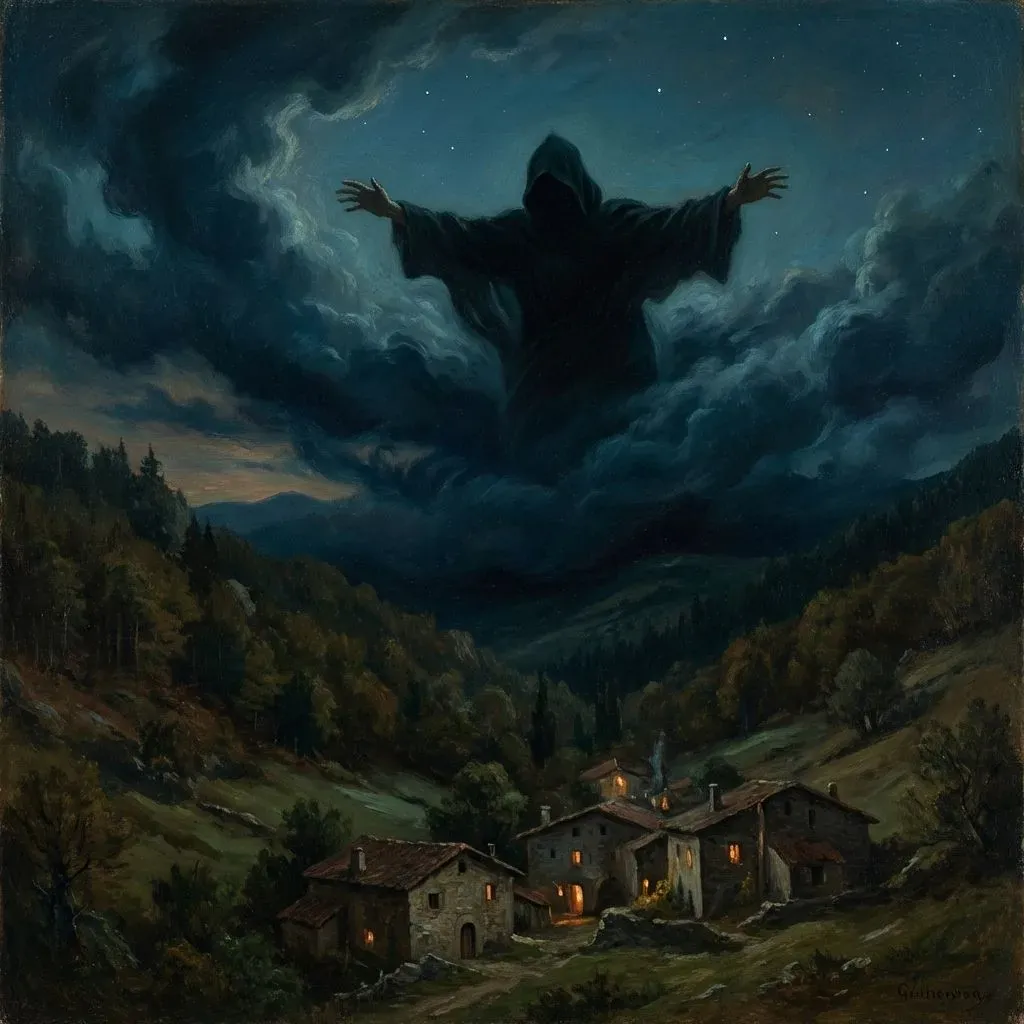
The creature that drains the life of sleepers in the dark
Not every dangerous being in Basque mythology arrives with noise and fury. Some approach in silence, during the most vulnerable hours of sleep, when the body is defenseless and the mind has retreated into dreams.
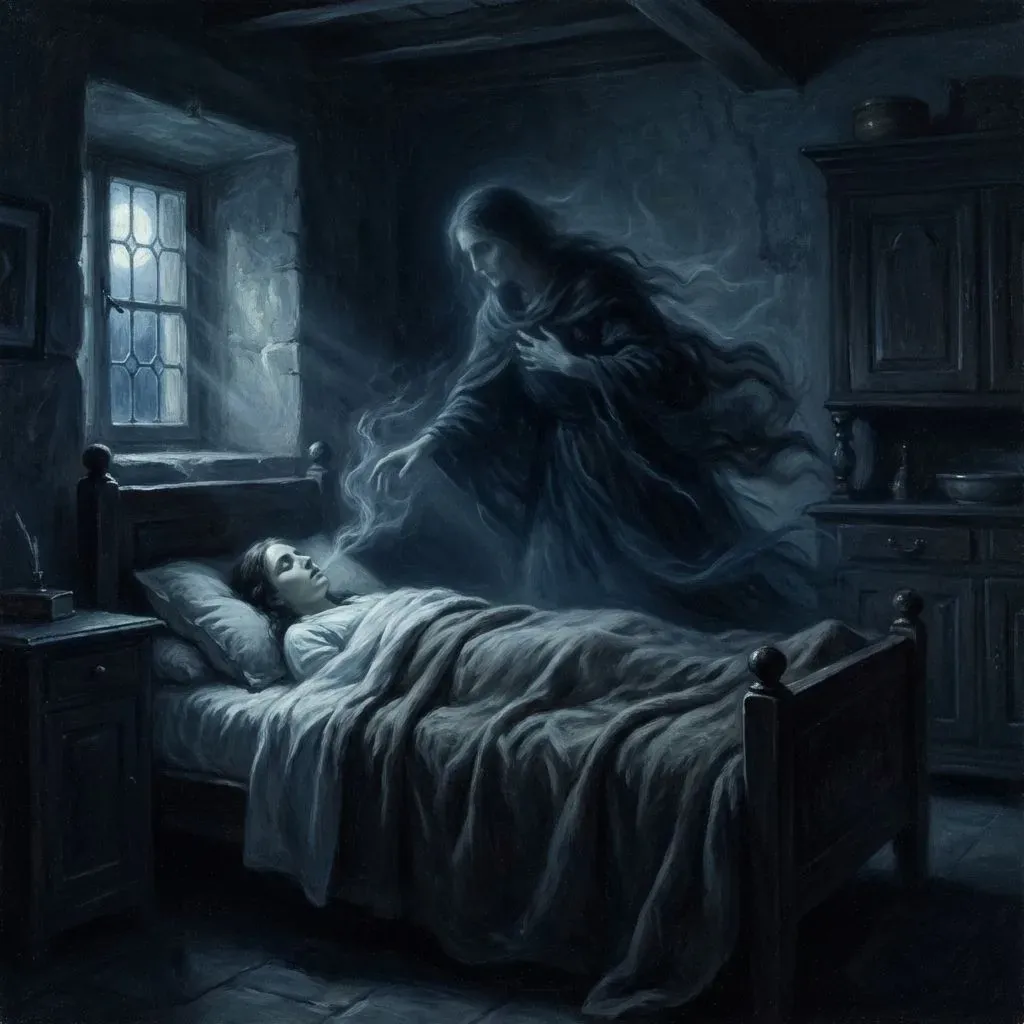
The thief of breath comes close to sleepers and slowly draws away their vital strength. The victim wakes exhausted, with pain in the chest and the sensation of having carried an enormous weight through the whole night.
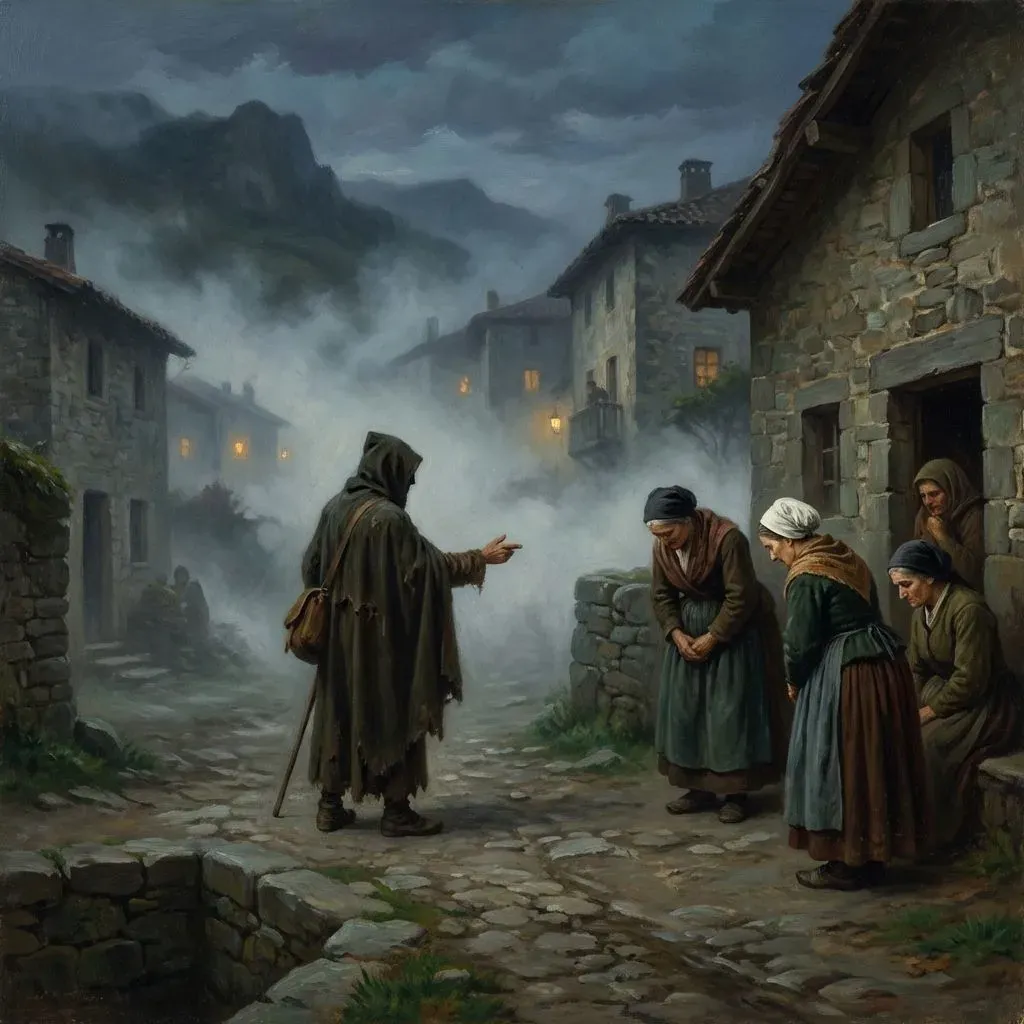
Village healers preserved remedies against this invisible threat: lines of salt at the threshold, protective plants fixed to the bed, or prayers spoken before the last candle went out.
The legend therefore stands at the border between medicine, ritual, and fear. It gives form to the nightmare of suffocation and turns domestic protection into a sacred necessity.
Interior spaces where the presence of Inguma was feared during sleep.

Domestic boundaries where salt, prayer, and herbs were used for protection.
This legend is one of the clearest Basque expressions of nocturnal vulnerability. It locates terror not in the open mountain but in the bed itself, where the human body should be safest and yet can still be attacked.
That inversion is powerful. The home remains sacred, but sleep opens a weakness within it, allowing the night to cross inward through the breath of the dreamer.
The response of popular tradition is revealing: people did not answer only with fear, but with techniques. Salt, plants, and spoken formulas show how myth and practical care worked together.
The tale endures because it transforms a universal bodily terror into a named and narratable enemy, making helplessness easier to resist.