House thresholds
Places where Herio waits in silence when the hour arrives.
Death personified
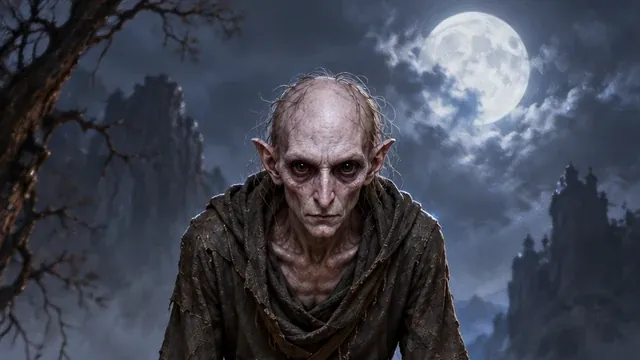
Herio is death personified, a silent and fleshless figure who visits homes when the appointed hour arrives. Her call is inevitable and inexorable: no one can escape when the moment has truly come.
She appears in dreams or as an omen to announce journeys toward the beyond. In Basque worldview she is not seen as wicked, but as part of the natural cycle of life, memory and departure.
Places where Herio waits in silence when the hour arrives.
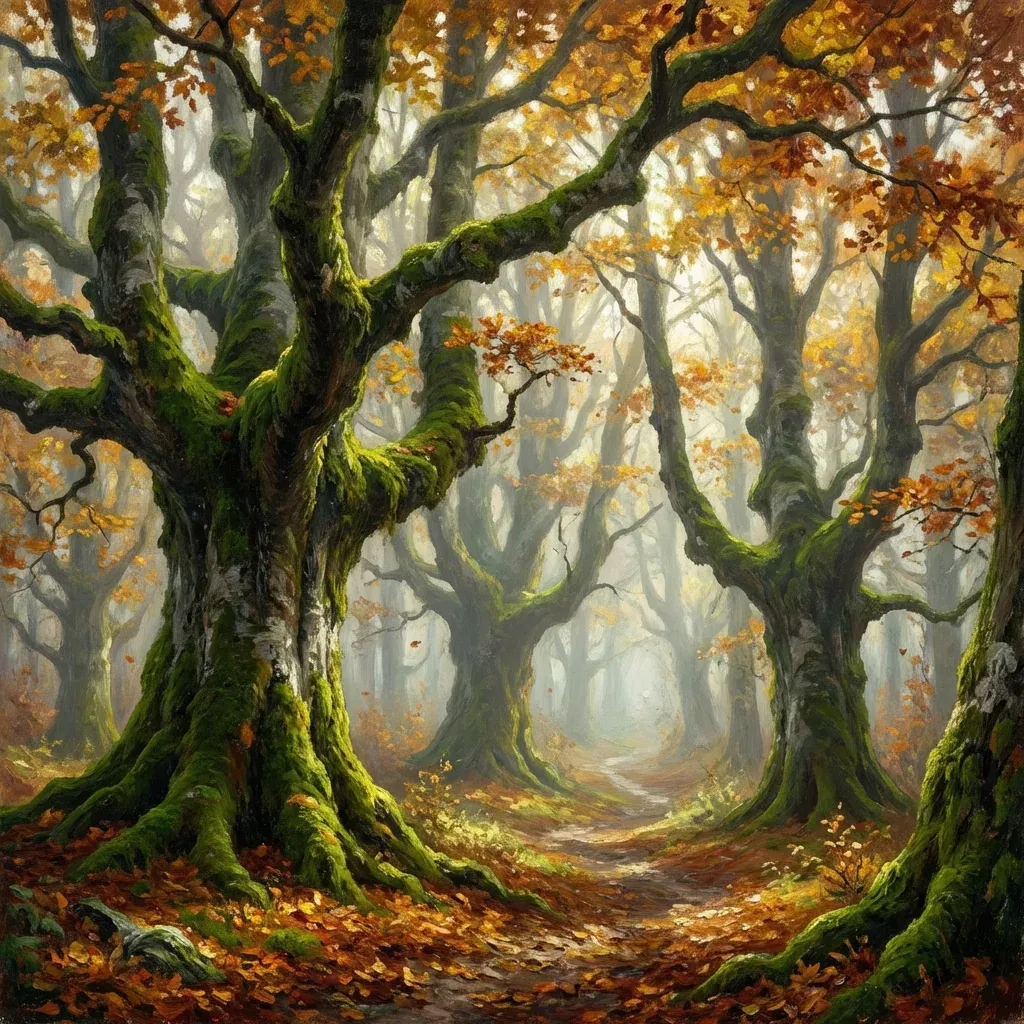
Routes along which souls are guided toward the beyond.
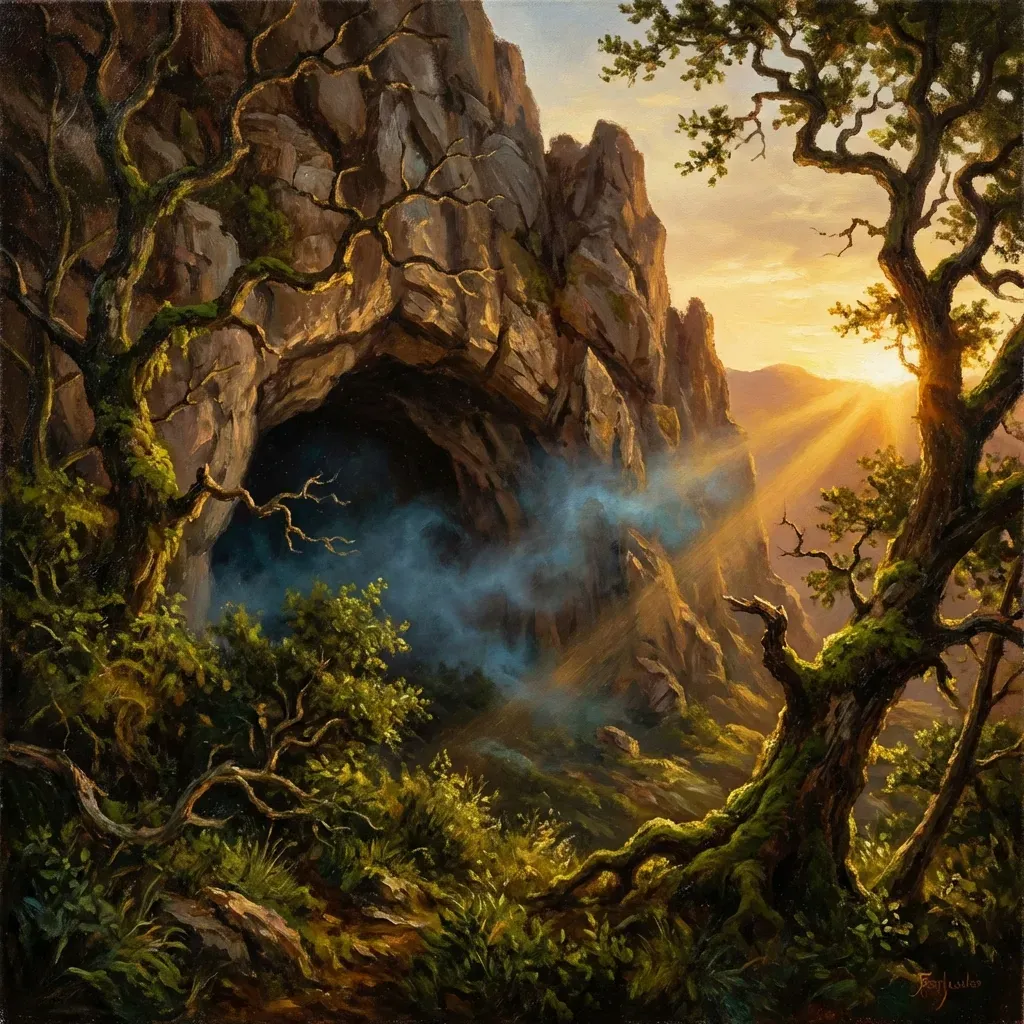
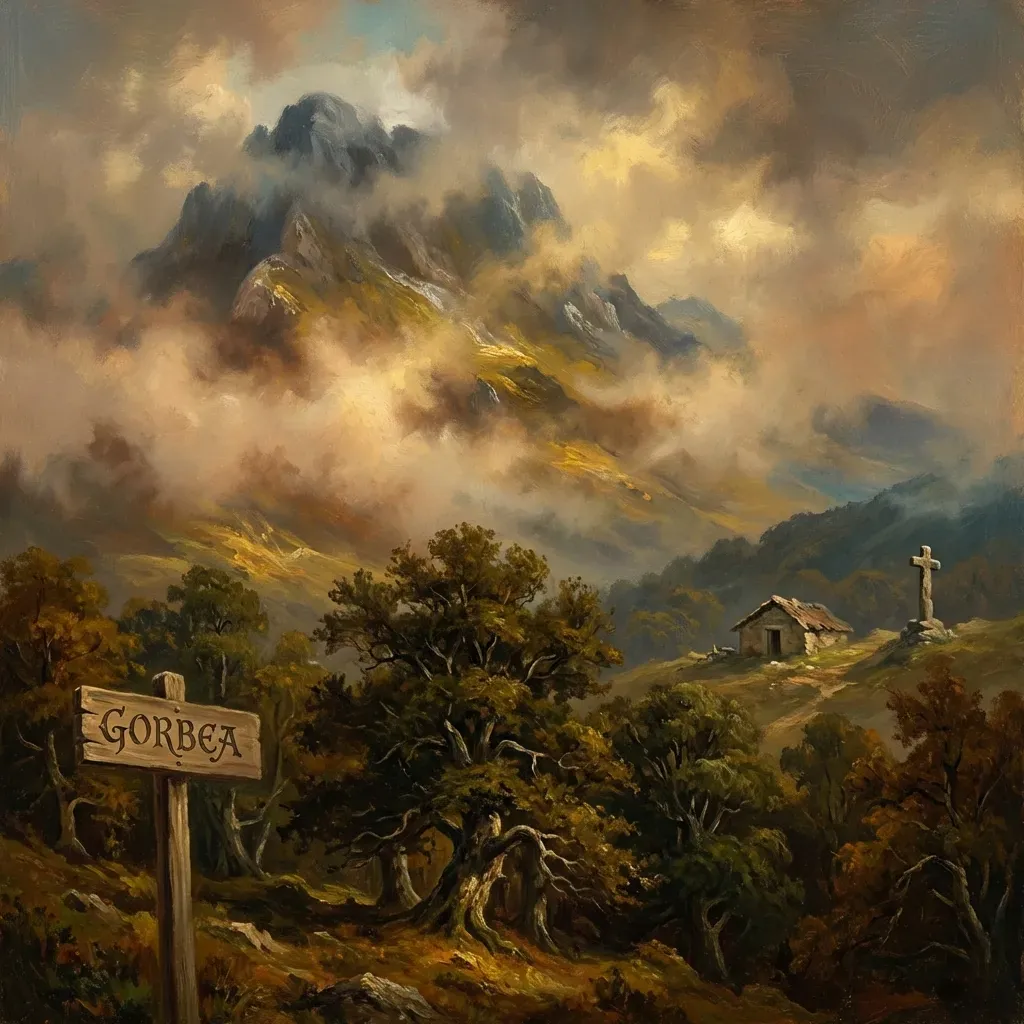
Sacred places linked to the passage of Herio.
The name Herio comes directly from the Basque word for death. It expresses not only the event of dying, but also its personification as an unavoidable presence.
Herio belongs to the oldest layer of Basque mythology and can be understood as the personified presence of death.
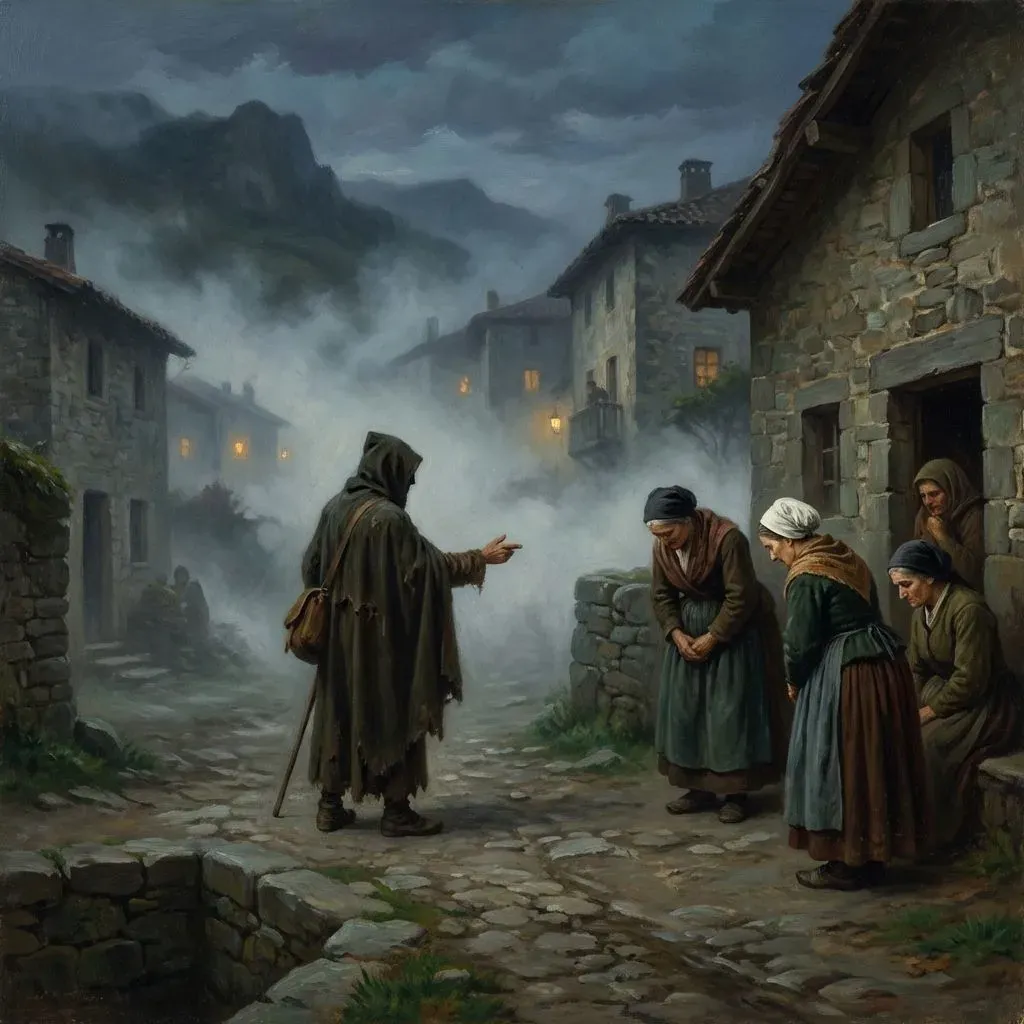
Nobody can escape when Herio comes to claim someone.
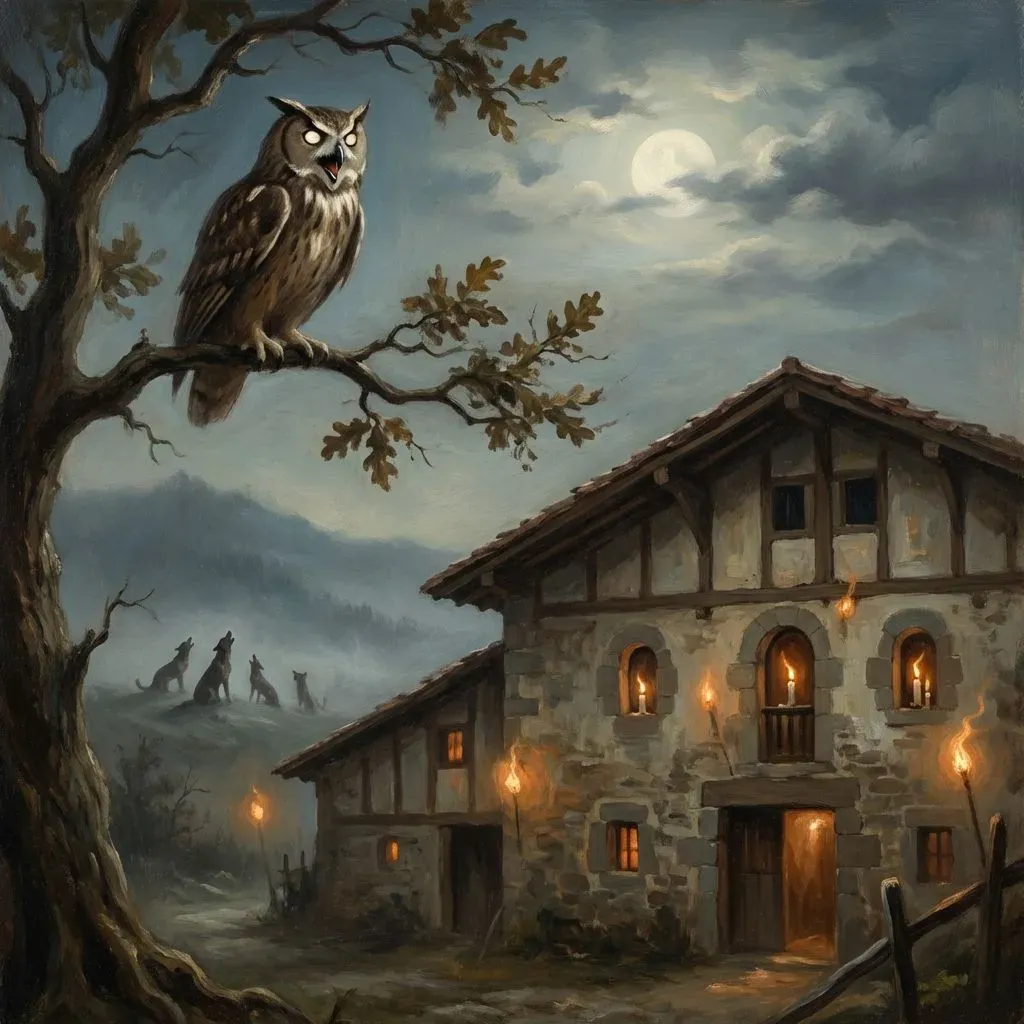
Signs announcing Herio’s approaching arrival at the home.
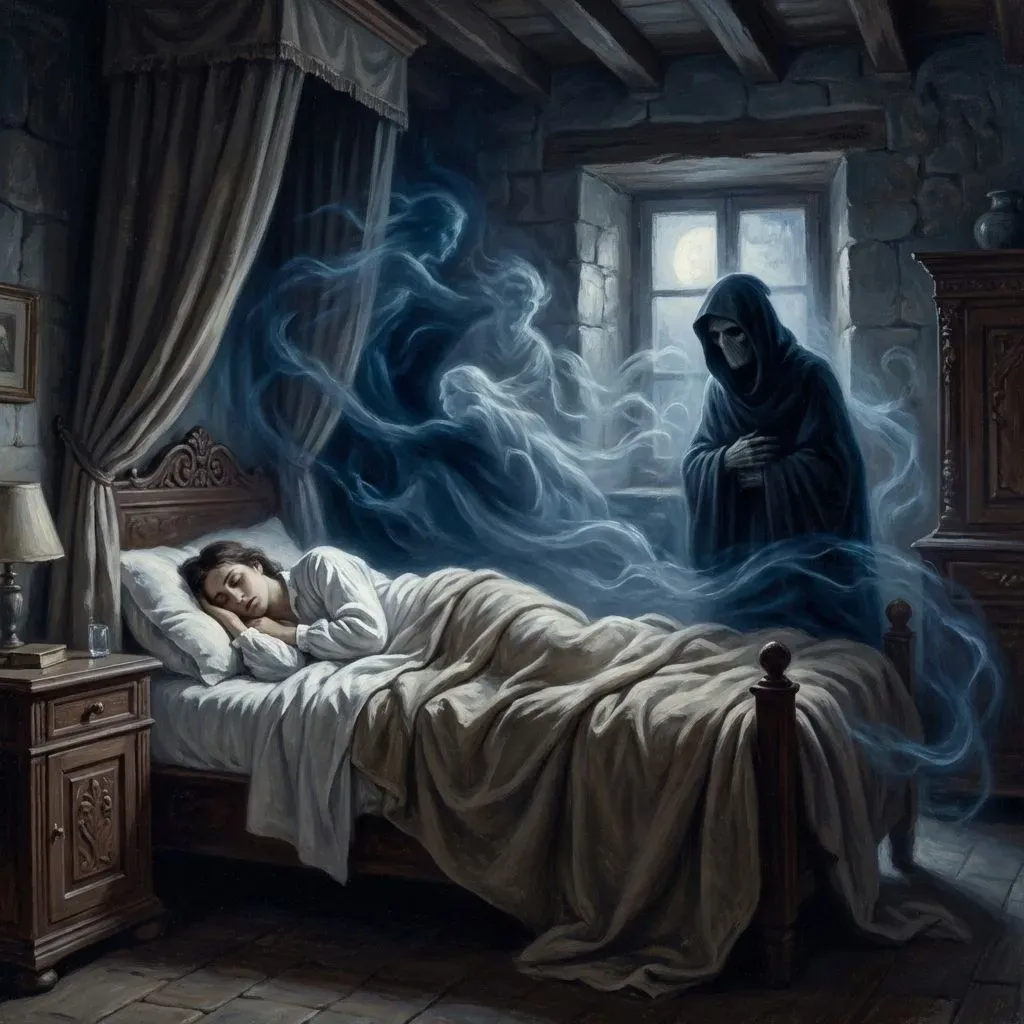
How Herio appears in visions to announce approaching departures.
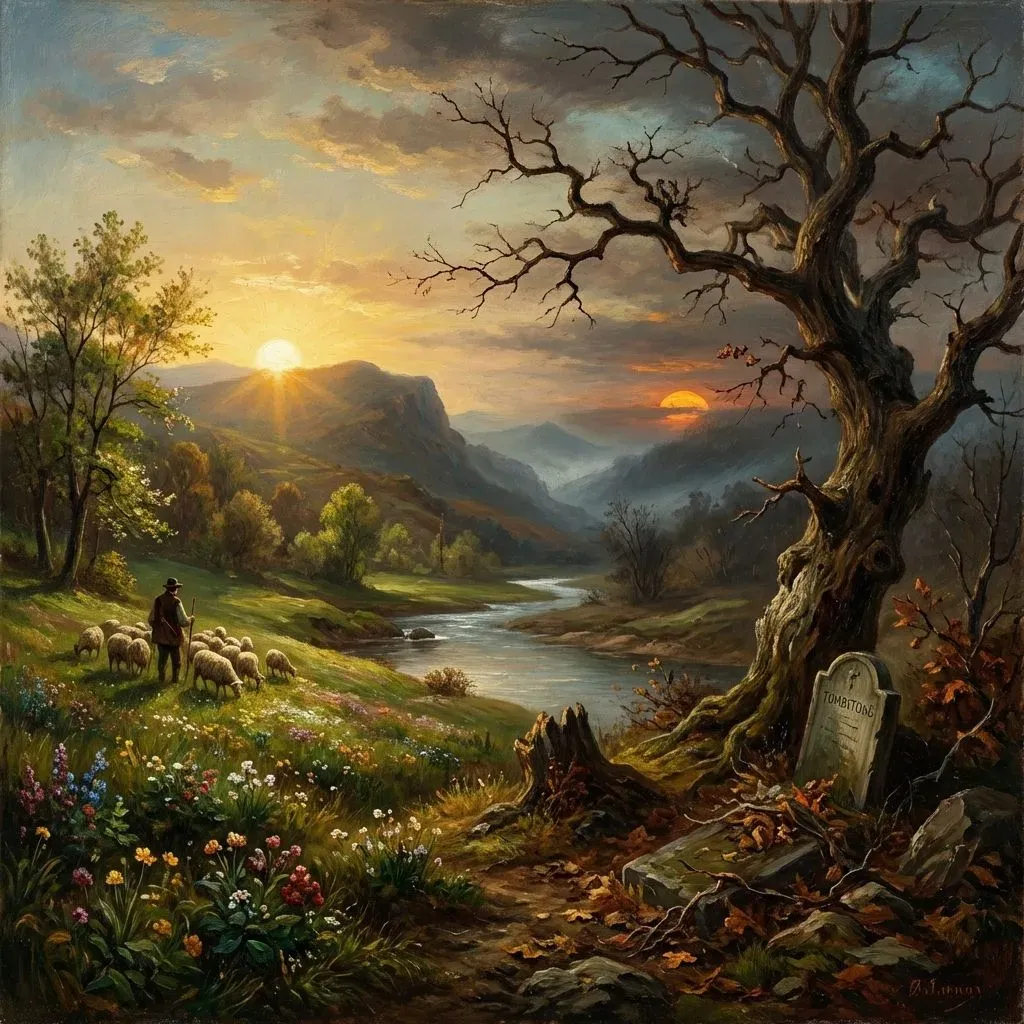
Why Herio is seen as part of life rather than as an evil being.
Its stories are closely tied to omens, funerary paths and the final threshold.
Again and again the tradition returns to mortality, warning, community and passage.
Rather than a decorative figure, Herio helps explain how the Basque world understood danger, order and sacred space.
In many versions, Herio marks a frontier between what belongs to human life and what must remain respected from a distance.