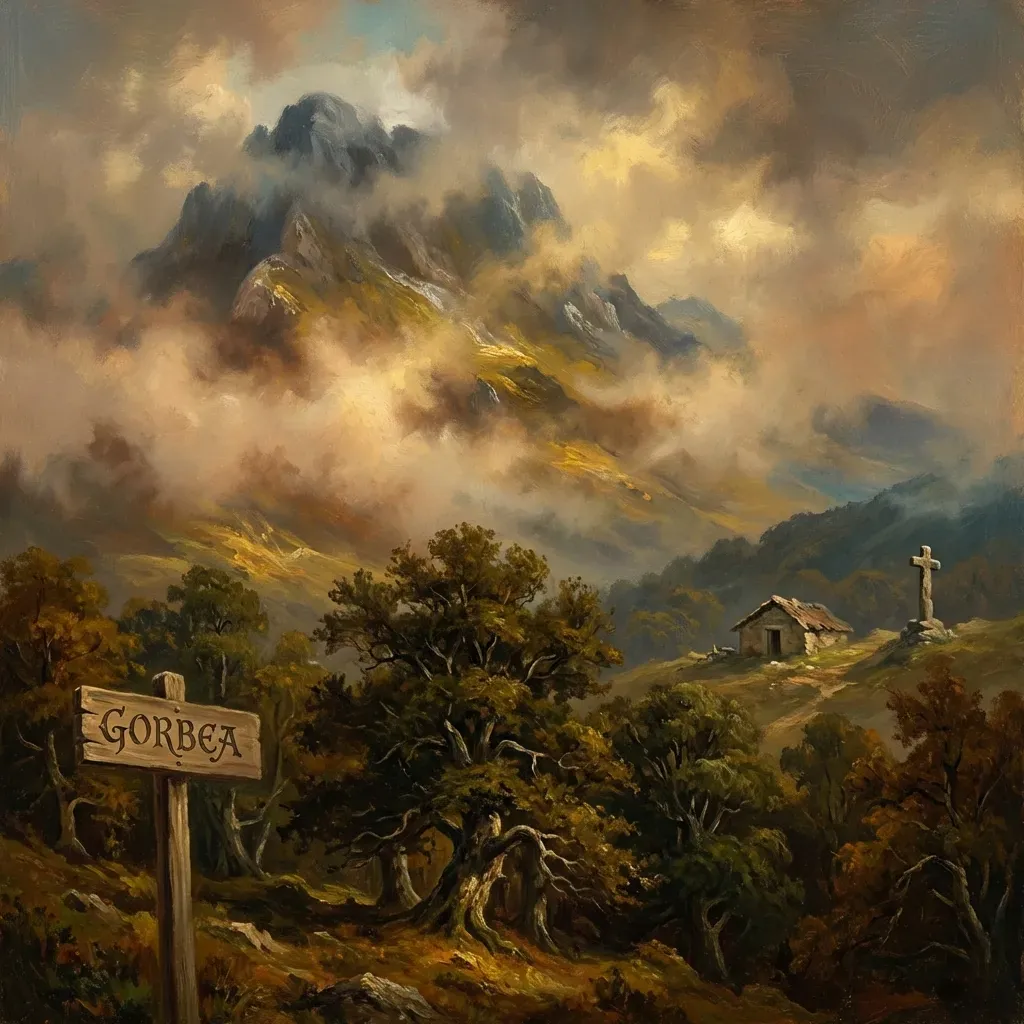
Ancestral farmhouses
Centuries-old homes where the soul of generations resides.
The sacred bond between spirit and home
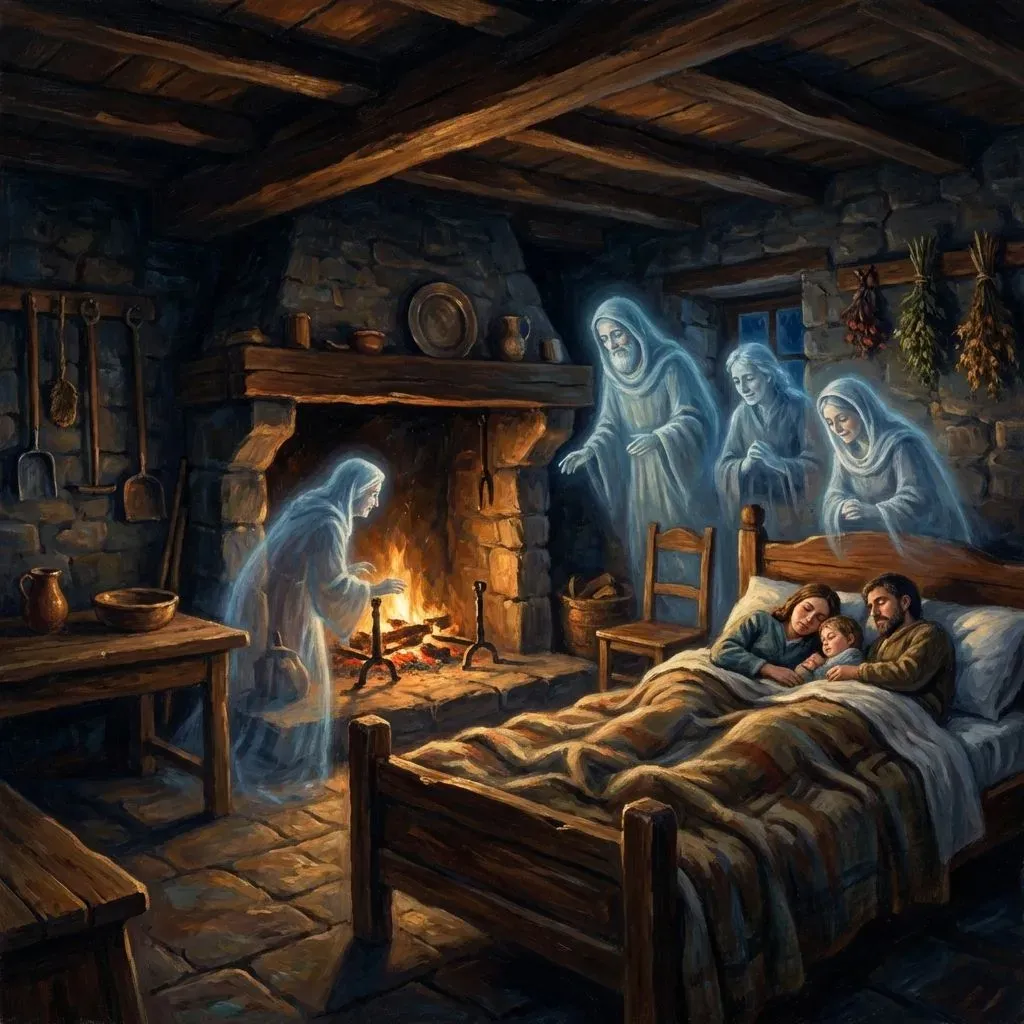
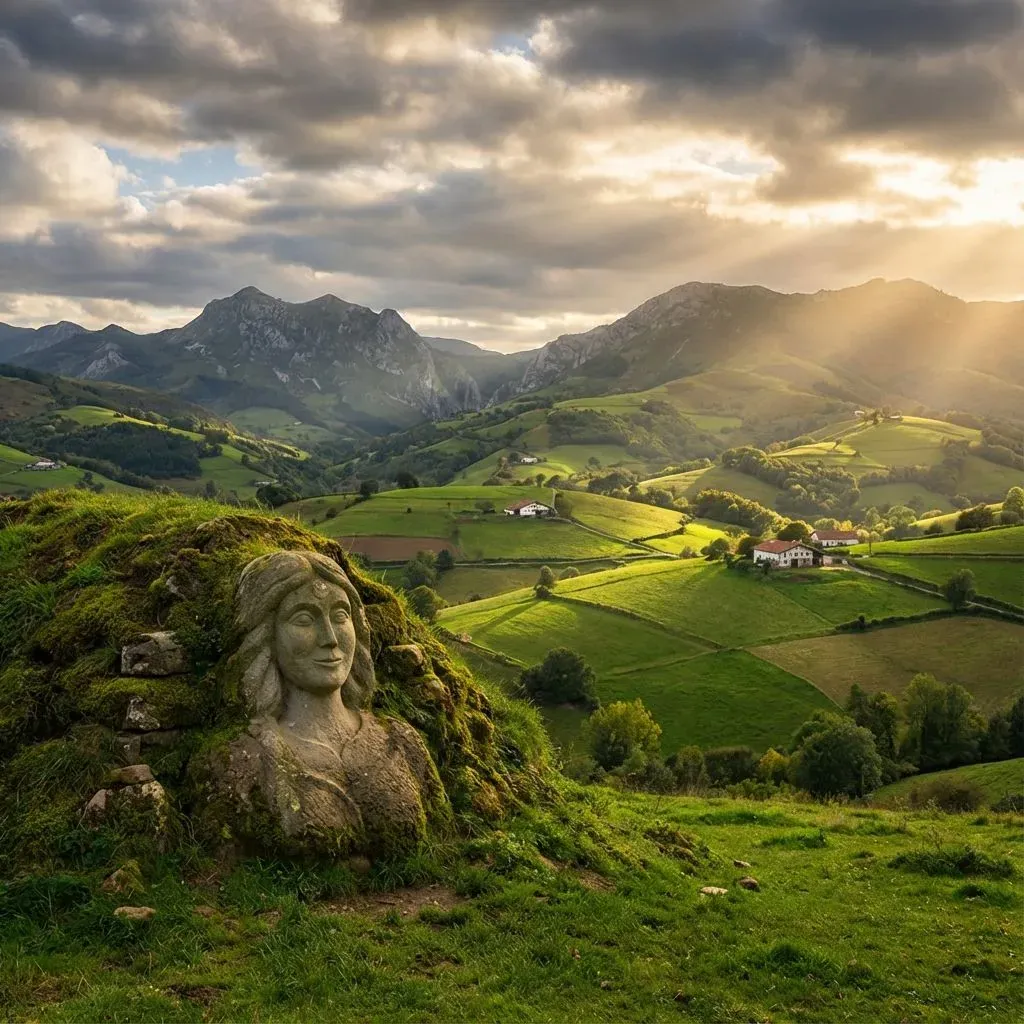
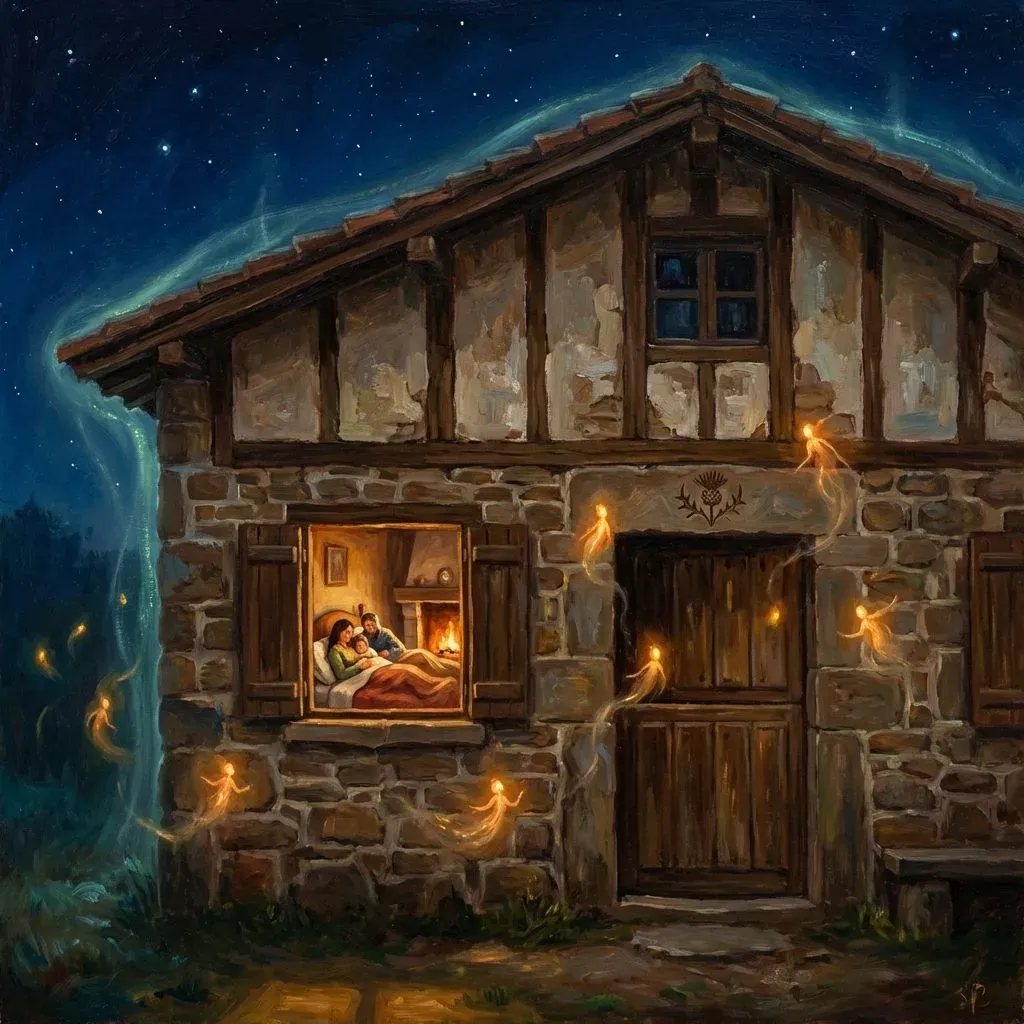
In the Basque Country, the farmhouse is far more than old stone and timber. It is a living being, a collective soul formed by all the generations that were born, lived, and died within its walls. The Etxekoak are the manifestation of that soul: the spirits of the ancestors who never truly left their home.
Elders said that every farmhouse has its own character, its own temperament. Some houses always prosper, where everything flourishes and the family lives in peace. Others seem cursed, where misfortune accumulates generation after generation. The difference lies in how their inhabitants treated the Etxekoak over the centuries.
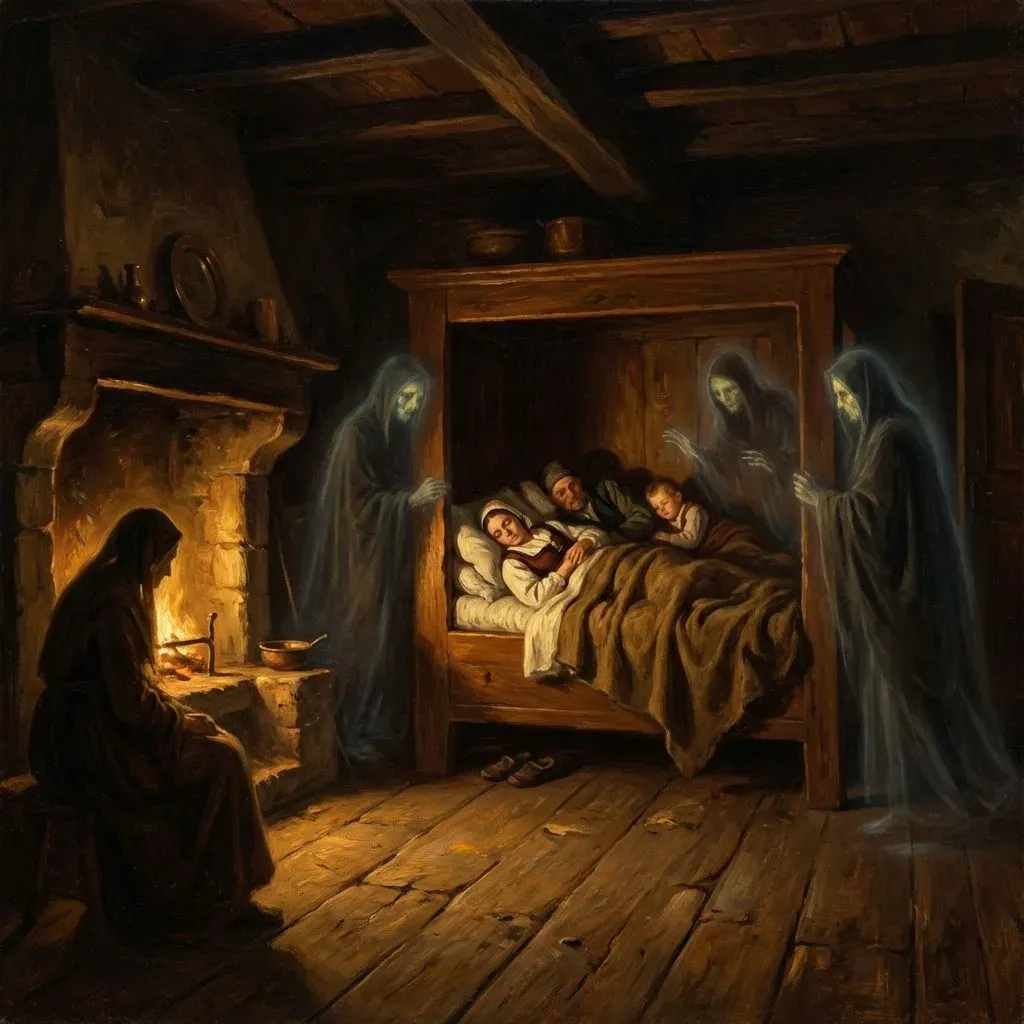
When a family abandons the ancestral farmhouse, or worse, sells it to strangers, the soul of the house suffers. The Etxekoak cannot follow the family elsewhere: they are bound to the stones, the beams, and the hearth where the sacred fire burns. That is why Basques resisted selling the farmhouse until the very end: it was not only a property, but the seat of their ancestors.
One story tells of a family from Oñati that sold its farmhouse because of hardship. For years the new owners could not prosper: the cows fell ill, the harvest failed, and night noises would not let anyone sleep. Only when a descendant of the original family returned to live there did the house regain its peace. The Etxekoak had recognized their bloodline.
Centuries-old homes where the soul of generations resides.
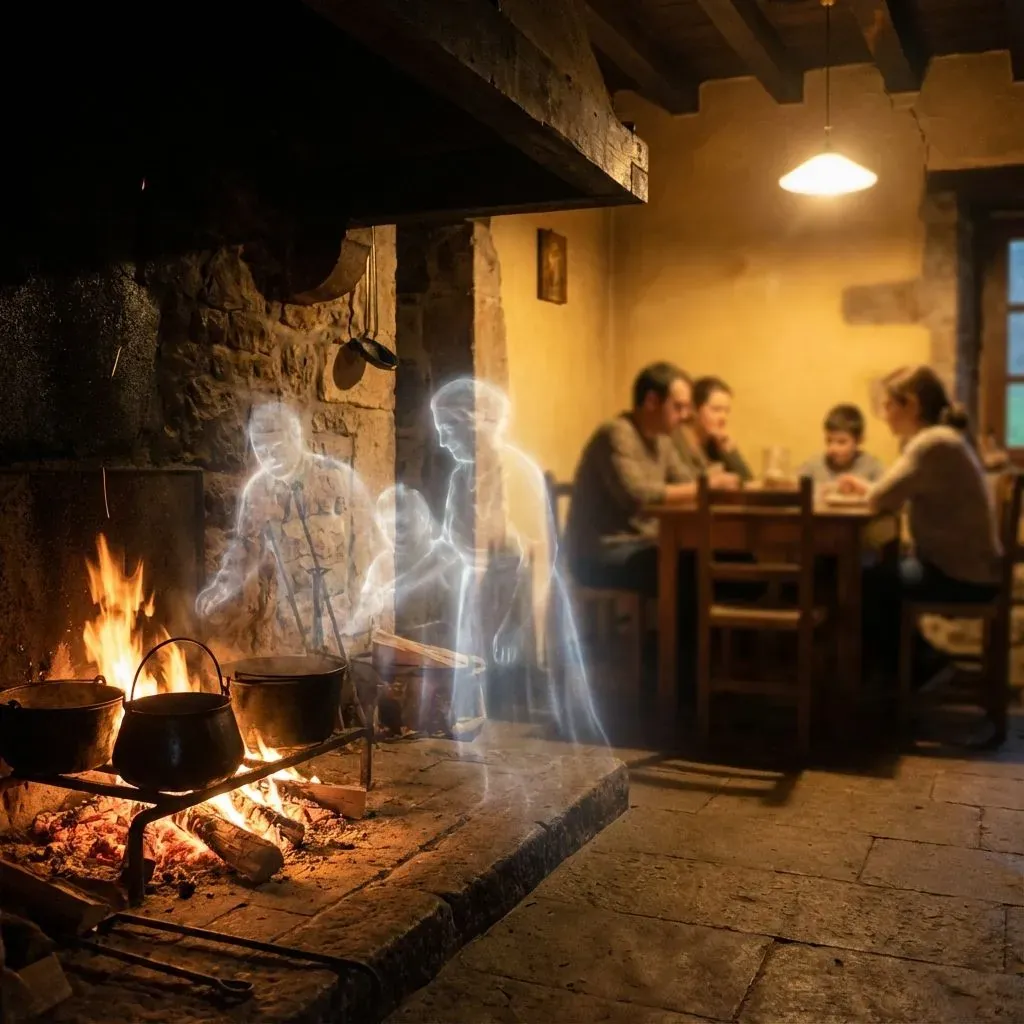
The sacred fire that keeps ancestral memory alive.
The Basque farmhouse has never been understood as a neutral building. It is a living center of continuity where lineage, land, labor, and memory are fused into a single moral space.
At the center of that world burns the hearth, the domestic fire around which the household gathers and from which the invisible protectors of the line are thought to remain present. The house shelters the family, but the family also feeds the house with loyalty and remembrance.
That relationship gives weight to every inheritance decision. To damage or abandon the farmhouse is not just to lose property, but to disturb a sacred network of obligations between living and dead.
The legend survives because it captures something fundamental in Basque culture: the home is not merely where one lives, but where identity, ancestry, and duty take root together.