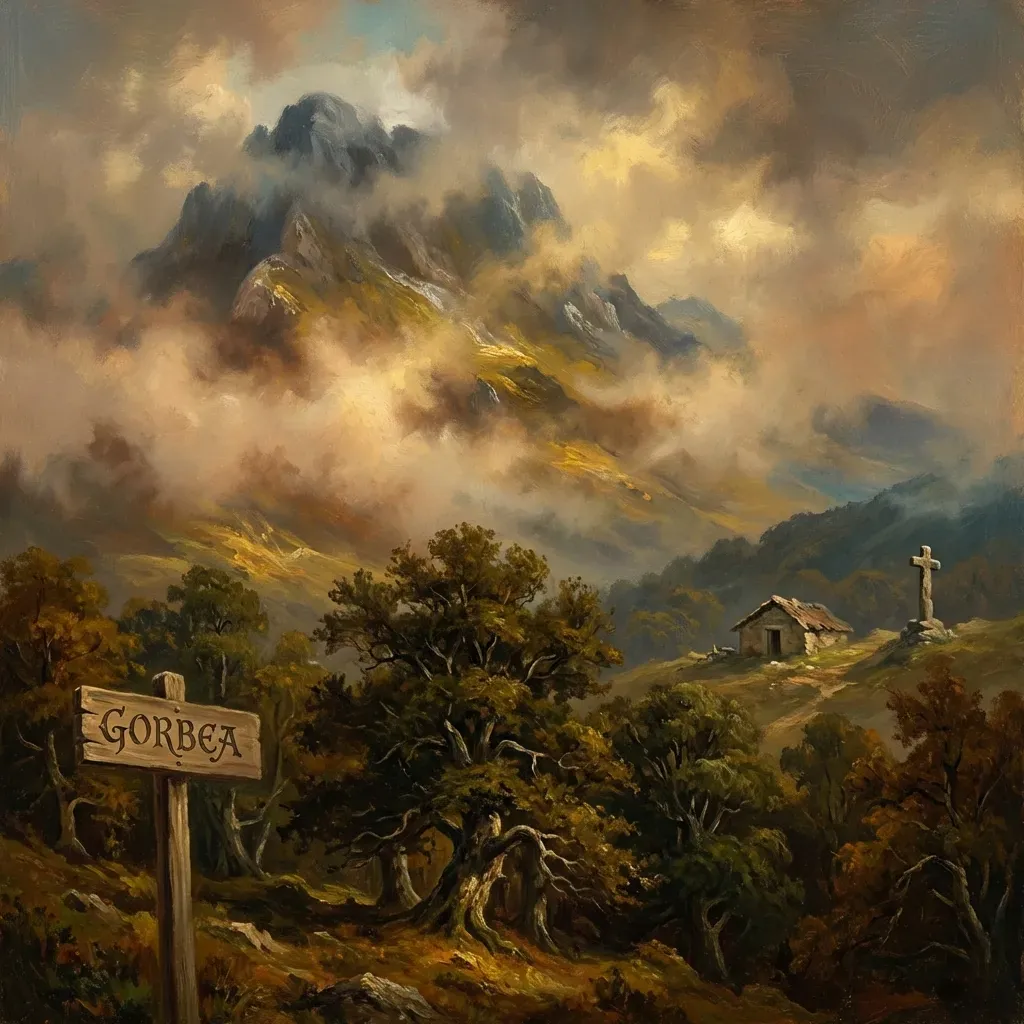
Ancestral farmhouses
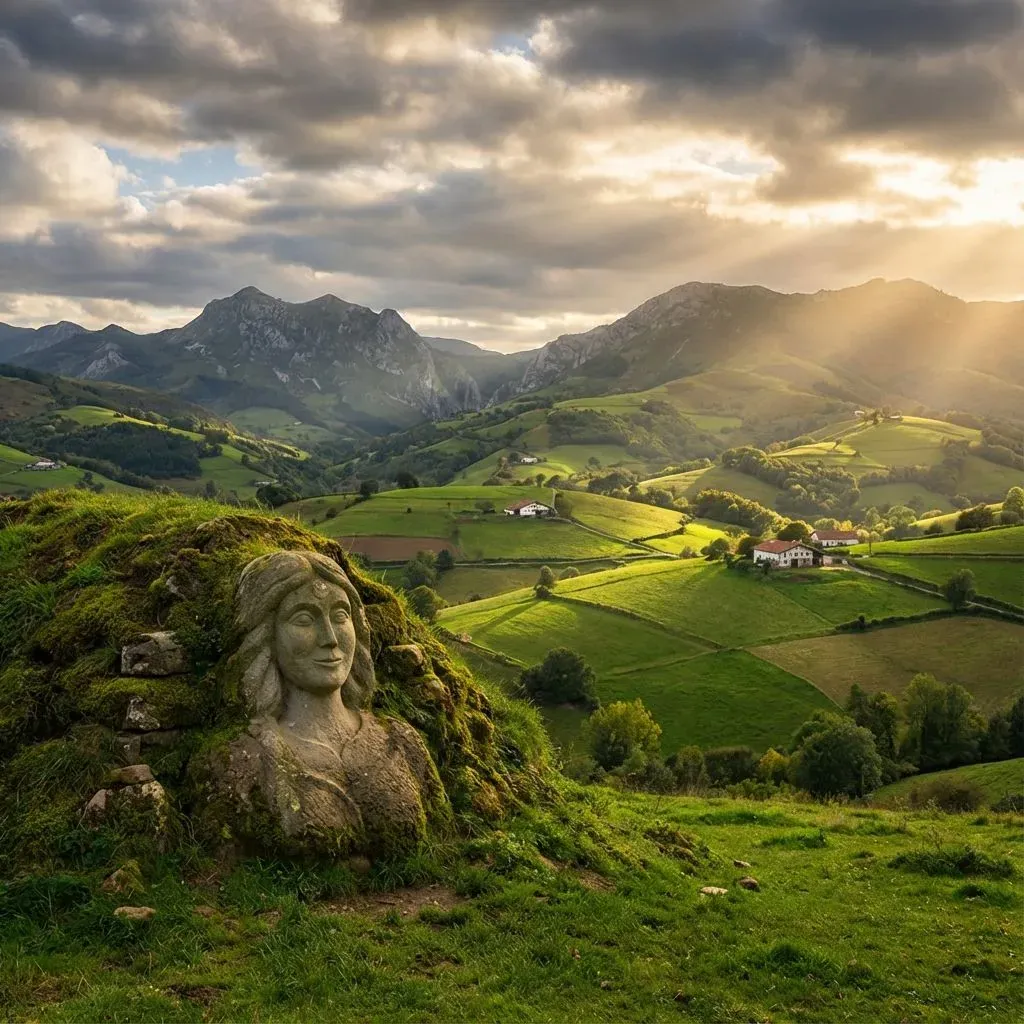
Centuries-old homes where the Etxekoak dwell.
The Etxekoak watch over the Basque farmhouse
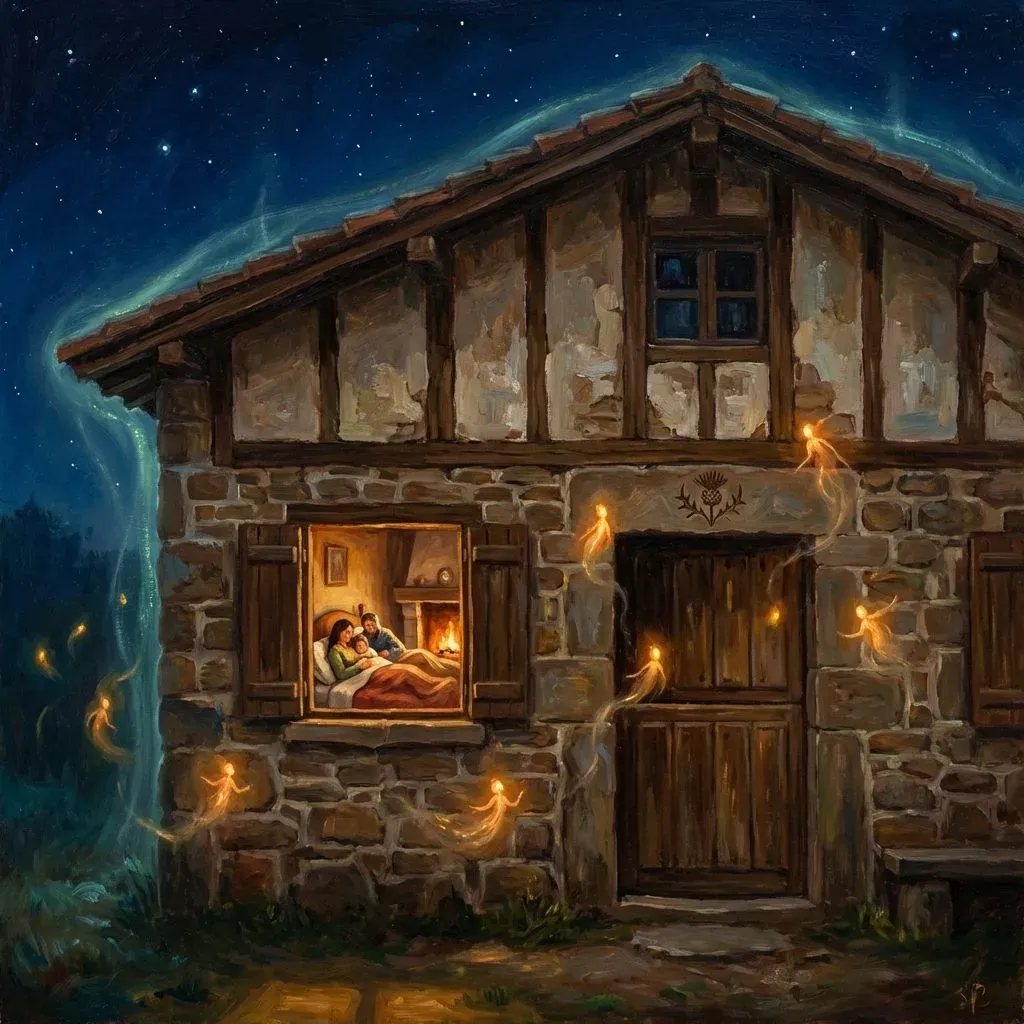
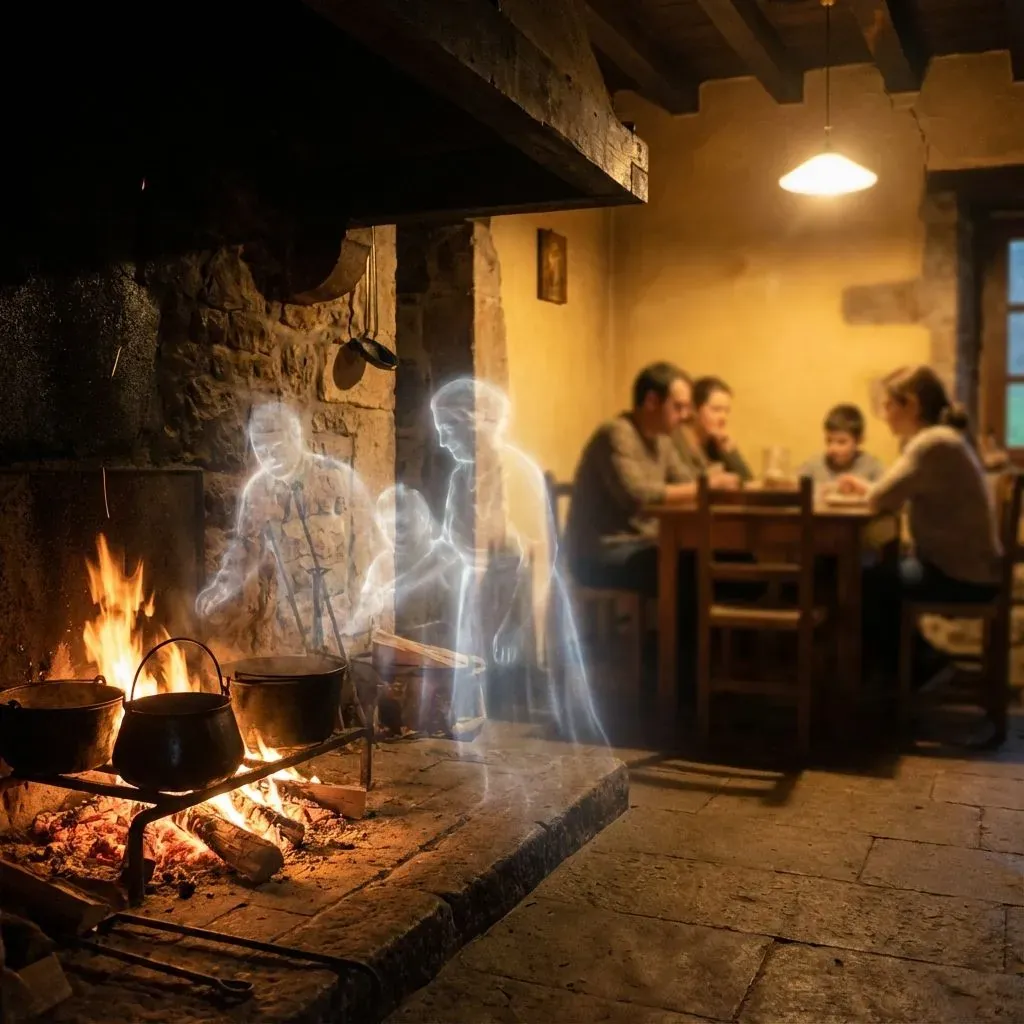
In every old Basque farmhouse of stone and centuries-old timber dwell the Etxekoak, the ones of the house: the spirits of the ancestors who never left the home they built. They are invisible, yet their presence is felt in the creak of old beams, in the warmth of the hearth that never truly dies, and in the sense of not being alone even when the house is empty.
An old woman from Legazpi said that her grandmother always kept an empty chair beside the fire. It is for the Etxekoak, she would say. They care for us and warn us of danger. When the milk curdles for no reason, something bad is approaching. When the fire crackles strangely, they are speaking to us.
The Etxekoak reward those who keep the house clean, ordered, and faithful to tradition. Families who tend the inherited home often prosper mysteriously: their harvests are rich, their animals healthy, their children strong. But woe to the one who abandons or sells the family farmhouse: the Etxekoak do not forgive forgetfulness.
That is why Basques have long treated the home as something sacred. The farmhouse is not merely stones and tiles, but the living bond with those who came before and the promise that their memory endures as long as the house still stands.
Centuries-old homes where the Etxekoak dwell.
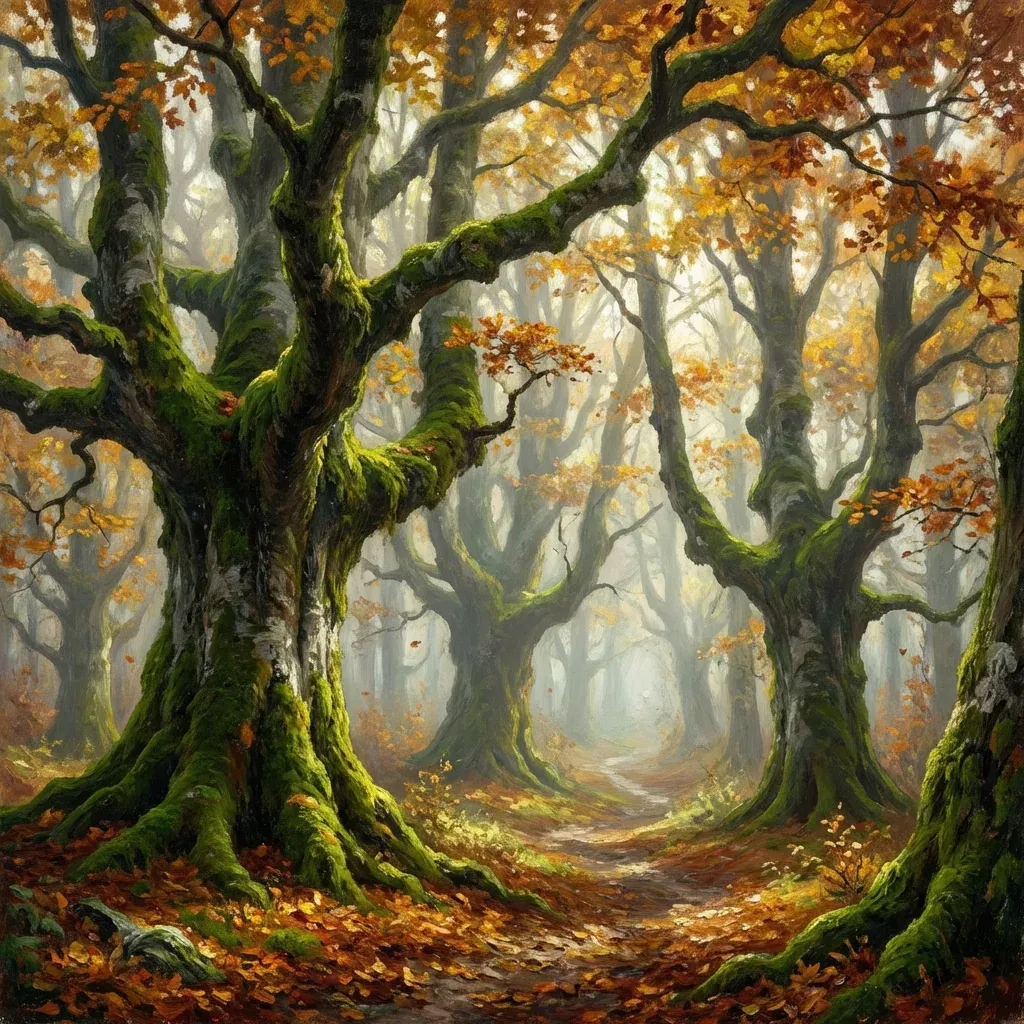
The sacred center where the spirits of the house communicate.
The farmhouse in Basque tradition is not simply an inhabited structure. It is a protected moral space where the living continue to share presence with the dead.
The Etxekoak embody this continuity. They are not distant ghosts but domestic guardians woven into the ordinary sounds, warnings, and protections of everyday household life.
This gives the house a sacred density. To care for it is to maintain a pact with memory, ancestry, and the unseen forces that hold the family together.
The legend remains powerful because it turns domestic order into a spiritual bond. The home shelters the family, but the family also has the duty to shelter the memory that dwells within the home.