Stormy skies
The nocturnal skies ruled by the Black Hunter during storm nights.
The Black Hunter
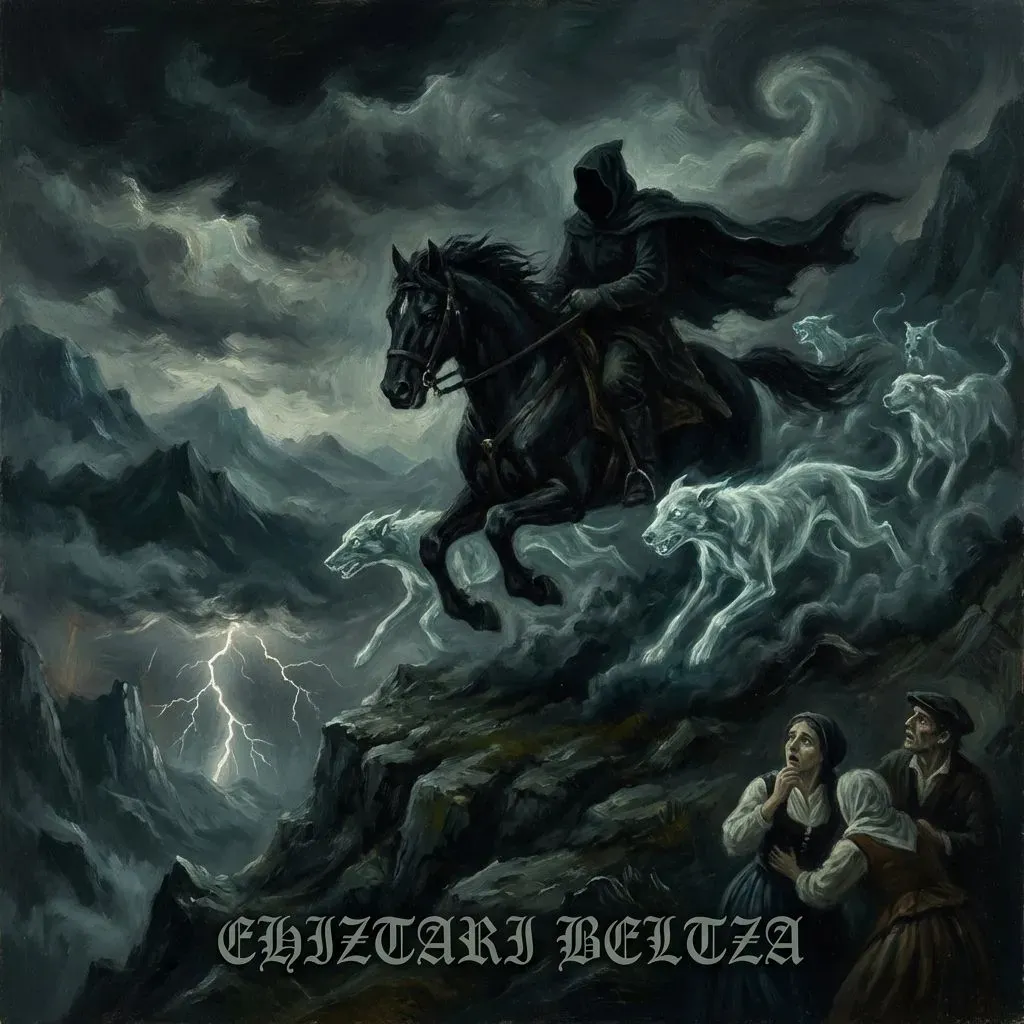
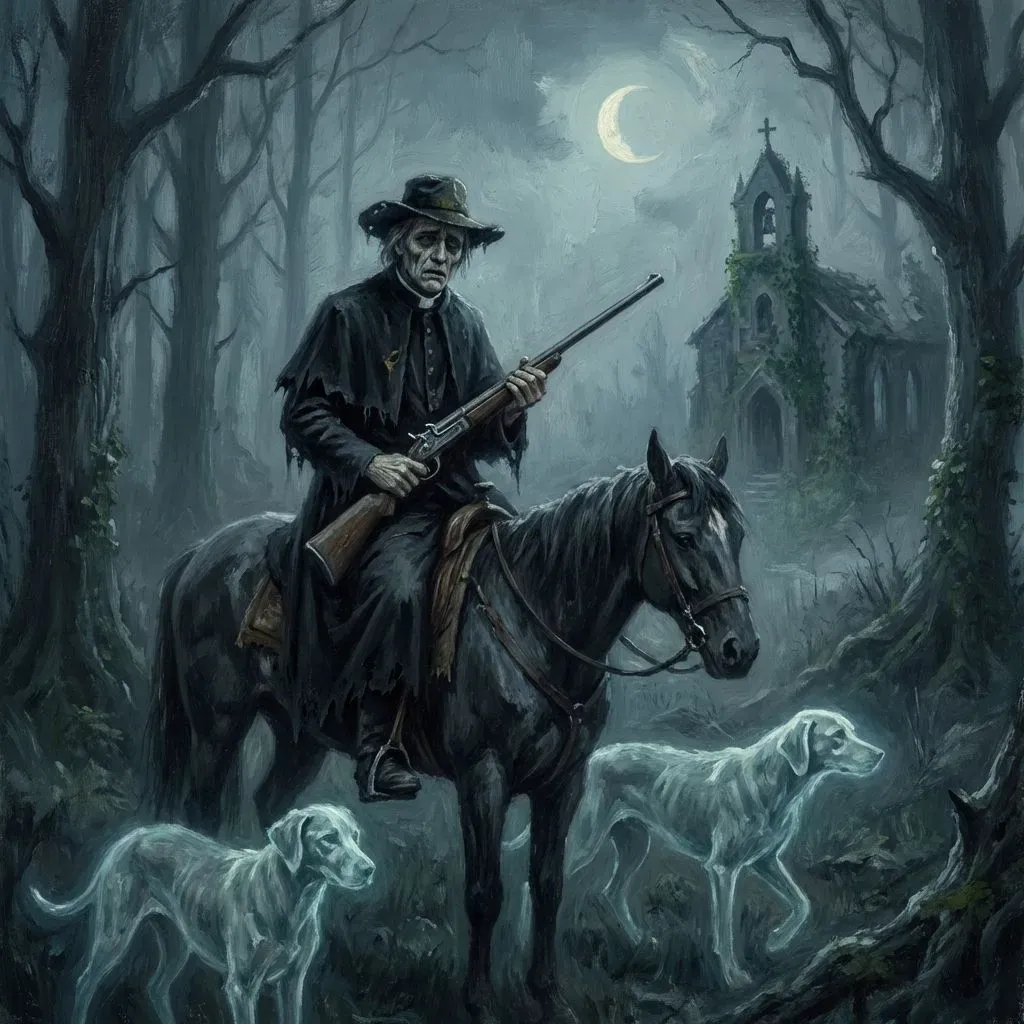
Ehiztari Beltza rides through storm-filled skies at the head of a terrifying procession of souls. Mounted on a black horse and followed by spectral hounds, he turns thunder and wind into the sound of pursuit.
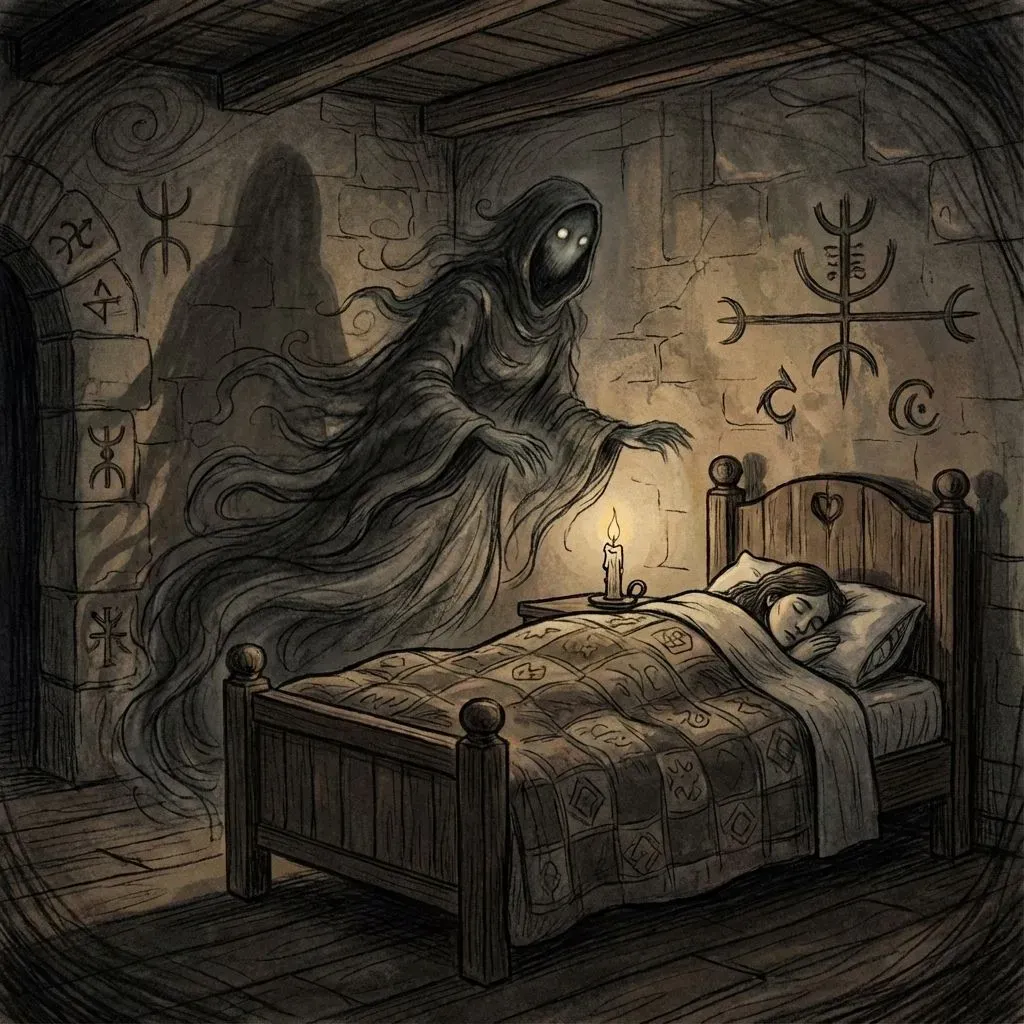
Anyone who hears that gallop is warned to hide. To look upon the hunt is to risk madness, illness or being drawn into the company forever.
He is the Basque form of the Wild Hunt, a motif found across Europe in which a cursed or supernatural rider crosses the sky with a ghostly retinue.
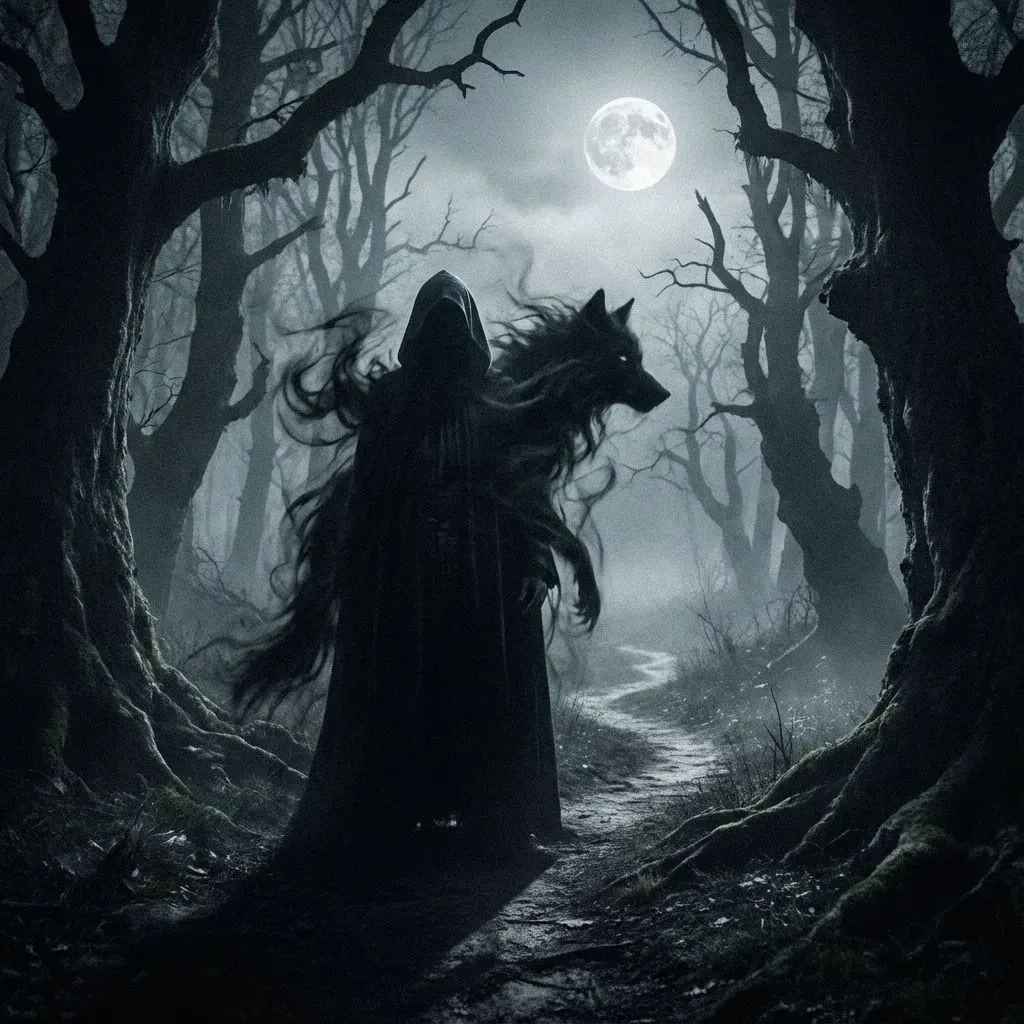
Storm nights therefore became charged with caution. When the windows shook and lightning split the clouds, elders said the Black Hunter was passing again.
The nocturnal skies ruled by the Black Hunter during storm nights.
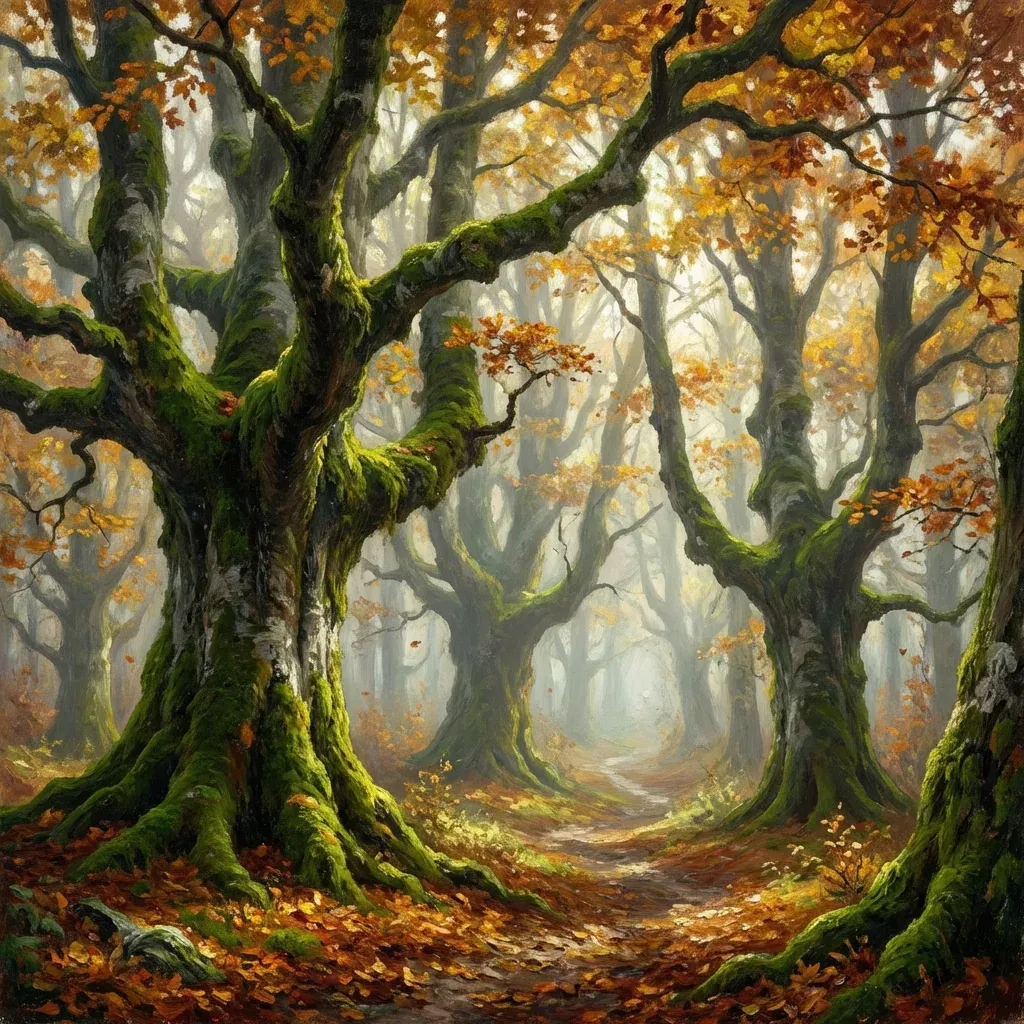
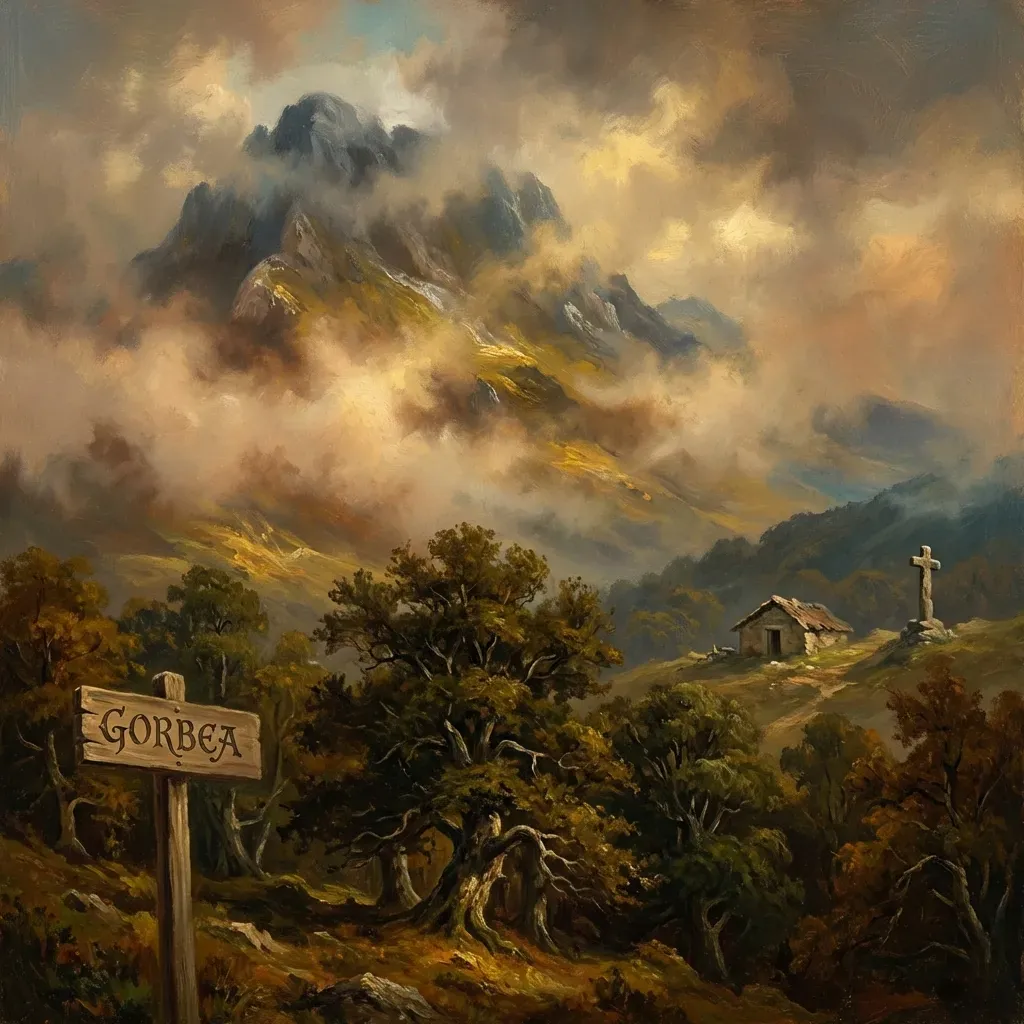
The summits and ridgelines where the wild hunt passes closest to the earth.
The Black Hunter condenses the fear of storm, death and pursuit into a single mounted figure. He belongs to the sky, but he is heard from the earth.
He is also a moral figure: in some versions a cleric or hunter who crossed a forbidden boundary and was condemned to ride without rest.
That is why the legend links weather, guilt and punishment. The storm is never only meteorological; it becomes the noise of an unending sentence.
The figure endures because it transforms shapeless dread into a recognisable rider whose coming can be sensed, named and feared.