The Basque sky
The celestial stage where the two sisters alternate their guardianship.
The embrace of the two radiant daughters of the mother goddess
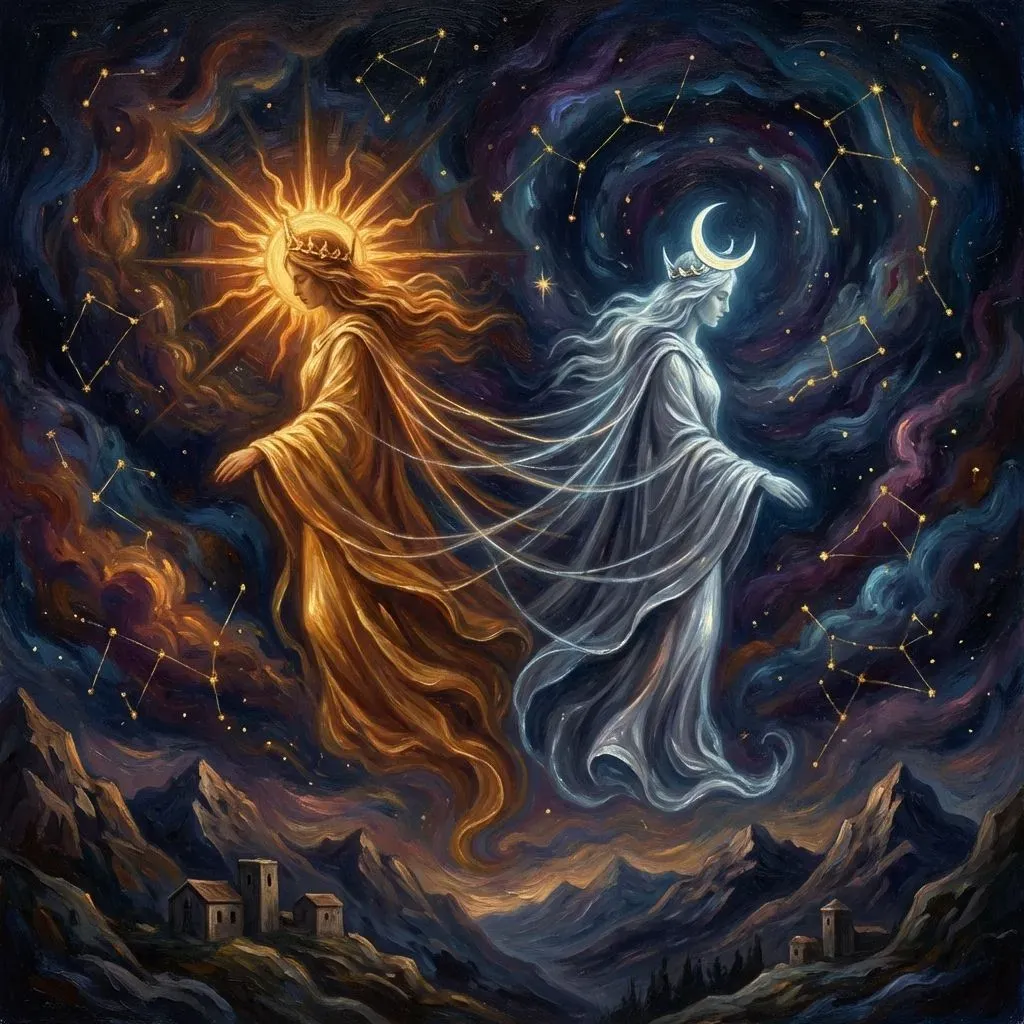
The myth of the astral sisters imagines Eguzki and Ilargi not as distant celestial objects, but as daughters of Amalur who share the task of protecting the world through alternating light.
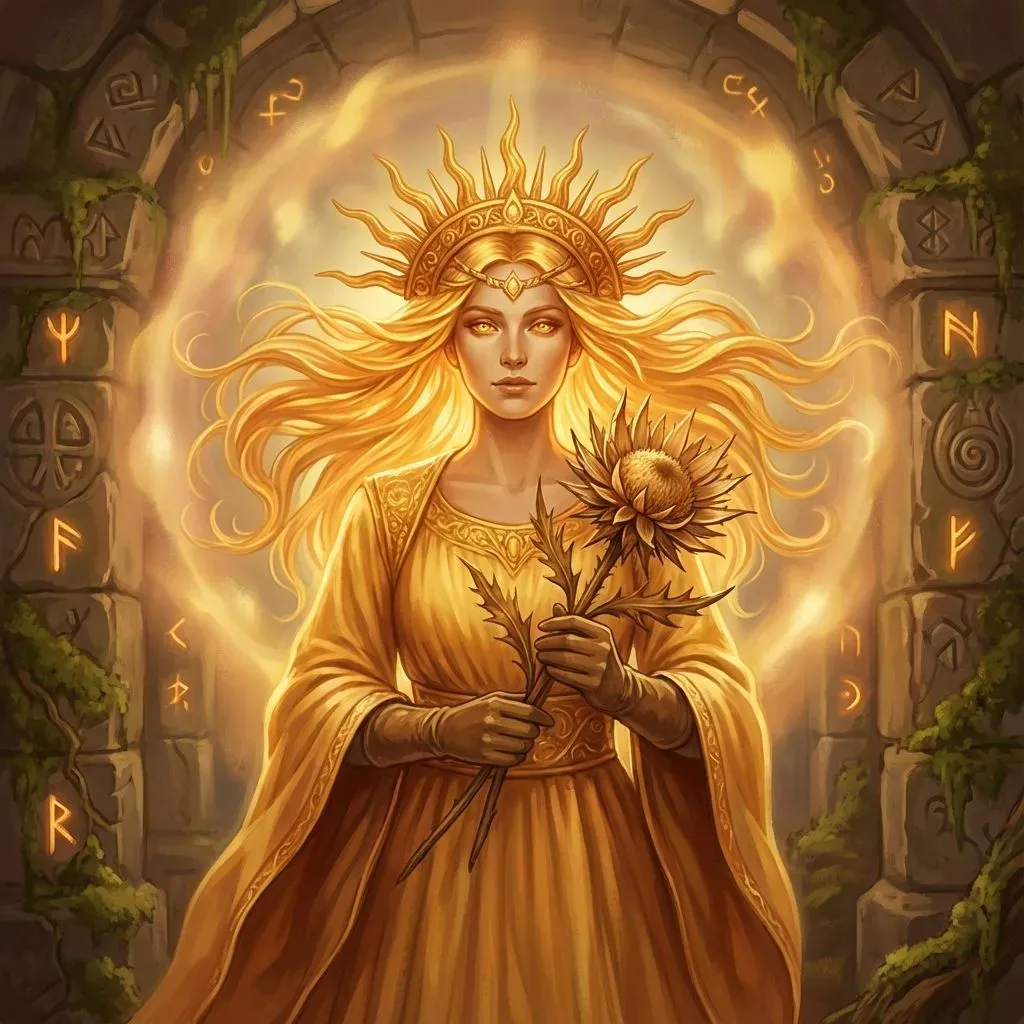
Eguzki warms, nourishes, and drives hostile shadows away by day, while Ilargi rises when her sister descends, accompanying the night with a gentler, silvery protection.
Their relation is not rivalry but cooperation. The cycle of day and night is sustained because each sister takes her turn without trying to replace the other.
The legend turns astronomy into kinship and balance. Light is strongest not when one force dominates, but when different forms of radiance work together.
The celestial stage where the two sisters alternate their guardianship.

The moment of transition when one light gives way to the other.
This legend is powerful because it imagines cosmic order as family order. Day and night are not mechanical opposites, but sisters who cooperate in caring for the living world.
That perspective gives the sky moral meaning. Harmony depends on alternation, respect, and the recognition that different powers can protect in different ways.
Linked to Amalur, the sisters also show that celestial light remains rooted in the maternal earth. Even the sky is part of a larger family of creation.
The tale endures because it turns the movement of light into an image of solidarity, rhythm, and sacred reciprocity.